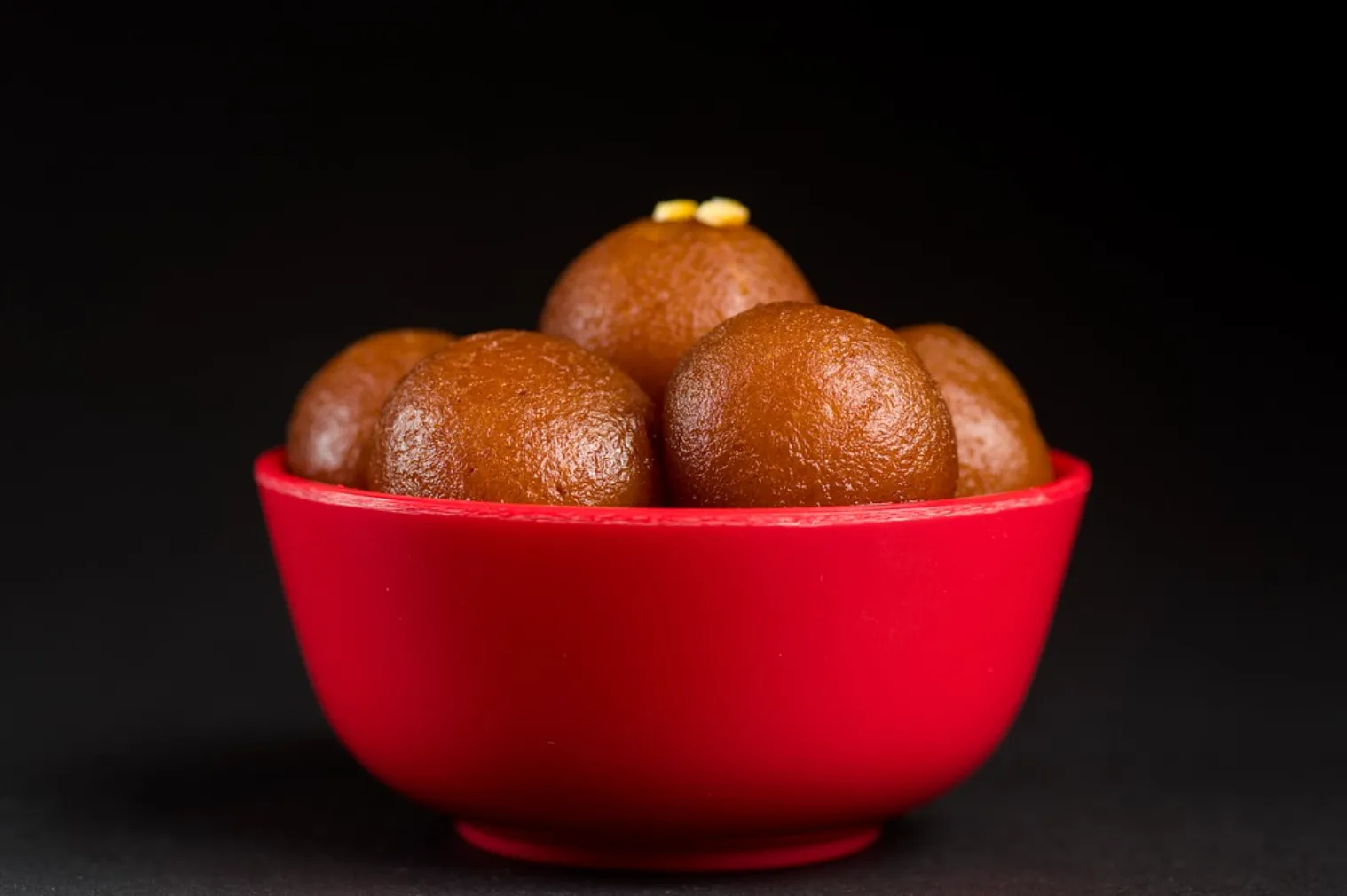
Gulab jamun is India’s most beloved dessert. Those soft, spongy balls soaked in sugar syrup appear at every celebration, festival, and dinner table.
But the question many of my patients ask me is: Just how many calories are in gulab jamun? Can I eat one if I’m watching my weight? What about diabetics?
The answer is more complicated than a simple number because gulab jamun isn’t just calorie-dense—it’s nutrition-void.
Understanding its impact on your diet is important if you eat it regularly.
In my practice, I’ve seen gulab jamun consumption become problematic, especially around festivals when people eat multiple pieces without realizing the caloric and sugar impact.
Today, I’m giving you the complete breakdown so you understand exactly what you’re consuming when you eat gulab jamun.
What Is Gulab Jamun? Quick Overview

Gulab jamun is a traditional Indian dessert made by rolling a dough (typically made from khoya or milk solids) into balls, deep-frying them, and immediately soaking them in sugar syrup flavored with rose and cardamom.
The result is a dessert that’s crispy outside, soft and spongy inside, and absolutely loaded with sugar.
Each gulab jamun is approximately 15-20g in weight and absorbs significant sugar syrup during soaking.
How Many Calories in One Gulab Jamun?
Here’s what you need to know about gulab jamun calories:
One medium gulab jamun (approximately 15-20g) contains approximately 80-100 calories.
But this is where gulab jamun becomes problematic. Let me show you how quickly calories accumulate:
| Quantity | Calories (kcal) | Sugar Content | What It Represents |
|---|---|---|---|
| 1 small (12g) | 60-70 | 12-15g sugar | Single piece |
| 1 medium (18g) | 80-100 | 16-20g sugar | Typical serving |
| 2 medium (36g) | 160-200 | 32-40g sugar | Common portion |
| 4 medium (72g) | 320-400 | 64-80g sugar | Festival consumption |
The Reality Check: One gulab jamun (90 calories) seems reasonable. But most people don’t eat just one.
A typical “small serving” is 2-3 gulab jamuns (180-300 calories). A “festival indulgence” might be 4-5 pieces (360-450 calories).
To put this in perspective: 3 gulab jamuns (270 calories) is more than an entire bowl of rice (260 calories).
Yet the gulab jamun provides sugar and fat, while rice at least provides carbs for energy.
Complete Nutritional Breakdown: What’s Actually in Gulab Jamun?
This is where gulab jamun reveals its true nature:
| Nutrient | Per 1 Gulab Jamun (18g) | Why It Matters |
| Calories | 80-100 kcal | Dense energy |
| Carbohydrates | 14-16g | Primarily sugar |
| Sugar | 12-15g | Massive amount of added sugar |
| Fat | 3.5-4g | From deep frying |
| Protein | 1g | Minimal |
| Fiber | 0g | None |
| Saturated Fat | 2g | Unhealthy fat |
| Cholesterol | 15mg | From ghee/khoya |
What This Composition Means:
Gulab jamun is approximately 56% sugar, 18% fat, and 4% protein. It’s essentially sugar-coated fat with zero fiber.
The sugar content is shocking: one gulab jamun contains 12-15g sugar—roughly 3-4 teaspoons.
The WHO recommends maximum 25g added sugar daily for women and 35g for men.
One gulab jamun accounts for half a woman’s daily sugar allowance in a single dessert.
Why Gulab Jamun Is Particularly Problematic?

Beyond the calories, gulab jamun has specific problems:
1. The Sugar Spike Problem:
Sugar is absorbed rapidly into the bloodstream from gulab jamun. This causes blood sugar spikes, triggering insulin release, leading to energy crashes. Diabetics must absolutely avoid gulab jamun.
2. The Empty Calories Problem:
Those 90 calories provide zero nutritional value—no vitamins, minerals, fiber, or meaningful protein. They’re pure indulgence with no health benefit.
3. The Portion Control Problem:
Gulab jamun is easy to eat. The soft, small size makes you feel like you’re eating “just one more,” leading to overconsumption.
Many people eat 4-5 pieces without realizing they’ve consumed 360-450 calories and 50-75g sugar.
4. The Syrup Absorption Problem:
The longer gulab jamun sits in sugar syrup, the more sugar it absorbs. A freshly fried gulab jamun soaked for hours is significantly sweeter and sugar-heavier than one soaked for minutes.
Real-World Impact: What Eating Gulab Jamun Means?
Let me translate gulab jamun calories into real impact:
Festival Scenario (typical):
- Eat 4 gulab jamuns = 360 calories + 60g sugar
- In perspective: This is the caloric equivalent of an entire meal (rice + dal + vegetables)
- Sugar equivalent: 15 teaspoons of pure sugar consumed in a dessert
If eating gulab jamun weekly (which is common):
- 4 gulab jamuns weekly = 1,440 calories + 240g added sugar monthly
- Over a year: 72,000 extra calories + 2,880g excess sugar
- Weight gain potential: 10+ kg annually from gulab jamun alone
- Blood sugar impact: Continuously elevated, increasing diabetes risk
This is why gulab jamun, despite being a small dessert, has outsized impact on weight and health.
Gulab Jamun vs. Other Desserts: How It Compares?
Where does gulab jamun stand nutritionally?
| Dessert | Portion | Calories | Sugar | Protein | Fiber |
| Gulab Jamun | 1 piece (18g) | 90 | 13g | 1g | 0g |
| Jalebi (1 piece) | 15g | 85 | 15g | 0.5g | 0g |
| Kheer (1 cup) | 180g | 250 | 25g | 8g | 1g |
| Ice Cream | 1 cup (120g) | 240 | 24g | 4g | 0g |
| Laddu (1) | 20g | 95 | 12g | 2g | 0g |
| Fruit (1 apple) | 182g | 95 | 19g | 0.5g | 4.4g |
The Comparison:
- Gulab jamun is similar to jalebi and laddu—all are sugar bombs
- Kheer at least provides milk protein and some nutrition
- Ice cream has similar calories but slightly less sugar
- Fruit provides similar calories with actual fiber and micronutrients
- No Indian dessert is particularly “healthy,” but fruit is the only genuinely nutritious option
Is Gulab Jamun Ever Okay to Eat?

Here’s my honest assessment:
Gulab Jamun Should Be:
- An occasional indulgence, not a regular snack
- Limited to 1-2 pieces maximum, not 4-5
- Eaten consciously during celebrations, not mindlessly
- Avoided entirely by diabetics
- Avoided by people actively losing weight
- Paired with water (to dilute sugar absorption)
When to Absolutely Avoid:
- If you have diabetes or prediabetes
- If you’re actively trying to lose weight
- If you have blood sugar control issues
- If you’re eating multiple times weekly (becomes a habit)
- If you have thyroid issues or PCOS (where sugar is particularly problematic)
The hard truth: Gulab jamun is a celebration dessert to enjoy occasionally, not a regular part of any health-conscious diet.
Healthier Dessert Alternatives
If you love sweets but want to minimize damage, consider:
| Alternative | Calories | Sugar | Nutritional Value |
| 1 Apple | 95 | 19g natural | Fiber, vitamins, minerals |
| 1 Banana | 105 | 14g natural | Potassium, B vitamins, fiber |
| 1 Orange | 47 | 9g natural | Vitamin C, fiber |
| Mixed Berries (1 cup) | 85 | 15g natural | Antioxidants, fiber, very low GI |
| Dark Chocolate (30g) | 170 | 12g | Antioxidants, less sugar than traditional desserts |
| 1 Homemade Laddu (dates+nuts) | 110 | 12g | Fiber, minerals, protein |
| Plain Yogurt with Honey | 120 | 15g | Probiotics, protein, honey has antimicrobial properties |
The Key Insight: All alternatives provide either natural sugars (fruit), superior nutrition (dark chocolate, nuts), or probiotics (yogurt). None are as sugar-dense and nutrition-void as gulab jamun.
For Diabetics: Why Gulab Jamun Is Forbidden?
This deserves special emphasis. Gulab jamun is particularly dangerous for diabetics:
Why:
- Rapid sugar absorption causes blood sugar spikes
- 12-15g sugar per piece is enormous for diabetics
- Fried in oil, adding fat that slows digestion (keeping blood sugar elevated longer)
- Easily overconsumable (small size, easy eating)
- Often consumed with other sweets at festivals (compounding effect)
Impact: A diabetic eating 2 gulab jamuns could see blood sugar spike by 80-100 mg/dL. Doing this regularly leads to poor diabetes control, increased medication needs, and long-term complications.
My Strong Recommendation: Diabetics should avoid gulab jamun entirely. If absolutely must have something sweet, choose fruit (natural sugar with fiber) or sugar-free alternatives.
Practical Strategies If You Eat Gulab Jamun
If you can’t completely avoid gulab jamun (especially during festivals), these strategies minimize damage:
- Eat Just One: Commit to 1 gulab jamun maximum (90 calories), not 3-4.
- Pair with Protein: Eat gulab jamun after a protein-rich meal, which slows sugar absorption.
- Drink Water: Consume plenty of water after eating, which helps dilute and flush excess sugar.
- Exercise After: Do light activity (20-minute walk) after eating, which helps muscle cells absorb excess glucose.
- Limit Frequency: Gulab jamun no more than once monthly, not weekly.
- Plan Ahead: If you know gulab jamun is coming, reduce calories elsewhere that day.
- Share: Eat half a gulab jamun shared with someone else rather than a whole piece.
FAQs
How many calories in 2 gulab jamuns?
Approximately 160-200 calories for 2 medium pieces, plus 24-30g sugar. This is equivalent to eating an entire meal’s worth of calories in a dessert.
Can I eat gulab jamun if dieting?
Not recommended. Gulab jamun at 90 calories per piece with zero nutrition is poor choice for weight loss. The sugar causes blood sugar spikes, increasing hunger shortly after. Choose fruit or sugar-free alternatives instead.
Is homemade gulab jamun healthier?
Slightly better if using less sugar in the syrup, but still problematic. Even homemade versions are deep-fried, loaded with sugar, and nutritionally empty. The improvement is marginal.
Can diabetics eat gulab jamun?
No. Gulab jamun should be completely avoided by diabetics due to rapid sugar absorption and excessive sugar content. The blood sugar impact is dangerous.
How much sugar does one gulab jamun have?
One gulab jamun contains 12-15g sugar—roughly 3-4 teaspoons. This is 50-60% of daily recommended added sugar intake for women in a single dessert.
Is gulab jamun worse than ice cream?
Roughly equivalent. Ice cream has similar calories (120g cup = 240 cal) but slightly less sugar (24g). Both are poor nutritional choices. Choose neither regularly.
Also Read:
Final Thoughts: Gulab Jamun as Occasional Indulgence
Gulab jamun is delicious. I’m not saying eat it.
But I am saying understand what you’re consuming: a sugar-coated, deep-fried ball of empty calories that provides nothing but taste satisfaction.
For people managing weight, controlling blood sugar, or seeking genuine health, gulab jamun should be avoided or consumed only during rare celebrations—and even then, just one or two pieces maximum.
The good news: There are healthier dessert options that provide both taste satisfaction and actual nutrition.
Fruit, dark chocolate, and homemade options with nuts and dates all provide better nutrition with acceptable taste.
Enjoy gulab jamun if you love it, but do so consciously, infrequently, and in small quantities.
Don’t let it become a regular habit that undermines your health goals.