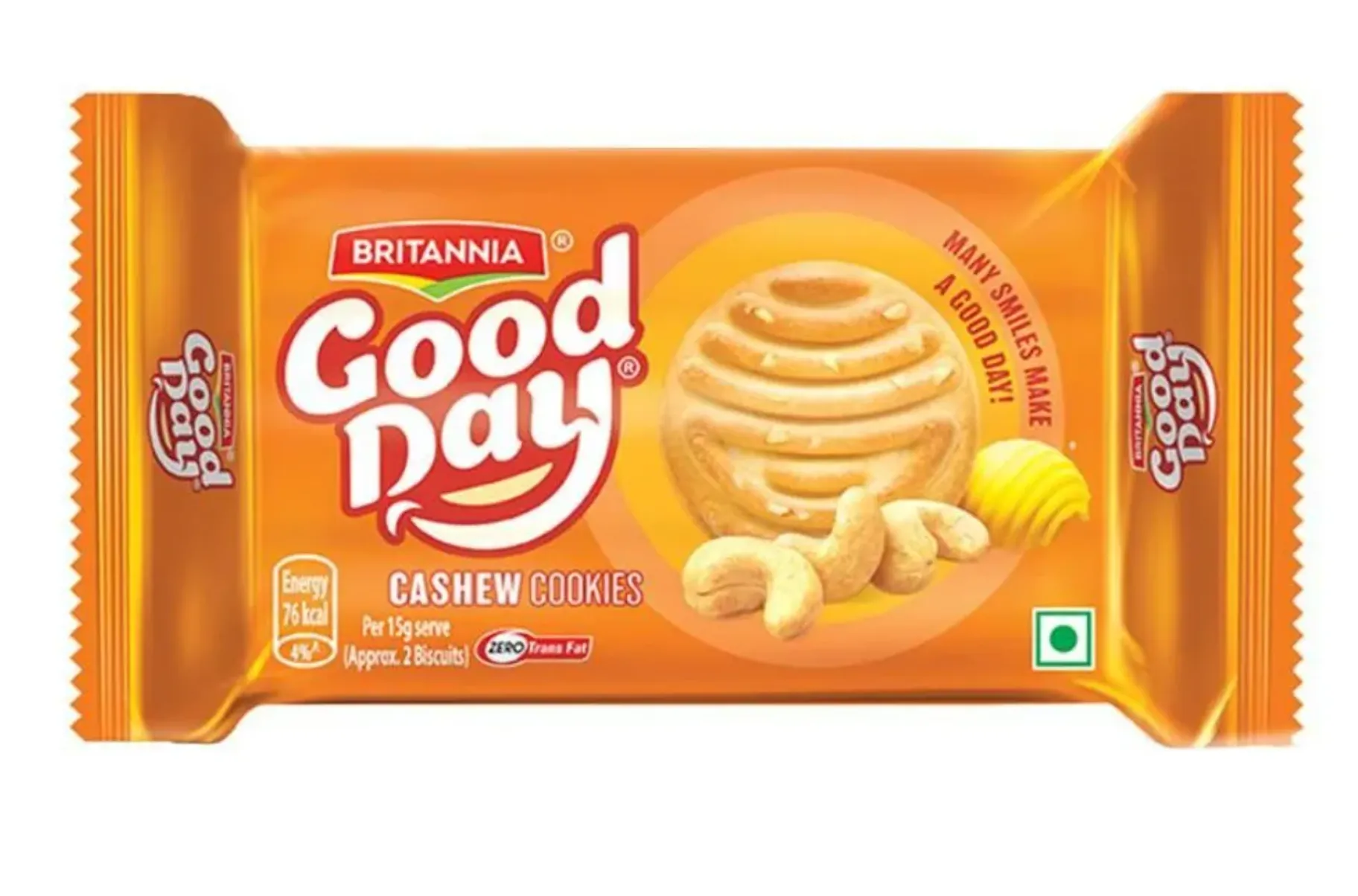
Good Day biscuits are India’s favorite chocolate-filled snack biscuits.
The combination of crispy exterior and chocolate filling makes them irresistible.
But if you eat them regularly, a question inevitably arises: How many calories are actually in these biscuits? Are they okay for my diet? How many can I eat?
These are practical questions I hear from patients constantly.
Many people eat Good Day biscuits without truly understanding the nutritional impact.
In my practice, I’ve seen Good Day consumption become habitual—people eating them mindlessly throughout the day without tracking total calories.
Today, I’m giving you the complete breakdown of Good Day biscuit nutrition so you can make informed choices about whether and how much to include in your diet.
What Are Good Day Biscuits? Quick Overview

Good Day biscuits are chocolate-filled wafer biscuits made by ITC Limited, one of India’s largest FMCG companies.
They’re known for their crispy texture, chocolate filling, and convenient individual packaging.
Most Indians have grown up with these biscuits as snacks or accompaniments to tea.
They’re not meant as a meal replacement but as a light snack or treat.
However, casual consumption often leads to eating multiple biscuits without realizing how many calories are being consumed.
How Many Calories in One Good Day Biscuit?
Here’s the specific number for the most popular Good Day variant (Almond):
One Good Day Almond biscuit (7g) contains approximately 37- 40 calories.
Let me break this down by different servings:
| Quantity | Calories (kcal) | What It Represents |
|---|---|---|
| 1 biscuit (7g) | 37-40 | Single snack |
| 2 biscuits (14g) | 74-80 | Small snack |
| 5 biscuits (35g) | 185-200 | Snack with tea |
| 1 full pack (6 biscuits / 42g) | 220-240 | Complete snack |
The Calorie Reality: One biscuit seems innocent at 40 calories. But here’s the trap: most people don’t eat just one.
A typical tea-time serving is 4-6 biscuits, which equals 160-240 calories. This is substantial, especially if eaten daily.
Let me put this in perspective: 6 Good Day biscuits (240 calories) is nearly the same as a full bowl of upma (224 calories).
The difference? Upma has 5.4g fiber and 5g protein. Good Day biscuits have 1.2g fiber and 3g protein.
Yet they deliver similar calories with far less nutritional value.
Complete Nutritional Breakdown: What’s in One Good Day Biscuit?

Understanding the nutritional composition matters more than calories alone:
| Nutrient | Per 1 Biscuit (7g) | Why It Matters |
|---|---|---|
| Calories | 37-40 kcal | Quick energy |
| Carbohydrates | 4.5g | Primary energy component |
| Sugar | 1.8g | Added sugar from chocolate and filling |
| Fat | 2g | Saturated fat from chocolate |
| Protein | 0.5g | Minimal protein |
| Fiber | 0.2g | Negligible |
| Sodium | 40mg | Minimal |
| Cholesterol | 5mg | From chocolate/ghee |
What This Composition Means:
Good Day biscuits are approximately 48% carbs, 5% protein, and 47% fat.
This is a sugar-heavy, fat-heavy snack with minimal fiber and protein. One biscuit provides a quick energy spike followed by a crash—not sustained energy.
The sugar content (1.8g per biscuit) is significant for a snack item.
Eating 6 biscuits means consuming 10.8g sugar—roughly 2-3 teaspoons of added sugar. For diabetics or people managing blood sugar, this is notable.
Why Good Day Calories Add Up So Quickly?
The insidious thing about Good Day biscuits is how easily calories accumulate:
The Typical Pattern:
- Morning tea: 3 biscuits = 120 calories + 5.4g sugar
- Afternoon snack: 2 biscuits = 80 calories + 3.6g sugar
- Evening tea: 4 biscuits = 160 calories + 7.2g sugar
- Daily total: 9 biscuits = 360 calories + 16.2g sugar
That 360 calories might not seem like much in isolation. But over a week, it’s 2,520 calories, or roughly 0.7 kg of potential weight gain.
Over a year, it’s approximately 36 kg weight gain.
Most people don’t consciously track biscuit calories, leading to passive weight gain.
This is what happens with snacks—they seem innocent individually, but become problematic in aggregate.
Comparing Good Day Biscuits to Other Snacks
Where do Good Day biscuits stand nutritionally?
| Snack | Portion | Calories | Protein | Fiber | Sugar |
| Good Day Biscuit | 1 biscuit | 40 | 0.5g | 0.2g | 1.8g |
| Almonds | 10 almonds (14g) | 80 | 3g | 1.7g | 0.5g |
| Banana | 1 medium | 105 | 1.3g | 2.7g | 14g |
| Apple | 1 medium | 95 | 0.5g | 4.4g | 19g |
| Greek Yogurt | 1 cup (170g) | 100 | 17g | 0g | 3.2g |
| Popcorn | 2 cups (16g) | 60 | 2g | 3.7g | 0.1g |
The Comparison Shows:
- Good Day biscuits are calorie-dense with minimal nutritional value
- Almonds provide more protein and fiber for double the calories
- Fruit, yogurt, and popcorn all offer superior nutrition
- Good Day biscuits are more about taste indulgence than nutrition
Health Impact of Regular Good Day Consumption

This is important to understand:
If eating 5-6 biscuits daily (typical for many Indians):
- 200 calories daily × 365 days = 73,000 extra calories yearly
- This could create 10.5 kg weight gain annually (if not compensated by activity)
- Added sugar: 30-35g daily (exceeds WHO recommendations of 25g for women, 35g for men)
Real-world impact: Many of my patients who struggle with weight gain are shocked to discover casual biscuit consumption is the culprit. A “small snack” of Good Day biscuits eaten mindlessly adds up to significant weight and blood sugar impact.
For diabetics, the sugar content is particularly concerning. Good Day biscuits cause rapid spikes in blood sugar.
Different Good Day Variants: Calorie Comparison
ITC makes multiple Good Day variants:
| Variant | Calories (1 biscuit) | Sugar per Biscuit | Protein |
| Almond | 37-40 | 1.8g | 0.5g |
| Cashew** | 42-45 | 2.1g | 0.6g |
| Hazelnut | 40-43 | 2g | 0.5g |
| Butterscotch | 38-41 | 1.9g | 0.5g |
The Pattern: All Good Day variants are nutritionally similar—roughly 37-45 calories per biscuit with 1.8-2.1g sugar.
Choice of variant makes minimal nutritional difference. Pick based on taste preference, not nutrition.
Are Good Day Biscuits Okay to Eat? The Honest Assessment
Good Day biscuits are fine as an occasional treat, not as a regular snack. Here’s my practical recommendation:
Good Day Biscuits Are Okay When:
- Eaten consciously (not mindlessly with tea)
- Limited to 1-2 biscuits occasionally (not daily)
- Part of a balanced diet with otherwise healthy eating
- Not the primary snack option
- Followed by water or unsweetened tea (not additional sugary drinks)
Good Day Biscuits Should Be Limited When:
- Managing weight (contributes to weight gain through calories)
- Diabetic (spike blood sugar)
- Managing blood pressure (sodium in biscuits adds up)
- Trying to reduce sugar intake
- Eating more than 3-4 biscuits per sitting
The core issue: Good Day biscuits are delicious but nutritionally empty.
They provide taste satisfaction with minimal health benefit. For the same 40 calories, you could eat part of an apple (8 calories) plus almonds (32 calories)—receiving significantly more nutrients.
Better Snack Alternatives (Same Calories, More Nutrition)
If you typically eat Good Day biscuits with tea, consider these alternatives:
| Alternative | Calories | Protein | Fiber | Why It’s Better |
| 2 Almonds | 11 | 0.4g | 0.2g | More protein, sustainable energy |
| 1 Banana | 105 | 1.3g | 2.7g | Fiber, minerals, satiety |
| Greek Yogurt | 100 | 17g | 0g | Protein-packed, satisfying |
| Popcorn (3 cups) | 90 | 3g | 3.5g | Fiber, whole grain |
| Roasted Chickpeas | 60 | 3g | 1.5g | Protein, minerals |
| Mixed Nuts | 170 | 5g | 3g | Sustained energy, minerals |
Each alternative delivers either more protein, more fiber, or more micronutrients—genuine nutritional value rather than empty calories.
Practical Tips for Managing Good Day Biscuit Consumption
If you love Good Day biscuits, these strategies help manage intake:
- Keep Out of Sight: Don’t stock them visibly in your kitchen. Out of sight helps prevent mindless consumption.
- Portion Control: Buy single-serving packs or pre-portion into small containers. Knowing the amount you’re eating matters.
- Delayed Gratification: When you crave Good Day biscuits, wait 20 minutes. Often the craving passes.
- Healthy Alternative First: Before eating biscuits, eat a healthy snack (fruit, nuts, yogurt). Often, you won’t want biscuits afterward.
- Weekly Limit: Allow yourself 1-2 servings weekly (1 serving = 2-3 biscuits) as a treat, not a daily habit.
- Substitution Day: Some days when craving biscuits, eat almonds or popcorn instead. Variety reduces reliance on any single snack.
FAQs
How many Good Day biscuits can I eat daily if dieting?
For weight loss, limit to 1-2 biscuits daily maximum (40-80 calories). Better yet, treat Good Day biscuits as weekly treats, not daily snacks. A good alternative is fruit or nuts providing similar calories with superior nutrition.
Are Good Day biscuits good for diabetics?
No. The sugar content (1.8g per biscuit, 10.8g for 6 biscuits) causes blood sugar spikes. Diabetics should avoid Good Day biscuits. If they must have biscuits, choose sugar-free alternatives or severely limit quantity to 1-2 biscuits with protein.
Which Good Day variant is healthiest?
All variants (Almond, Cashew, Hazelnut, Butterscotch) are nutritionally similar—roughly 37-45 calories with 1.8-2.1g sugar. Choose based on taste preference. Nutritionally, no variant is significantly better than others.
How many Good Day biscuits equal 100 calories?
Approximately 2.5-3 Good Day biscuits equal 100 calories. This is crucial for calorie tracking if you eat them regularly.
Can Good Day biscuits cause weight gain?
Yes, if eaten mindlessly. 5-6 biscuits daily (200 calories) × 365 days = 73,000 extra calories yearly, potentially creating 10+ kg annual weight gain. This is how casual snacking leads to weight gain.
What’s the nutritional value of Good Day biscuits?
Minimal. They’re primarily refined carbohydrates and sugar with a small amount of protein. No significant vitamins, minerals, or fiber. They’re taste satisfaction, not nutritional value.
Also Read:
Final Thoughts: Good Day Biscuits in Perspective
Good Day biscuits are delicious—that’s not debatable. They’re engineered to be tasty, convenient, and crave-worthy. But nutritionally, they’re empty calories.
The problem isn’t Good Day biscuits themselves—it’s the casual, mindless consumption that characterizes most eating patterns.
When Good Day biscuits become the default snack eaten daily with tea, they become a significant source of empty calories, added sugar, and weight gain.
My recommendation: Enjoy Good Day biscuits as an occasional treat—perhaps 1-2 times weekly.
Don’t make them your daily snack. When you do eat them, do so consciously, knowing you’re choosing taste over nutrition.
For your everyday snacking, invest in healthier options: fruits, nuts, yogurt, popcorn. These provide similar satisfaction with genuine nutritional value.