
This post may contain affiliate links. As an Amazon Associate, I earn from qualifying purchases. Please read my disclosure.
If you want an authentic bowl of Mediterranean goodness, then this Moroccan stew with chickpeas and quinoa couscous is all you need. I layer sweet dried apricots, tender sweet potatoes, and protein-packed chickpeas into a deeply spiced broth that simmers flavor into every bite. In just 1 hour, I have a comforting, hearty, and nutritious vegan stew that sparks my appetite.
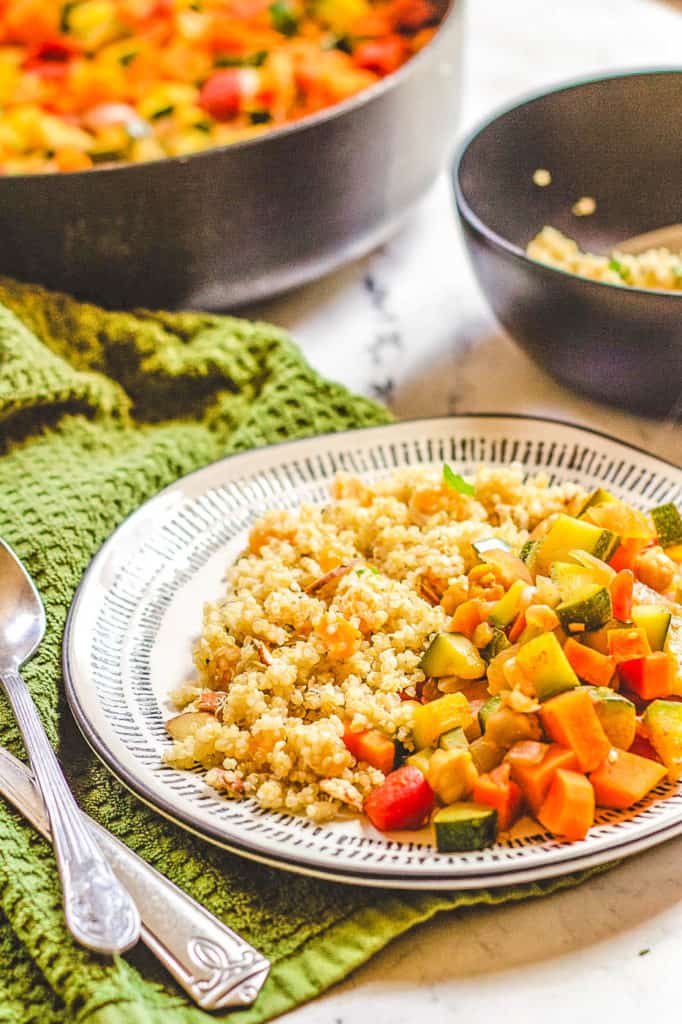
Moroccan cuisine balances bold spices, gentle sweetness, and wholesome ingredients. A traditional tagine slow cooks vegetables and legumes in a clay vessel of the same name, until they reach a buttery tenderness full of flavor. But I do all of this in my good old stock pot and achieve the same results. My Italian chickpea soup is another comforting Mediterranean recipe that I recommend trying if you love soups and stews.
My husband and I are avid travelers, and one of my favorite things to do is experience authentic cuisines from around the world. Inspiration for a new recipe is my favorite kind of souvenir. This stew was born after one of our international trips, and I came home determined to put a vegan spin on it. After seeing the success I had with my vegetarian quinoa paella, I knew I could go one step further and make it gluten-free too! I was surprised that my kids asked for seconds the first time I made it, but then I noticed they were looking for all the apricots. Ha!
As a health coach, I am always looking for recipes that pack serious nutrition in every bite, without being boring and repetitive. I am sure many vegans look forward to a warm meal that is not curry. And this Moroccan stew does all of this and more, which is why I love it. Chickpeas provide a substantial amount of protein, fiber, iron, and folate, while supporting sustained energy and digestive health. The sweet potatoes add a good dose of beta carotene and vitamin A, leaving the quinoa to round out the meal with more protein and a light, nutty texture that is the perfect contrast to the stew.
What makes this Moroccan stew with chickpeas and quinoa couscous work so well is the layered approach that I use when it comes to building flavor and texture. I start by soaking the apricots in hot water, allowing them to become plump and juicy. Sauteing the aromatics until they caramelize creates a savory base for every spice I add in. I simmer the stew covered over medium heat to get that “tagine” effect, giving the spices time to infuse into my veggies and chickpeas. Cooking the quinoa separately keeps it light and fluffy, making it an ideal base for soaking up the saucy stew.
I made this dinner for some friends one night, and learned that one of our guests had actually spent a year living in Morocco. While we were eating, he told me about the traditional communal way of eating from a tagine. The tagine is placed in the center of the tables, and instead of spoons, everyone uses a piece of crusty bread to scoop out stew with their right hand. My friend is left-handed and had a few messes and mishaps the first time he did this. Ha! If you make this Moroccan stew, try serving and dishing it up the traditional way.
🥘 Ingredients
I use a combination of pantry staples and fresh vegetables to create the authentic flavors for this Moroccan stew with chickpeas and quinoa couscous. This is what I use:
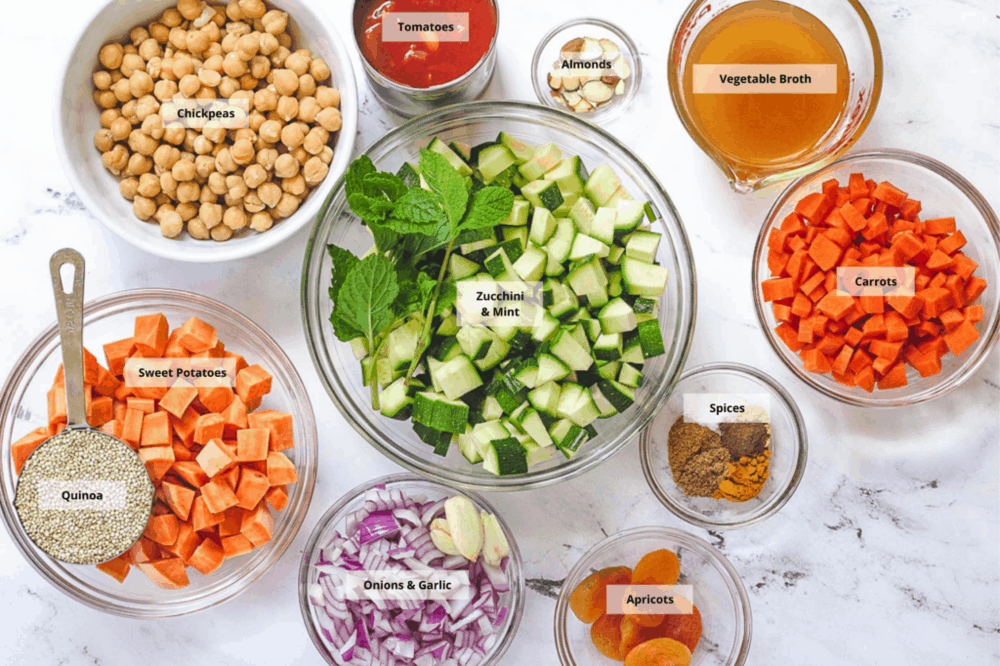
Chickpeas: I use canned chickpeas for convenience. They provide plant-based protein and hold their shape well during cooking.
Quinoa: Instead of traditional couscous, I use quinoa for a gluten-free protein boost.
Sweet potatoes: I cube my sweet potatoes into bite-sized pieces so they cook at the same rate, becoming creamy and tender in the broth.
Zucchini and carrots: These vegetables add color, freshness, and a slight bite compared to the tenderness of the other ingredients.
Canned diced tomatoes: I use a can of diced tomatoes for a bit of acidity and liquid. This forms the base of the stew broth.
Vegetable broth: This adds to the tomato base, building a deeply savory flavor.
Aromatics: I saute onions and garlic until they are caramelized and fragrant, adding another dimension to the base flavors.
Spice blends: For this recipe, I use a combination of Ras El Hanout, shawarma spice blend, and curry powder. Together, these create a warm, layered classic Moroccan flavor.
Dried apricots: I soak these in hot water for a plump, sweet juiciness.
Fresh mint: I stir chopped fresh mint into the quinoa just before serving, for a vibrant herbaceous freshness.
Sliced almonds: I scatter sliced almonds over the top of my quinoa for a nutty crunch.
Olive oil: This is used to saute my aromatics, before they are added into the stew.
🔪 How To Make
The key to perfecting this Moroccan stew with chickpeas and quinoa couscous is to build it in careful layers. This is exactly how I make it:
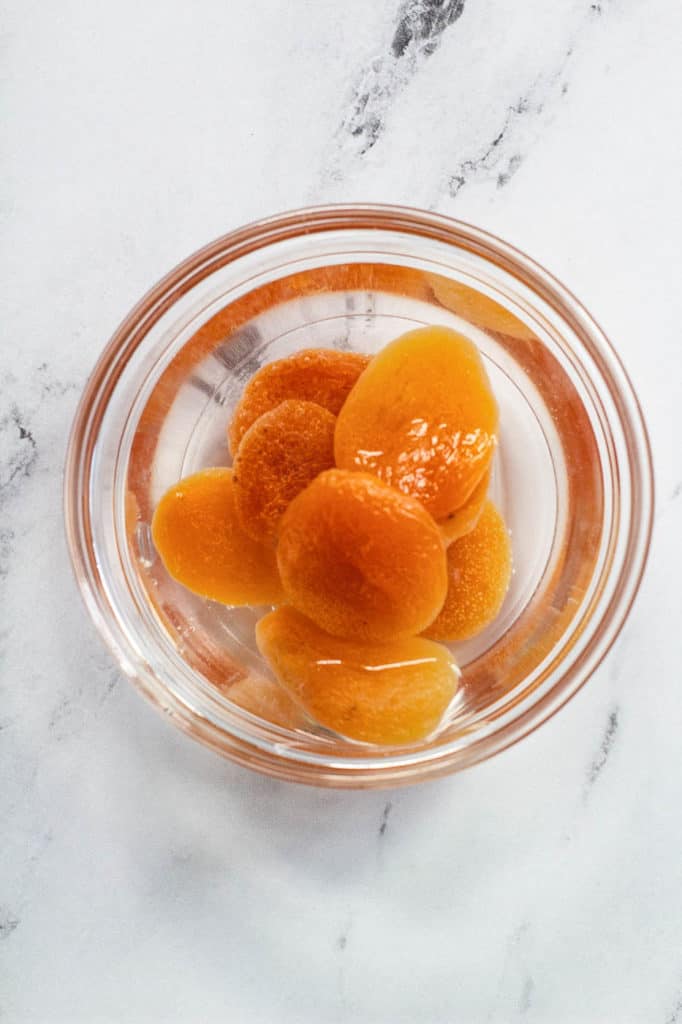
Soak apricots: First, I soak my dried apricots in a bowl of hot water and set them aside.
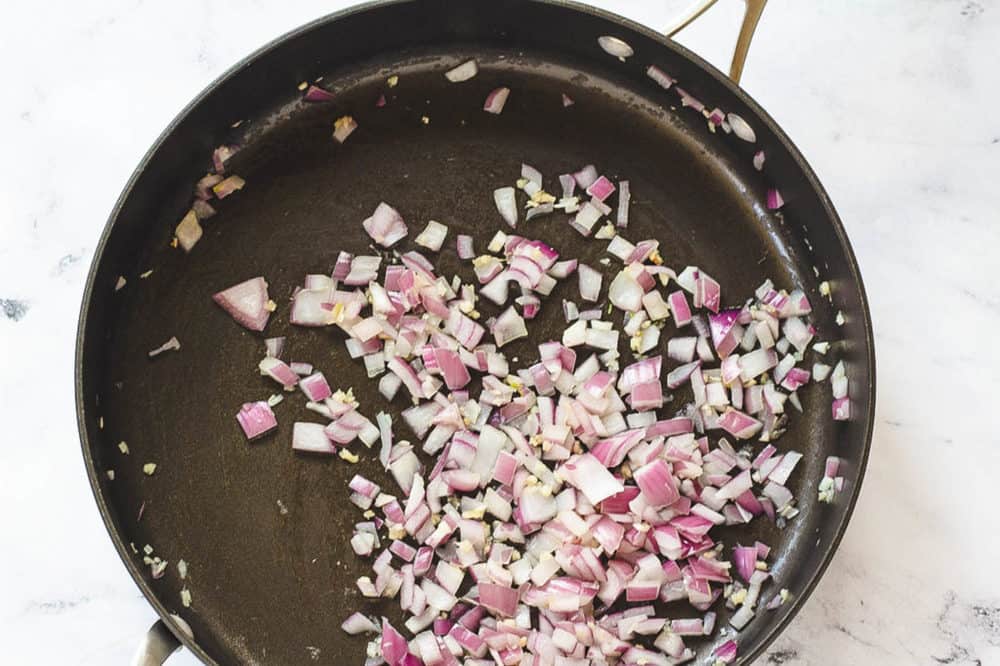
Chop vegetables, saute aromatics: Next, I chop all of my vegetables. Then I saute the onions and garlic in 2 teaspoons of olive oil, over a medium heat until caramelized.
Add remaining ingredients: I add the sweet potatoes, zucchini, carrots, tomatoes, chickpeas, spices, and 4 oz of veggie broth to the pot and stir to combine. Then I allow it to simmer on medium heat, covered, for 10 minutes until the potatoes and chickpeas are tender.
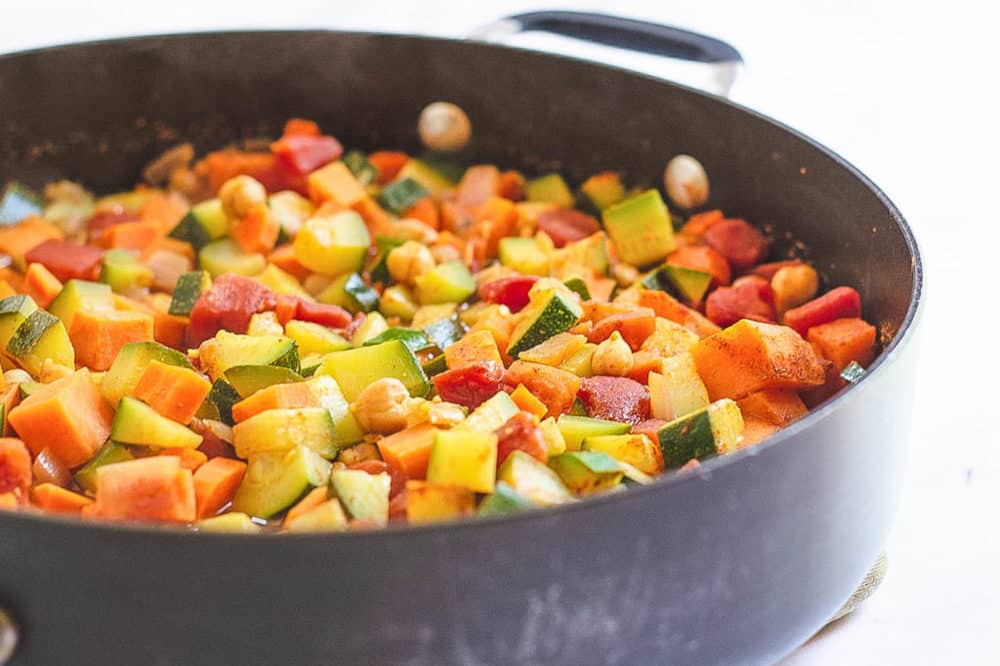
Make quinoa: While the stew simmers, I combine the quinoa and water in a separate pot and bring to a boil. Then I cover and simmer for 10 minutes until the quinoa is cooked. Once cooked, I fluff it with a fork
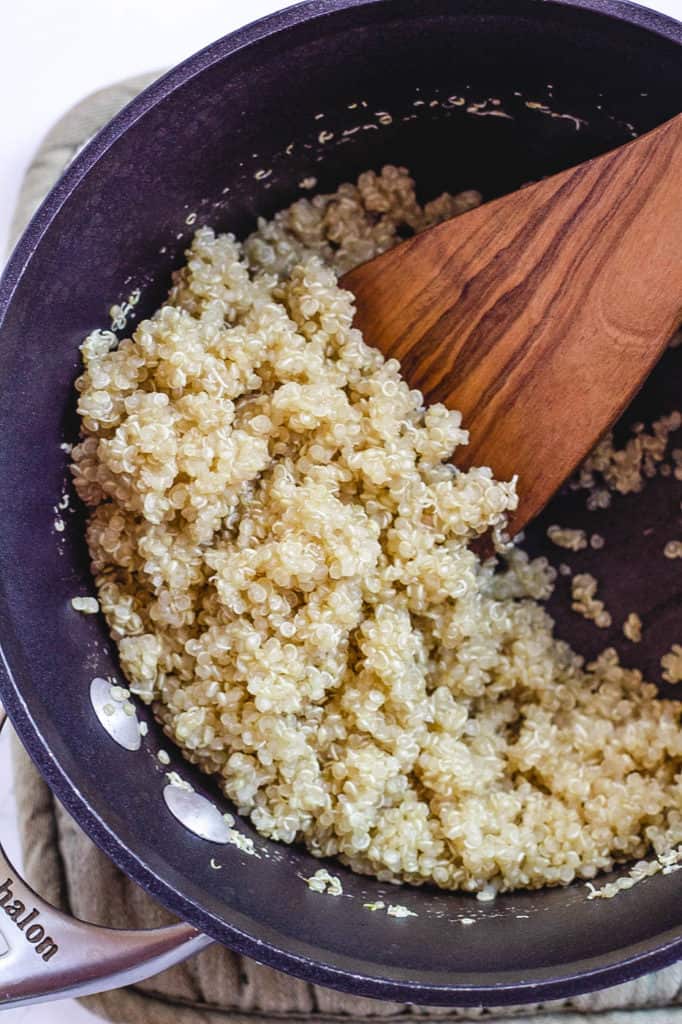
Add mint and apricots to quinoa: I take the apricots out of the water and chop them up. Then I chop up my mint and stir it into the quinoa along with the apricots and almonds.
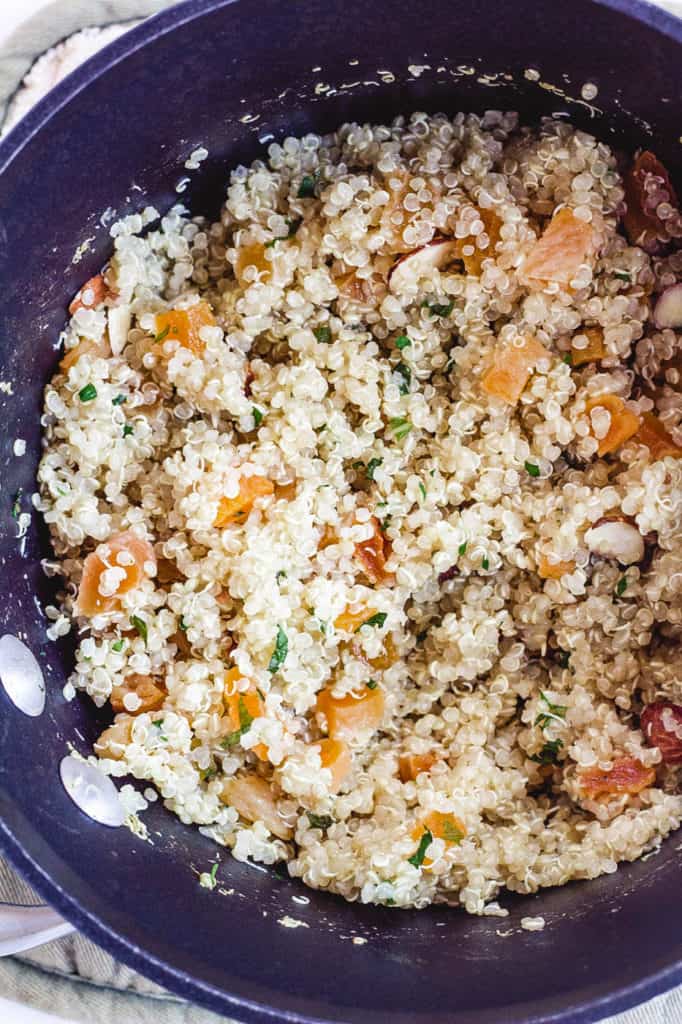
Cook tagine uncovered: Next, I uncover the stew and let it cook for a few more minutes, allowing excess liquid to reduce. If the stew has thickened too much, I add a splash of vegetable broth to reach my preferred consistency.
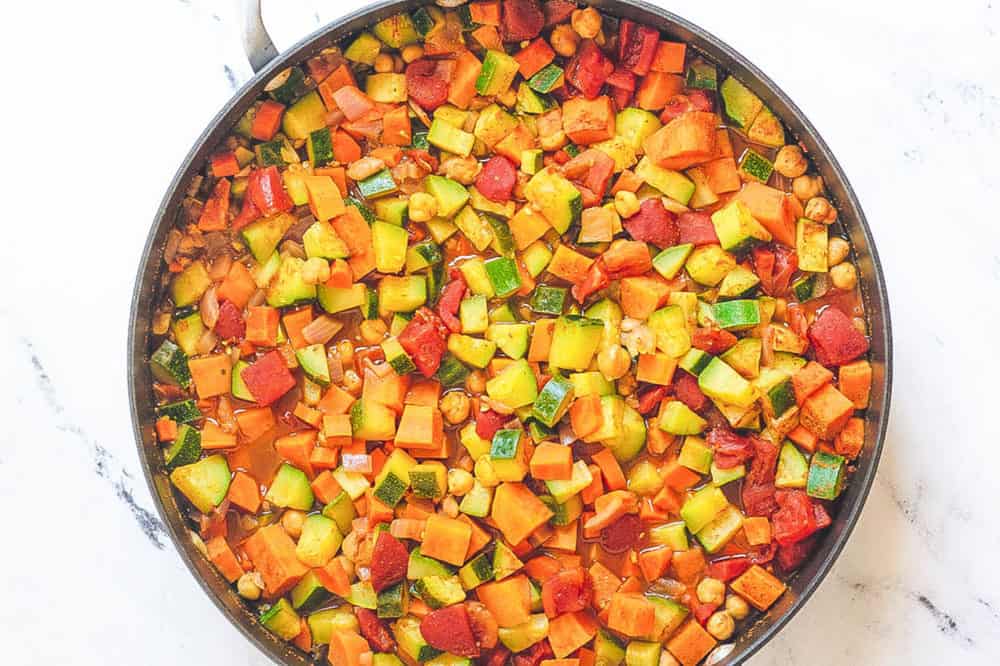
Serve: I spoon the warm stew over the fluffy quinoa and serve immediately.
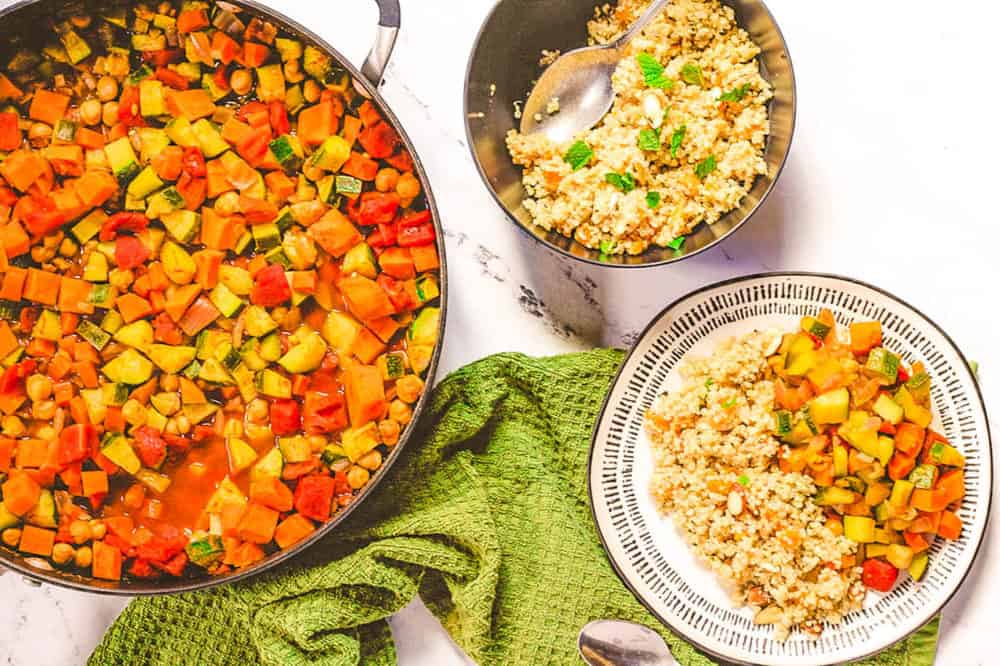
My #1 Secret Tip for this Moroccan stew with chickpeas and quinoa couscous recipe is never skip soaking the apricots. I make sure I soak them before starting anything else. This gives them ample time to plump up and absorb the water. Dried apricots that go straight into the quinoa stay tough and chewy, and clash with the other textures.
Other Tips To Keep In Mind:
- Low and slow simmer: I keep the heat at a medium-low once the stew is covered. Rushing the simmer with a high heat may cause the liquid to evaporate too quickly, before the vegetables have had a chance to soften fully.
- Prep ahead: When I am very organized, I like prepping my vegetables the night before and storing them in an airtight container in the fridge, keeping the aromatics separate. This saves time when I make the stew.
- Spice substitution: If I am unable to locate these specific spice blends, I build my own mix by using 1 teaspoon paprika, 1 teaspoon cumin, 1/2 teaspoon coriander, 1/2 teaspoon turmeric, 1/4 teaspoon ginger, and 1/4 teaspoon cinnamon. These spices do a good job of replicating the warm, complex flavor profile.
- Keep cuts uniform: I try to cut my zucchini, sweet potatoes, and carrots into uniform-sized pieces, which allows everything to cook at the same rate.
- Add a bright finish: Just before serving, I add a squeeze of fresh lemon juice over the stew. The acidity reawakens all the spices and gives the dish a vibrant finish.
📖 Variations
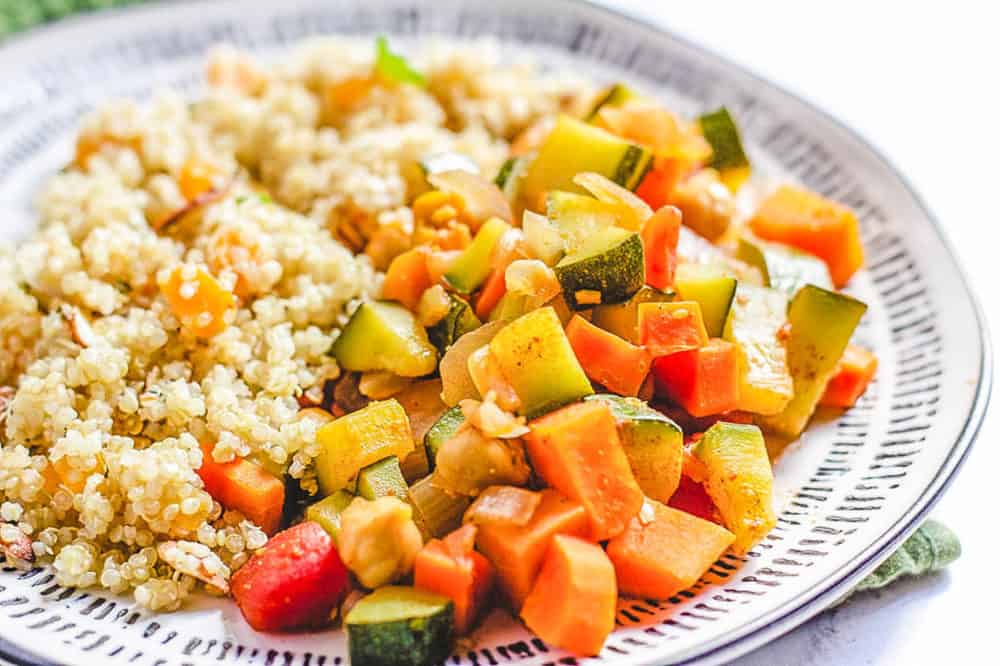
This Moroccan stew with chickpeas and quinoa couscous is incredibly adaptable, and I have made it in many different ways depending on what I have on hand. These are a few I recommend:
Butternut squash swap: I replace the sweet potato with cubed butternut squash. This has a slightly creamier texture and buttery flavor, which holds its shape nicely. My kids love the added sweetness of this version.
Lentil protein boost: I stir in 1/2 cup of dried red lentils along with the chickpeas and an extra 1/2 cup of vegetable broth to compensate. The lentils dissolve right into the broth as they cook and make the stew even heartier. This is great as a winter meal.
Brown rice base: The days when quinoa is absent from my pantry, I serve this stew over brown rice instead. I still add the apricots, mint, and almonds for that same fresh finish. Brown rice adds a lovely nutty flavor and slight bite, which I love.
🍽 Serving Suggestions
When I serve this stew for a casual family dinner, I spoon it generously over the couscous and make sure everyone has a warm piece of freshly baked vegan flatbread. If you would like to make this a part of a bigger menu, I recommend starting with some baked vegan falafel and ending the meal with a Mediterranean dessert like my healthy vegan baklava.
Whenever I make this stew at home, I prefer not to serve it with too many items that steal focus. My good friend from the gym, however, loves her meals with a side of something fresh and bright. So the last time she came for dinner, I texted her that I was making Moroccan tagine, along with Greek vegan spanakopita and a side of spinach and arugula salad. As we were done eating, she commented that the meal was great, but that she could not taste the tangerine at all. Apparently, my phone autocorrected to tangerine instead of tagine. Ha!
🧊 Storing And ♨️ Reheating
Refrigeration: I allow the stew to cool completely before transferring it to an airtight container, which keeps in the refrigerator for 4-5 days.
Freezing: I portion the cooled stew into freezer-safe containers and label them with the date. This keeps for up to 2 months. Make sure to freeze the quinoa separately so the grains do not become waterlogged.
Reheating: If frozen, I thaw overnight in the refrigerator before reheating. I like warming the stew in a pot on the stove top over a medium-low heat, stirring frequently. If the stew has thickened too much, I loosen it with a splash of vegetable broth.
❓Recipe FAQs
Ras El Hanout translates to “head of the shop,” which refers to the idea that spice merchants would offer the very finest spices in this single blend. Traditional versions include spices such as cumin, cinnamon, ginger, coriander, rose petals, and saffron. To make your own version, use the recipe under expert tips, and add 1/8 teaspoon of dried culinary-grade finely crushed rose petals and 5 -6 crumbled threads of saffron. A little goes a very long way with these additions.
This is almost always caused by saponins, which are the natural coating on the seeds used to deter insects and birds. Most store-bought quinoa is pre-rinsed, but I like giving mine an extra rinse. If the rinsing does not work next time, soak the quinoa in cold water with 1 teaspoon of salt for 30 minutes. And for an extra nutty flavor, you could toast the rinsed dried seeds in a dry pan over medium heat for 2-3 minutes before boiling.
Yes, I have made it both ways. But since there is no meat in this dish, I find a slow cooker to be unnecessary. For an Instant Pot, I use the saute function to fry the onions and garlic directly in the pot, then add all the ingredients with the broth reduced by 1/4 cup, seal the lid, and pressure cook on high for 12 minutes, followed by a natural release of 10 minutes. Be sure to check out my recipe for pressure cooker quinoa, too.

Love this plant based Mediterranean recipe? Please leave a 5-star rating 🌟 in the recipe below and/or a review in the comment section further down the page!
You can also FOLLOW ME on FACEBOOK, INSTAGRAM, and PINTEREST to see more delicious, healthy, family-friendly food, and if you have any questions, I’m here to help!
Moroccan Stew with Chickpeas and Quinoa Couscous
If you want an authentic bowl of Mediterranean goodness, then this Moroccan stew with chickpeas and quinoa couscous is all you need. I layer sweet dried apricots, tender sweet potatoes, and protein-packed chickpeas into a deeply spiced broth that simmers flavor into every bite. In just 1 hour, I have a comforting, hearty, and nutritious vegan stew that sparks my appetite.
Servings: 6 servings
Calories: 238.8kcal
-
Soak the apricots in hot water and set aside. They will absorb the water and reconstitute while you are cooking the other ingredients.
-
Chop all of the veggies: onions, sweet potatoes, garlic, zucchini, etc.
-
Saute the onions and garlic in 2 tsp olive oil over medium heat. Let the onions cook until they have caramelized slightly. Add the rest of the ingredients: potatoes, zucchini, carrots (if using), tomatoes, chickpeas, and all of the spices. Add 4 oz veggie broth, stir to combine, and let all of the ingredients simmer on medium heat, covered, for at least 10 minutes until the potatoes and chickpeas are tender.
-
While the tagine is cooking, combine the quinoa and water in a pot, bring to a boil. Cover and simmer for 10 minutes until the quinoa is cooked. Fluff with a fork.
-
Take the apricots out of the water and chop them. Chop the mint as well.
-
Uncover the tagine and finish cooking through. Let some of the excess water boil off (if there is any). If it’s gotten dry, add a bit more vegetable broth until it’s the consistency you want. When it’s done, it will look like this:
-
Stir the apricots, mint and almonds into the quinoa, and serve.
- My #1 Secret Tip for this Moroccan stew with chickpeas and quinoa couscous recipe is never skip soaking the apricots. I make sure I soak them before starting anything else. This gives them ample time to plump up and absorb the water. Dried apricots that go straight into the quinoa stay tough and chewy, and clash with the other textures.
- Low and slow simmer: I keep the heat at a medium-low once the stew is covered. Rushing the simmer with a high heat may cause the liquid to evaporate too quickly, before the vegetables have had a chance to soften fully.
- Prep ahead: When I am very organized, I like prepping my vegetables the night before and storing them in an airtight container in the fridge, keeping the aromatics separate. This saves time when I make the stew.
- Spice substitution: If I am unable to locate these specific spice blends, I build my own mix by using 1 teaspoon paprika, 1 teaspoon cumin, 1/2 teaspoon coriander, 1/2 teaspoon turmeric, 1/4 teaspoon ginger, and 1/4 teaspoon cinnamon. These spices do a good job of replicating the warm, complex flavor profile.
- Keep cuts uniform: I try to cut my zucchini, sweet potatoes, and carrots into uniform-sized pieces, which allows everything to cook at the same rate.
- Add a bright finish: Just before serving, I add a squeeze of fresh lemon juice over the stew. The acidity reawakens all the spices and gives the dish a vibrant finish.
Calories: 238.8kcal | Carbohydrates: 47.7g | Protein: 8.8g | Fat: 2.3g | Sodium: 387.9mg | Fiber: 8.3g | Sugar: 8.7g