
When you ask families in Tanga what salt means to them, the answer is often simple: “It’s something we cook with every day.” Yet few realise that the quality of that salt; its purity, safety, and level of iodization; directly affects the health of households, particularly children and pregnant women.
For years, salt producers in Tongoni and Masiwani worked with unlined pans, contaminated crystals, and unpredictable yields. Salt was often sold locally without consistent iodization, leaving families vulnerable to iodine deficiency, which contributes to goiter, impaired development, and weakened immunity.
Today, a different story is unfolding. Improvements in infrastructure, training, and coordination, supported by the Global Alliance for Improved Nutrition (GAIN), are transforming production from low-quality, non-iodized salt to safer, cleaner, and more reliable salt that strengthens household nutrition.
Why salt quality matters for nutrition
Salt is the most universal fortified food in Tanzania. When iodized properly, every family; regardless of income; receives a critical micronutrient essential for cognitive development and metabolic health. However, iodization works effectively only if the salt is clean, dry, and manufactured under controlled conditions
Before the intervention, producers in Tujikomboe, Tumeshtuka, and Mwevupi struggled with:
● Unlined pans that mix soil and debris into the crystals
● Irregular water-flow systems that diluted brine
● Heavy contamination making iodization inconsistent
● Low yields that discouraged investment
● Limited understanding of micronutrient standards
The result was a value chain producing large volumes of salt, but without the quality needed for safe iodization or the confidence of formal buyers.
GAIN’s mission was nutrition-first: improving the quality of raw salt to ensure iodization is reliable, efficient, and scalable. This was not only an economic intervention; it was a public health intervention at its core.
From production challenges to targeted improvements
Following an initial assessment of the salt sector in Tanga, GAIN worked with regional and district authorities to identify producer groups suitable for piloting a quality- and market-led intervention. Selection criteria focused on groups already engaged in salt production, proximity to TAN SALT as a potential off-taker, basic organizational structure, and willingness to adopt improved production practices. Tujikomboe, Tumeshtuka, and Mwevupi were selected to represent different starting points in capacity and production maturity.
Initial pilot activities focused on understanding baseline production constraints and introducing foundational improvements. These included site assessments, technical discussions with producers on hygiene and salt quality, rehabilitation of pans and water-flow systems, and installation of dam liners in priority ponds.
Early emphasis was placed on generating quick improvements in salt cleanliness and consistency while building producer confidence and readiness to supply a formal processor.
How infrastructure changes strengthened nutrition quality
What changed most for farmers were interventions often overlooked: dam liners, pumps, and improved water-flow systems. These technical improvements have had profound nutrition impacts.
1. Dam Liners: The Turning Point
Lining pans with durable dam liners prevented salt from mixing with soil and debris. This resulted in significantly cleaner crystals, faster drying times, and more predictable yields. In some cases, farmers reported up to a 90% reduction in impurities.
Farmers now describe their salt as “safi”, “ya uhakika”, “inayokubalika kiwandani”.
“Before, we produced salt, but it was full of impurities. Taking it to the factory was always uncertain because we could not guarantee its quality. Today, our salt is clean, and we deliver it with confidence.”
“Awali tulikuwa tunapata chumvi, lakini ilikuwa na uchafu mwingi. Kufikisha kiwandani ilikuwa changamoto, kwa sababu hatukuwa na uhakika wa ubora. Sasa chumvi yetu ni safi, na tunaipeleka kiwandani kwa kujiamini.”
— Tumeshtuka Salt Group
2. Improved water-flow and pumping systems
New pumps and improved inlets/outlets allow producers to control brine circulation, reducing stagnant water and contamination while maintaining proper salinity.
Nutrition impact:
● Cleaner, drier salt for iodization
● Less iodine loss during processing
● Consistent fortification across batches
3. Improved Pans and Condensers
Upgraded pans increase surface area and stabilize production cycles. Lined pans now allow 2–3 harvests per month, giving iodization facilities a reliable supply.
Voices from the field: Why quality matters
Tumeshtuka Group – Ally Mikidadi Mwarai, Chairperson
“At first, we produced a lot of salt, but it was not clean. Now we deliver salt to the factory without worry; they know it’s of good quality.”
“Hapo mwanzo tulikuwa tunapata chumvi nyingi lakini sio safi. Sasa tunaleta chumvi kiwandani bila wasiwasi – wanajua ni ya ubora.”
Tujikomboe Group – Ally Salim
“Before GAIN’s support, we had never produced any salt. We were struggling just to develop the site. After their support, we acquired equipment like dam liners and machines. This has helped us start harvesting and given us hope for greater success.
“Kabla ya udhamini wa GAIN, hatukuwahi kuzalisha. Tulikuwa tunajitahidi kujenga mgodi, lakini baada ya ujio wao tulipata vifaa kama kapeti (dam liner) na mashine. Hii imetusaidia kupata mazao na matumaini ya mafanikio zaidi.”
Mwevupi Group – Mwanahawa Sakaza Shali, Treasurer
“At first, we had challenges with broken equipment, but with support from GAIN, we received two additional machines. Our goal now is to improve production, reinvest part of the income into the site, and share the benefits so that every member can see the impact.”
“Mwanzoni tulikuwa na changamoto ya mashine kuharibika, lakini kwa msaada wa GAIN tumepata mashine nyingine mbili. Matarajio yetu ni kuboresha hali ya uzalishaji, kuwekeza kipato kwenye mgodi, na kugawana faida ili kila mwanakikundi aweze kuona manufaa.”
From a public health perspective, the implications are significant.
“Lack of iodized salt affects children even before birth, leading to stunted growth. After birth, both physical and brain development are compromised. This is a hidden threat for many households.”
“Ukosefu wa chumvi yenye madini (iodized) unaathiri watoto hata kabla ya kuzaliwa, na kusababisha ukuaji duni. Baada ya kuzaliwa, ukuaji wa mwili na ubongo unakumbwa na changamoto. Hii ni hatari iliyofichika kwa kaya nyingi.” Regional Nutrition Officer – Ms. Sakina Magadi Mustafa
From better salt to a stronger system: TAN SALT
Improvements at production level have strengthened the entire value chain.
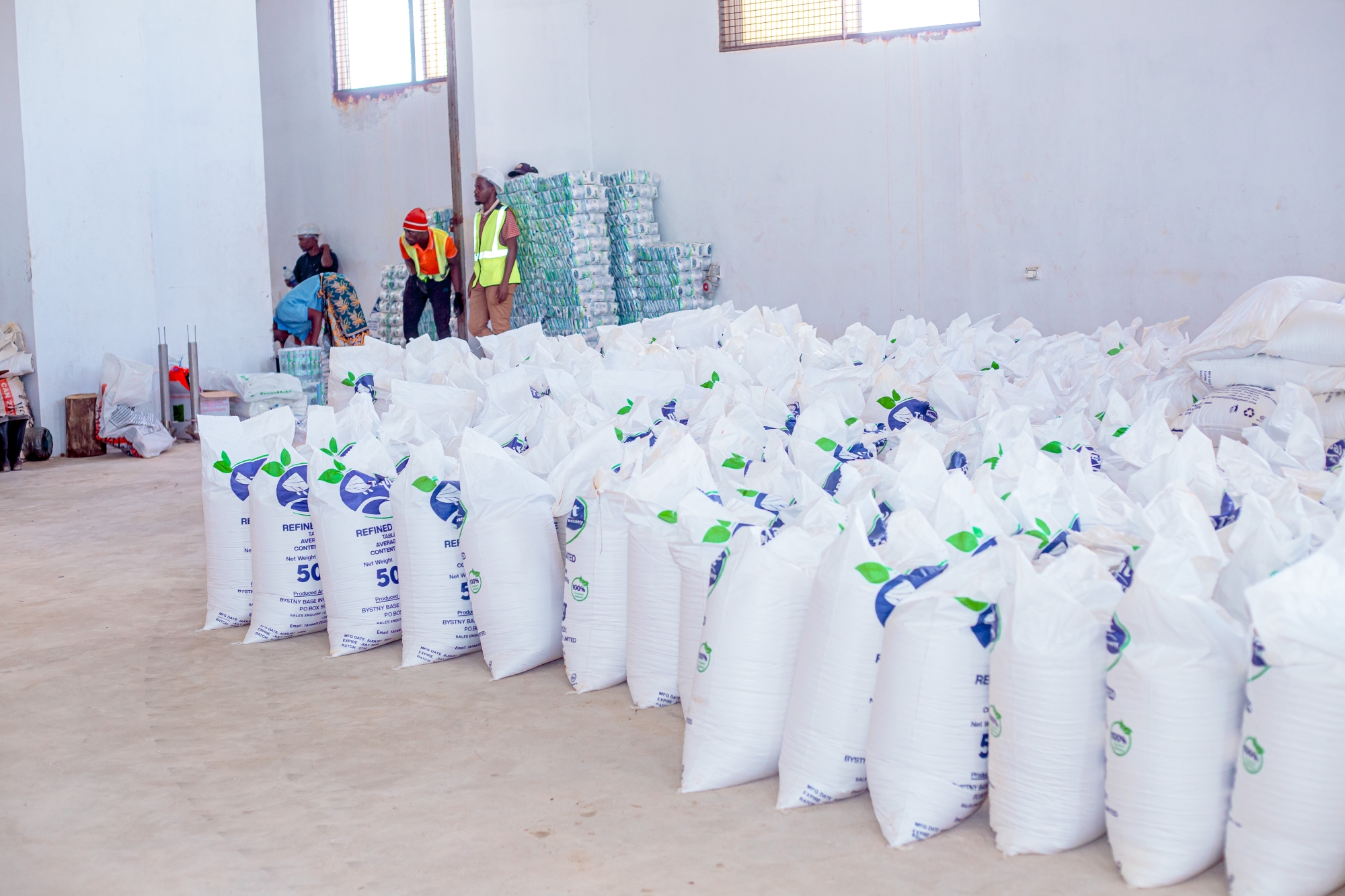
At TAN SALT, the engagement with producer groups was designed as a test of an off-taker model, assessing whether small-scale producers could reliably meet quality and volume requirements for formal processing. The factory employs 24 workers, 16 of whom are women, and processes about 10 tons per day for Tanga. Its installed capacity of 90–120 tons per day allows distribution to Zanzibar, DRC, Malawi, and Rwanda.
“We look for clean, consistent raw salt. What we are now receiving from the groups meets those expectations. Both quality and quantity have improved, and that gives us confidence to continue working with them.”
“Tunachohitaji ni chumvi iliyo safi na yenye ubora. Chumvi tunayopokea sasa kutoka kwa vikundi inakidhi vigezo hivyo. Ubora kiasi umeimarika, na hilo linatupa imani ya kuendelea kushirikiana nao.” Operations Manager – Mr. Chacha
Cleaner raw salt enables more consistent iodization, improves compliance with national standards, and ensures that salt entering the market is safe and effective.
System change through cooperation
What is emerging in Tanga is not just an improvement in production, but a more coordinated system for delivering better nutrition.
As the quality of raw salt improves, iodization becomes more effective and consistent. This strengthens compliance with iodine standards and ensures that the salt reaching households is safer and more reliable. At the same time, higher yields are increasing producer incomes, allowing groups to reinvest in their sites and maintain quality improvements over time.
Stronger producer groups, combined with more predictable market linkages, are reinforcing these gains, creating a system that is more stable, more efficient, and better able to deliver fortified foods at scale.
This model can be scaled nationally as it shows how relatively small, practical changes at production level can translate into broader nutrition outcomes when they are connected across the value chain.
What this means for households and communities
The impact extends beyond the farms:
● TAN SALT now sources from small groups due to improved quality
● Gender-inclusive employment at the factory (16 of 24 workers are women)
● Expanded market reach: Zanzibar, DRC, Malawi, Rwanda
● Safer iodized salt reaching households consistently
● Producer groups are more confident in meeting quality standards
Sustaining progress and scaling impact
While early results are promising, sustaining these gains will require continued effort.
Infrastructure such as dam liners and pumps needs regular maintenance. Producer groups will need to reinvest part of their income to maintain quality standards. External risks, including weather variability and market fluctuations, remain.
At the same time, demand for high-quality salt continues to grow. TAN SALT and other processors require more supply than current groups can meet. Scaling these improvements alongside stronger producer formalisation, storage, and packaging will be critical to extending impact.
For families in Tanga, the benefits are already tangible. Clean, properly iodized salt supports children’s development, strengthens maternal health, and contributes to more resilient communities.