
This post may contain affiliate links. As an Amazon Associate, I earn from qualifying purchases. Please read my disclosure.
I use glutinous rice flour, mango ice cream, and sugar to make these adorable, tasty mango mochi ice cream. There is nothing like the soft, chewy outer covering, with the cold, sweet, fruity center. There is a reason these delicacies went viral, and now you can make your own at home!
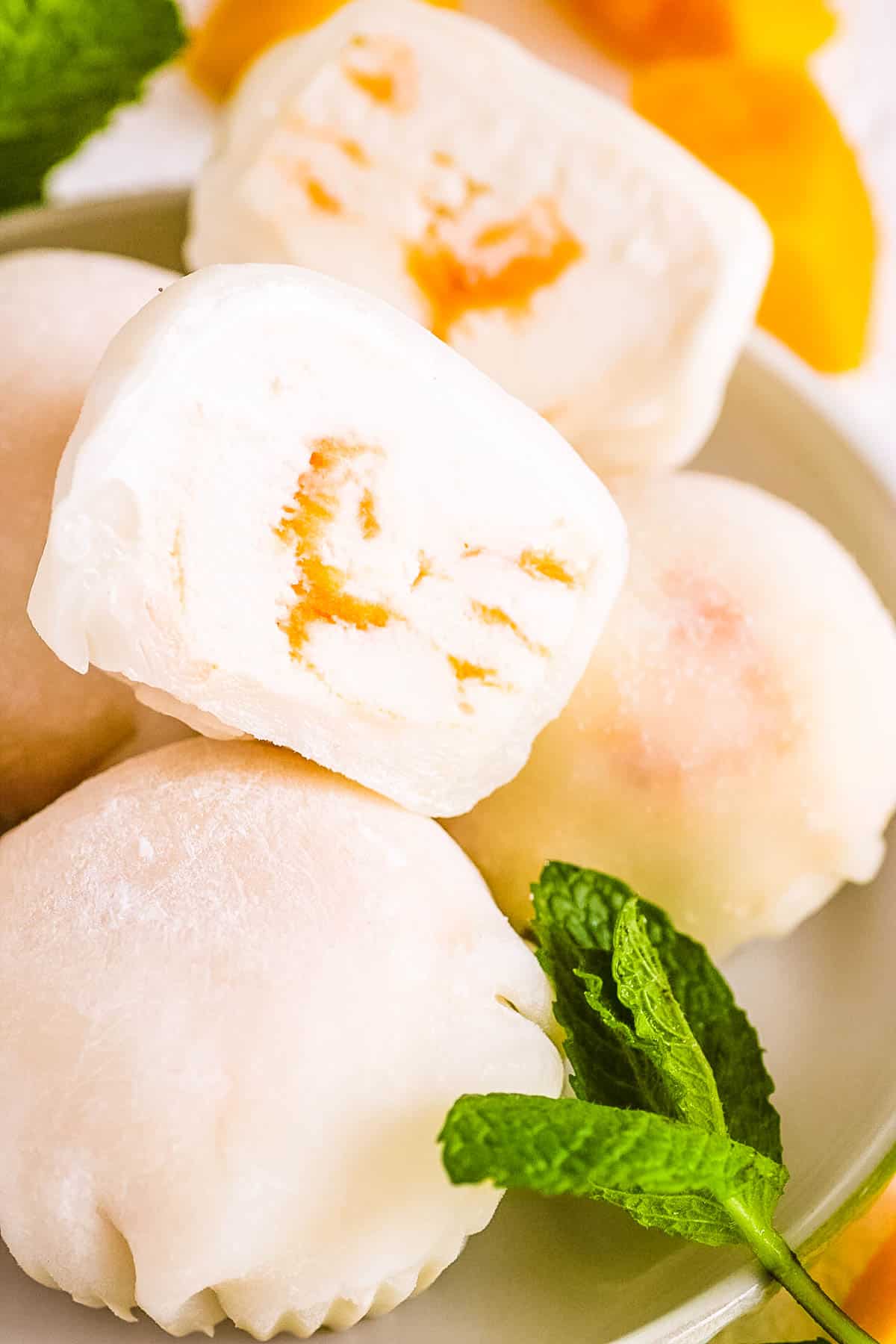
Mango mochi ice cream stands out from other desserts the second you bite into it. The outer layer is soft and slightly elastic, while the filling remains smooth, cold, and creamy for a unique contrast that sets it apart from traditional desserts. And if you enjoy unusual mango-flavored desserts, my homemade Disney Dole Whip is another dessert you have to try.
While it may have been developed in America in the 1990s, mochi ice cream took inspiration from Japanese ingredients. There is a similar Japanese product whose name translates into “snow-viewing daifuku”. This confection was inspired by the tradition of eating sweets while looking at snow. I made sure I had mango mochi ice cream and chewy Japanese mochi cookies prepared for our first snow day last year. Even though my kids thought it was a bit strange that I was giving them ice cream as we sat outside watching the snow. Ha!
The texture is what makes this mango mochi ice cream worth making. The glutinous rice, which, despite its name, is gluten-free, creates a distinct chewiness, while the ice cream adds a delightful difference. These desserts are known to be portion-controlled by design, due to their size, and as a nutritionist, I love that I can control the ingredient list for this recipe, leaving out artificial flavors. As a mom, I love that I can give my kids something sweet without worrying about them overindulging.
Getting this recipe right comes down to timing and temperature. I cook the dough just until it turns translucent and sticky, then roll it while it is warm, but manageable. Keeping the ice cream fully frozen before wrapping makes assembly much easier and prevents the filling from leaking through. Looking at it, mochi ice cream may seem like a complicated item to make from scratch, but the outcome is not only worth it, but better than store-bought versions.
After mochi ice cream went viral on TikTok in 2021, some brands saw a 1400% increase in sales. And the virality even saw an increase in my kitchen. I have tried it with numerous flavors, but mango always gets the most compliments. Apart from compliments, I also get asked where I bought mochi ice with such a fresh and authentic flavor. People do not always believe me until I send them my recipe. If you enjoy hands-on recipes that yield stunning results and plenty of compliments, this is one I recommend trying.
Latest Recipe Video!
🥘 Ingredients
I use a short list of ingredients for this mango mochi ice cream, but each one plays a crucial role in the texture and structure. This is what I use:
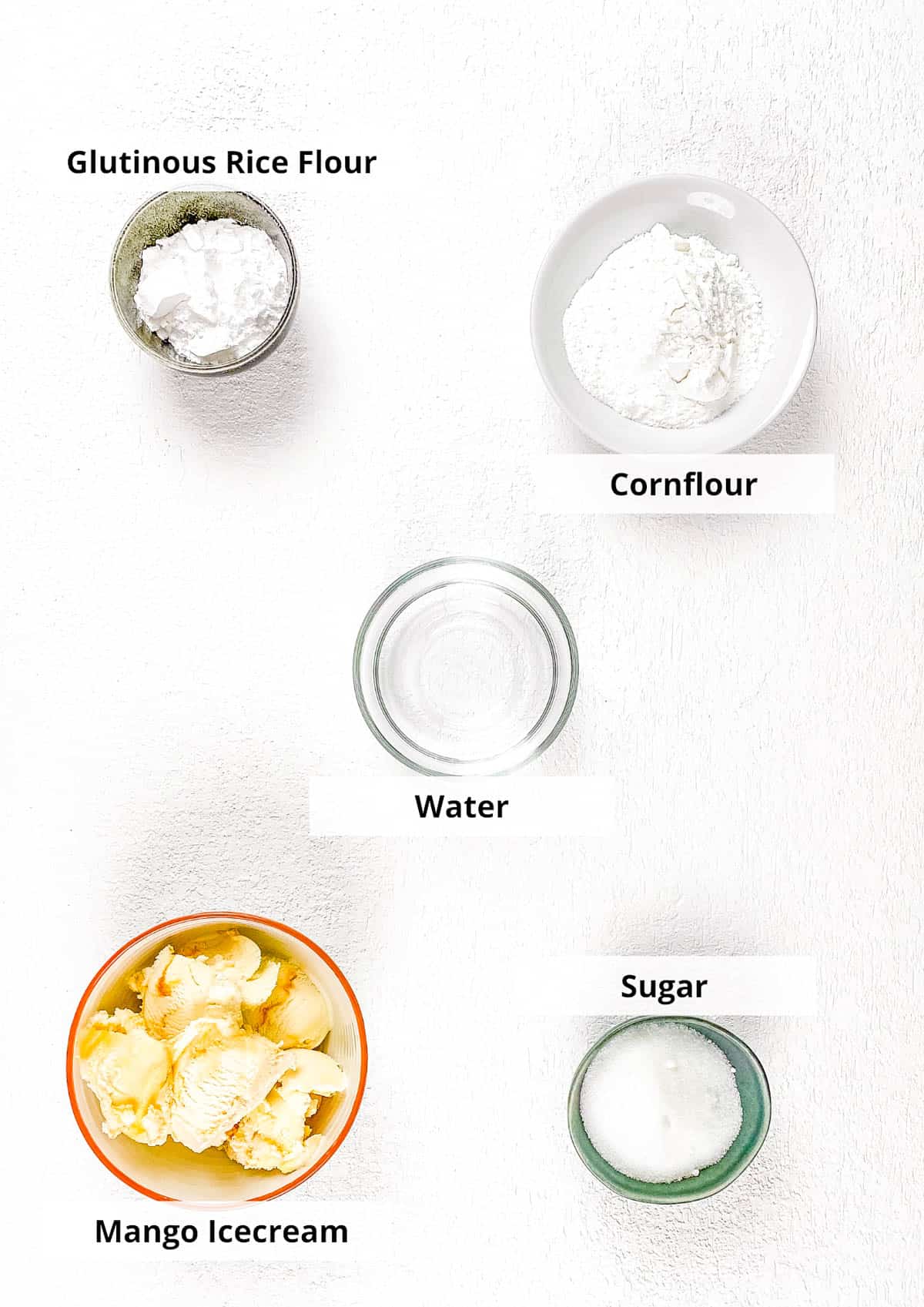
Glutinous rice flour: I use this to create the chewy mochi dough that holds everything together.
Sugar: Sugar lightly sweetens the dough, without detracting from the filling.
Water: I mix this with the flour to form a smooth batter before cooking.
Corn starch: This prevents the dough from sticking when rolling it out.
Mango ice cream: I scoop and freeze this ahead of time to ensure it stays firm during assembly. You could also try my mango nice cream recipe for a healthier homemade variety.
Food coloring (optional): I add a small drop of orange coloring for a more vibrant mango color in the mochi dough.
🔪 How To Make
I divide this mango mochi ice cream recipe into stages: preparation, cooking, and assembly. This keeps everything controlled, which is important when working with ingredients like ice cream. This is how I make it:
Line tray and prep filling: I scoop the mango ice cream into balls and freeze them in a lined muffin tin for easy access.

Mix dough ingredients: Then, in a medium mixing bowl, I whisk the rice flour and sugar together. I pour the water and mix until smooth. If I am using food coloring, I add it here and mix until well combined.

Cook dough: I cover the bowl with plastic wrap and microwave on high for 1 minute. Then I remove it, stir it with a spatula, cover it again, and heat it for 60-90 seconds. I do this just until the mochi changes from white to almost translucent.

Place on parchment: Next, I sprinkle cornstarch over a piece of parchment paper and place the mochi dough on top.

Roll dough: Then, I sprinkle more corn starch over the top of the dough, and roll it out with a rolling pin.

Cut dough into circles: Using a circular cookie cutter, I cut out pieces of dough, large enough to cover each ice cream ball. I chill the circles in the fridge for 10 minutes, making sure to keep layers separated with plastic wrap.
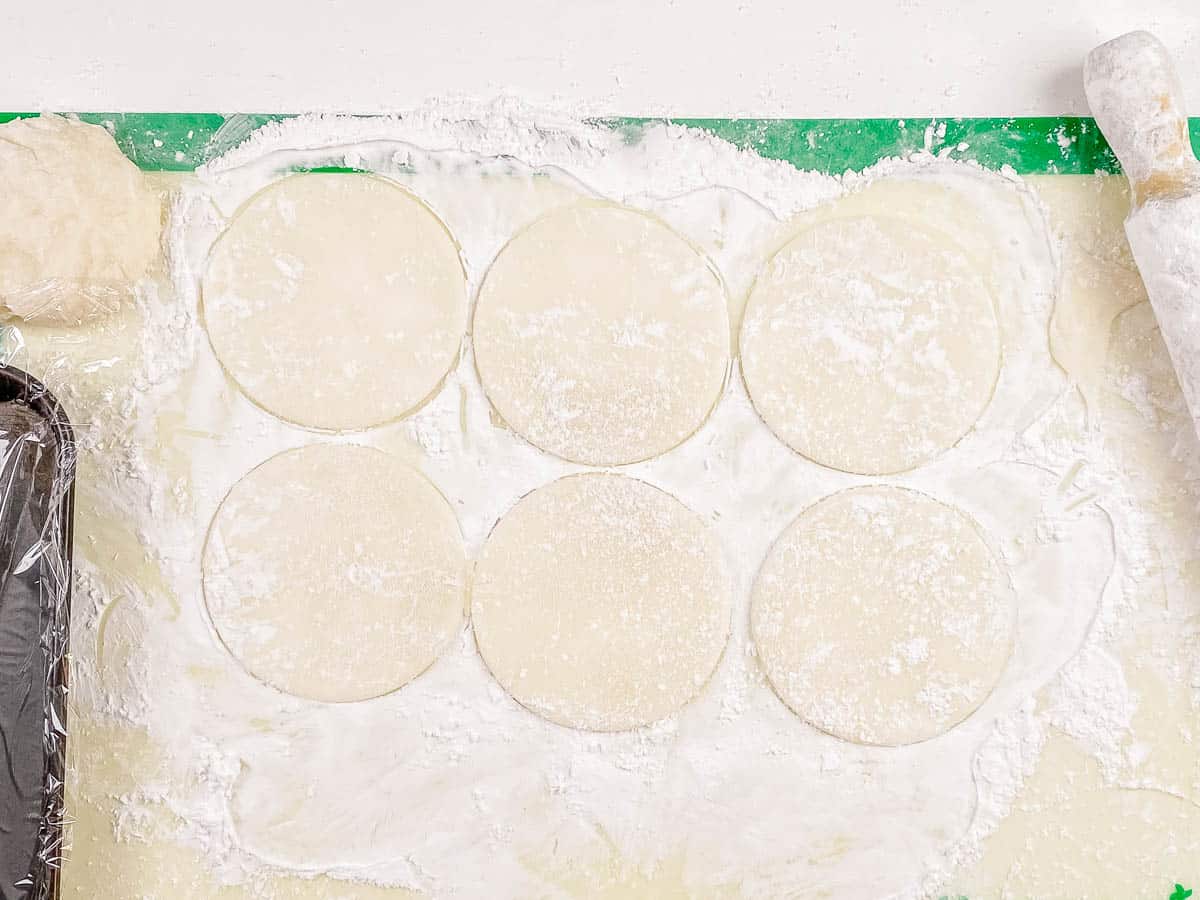
Assemble: I place an ice cream ball in the center of each circle.

Close the dough around the ice cream: Then I stretch the dough around it, and pinch to seal. Repeat with the remaining balls and dough.

Freeze and set: I place each piece seam side down and freeze for at least 2 hours before serving.

My #1 Secret Tip for this mango mochi ice cream recipe is to work quickly once the ice cream and dough come together. The longer the ice cream sits out, the harder it becomes to seal the dough cleanly.
Other Tips To Keep In Mind:
- Cook in stages: I microwave the dough in short bursts and stir each time to avoid uneven cooking.
- Dust generously: When rolling out the dough, dust the parchment and dough with a generous amount of corn starch. I even recommend rubbing some on the rolling pin before you begin.
- Check texture: I look for a stretchy, glossy finish before removing the dough from the microwave.
- Seal tightly: Pinching the edges firmly ensures that the ice cream stays fully enclosed during freezing, and does not leak out when eaten.
📖 Variations
I like to make subtle adjustments to this mango mochi ice cream recipe, depending on what I have available. These are some of my most delicious variations:
Lychee mochi: I swap out the mango ice cream for lychee ice cream. This creates a lovely, sweet, and slightly floral scent, and I love that I can keep it plain white. If I have extra raspberries around, I break them into small pieces and mix them through the ice cream before freezing, for a hybrid flavor.
Coconut coating: I roll the assembled mochi in 1/4 cup shredded coconut for added texture and a tropical flavor. These taste like a summer holiday, and are my personal favorite.
Fresh mango: For a fruitier filling, I mix diced fresh mango into the ice cream and then refreeze it until it is firm. Whenever I make or buy mango ice cream, I try to fold in fresh pieces once it is soft enough, so I always have some on hand.
🍽 Serving Suggestions
I enjoy this mango mochi ice cream as is, or with a cool beverage that plays off the flavor. Next time you make it, try it with some of my wintermelon milk tea. There is nothing quite like bubble tea and a viral dessert. Or if you prefer a smoother drink, I have always enjoyed this mochi ice cream with a mango pineapple banana smoothie.
A friend of mine has always loved mangoes and goes crazy for mango desserts. For her birthday, I made a chocolate mango cake, which I decorated with a few mango mochi balls. She was beyond thrilled, especially since I made her a box of extra mochi and hid it in her freezer. Halfway through her party, she disappeared and later admitted to having a few sneaky pieces in her kitchen with some vegan whipped cream. Ha!
🧊 Storing And ♨️ Reheating
Refrigeration: Mochi ice cream is not suitable for refrigeration, as it causes the dough to become too firm and the ice cream to melt.
Freezing: I keep the mochi in an airtight container in the freezer for up to 3 months, separating layers to prevent sticking.
Reheating: I do not reheat mochi ice cream, but I allow it to sit at room temperature for 5-10 minutes before serving for the best texture.
❓Recipe FAQs
This happens when the dough is overcooked in the microwave. I cook mine in short intervals and stop as soon as it turns glossy and stretchy. Overheating removes too much moisture, which makes the dough harder to work with and unpleasant to eat. Rubbery mochi can be hard to fix, but you can try sprinkling it with some water and microwaving it for 5-10 more seconds. If your dough has hardened completely, place it in a steamer for a few minutes until rehydrated.
This happens when I have not microwaved my mochi for long enough, or if it is still too warm. I continue microwaving in 30-second bursts until it is a solid kneadable mass. Then I give it time to cool down, which allows the dough to firm up.
In my kitchen, this mango mochi ice cream can hold its shape at room temperature for around 3-10 minutes. After that, the ice cream starts to soften, and the dough can stretch or sag. I like serving them in chilled metal ice cream dishes to help preserve them for a bit longer. The melting point of the ice cream also depends on the type of ice cream you have used. Some homemade varieties may soften faster than commercial brands.

Love this dessert recipe? Please leave a 5-star rating 🌟 in the recipe below and/or a review in the comment section further down the page!
You can also FOLLOW ME on FACEBOOK, INSTAGRAM, and PINTEREST to see more delicious, healthy, family-friendly food, and if you have any questions, I’m here to help!
📋 Recipe Card
Mango Mochi Ice Cream
I use glutinous rice flour, mango ice cream, and sugar to make these adorable, tasty mango mochi ice cream. There is nothing like the soft, chewy outer covering, with the cold, sweet, fruity center. There is a reason these delicacies went viral, and now you can make your own at home!
Servings: 8
Calories: 275kcal
-
Using a 12 hole muffin tray, line 8 holes with muffin liners, set aside.
-
Using an ice cream scoop, scoop out 8 balls of ice cream and place each ball into prepared muffin liners.
-
Place the ice cream balls into the freezer.
-
In a medium mixing bowl whisk together the rice flour and sugar. Pour in the water and mix until smooth. If using food coloring add a drop and mix until well combined.
-
Cover with plastic wrap and microwave on high for 1 minute. Remove and stir with a rubber spatula, cover and heat again for another minute to a minute and 30 seconds. (Total cooking time will depend on the strength of the microwave.)
-
Remove and stir. The mochi will turn from white to almost translucent in color.
-
Sprinkle corn starch over a silicone sheet or parchment paper. Place the cooked mochi dough onto the corn starch (corn flour).
-
Using a rolling pin, roll the dough out thin, dusting with cornflour if it’s a little sticky.
-
Using a circular cookie cutter, large enough to cover the icecream balls, cut the dough into 8 circles.
-
Cover a tray with plastic wrap and place the dough circles on to it with a piece of wrap in between each layer.
-
Chill the cut circles in the fridge for 10 minutes.
-
When the dough is cold and the ice cream balls are frozen hard you can start to put it all together.
-
Start by placing one dough circle on your work surface, add an ice cream ball into the center of the dough.
-
Encase the ice cream ball with dough, pinching the ends together. Place the dough covered ice cream ball back into the muffin liner with the seam side down.
-
Repeat with remaining ice cream balls and dough.
-
Once complete, place the muffin tray with mochi ice creams back into the freezer and freeze until ready to serve, at least 2 hour before serving.
- My #1 Secret Tip for this mango mochi ice cream recipe is to work quickly once the ice cream and dough come together. The longer the ice cream sits out, the harder it becomes to seal the dough cleanly.
- Cook in stages: I microwave the dough in short bursts and stir each time to avoid uneven cooking.
- Dust generously: When rolling out the dough, dust the parchment and dough with a generous amount of corn starch. I even recommend rubbing some on the rolling pin before you begin.
- Check texture: I look for a stretchy, glossy finish before removing the dough from the microwave.
- Seal tightly: Pinching the edges firmly ensures that the ice cream stays fully enclosed during freezing, and does not leak out when eaten.
Serving: 1mochi | Calories: 275kcal | Carbohydrates: 51g | Protein: 3g | Fat: 7g | Saturated Fat: 4g | Polyunsaturated Fat: 0.3g | Monounsaturated Fat: 2g | Cholesterol: 25mg | Sodium: 47mg | Potassium: 125mg | Fiber: 1g | Sugar: 31g