
This post may contain affiliate links. As an Amazon Associate, I earn from qualifying purchases. Please read my disclosure.
There is nothing more comforting and assuring than a stack of vegan coconut flour pancakes. I use coconut flour, almond milk, and baking powder to create soft and light pancakes that are ready and on the table in just 25 minutes. They are gluten-free and dairy-free while retaining the classic characteristics of a beloved breakfast treat.
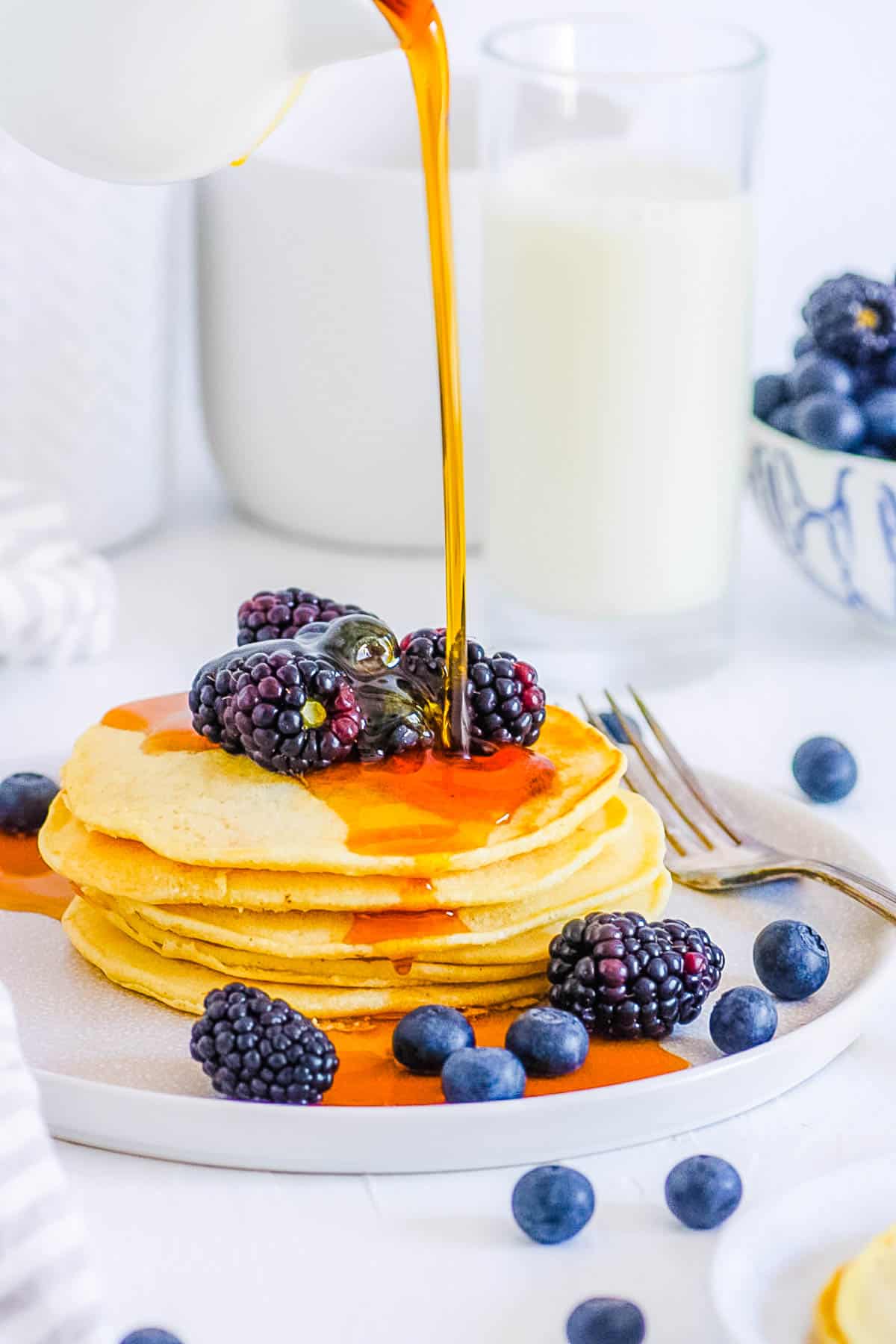
Coconut flour pancakes are a great option when I want a lighter breakfast that is both satisfying and plant-based. The coconut flour absorbs more liquid than traditional flour, which gives it a unique texture that pairs nicely with syrups. And if you like your pancakes with a bit of texture and a lower-carb profile, be sure to try my oat flour pancakes next.
This recipe came about when I was experimenting with gluten-free recipes, like my vegan gluten-free drop biscuits. Instead of depending entirely on gluten-free flour for these pancakes, I wanted to add in something a little different that would not change the taste or texture too much. The great thing about pancakes is that it does not matter how much I tweak the recipe, as long as you can still pour maple syrup over it, my kids will love it. Ha! They eat these coconut flour pancakes with the same excitement and enthusiasm that they have for regular pancakes.
We all know that starting the day off with a balanced meal makes a significant difference to energy levels and brain function. And when you have picky eaters, these vegan coconut flour pancakes take the stress out of busy mornings. As a nutritionist, I love the addition of coconut flour for its high fiber content, which supports digestion and keeps everyone fuller for longer. The almond milk ensures this recipe stays light and dairy-free, with each pancake being lower in carbs than traditional versions, and better at maintaining steady energy levels. This means I do not have to worry about any mid-morning sugar crashes.
The texture and form of these pancakes come down to a few key steps that I always follow when making this recipe. I start by whisking my wet and dry ingredients in 2 separate bowls, before combining and mixing until smooth. Since the coconut flour absorbs liquid differently, I give the batter a chance to rest before cooking. Then I scoop out 1/4 cup measurements of the batter and place them in a greased and preheated pan. I wait for bubbles to form on the surface, then flip and cook the other side, giving the pancakes a golden finish.
Growing up, my one friend had only ever had pancakes made from a pre-packaged box mixture, and while these are great for convenience, there is always a lingering synthetic taste that I cannot get past. You can imagine her surprise when I not only told her that I make all my pancakes from scratch, but that some of them do not use dairy or eggs.
When she came over for breakfast, I saw her looking at the steaming stack of pancakes with skepticism, which melted away after her first bite. I had to make a second batch with her by my side to prove that this recipe was gluten and dairy-free. Ha! If you like sweet breakfasts but can do without the sluggishness that follows, try these pancakes.
Latest Recipe Video!
🥘 Ingredients
For these vegan coconut flour pancakes, I use a mix of pantry staples and a few key ingredients that help create the perfect texture. This is what I use:
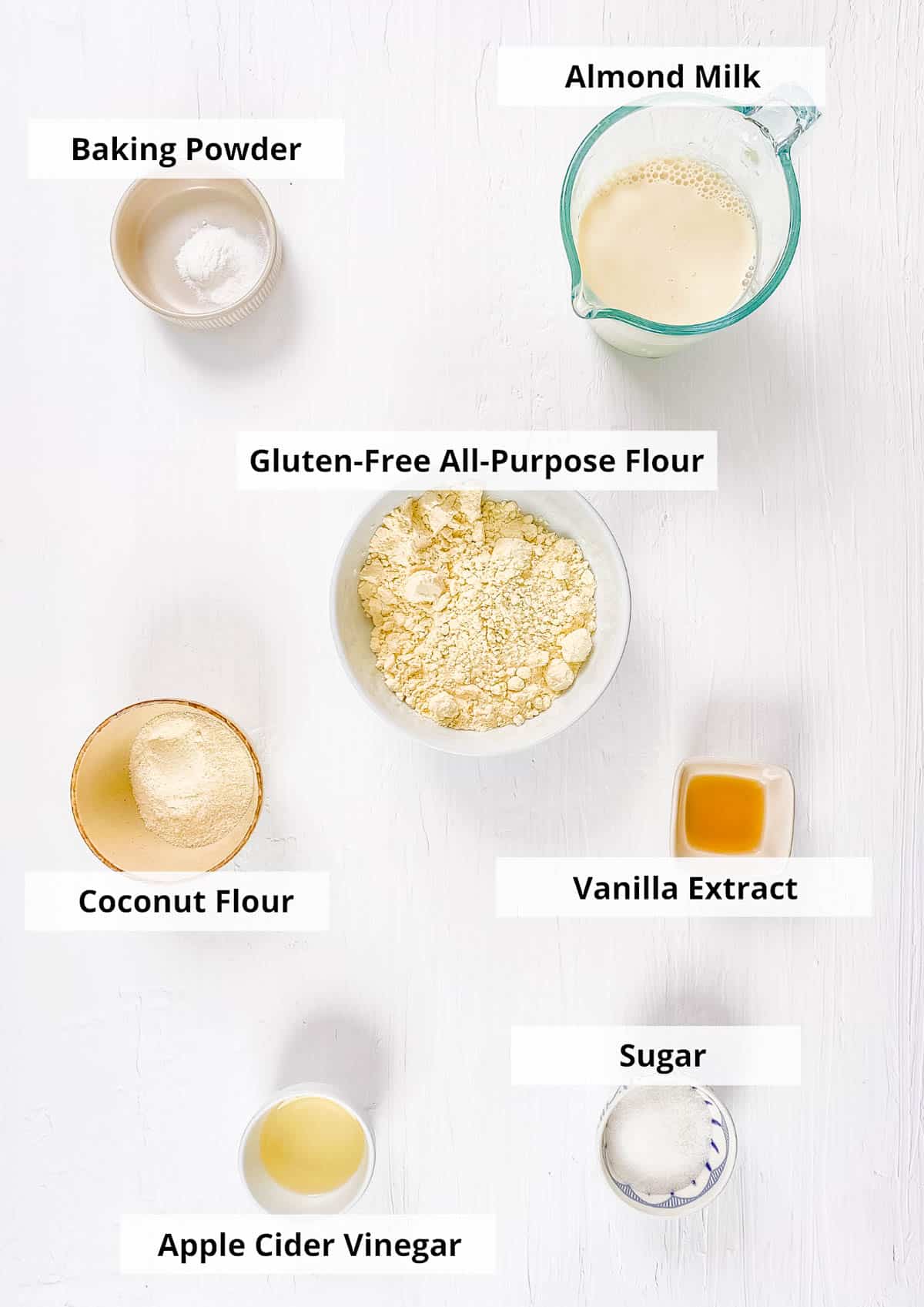
Gluten-free flour: I use a 1:1 gluten-free flour for a better structure and texture.
Coconut flour: This adds fiber and creates a soft texture.
Almond milk: Unsweetened almond milk keeps the batter dairy-free while adding moisture.
Sugar: I add a small amount of sugar or maple syrup to balance the flavor without making the pancakes overly sweet.
Apple cider vinegar: This reacts with the baking powder and helps create a light texture.
Vanilla extract: I add vanilla to round out the flavors and enhance the sweetness.
Baking powder: This gives my pancakes a lift and prevents them from becoming dense as they cook.
🔪 How To Make
These vegan coconut flour pancakes are made with a simple batter and standard cooking method. This is how I make them:
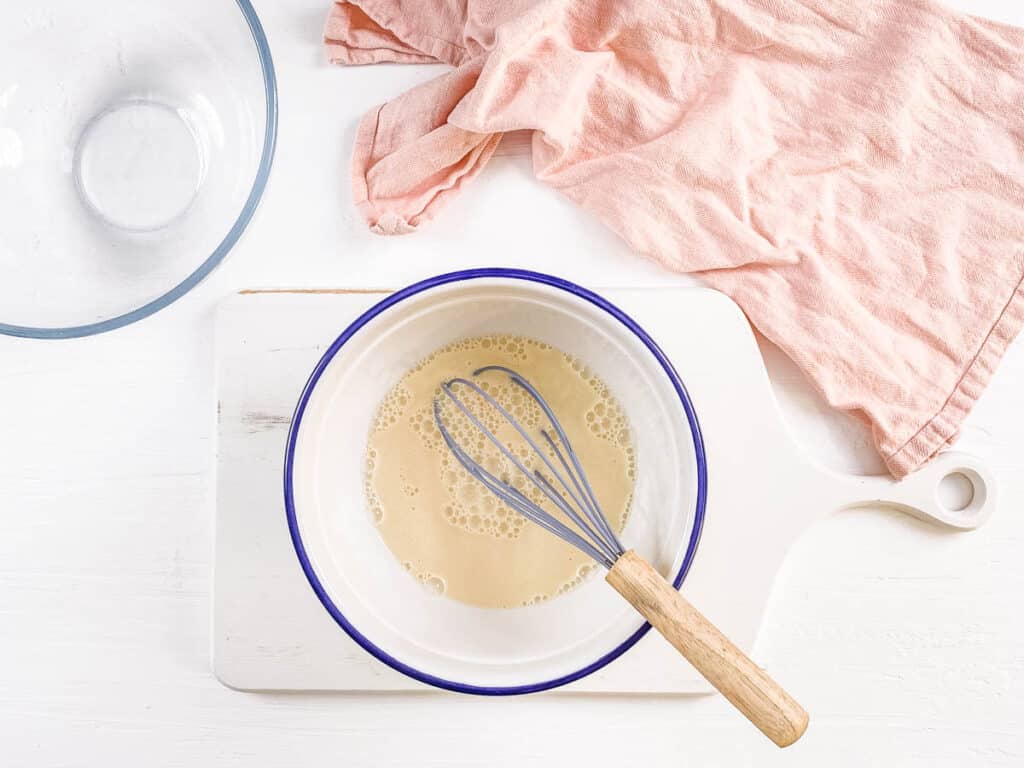
Mix wet ingredients: I start by whisking together the almond milk, apple cider vinegar, and vanilla extract until combined.
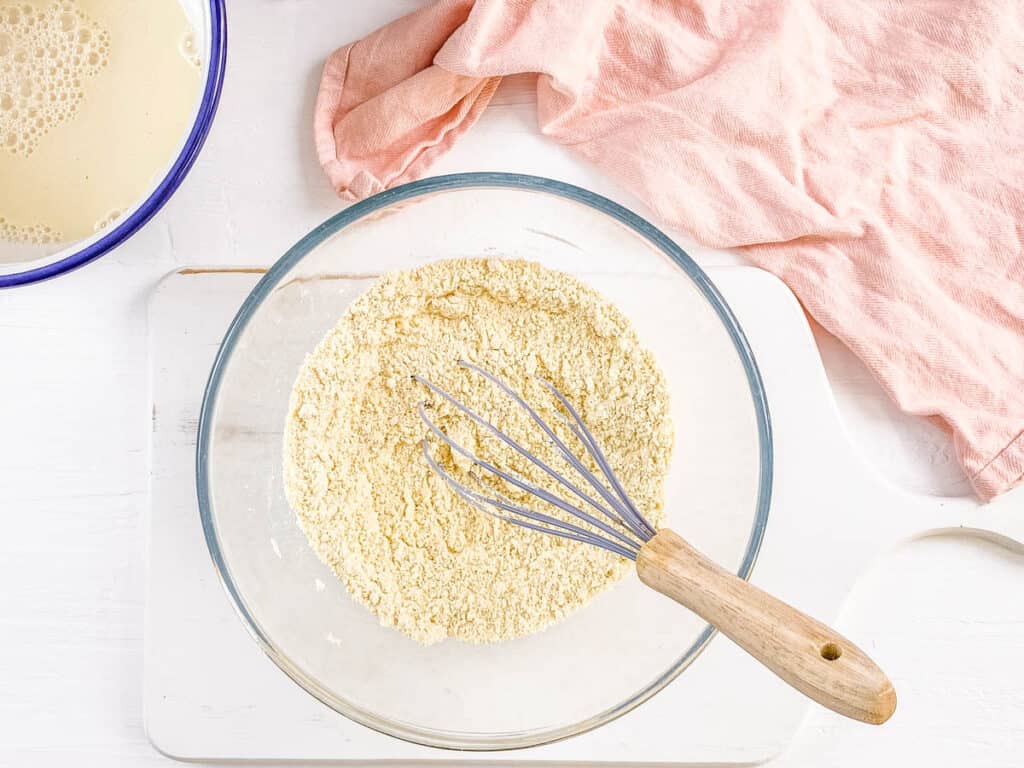
Mix dry ingredients: Then, I combine my flours, sugar, and baking powder in a separate bowl.
Make batter: I pour the wet ingredients into the dry ingredients and whisk until smooth.
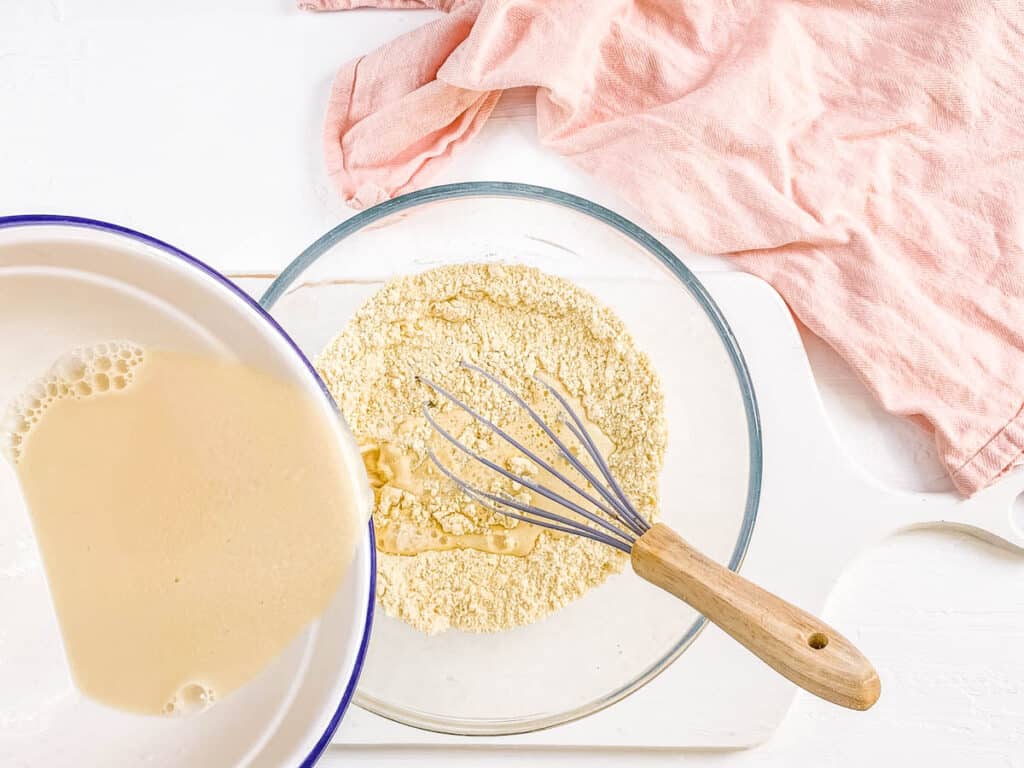
Rest batter: Next, I allow the batter to rest for 10 minutes.
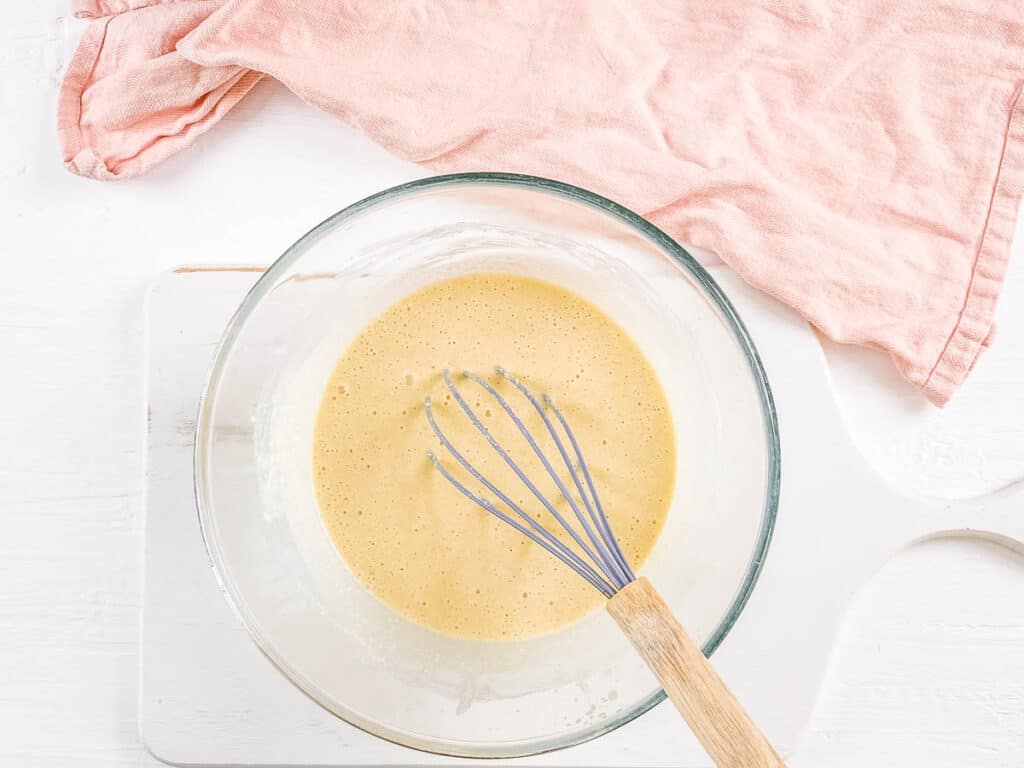
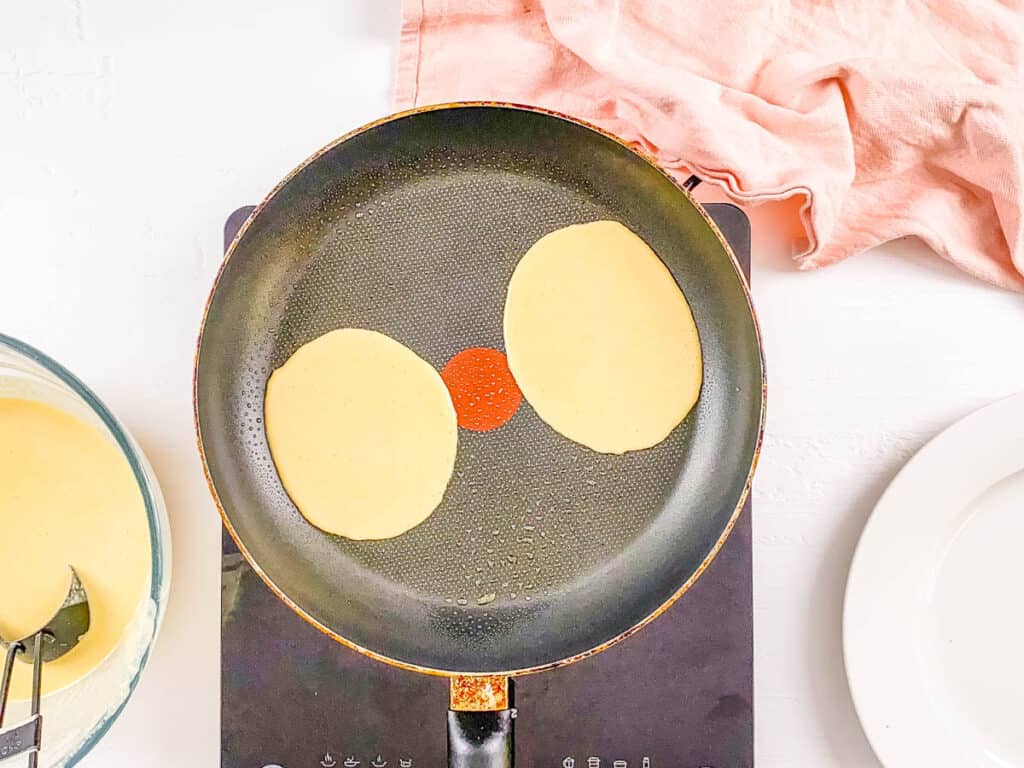
Cook: Once the batter is rested, I scoop out 1/4 cup portions into a lightly greased skillet over medium heat and cook until bubbles form on the surface.
Flip and continue: Then I flip and cook the other side for 4 minutes or until fully cooked through. I repeat this process with the remaining batter.
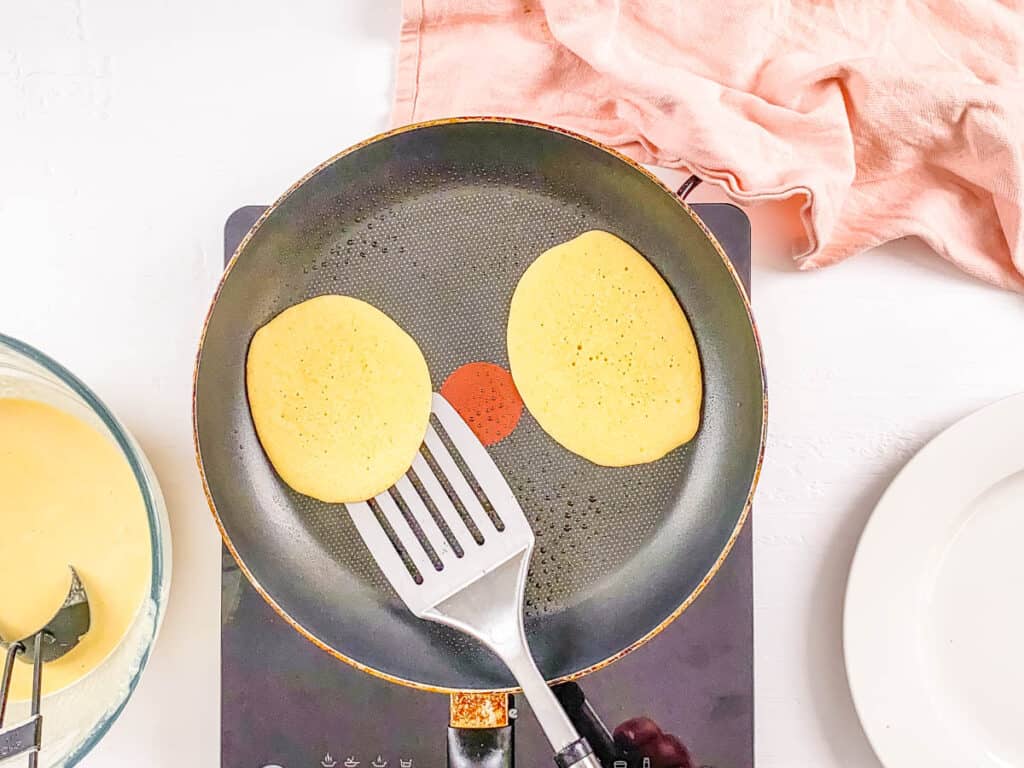
Serve: I serve these pancakes warm with my favorite toppings.
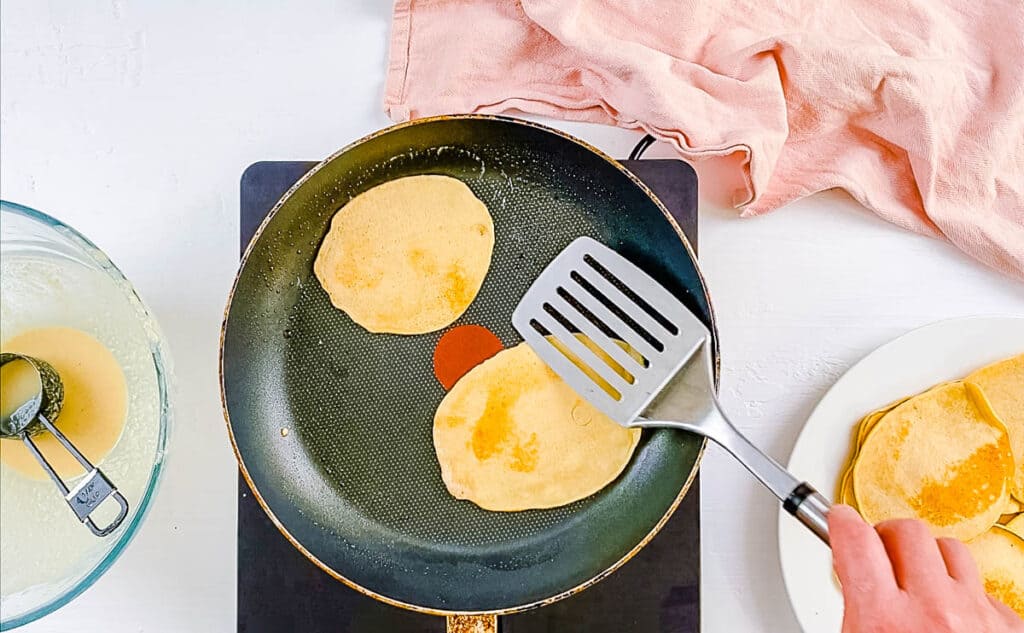
My #1 Secret Tip for this vegan coconut flour pancake recipe is to let the batter rest before cooking. Coconut flour absorbs a lot of liquid right away, but continues to thicken as it sits. Cooking the batter immediately will cause the pancakes to spread too much. I let the batter rest for 10 minutes, which allows the flour to fully hydrate, giving me a thicker, more stable batter that cooks evenly.
Other Tips To Keep In Mind:
- Adjust thickness: If the batter becomes too thick after resting, I add a splash of almond milk and stir through until loose. If the batter seems too thin, I add 1 teaspoon of gluten-free flour at a time until thicker, then let it rest for 5 more minutes.
- Use medium heat: I cook on a moderate heat so the pancakes cook through evenly without browning too quickly.
- Test pancake: I use a small amount of batter and make 1 test pancake first. This allows me to check the texture, flavor, and heat before proceeding with the rest of the batter and gives me a chance to adjust where needed.
- Do not press down: As tempting as it may be, I never press my coconut flour pancake flat after flipping. This squeezes out all the air that the leavening agents work so hard to create.
- Keep milk at room temperature: Cold milk slows down the reaction between the apple cider vinegar and baking powder, which means less lift and flatter pancakes.
📖 Variations
I like to change up these vegan coconut flour pancakes depending on who I am serving, and these are 3 variations that have been requested again and again:
Chocolate chip: After adding my batter to the pan, I sprinkle 2 tablespoons of vegan mini chocolate chips or chocolate sprinkles onto the uncooked side. My kids always ask for this version and rarely add anything else to it.
Blueberry boost: I add 1/3 cup fresh blueberries directly onto the batter once it hits the pan. I have a lot of fun with this version and love making smiley faces or heart shapes with the berries.
Banana mix: I mash 1 small ripe banana into the batter for natural sweetness. These may require a few extra minutes in the skillet, but they are worth the extra time and are fantastic with my healthy vegan chocolate sauce.
🍽 Serving Suggestions
When I serve these vegan coconut flour pancakes, I like building a breakfast that is cohesive without being overly indulgent. If you enjoy sweet toppings on your pancakes, try it with a spread of my vegan Nutella. And you can get your fruit in easily with a healthy banana berry smoothie, which is also dairy-free.
On slower mornings, or for a brunch gathering, I serve these pancakes with other vegan treats and toppings for a spread that is like a sweet take on a continental breakfast. I serve them with a selection of muffins or some of my vegan churros and a side of vegan whipped cream or some of my vegan honey. Of course, I make sure to balance the sweetness out with something fresh like a big bowl of breakfast fruit salad.
🧊 Storing And ♨️ Reheating
Refrigeration: I store leftover pancakes in an airtight container in the refrigerator for up to 4 days.
Freezing: I freeze cooked pancakes in a single layer with parchment between each pancake in a freezer-safe container for up to 2 months.
Reheating: I reheat pancakes in a skillet or toaster until warmed through.
❓Recipe FAQs
No, and this is a very common mistake a lot of people make with coconut flour. Since it absorbs liquid faster than gluten-free or all-purpose flour, using it as a straight swap results in a very dense and dry pancake. I have a blend of flours in this recipe for a reason. The coconut flour adds flavor while the gluten-free flour provides structure and lightness that is essential to a classic pancake.
There is a subtle coconut flavor present, but it is not the main flavor in this recipe. If you want to really highlight that flavor, I recommend adding 1/4 cup of shredded coconut to the batter.
Yes, with a few small adjustments, this coconut flour pancake recipe can be added to a waffle iron for a wonderful gluten-free breakfast option. First, I recommend reducing the almond milk by 1/4 cup, so the batter is slightly thicker, which helps it hold its shape in the waffle iron. Cook it on a medium setting and the waffles a full minute longer than you normally would, since coconut flour takes a little longer to cook through.
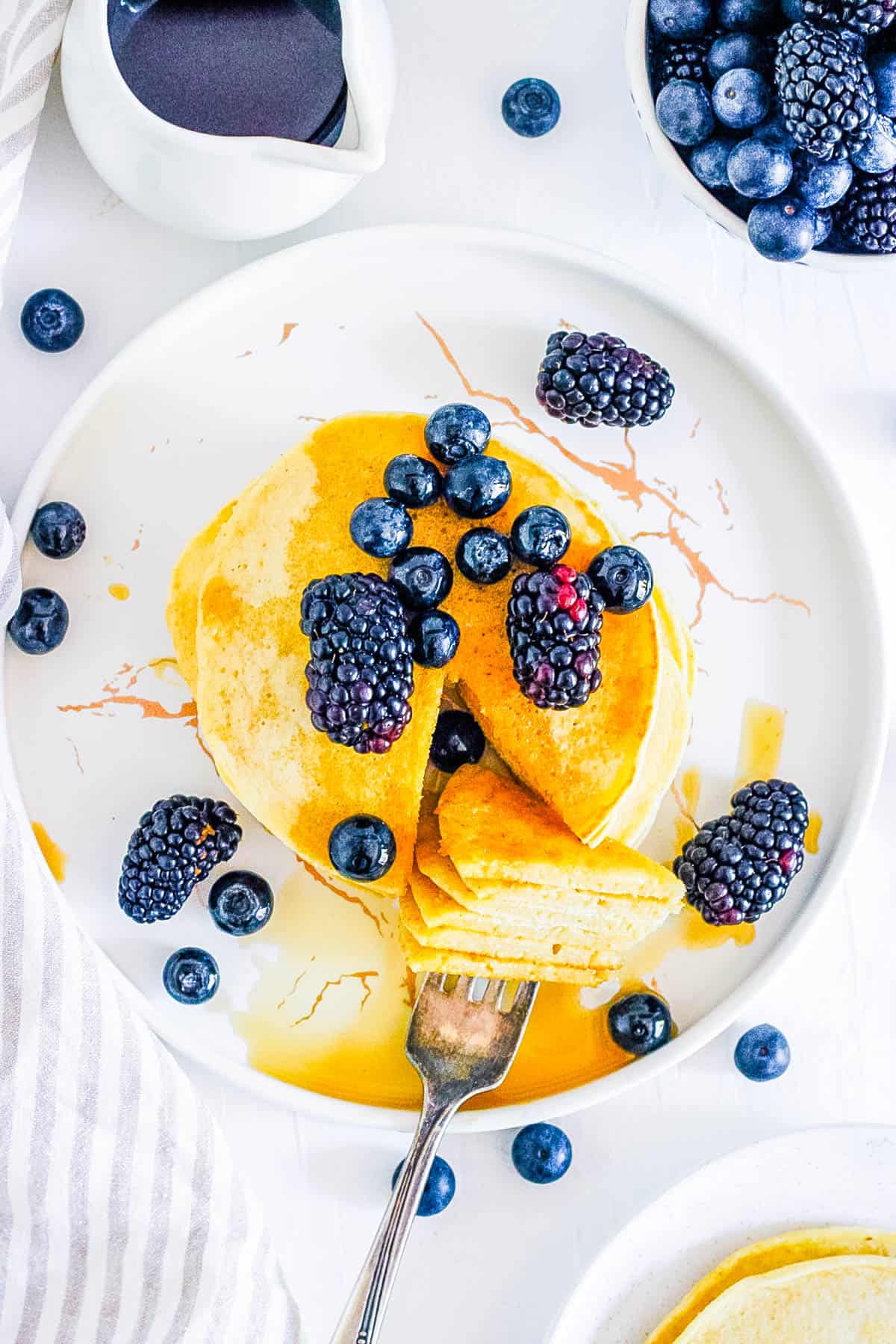

Love this vegan breakfast recipe? Please leave a 5-star rating 🌟 in the recipe below and/or a review in the comment section further down the page!
You can also FOLLOW ME on FACEBOOK, INSTAGRAM, and PINTEREST to see more delicious, healthy, family-friendly food, and if you have any questions, I’m here to help!
📋 Recipe Card
Vegan Coconut Flour Pancakes
There is nothing more comforting and assuring than a stack of vegan coconut flour pancakes. I use coconut flour, almond milk, and baking powder to create soft and light pancakes that are ready and on the table in just 25 minutes. They are gluten-free and dairy-free while retaining the classic characteristics of a beloved breakfast treat.
Servings: 16 pancakes
Calories: 48kcal
- My #1 Secret Tip for this vegan coconut flour pancake recipe is to let the batter rest before cooking. Coconut flour absorbs a lot of liquid right away, but continues to thicken as it sits. Cooking the batter immediately will cause the pancakes to spread too much. I let the batter rest for 10 minutes, which allows the flour to fully hydrate, giving me a thicker, more stable batter that cooks evenly.
- Adjust thickness: If the batter becomes too thick after resting, I add a splash of almond milk and stir through until loose. If the batter seems too thin, I add 1 teaspoon of gluten-free flour at a time until thicker, then let it rest for 5 more minutes.
- Use medium heat: I cook on a moderate heat so the pancakes cook through evenly without browning too quickly.
- Test pancake: I use a small amount of batter and make 1 test pancake first. This allows me to check the texture, flavor, and heat before proceeding with the rest of the batter and gives me a chance to adjust where needed.
- Do not press down: As tempting as it may be, I never press my coconut flour pancake flat after flipping. This squeezes out all the air that the leavening agents work so hard to create.
- Keep milk at room temperature: Cold milk slows down the reaction between the apple cider vinegar and baking powder, which means less lift and flatter pancakes.
Serving: 1pancake | Calories: 48kcal | Carbohydrates: 10g | Protein: 1g | Fat: 1g | Saturated Fat: 0.3g | Polyunsaturated Fat: 0.2g | Monounsaturated Fat: 0.2g | Sodium: 30mg | Potassium: 26mg | Fiber: 1g | Sugar: 3g