Good news for Target shoppers: By the end of this month, all cereals sold by the retailer will be made without certified synthetic colors. This change is in keeping with a promise the chain made earlier this year to eradicate the additives from the breakfast aisle by the end of May.
“We know consumers are increasingly prioritizing healthier lifestyles, and we’re moving quickly to evolve our offerings to meet their needs,” said Cara Sylvester, Target’s executive vice president and chief merchandising officer, in a February press release announcing the change1. “Our new cereal assortment made without certified synthetic colors makes it easier for busy families to make choices they feel good about, and shows what it means to curate a great assortment and lead with merchandising authority.”
With its announcement that it was on-track to meet its end-of-May goal, Target has become one of the first national retailers to hit this important milestone. To deliver on the promise of these healthier Target cereals, the company partnered with national and own-brand partners to reformulate its entire cereal lineup, which now notably features a synthetic color-free version of Froot Loops, in a new Wild Berry flavor — a retailer exclusive.
How Synthetic Additives Can Impact Our Health
American and international food producers have long relied on synthetic color additives to add a bright appeal to packaged foods like cereal. But recently, research has shown us just how harmful some of these additives can be.
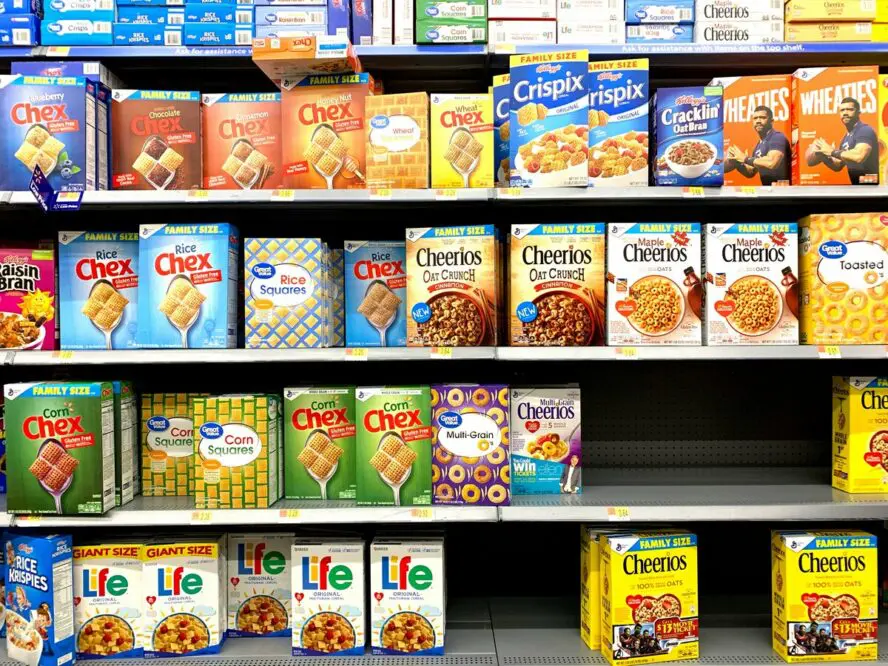
A 2024 study in the International Journal of Environmental Research and Public Health specifically addressed the link between synthetic food colorings and harmful effects on children, including those diagnosed with Autism Spectrum Disorder and Attention Deficit Hyperactivity Disorder2. The study found that certain substances could contribute to increased risk of behavioral problems, respiratory symptoms, allergies, and even cancer.
Bans on Synthetic Food Colorings
Last year, FDA issued a Red 3 ban, which will go into effect in foods in 2027 and in drugs in 2028. FDA also announced that it was requesting that food manufacturers phase out the use of six other petroleum-based food dyes: Blue 1, Blue 2, Green 3, Red 40, Yellow 5, and Yellow 6. Compliance with this request is voluntary.
Certain states have taken a more extreme stance on these additives. Bills banning synthetic dyes in schools have been put forward or are in consideration in California, Utah, Virginia, and Arizona, and in 2025, West Virginia became the first state to ban synthetic dyes from all foods sold in the state beginning in 2028. But in the wake of 2026’s proposed FRESH Act, which would preempt state food safety laws in favor of more wide-reaching federal oversight rooted in weaker policies, Target’s commitment comes not a moment too soon.
Target’s Ongoing Commitment to Healthy Options
Target has taken advantage of this change to remodel its cereal offerings in other ways, as with the recent début of its Good & Gather Kids line. This own-brand line features options with more protein and fewer than six grams of added sugar per serving.
And it’s not just the healthiest cereals Target has been working on — the update to its breakfast aisle is just one piece of Target’s ongoing investments in wellness. The retailer’s Good & Gather line, introduced in 2019, features more than 2,500 products formulated without artificial flavors and sweeteners, synthetic colors, or high-fructose corn syrup.
Sources:
- https://corporate.target.com/press/release/2026/02/target-s-entire-cereal-assortment-will-be-made-without-certified-synthetic-colors
- https://pmc.ncbi.nlm.nih.gov/articles/PMC11203549/

Add Organic Authority as a preferred source on Google?