With the help of TikTok health influencers, cottage cheese has gone from retro diet food to the latest wellness trend. With sales increasing 16% in 2023 and another 17–18% in 2024, cottage cheese is rapidly becoming a go-to choice for those trying to eat healthier1. But do the health claims hold up? Is cottage cheese as healthy as people seem to think, or is its resurgence just another passing weight loss fad?
As a registered dietitian, I’ve started to get this question more frequently from my clients, who can’t help but notice that cottage cheese suddenly seems to be a staple food in every influencer-recommended meal plan. And here’s the thing: There’s no doubt that cottage cheese is an excellent source of protein. But as you dig deeper into the nutrition label, high sodium content and varying fat content can leave you feeling confused about the health benefits of cottage cheese. When you add organic versus conventional cottage cheese products into the mix, you might find yourself more confused than ever.
To get to the bottom of the cottage cheese debate, we’ll break down the nutrition facts, how to choose the best cottage cheese for you, and when it would be best to avoid it altogether. So, is cottage cheese good for you?
What Is Cottage Cheese, Nutritionally Speaking?
Cottage cheese comes in many forms, from whole fat to non-fat. Let’s take a look at the nutrition facts of the most common forms of cottage cheese2,3,4,5.
| Nutrition Facts per cup | 0% Milkfat | 2% Milkfat | Full fat (4% or more milkfat) |
| Calories | 104 | 185 | 240 |
| Total fat (g) | 0.42 | 4.11 | 10 |
| Saturated fat (g) | 0 | 2.77 | 6 |
| Protein (g) | 14.9 | 24.2 | 26 |
| Carbohydrate (g) | 9.66 | 9.48 | 10 |
| Sugar (g) | 2.68 | 9.02 | 8 |
| Sodium (mg) | 539 | 706 | 860 |
| Potassium (mg) | 199 | 264 | 308 |
| Calcium (mg) | 125 | 227 | 202 |
| Phosphorus (mg) | 276 | 326 | 340 |
| Vitamin A (mcg) | 2.9 | 152 | 106 |
| Cholesterol (mg) | 7.9 | 26.4 | 50 |
There are a few key takeaways that are immediately obvious just from looking at these cottage cheese nutrition facts. For one, the protein content of cottage cheese is excellent, no matter what type you go for. At an average of 11 grams per ½ cup serving, the amount of protein in cottage cheese rivals that of animal proteins like chicken, which contains 7 grams of protein per ounce6. It’s worth noting that the 2% milkfat and full-fat options do offer more protein than the non-fat option, but even the non-fat option packs a punch.
Total carbohydrate content also remains similar among all cottage cheese types, at around 10 grams per cup. Non-fat cottage cheese, though, has significantly less sugar than full fat or 2% milkfat cottage cheese due to much of the whey being drained out. This process makes it naturally lower in the milk sugar lactose than other types of cottage cheese7, and it may make non-fat or low-fat cottage cheese a better option for diabetics or those with blood sugar concerns.

The nutritional value of cottage cheese begins to vary more when it comes to total fat, saturated fat, and cholesterol content, which may be the biggest deciding factors in cottage cheese choice for many people. But it shouldn’t necessarily come down to just a simple comparison of fat content — it’s worth remembering that higher-fat cottage cheese products may have health benefits that lower-fat options don’t, such as higher vitamin A, potassium, and calcium content.
On the flip side, one nutrition fact of concern common to all cottage cheese products is the high sodium content. The sodium in cottage cheese ranges from around 500 to 900 mg of sodium per cup, which already represents roughly 20% of the recommended daily value. That absolutely doesn’t automatically make cottage cheese unhealthy, but it’s something to consider depending on your health goals and priorities.
The Genuine Health Benefits
With all these benefits, it’s no wonder cottage cheese is TikTok’s rising star of the moment.
Protein Quality and Casein’s Slow-Release Advantage
One of the biggest reasons that cottage cheese is having a viral moment is because it contains high-quality complete proteins that can support muscle recovery and satiety8,9. The rich amount of protein in cottage cheese is part of what makes it such a filling food and excellent workout companion10. Beyond protein, the fat content of cottage cheese can also affect satiety, with higher-fat options making you feel fuller than lower-fat and non-fat options.
Cottage cheese may also be helpful in muscle recovery. A 2024 study found that cheese can help support increases in muscle mass and strength in older women with sarcopenia, or age-related muscle loss11,12. A 2022 study also concluded that regular cheese intake can increase muscle protein synthesis rates, both at rest and during exercise recovery13.
Bone Health

Another well-known health benefit of dairy products, including cottage cheese, is the support they can offer to bone health. One cup of your average cottage cheese contains around 16% of the recommended daily value of calcium, and it’s also a good source of phosphorus14. Research clearly shows that calcium is an essential mineral in bone formation, while phosphorus supports bone mineralization15,16.
Not only that, but cottage cheese protein content, particularly casein protein, helps support calcium absorption. It also indirectly supports bone health through its role in muscle strengthening17.
Metabolic Health
The health benefits of cottage cheese don’t stop at bone health. From a purely nutritional perspective, all cottage cheese is relatively low in carbohydrates and high in protein, which can support weight loss and management efforts18,19,20.
Fermented dairy products (including cheese!) can provide even more benefit in this regard, since studies suggest they may reduce obesity risk over time21. However, more studies are needed to confirm such findings.
Gut Health — With a Caveat
Lesser known (but no less important!) are the gut health benefits of cottage cheese. Not all cottage cheese products contain live and active cultures of good bacteria. However, when such cultures are present in cottage cheese, they may help nourish the gut microbiome — which over time, could reduce inflammation in the body22. More studies are needed to support this theory, but it is well understood that fermented foods like cottage cheese with live, active cultures can support gut health23.
If a cottage cheese product contains live, active cultures, it should be clearly stated on the front label. You can also check the nutrition facts and ingredient labels for information on what, if any, probiotics are in the product.
The Part Nobody on TikTok Is Talking About
Although there are many health benefits of cottage cheese, you can’t answer the question “Is cottage cheese healthy?” without addressing the potential nutritional concerns of cottage cheese intake.
No matter what level of milkfat you choose, the sodium in cottage cheese tends to be on the higher side. As the nutrition facts highlighted, the cottage cheese sodium content ranges from around 500 to 900 mg of sodium per cup of cottage cheese.
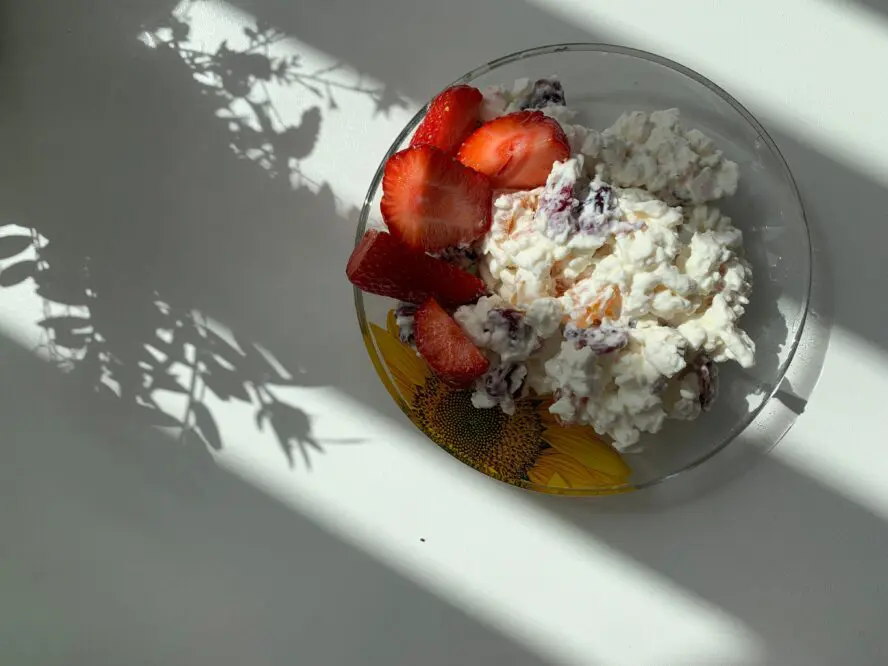
To put this into perspective, an optimal heart-healthy diet contains around 1500 mg of sodium24 — so if you have a full cup of cottage cheese with berries as your breakfast, it’s possible you’ve already consumed 60% of your daily sodium intake before you even leave the house. If you’re not careful about your portion sizes, cottage cheese can easily push you over your recommended intake.
What Counts As “Low-Sodium”?
If you’re trying to reduce your sodium intake, you might wonder what exactly is considered a low-sodium food. According to the Food and Drug Administration (FDA), a food cannot be labeled as “low-sodium” unless it contains 140 mg or less sodium per RACC, or Reference Amount Customarily Consumed25. The RACC is the information the FDA uses to help manufacturers determine serving sizes of foods.
Sodium Content of Common Cottage Cheese Brands
Low-sodium cottage products can be hard to find, but they do exist. However, most of them tend not to be organic. This is because salt acts as a natural primary preservative and texture stabilizer in cottage cheese. Organic brands avoid artificial preservatives, so they’ll rely on salt for shelf life, while non-organic brands can use additives to do this job instead.
Because of this, you may need to make a choice between low-sodium and organic based on your health priorities when it comes to cottage cheese.
| Cottage cheese brand and type | Sodium content per ½ cup serving (mg) |
| CLASSIC BRANDS | |
| Friendship (no salt, 1% milkfat) | 45 |
| bowl & basket Low-fat and No-Salt 1% milkfat (Shoprite brand) | 45 |
| Lucerne Lowfat 1% milkfat(Albertson’s store brand) | 60 |
| Breakstone’s (Low Sodium 2% milkfat) | 200 |
| Kemp’s Reduced Sodium (2% milkfat) | 320 |
| Daisy (2% milkfat) | 330 |
| ORGANIC BRANDS | |
| Organic Nancy’s (2% milkfat) | 300 |
| 365 Organic low fat (Whole Foods brand) | 360 |
| good Culture (2% milkfat) | 380 |
| Organic Valley | 450 |
Other Additives to Look Out for in Cottage Cheese
Of course, it’s not just low-sodium cottage cheese that may include additives. Some cottage cheese brands may contain additives to enhance texture and structure. These ingredients may cause adverse health effects in certain people, such as those with digestive conditions26.
If this is a concern of yours, pay attention to the labels. Products with “clean label” compliance (not to be confused with the Clean Label Project) will not contain additives like thickeners, gums, and stabilizers in favor of simple, whole ingredients like milk, cream, sea salt, and live cultures27.
Why Are There Gums and Stabilizers in Cottage Cheese?
Gums and stabilizers aren’t necessarily just in conventional cottage cheese brands. Even some organic brands like Organic Valley state on their site that they use gums in their cottage cheese products. Their reasoning is28:
“The added gums in the Organic Valley cultured products act as stabilizers. They are used as a thickening agent and prevent the products from separating. We use organic locust bean gum and/or organic guar gum.”
Some gums, like xanthan gum, may cause digestive symptoms in some people. However, other studies show that certain additives such as guar gum could promote healthy gut bacteria and benefit gut health overall29,30.
Full-Fat vs. Low-Fat vs. Non-Fat — Does It Matter?
Now that you know more about cottage cheese benefits, you may be weighing up the choice between low-fat cottage cheese, non-fat cottage cheese, or the classic full-fat cottage cheese option. The right choice for you will depend on your health goals.
If you’re trying to reduce your calorie intake daily, non-fat cottage cheese is probably the best choice. If you’re trying to induce satiety to help support weight loss or weight maintenance, then higher-fat cottage cheese options may actually be more helpful. These higher-fat options, especially full-fat options, are also especially rich in fat-soluble vitamins like A, D, E, and K, which will benefit just about anyone’s health.
What to Look for on the Label
If you’re still not sure which cottage cheese option to choose, here are some things to look out for as you seek out the right choice for you:
- Sodium range: If you’re looking for a low-sodium product, opt for brands of cottage cheese that contain less than 140 mg of sodium per serving. You may have to forego the organic status to enjoy a low-sodium option.
- Fat percentage: Choose the milkfat percentage level that works best with your lifestyle. Low-fat or non-fat options may be the best for those with fat malabsorption issues or a history of heart disease. Otherwise, full-fat options can provide a good source of omega-3 fatty acids.
- Ingredient list: As with all foods, be sure to read the ingredient list to confirm the cottage cheese product you choose does not contain any ingredients you are allergic or intolerant to. Organic cottage cheese products will typically contain fewer ingredients and additives.
- Live culture labeling: If you’re hoping to obtain gut health benefits from your cottage cheese, then look for brands with “live and active cultures” on the label.
- Organic sourcing: Look for organic and grass-fed brands of cottage cheese if you hope to benefit from the extra polyunsaturated fats.
Why Choose Organic Cottage Cheese?
Organic and grass-fed options typically contain mostly (if not all!) whole, all-natural ingredients — which may already be enough for some people to choose these options over the alternatives.

When assessing the differences in the nutritional profile of conventional cottage cheese products versus organic and grass-fed products, it comes down to the way the cows are nourished before the milk is extracted. Organic, grass-fed cottage cheese typically has higher levels of omega-3 polyunsaturated fats due to the fresh pasture and legumes in the cow’s diets31.
Who Should Be More Mindful
If you’ve gotten to this point, you’ve explored pretty much all of the cottage cheese health benefits. But just like any food, cottage cheese is not right for everyone. For example, those with sodium-sensitive hypertension should avoid cottage cheese or only consume very low-sodium options, like those with no salt. And those with fat malabsorption issues or certain digestive conditions should choose non-fat or lower-fat cottage cheese options.
Furthermore, those with lactose intolerance should stick to lactose-free cottage cheese options such as Green Valley™ or Lactaid® brands to reduce risk of digestive issues. Finally, those with casein insensitivity, a casein allergy, or another milk allergy should avoid cottage cheese altogether to avoid any harmful bodily reactions.
Final Thoughts
Cottage cheese is a generally healthy food that comes in various forms (low-sodium, lactose-free, and low- to non-fat options) to help meet a variety of nutritional needs. No matter what type of cottage cheese you choose, the high protein content can help provide optimal satiety and muscle health support. In other words, TikTok wasn’t wrong this time. But just like any other food, it’s always important to read the nutrition facts on the label to see if cottage cheese is right for you and your unique dietary needs.
Frequently Asked Questions
Both low-fat and full-fat cottage cheese offer health benefits. Low-fat cottage cheese may be better for those who do not tolerate fat well or who have a history of heart disease. But if you don’t have any dietary restrictions or intolerances, full-fat cottage cheese may be a better option for satiety and omega-3 fatty acid benefits.
Cottage cheese is made from adding healthy bacteria to milk. However, such probiotics may be eliminated during the pasteurization process — unless they’re added back in by the manufacturer. Be sure to look for “live and active cultures” on the label if you’re looking to enjoy your cottage cheese with a side of gut health benefits.
Organic cottage cheese is worth the extra cost if you’re looking for a simply made cottage cheese product with no additives. Organic cottage cheese, specifically grass-fed organic cottage cheese, can also provide a higher level of polyunsaturated omega-3 fatty acids because the milk used to create the cottage cheese is produced by pasture-fed cows.
Sources:
- https://www.dairyfoods.com/articles/99101-cottage-cheese-sales-top-2-billion
- https://fdc.nal.usda.gov/food-details/328841/nutrients
- https://fdc.nal.usda.gov/food-details/172181/nutrients
- https://www.darigold.com/product/whole-cottage-cheese/
- https://tools.myfooddata.com/nutrition-facts/172181/wt2
- https://www.hopkinsmedicine.org/-/media/bariatrics/nutrition_protein_content_common_foods.pdf
- https://www.eatright.org/food/food-groups/dairy-and-alternatives/what-to-look-for-in-cottage-cheese
- https://cdn.nutrition.org/article/S2475-2991(24)02473-9/fulltext
- https://www.clinicalnutritionjournal.com/article/S0261-5614(16)00044-3/abstract
- https://www.sciencedirect.com/org/science/article/abs/pii/S0034665919000636
- https://pmc.ncbi.nlm.nih.gov/articles/PMC11308463/
- https://my.clevelandclinic.org/health/diseases/23167-sarcopenia
- https://pmc.ncbi.nlm.nih.gov/articles/PMC8971000/
- https://fdc.nal.usda.gov/food-details/328841/nutrients
- https://pmc.ncbi.nlm.nih.gov/articles/PMC12714311/
- https://pmc.ncbi.nlm.nih.gov/articles/PMC12941187/
- https://pmc.ncbi.nlm.nih.gov/articles/PMC12810459/
- https://pmc.ncbi.nlm.nih.gov/articles/PMC12255039/
- https://pmc.ncbi.nlm.nih.gov/articles/PMC12775015/
- https://www.sciencedirect.com/science/article/abs/pii/S1871402125001699
- https://pmc.ncbi.nlm.nih.gov/articles/PMC11889060/
- https://pmc.ncbi.nlm.nih.gov/articles/PMC11743475/
- https://pmc.ncbi.nlm.nih.gov/articles/PMC13106139/
- https://www.heart.org/en/healthy-living/healthy-eating/eat-smart/sodium/how-much-sodium-should-i-eat-per-day
- https://www.ncbi.nlm.nih.gov/books/NBK209851/
- https://pmc.ncbi.nlm.nih.gov/articles/PMC12767680/
- https://www.ift.org/brain-food-blog/what-is-clean-label
- https://organicvalley.my.site.com/custhelp/s/article/Why-does-Organic-Valley-add-gums-to-the-cultured-products-cottage-cheese-and-cream-cheese
- https://pmc.ncbi.nlm.nih.gov/articles/PMC13082600/
- https://pmc.ncbi.nlm.nih.gov/articles/PMC12693824/
- https://www.sciencedirect.com/science/article/abs/pii/S0963996923007408?via%3Dihub

Add Organic Authority as a preferred source on Google?