
This post may contain affiliate links. As an Amazon Associate, I earn from qualifying purchases. Please read my disclosure.
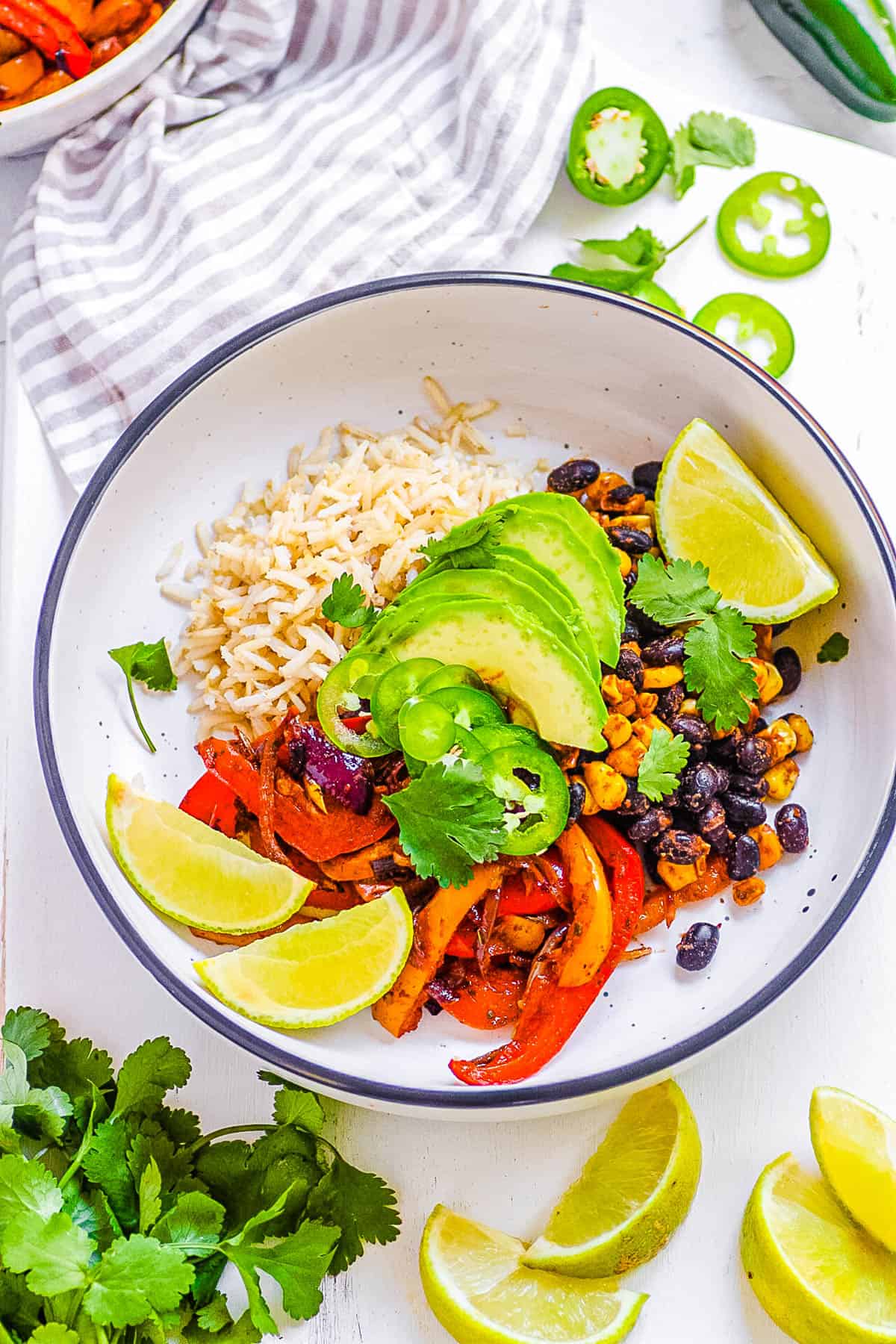
This Tex-Mex dish usually contains off-cuts or strips of meat, but my vegetarian fajita bowl requires no meat and is colorful, tasty, nourishing, and it is ready in just 35 minutes. I use tender roasted vegetables, bold seasoning, and creamy avocado to create an easy and balanced meal that my family absolutely loves.
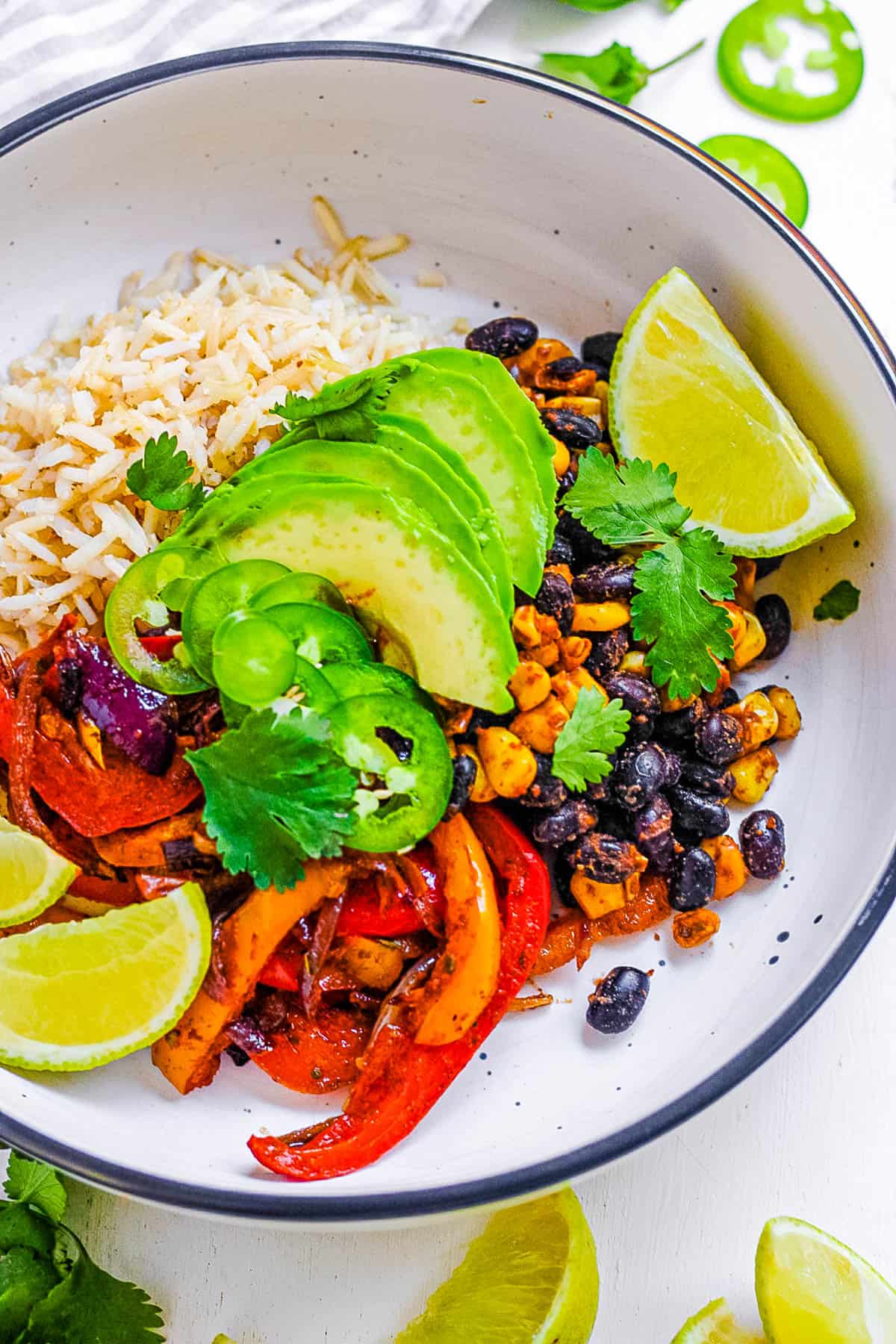
Vegetarian fajita bowls are my favorite way of bringing classic Mexican flavors, Texan influence, wholesome vegetables, and an array of textures into one savory bowl. If you love takeout Mexican food, try this dish with my fajita veggies, which is a Chipotle copycat.
I started making this vegetarian fajita bowl after seeing how much my family loved my BBQ jackfruit burrito bowl, which is incredible but requires more time and preparation. This fajita bowl has become a staple on busy weeknights, and I always make sure to overcater so there are enough leftovers for lunchtime salad bowls. It is so wonderfully fulfilling that you really do not need meat or even a meat substitute.
As a mom and health coach, I love easy plant-based meals that use basic ingredients, deliver robust flavor, and tick all of the nutritional boxes, like this vegetarian fajita bowl. I use brown rice for fiber, and a filling starch that does not spike energy levels, while the black beans add plant-based protein, and the roasted vegetables add vitamins, color, and a slight sweetness. Everything comes together thanks to a selection of spices common to authentic Mexican cuisine.
The components for this fajita bowl are cooked individually, which is how I retain their flavors and textures. I roast my seasoned peppers and onions together in the oven to bring out their natural sugars, then I warm the corn and beans in a skillet, allowing them to infuse with the spices. I layer everything over warm rice and add some traditional fixings before serving.
Many years ago, I was at a Mexican restaurant with my kids, and they overheard the patron next to us order fajitas. Curious kids that they are, they looked on with interest as the waiter arrived with the famous sizzling cast-iron skillet. My kids looked at each other, baffled. Then quietly asked me if the kitchen ran out of dishes. Ha! Next time I made fajita bowls, I served them to my kids in small pans, and told them I had no more clean plates. They loved that. Next time you make this dish, get creative with your presentation.
Latest Recipe Video!
🥘 Ingredients
I use simple pantry staples and fresh ingredients to create this vegetarian fajita bowl. Here is a list of everything I use:
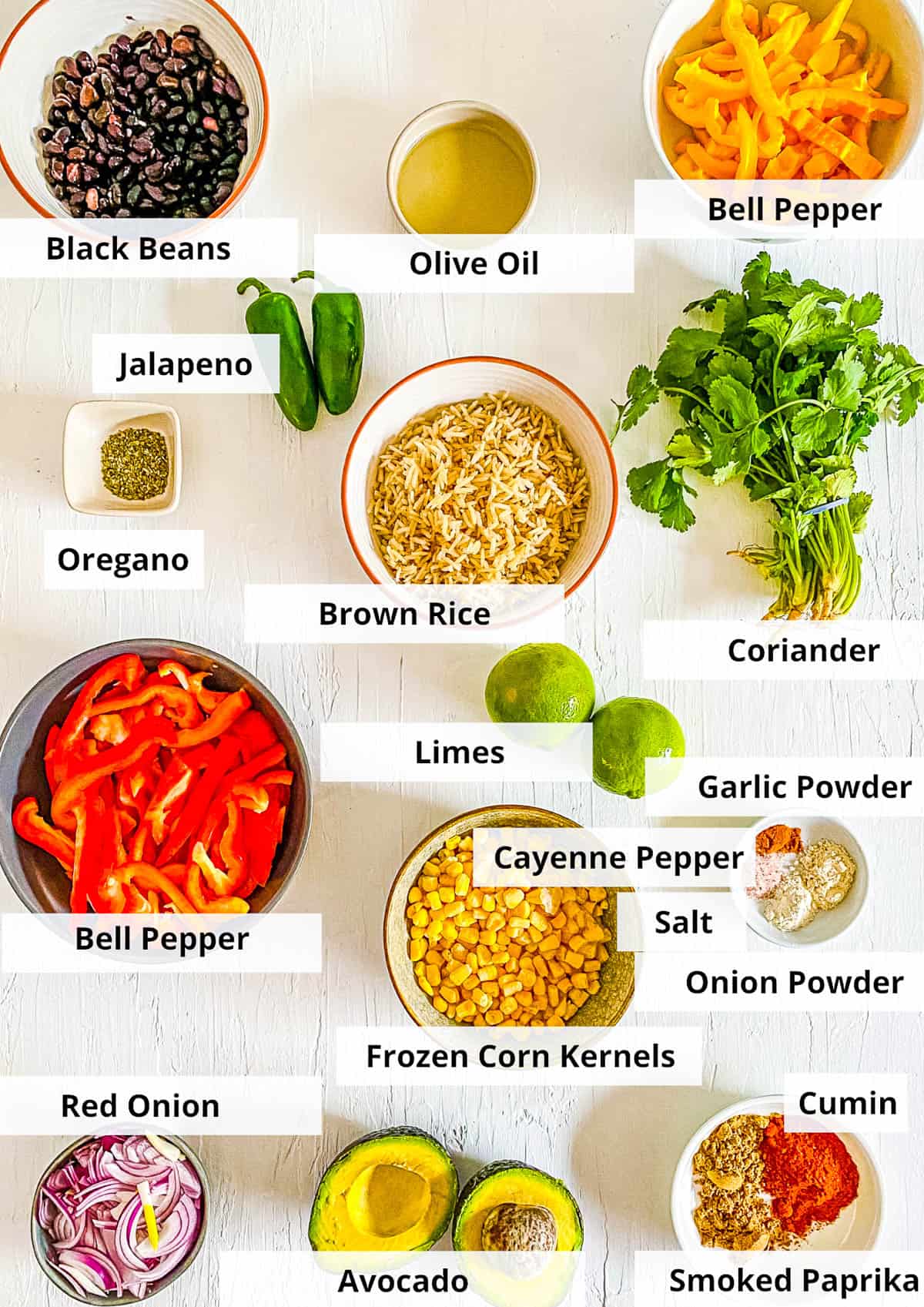
Fajita seasoning: I make my own blend with paprika, cumin, garlic powder, onion powder, oregano, and a pinch of cayenne for warmth. If you want something with a bit more heat, try this easy homemade taco seasoning recipe.
Bell peppers: I use red and yellow peppers for their bright color and natural, sweet, juicy flavor.
Red onion: Sliced red onion adds a slightly sharper flavor that softens as it roasts.
Olive oil: I toss the vegetables in olive oil to help them roast evenly and develop golden edges.
Corn: Frozen corn works well in this recipe, and it has a reliable sweetness and firm texture. If you use canned corn, make sure to drain and rinse well.
Black beans: I add on black beans for protein and a filling bite.
Brown rice: For convenience, I use cooked brown rice for a hearty base with added fiber and a slutty nutty taste.
Toppings: I like adding sliced avocado, chopped cilantro, and a squeeze of fresh lime juice to brighten up the bowl.
🔪 How To Make
Vegetarian fajita bowls require roasting, warming, sauteing, and layering techniques for a perfectly balanced bite. This is how I make mine:
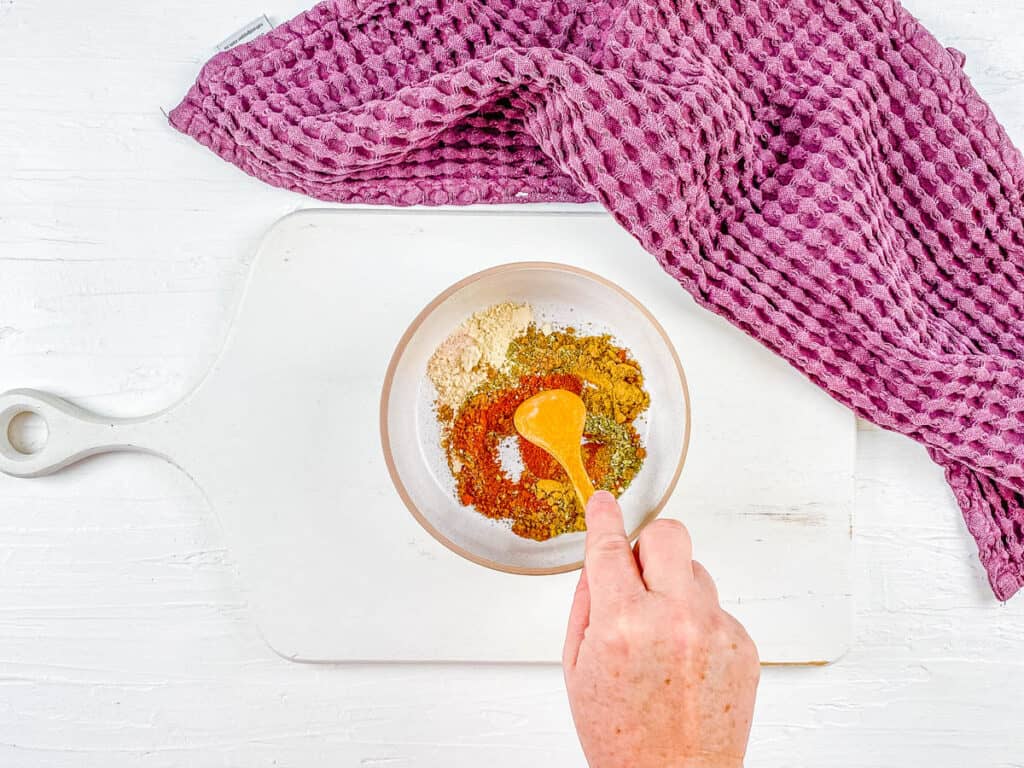
Preheat oven, make seasoning: I start by preheating my oven to 350F, then I measure all my spices and mix them in a small bowl.
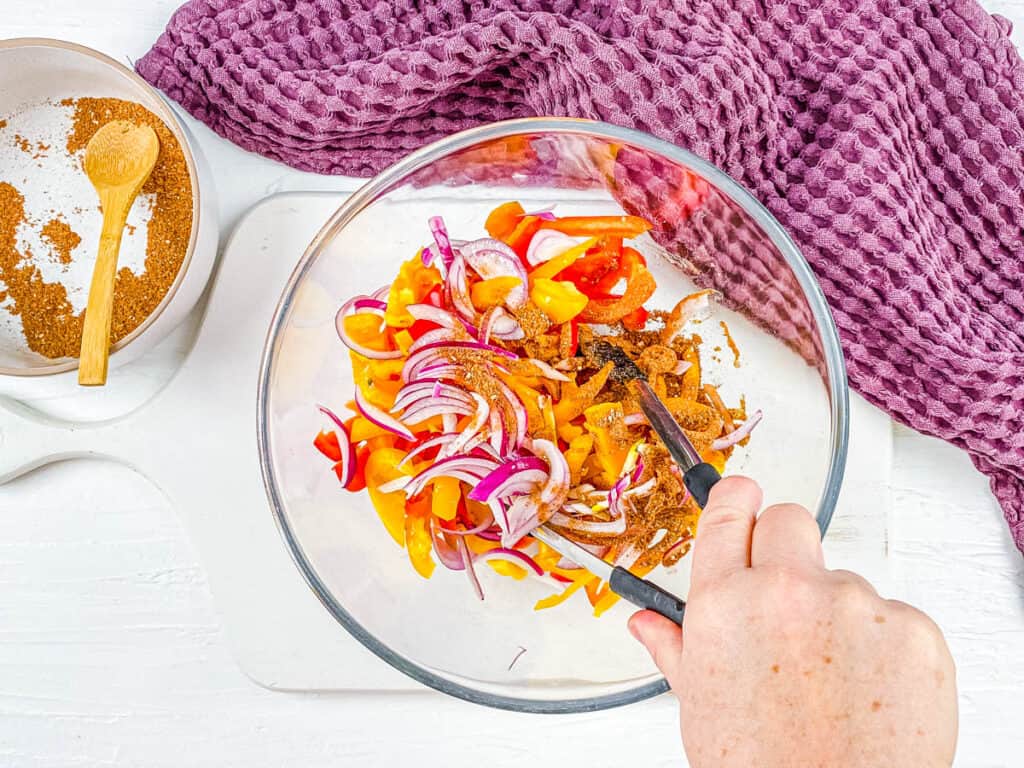
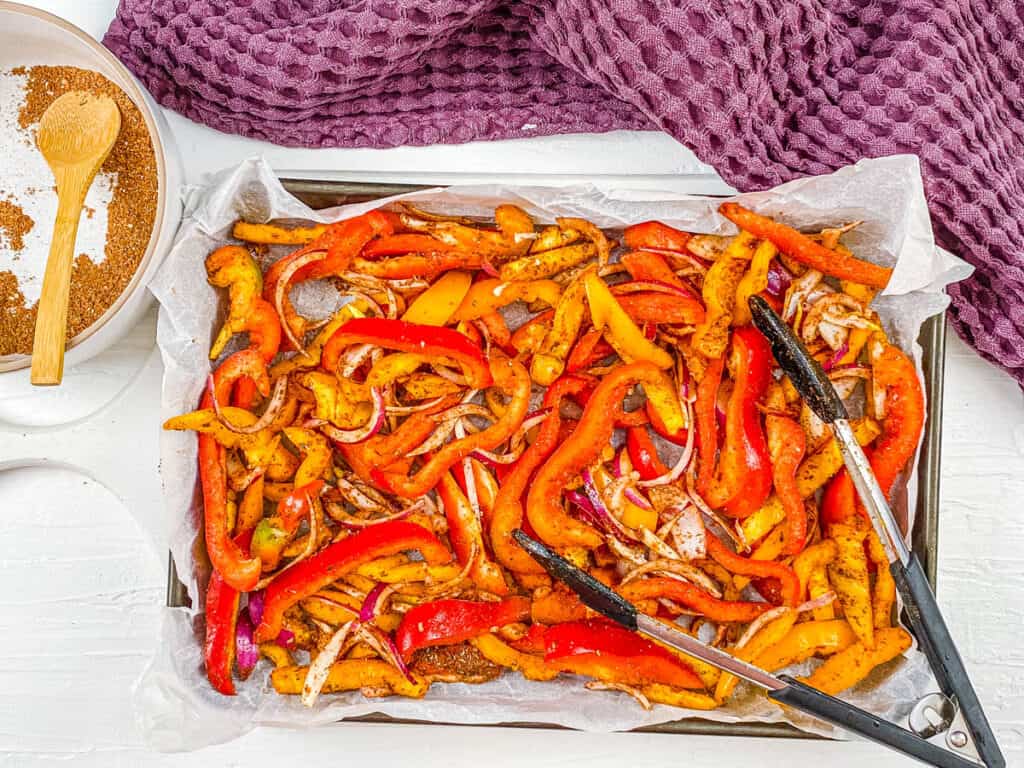
Coat vegetables: I place my sliced onion and pepper in a large bowl and toss with olive oil and half of my seasoning mix.
Roast veggies: I transfer the veggies to a baking sheet and roast them in the oven for 10-15 minutes.
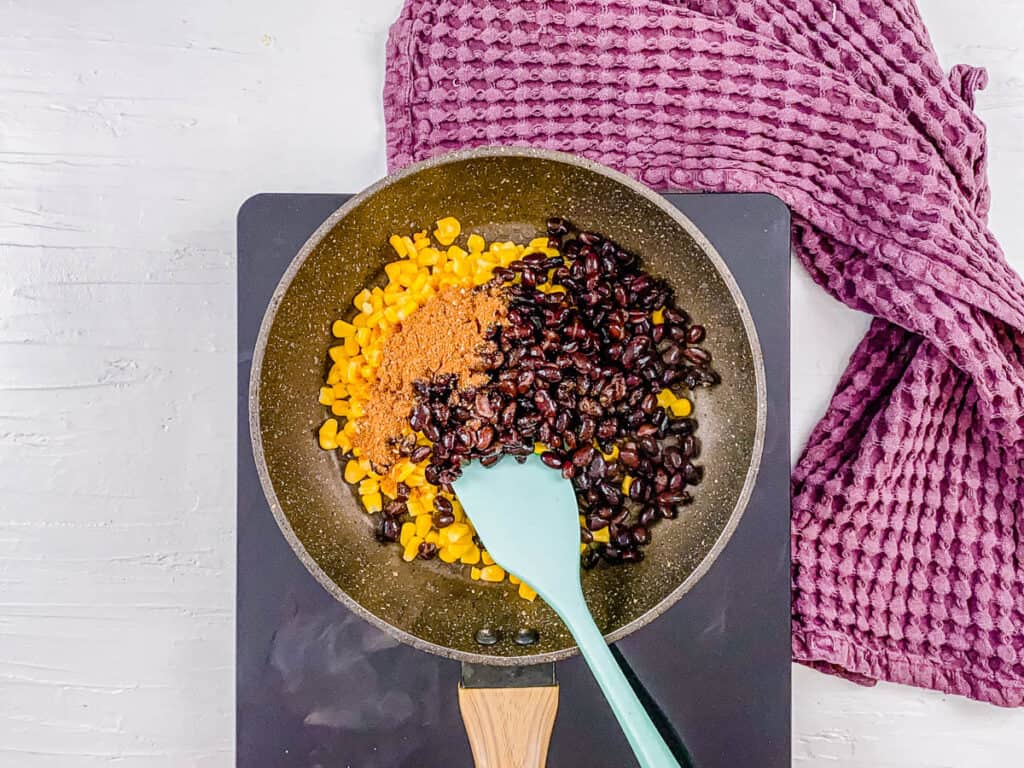
Heat corn and beans: While the veggies roast, I heat my corn and beans in a small skillet until hot, then stir in the remaining seasoning mix.
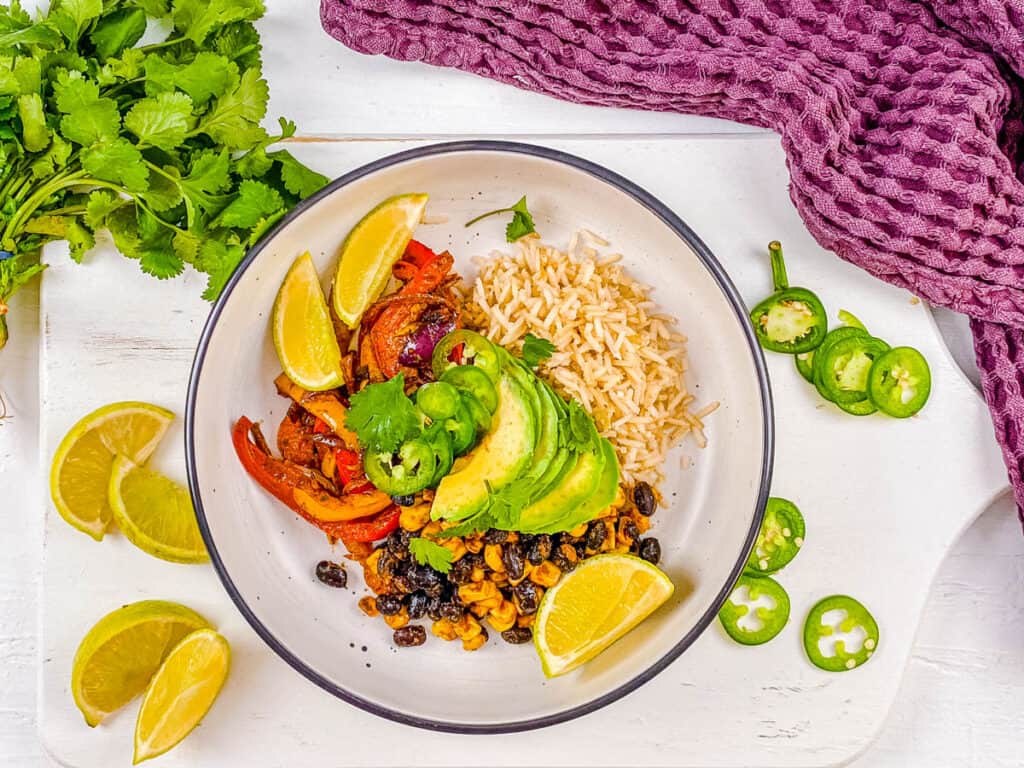
Assemble bowls: I reheat my cooked rice and divide it amongst 3-4 bowls. Then I spread a layer of my corn mixture, followed by my roasted veggies, and finish with my sliced avocado, cilantro, and lime. Serve immediately with a fresh lime wedge.
My #1 Secret Tip for this vegetarian fajita bowl recipe is to spread the vegetables out in a single layer when roasting. If my veggies are overcrowded, they steam and become limp. By spreading them out, they develop a slight browning, which makes a notable difference in their flavor.
Other Tips To Keep In Mind:
- Keep cuts uniform: I like to slice my onions and peppers to a similar size, to ensure they cook at the same rate. This also makes for easier eating.
- Adjust the heat: For a bit more heat, I add an extra pinch of cayenne pepper or add some sliced jalapeno to the toppings. You could also add 1 deseeded serrano chili to the skillet with the beans and corn.
- Hot oven roast: If I want some intense caramelization and crunchier veggies, I increase the heat to 400F, and remove the veggies as soon as the edges are charred.
- Drain and rinse beans: I drain, rinse, and dry my black beans before adding them to the skillet. This prevents excess moisture from steaming the beans and corn, and losing their firmness.
📖 Variations
This vegetarian fajita bowl is highly adaptable, and I have tweaked it in various ways to subtly change the flavor or to increase the nutritional value. These are my favorite variations:
Grain swap: Instead of brown rice, I make a quick batch of pressure cooker quinoa and use this for a fluffier, nutrient-dense base. I like adding a few baked corn tortilla chips on the side, which my kids love using to scoop up everything.
Cilantro lime rice: For a softer, more fragrant base, I make my 4 ingredient cilantro lime rice. The fresh citrusy flavors complement the spices and veggies. The rice is just as good the next day, and is tender enough to use in a cold fajita salad bowl.
Protein boost: If I want to add some extra protein to this bowl, I include 1 cup of chickpeas in the bean mix and add a bit more seasoning. I have also added a few cubes of crispy air fryer tempeh to the finished bowl, which adds a fun crunch.
🍽 Serving Suggestions
The great thing about vegetarian fajita bowls is that I can really go all out with my toppings. Next time you make this recipe, instead of a basic salsa, try my sweet and tangy pineapple pico de gallo. And if, like me, you enjoy an extra bit of sauce, add a drizzle of my vegan sour cream or my smoky red pepper crema for a luscious addition.
In our house, we have a build-your-own taco, burrito, and tortilla. So a build-your-own fajita bowl was bound to happen. But my family never expected me to make individual vegetarian fajita charcuterie boards. I placed my cooked veggies and beans in bowls, and instead of rice, I had a pile of vegan arepas ready to be filled, along with my vegetarian stuffed poblano peppers and edamame guacamole.
🧊 Storing And ♨️ Reheating
Refrigeration: I store the rice, bean mix, and vegetables in separate airtight containers in the fridge for up to 3 days.
Freezing: Fresh toppings and vegetables are not suitable for freezing as they change texture once thawed. I freeze my rice and beans separately, portioned out, for up to 2 months.
Reheating: If frozen, I allow the rice and beans to thaw in the refrigerator overnight. Then I reheat refrigerated components separately, in the microwave or on the stovetop, and add fresh toppings before serving.
❓ Recipe FAQs
Dry spices need heat and fat to fully activate and bloom. If the vegetables have not been covered in oil, the spices sit on the surface without releasing any flavor compounds. Additionally, any moisture from the vegetables may water down the spices, not allowing them to take on enough heat, resulting in a flat spice flavor.
This may sound like a small thing, but intentional layering has made a significant difference to my fajita bowls. I like to start with rice as the base layer, then spread the beans and corn over the top, allowing the seasoning to seep into the grains. Then I add a layer of my roasted vegetables, and I place my avocado to one side, if I know I am using additional toppings.
Rice can dry out if it sits too long or is reheated without moisture. I like adding a splash of water to my ready-cooked rice before reheating, and covering it to allow the steam to soften the texture. If I have a bit more time, I make my rice fresh and add a squeeze of fresh lemon juice or sauce over it before layering my vegetables.

Love this plant based Mexican recipe? Please leave a 5-star rating 🌟 in the recipe below and/or a review in the comment section further down the page!
You can also FOLLOW ME on FACEBOOK, INSTAGRAM, and PINTEREST to see more delicious, healthy, family-friendly food, and if you have any questions, I’m here to help!
📋 Recipe Card
Vegetarian Fajita Bowl
This Tex-Mex dish usually contains off-cuts or strips of meat, but my vegetarian fajita bowl requires no meat and is colorful, tasty, nourishing, and it is ready in just 35 minutes. I use tender roasted vegetables, bold seasoning, and creamy avocado to create an easy and balanced meal that my family absolutely loves.
Servings: 4 servings
Calories: 475kcal
- My #1 Secret Tip for this vegetarian fajita bowl recipe is to spread the vegetables out in a single layer when roasting. If my veggies are overcrowded, they steam and become limp. By spreading them out, they develop a slight browning, which makes a notable difference in their flavor.
- Keep cuts uniform: I like to slice my onions and peppers to a similar size, to ensure they cook at the same rate. This also makes for easier eating.
- Adjust the heat: For a bit more heat, I add an extra pinch of cayenne pepper or add some sliced jalapeno to the toppings. You could also add 1 deseeded serrano chili to the skillet with the beans and corn.
- Hot oven roast: If I want some intense caramelization and crunchier veggies, I increase the heat to 400F, and remove the veggies as soon as the edges are charred.
- Drain and rinse beans: I drain, rinse, and dry my black beans before adding them to the skillet. This prevents excess moisture from steaming the beans and corn, and losing their firmness.
Serving: 1bowl | Calories: 475kcal | Carbohydrates: 80g | Protein: 14g | Fat: 14g | Saturated Fat: 2g | Polyunsaturated Fat: 2g | Monounsaturated Fat: 8g | Sodium: 713mg | Potassium: 1136mg | Fiber: 17g | Sugar: 7g