If Cyclospora (aka “the diarrhea parasite”) has been making you think twice about your salad order, you’re not alone. As of mid-July, the CDC has confirmed more than 1,600 cases of cyclosporiasis in 34-plus states, and thousands more are still under investigation1. That’s a far cry from the roughly 250 cases reported by this point last year.
Michigan, Ohio, and New York have the highest numbers of cases2, and FDA investigators have now identified a Mexican lettuce supplier tied to California-based Taylor Farms, after contaminated iceberg lettuce reportedly made its way into select Taco Bell locations3.
Many people’s first instinct when a produce-related outbreak is reported is to swear off salad entirely. That’s not necessarily the “wrong” move, but since most of us get our fiber, antioxidants, and micronutrients from fresh produce, giving it up trades one health risk for several others. Washing and cooking your food matters, and so does something less visible: the internal terrain that governs how your body responds when exposure to pathogens or parasites inevitably occurs. No single factor, including stomach acid, guarantees you won’t get sick. But a well-supported gut is one meaningful layer in a bigger picture.
What Is Cyclospora, Exactly?
Cyclospora cayetanensis is a microscopic, single-celled parasite, not a worm. It’s an entirely different organism from the intestinal worms most “parasite cleanse” content is talking about. It is not spread person-to-person — it spreads through food or water contaminated with the parasite’s oocysts. Most often, this is fresh produce that’s been rinsed with or grown near contaminated water.
Past outbreaks have been linked to bagged salad greens, basil, cilantro, raspberries, and snow peas4. Michigan’s early data points to lettuce or salad greens as a likely factor in its cluster, though nothing has been confirmed nationally (as of this article’s publish date)5.
Symptoms typically appear about a week after exposure, though it can range from two days to two weeks — which makes tracing a source difficult. The signature symptoms are watery (“explosive”) diarrhea, cramping, bloating, nausea, and fatigue. What sets it apart from typical food poisoning is that symptoms can ease up for a few days and then return. Left untreated, illness can linger for a month or longer1.
Washing Helps, But It’s Not a Guarantee
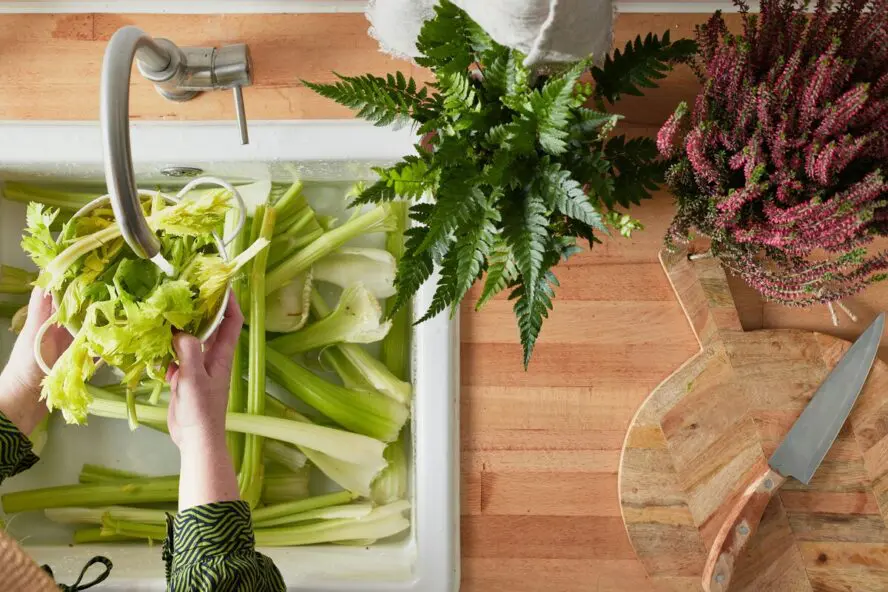
Rinsing lettuce (and all produce) under running water or soaking it in a baking soda or vinegar solution reduces microbial and pesticide load — it’s worth doing every time. But Cyclospora oocysts are sticky, and no chemical disinfectant or produce wash has been shown to reliably eliminate them once they’re on food. The CDC specifically states that produce should be washed even when it’s labeled pre-washed, while still acknowledging this step isn’t foolproof1.
During an active outbreak, heat is a more reliable safeguard than washing. Cooking kills the parasite — food heated to 158°F or higher destroys it. This is why leaning into soups, stews, and grilled or sautéed vegetables makes sense right now, particularly for the foods most associated with past outbreaks2.
Your Gut Terrain: A Major Layer of Defense
Here’s the piece that tends to get lost in outbreak coverage: outcomes after the same exposure can vary from person to person. One factor that may play a role is your own internal terrain, alongside things like dose of exposure, overall health, and access to prompt treatment. The gut isn’t a passive tube food passes through. It’s an active, layered system, and supporting it is a reasonable, low-risk thing to do regardless of outbreak season.
Stomach Acid
This is quite literally your first line of defense. Most ingested pathogens can’t survive a properly acidic stomach environment, so anything that causes low stomach acid may raise your risk of cyclosporiasis. Some of these risk factors include taking acid-suppressing medications, ongoing Helicobacter pylori infections, aging, chronic stress, or a long history of restrictive eating (which can often lead to localized nutritional gaps in zinc or iron).
Bile Acids
These powerful acids do more than digest fat. They carry antimicrobial properties and help regulate microbial load as food moves into and through the small intestine.
Gut Motility
This is what keeps things moving. Consistent, healthy transit time limits the window pathogens have to take hold. Eating regular meals is what triggers motility.
Secretory IgA
The gut’s frontline antibody (AKA your gut immune system), lives in the mucus layer coating your gut and neutralizes pathogens before they attach to the intestinal wall.
Mucosal Barrier Integrity
Held together by tight junctions, this is the physical boundary between what’s in the gut and what reaches the bloodstream.
Microbiome Diversity

This diversity is what rounds it all out. A well-fed, diverse population of beneficial bacteria competes with opportunistic organisms for space and nutrients and produces its own antimicrobial compounds, a phenomenon researchers call colonization resistance.
Supporting stomach acid specifically tends to have a substantial effect, since it’s the first line of defense and the one most commonly compromised. People working with a functional nutrition practitioner or integrative provider may have a range of tools in their arsenal to support stomach acid. Some of these may include stomach-acid-supporting supplements, such as Betaine HCl or digestive bitters, alongside food-based strategies like chewing thoroughly, eating without distraction (aka “rest-to-digest”), and limiting added sugars and ultra-processed foods. These are worth discussing with a qualified practitioner rather than starting blind, since the root causes of low stomach acid vary from person to person.
What to Do If You Suspect You’ve Contracted Cyclospora
If you’re having “explosive” diarrhea that lasts longer than a few days, especially if it eases up and then comes back, don’t wait it out.
Call Your Trusted Healthcare Provider
Be sure to specifically request Cyclospora testing. Standard stool cultures often miss this parasite, so it needs to be named and requested directly1. Cyclosporiasis is usually treated with a course of prescription antibiotics, and getting the right diagnosis early can shorten weeks of illness6.
Hydrate with Electrolytes
It’s not just about water — electrolytes are key. Frequent watery diarrhea depletes sodium, potassium, and other minerals faster than plain water can replace them, and dehydration is the most common complication. Add electrolytes to water once or twice a day, sip coconut water, or drink mineral-rich bone broth rather than relying on plain water alone. Seek emergency care if you have very dark urine or are unable to urinate, can’t keep fluids down, feel severely dizzy or confused, or see blood in your stool.
Healing Your Gut After Infection
Once the acute infection has been treated, the work isn’t done. A parasitic infection itself is inflammatory, and antibiotic treatment can leave the microbiome depleted. It’s common to experience other symptoms and just feel “off” for weeks after the diarrhea itself resolves.
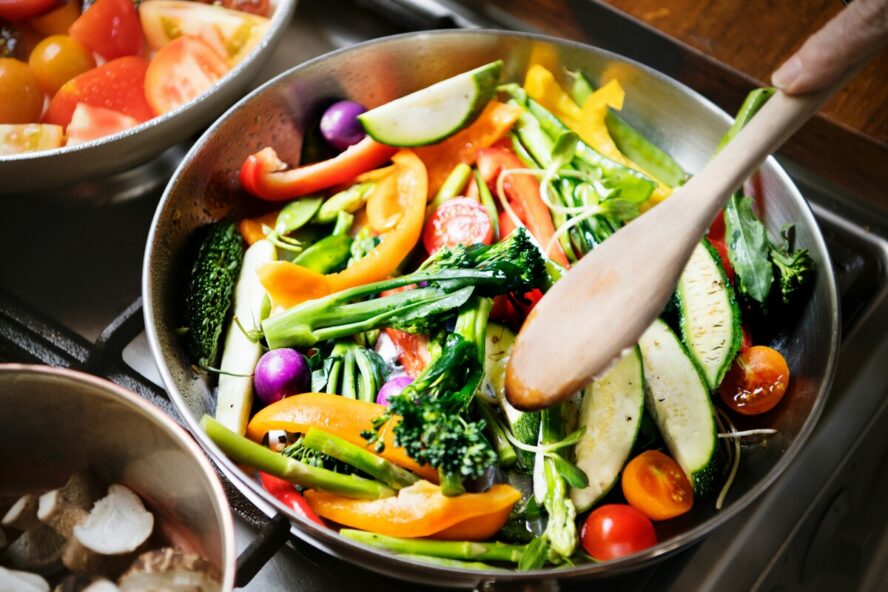
Go slow with food at first, favoring easy-to-digest foods like cooked options over raw vegetables and stewed meats, before gradually reintroducing variety. Support the gut lining with nutrients like L-glutamine and other amino acids, collagen, or bone broth once the acute phase has passed. As tolerance allows, reintroduce a diverse mix of fiber-rich vegetables and fermented foods, since fiber and diversity are what rebuild a resilient microbiome over time. A quality, spore-based probiotic can also help restore balance, though timing and strain matter — this is worth discussing with a qualified practitioner rather than guessing.
Finally, give your body permission to rest. The fatigue that follows a parasitic infection can outlast the digestive symptoms by weeks while the gut lining repairs and nutrient stores rebuild. And if symptoms return after a course of treatment has finished, that’s a reason to call your provider again, not a sign to push through it.
For anyone dealing with lingering bloating, irregularity, or fatigue well after the initial illness, functional stool testing can help make sense of what’s still out of balance, whether that’s a lingering pathogen, a depleted microbiome, or simply a gut that needs more time and the right support to fully recover.
The Bottom Line
This outbreak is real, and it’s worth taking seriously. Nothing here is a guarantee against getting sick, and if you do develop symptoms, a healthcare provider and proper testing are what will actually treat the infection. But fear isn’t a strategy either, and neither is giving up the produce your body needs. Skip the bagged lettuce, wash your greens and peel off the outer layers, lean on cooked foods during this season, and give supportive attention to the foundational systems (stomach acid included) that make up your gut’s landscape. That, coupled with timely medical care if you do become sick, is a reasonable, well-founded approach.
This article is for educational purposes and is not a substitute for medical advice. If you suspect you have cyclosporiasis or another gastrointestinal infection, consult a licensed healthcare provider.
Sources:
- https://www.cdc.gov/han/php/notices/han00531.html
- https://www.npr.org/2026/07/12/nx-s1-5890935/cyclosporiasis-outbreak-diarrhea-nausea-where-states-us
- https://www.cbsnews.com/sanfrancisco/news/salinas-taylor-farms-linked-cyclospora-outbreak/
- https://www.fda.gov/food/foodborne-pathogens/cyclospora
- https://www.usnews.com/news/u-s-news-decision-points/articles/2026-07-13/the-cyclosporiasis-outbreak-is-spreading-faster-than-the-cdc-can-track
- https://www.cdc.gov/cyclosporiasis/hcp/clinical-care/index.html

Add Organic Authority as a preferred source on Google?