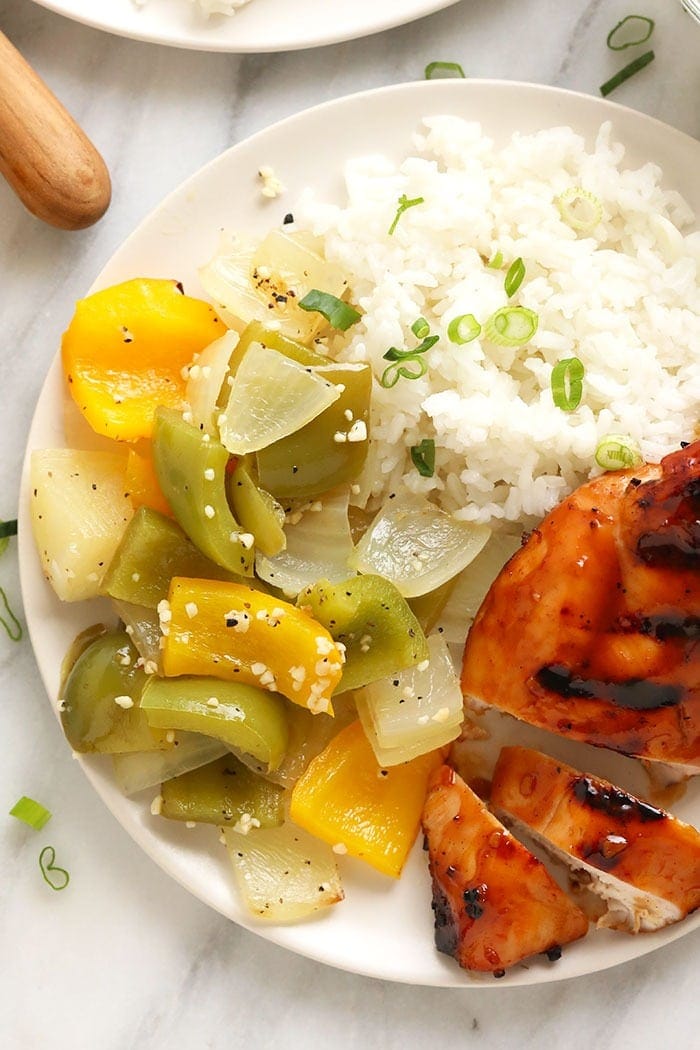
These grilled peppers and onions are my go-to summer side, and I make them at least a few times a week during grilling season. With just 5 simple ingredients and about 20 minutes on the grill, they turn out perfectly tender with lightly caramelized edges every time.
The foil packet method is what makes this recipe so foolproof. As the vegetables cook, the sealed packet traps heat and steam, helping the peppers and onions soften while caramelizing. That also means no grill basket, no pepper strips falling through the grill grates, and practically zero cleanup! These peppers and onions are an easy side that goes with just about everything.
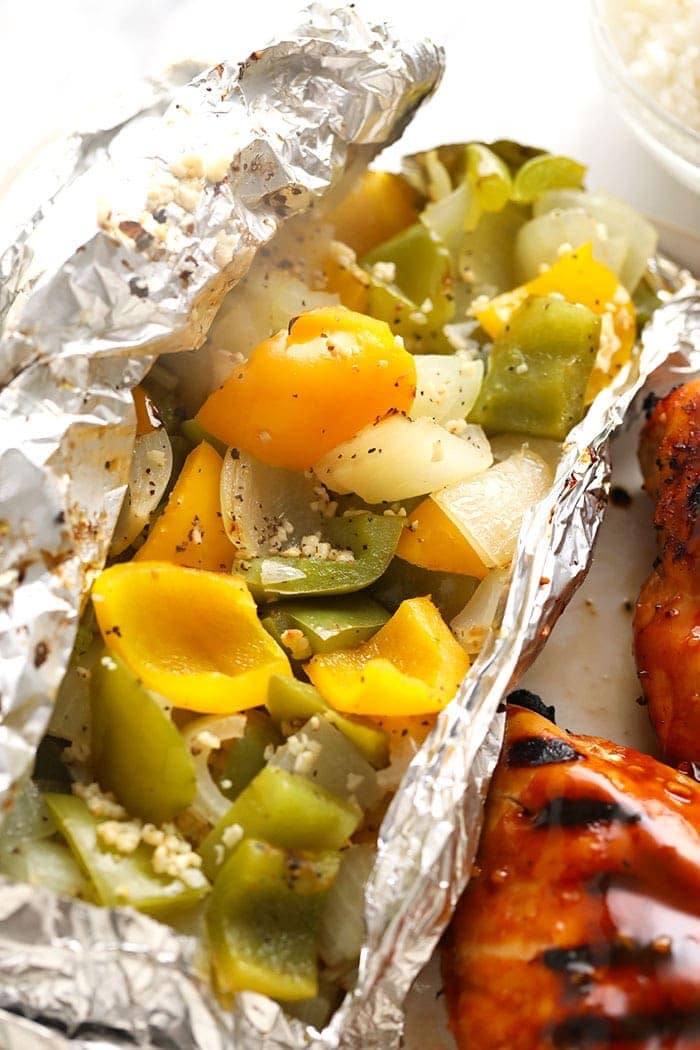
Here’s why I love these grilled peppers and onions all summer long:
- Just 5 simple ingredients: Bell peppers, onion, olive oil, garlic, salt, and pepper are all you need for a flavorful grilled side dish.
- Virtually no cleanup: The foil packet keeps everything contained, so there’s no grill basket to scrub and no vegetables falling through the grates.
- Perfectly tender every time: The sealed foil packet traps heat and steam, creating soft, caramelized peppers and onions with very little hands-on work.
- Incredibly versatile: Serve them alongside grilled meats, pile them onto burgers and sandwiches, tuck them into fajitas, or toss them with pasta or rice bowls.
Key Ingredients
Here’s all I need when I’m grilling bell peppers and onions:
Salt and pepper: I season generously. The veggies can handle it! I also love swapping in different spice blends for an easy flavor twist.
Bell peppers: Red bell peppers, yellow bell peppers, orange bell peppers…any color works! I love using a mix for the best visual appearance and sweetness. Yellow, orange, and red peppers are sweeter and caramelize beautifully on the grill. Green bell peppers are slightly more bitter but add a nice contrast.
Onion: Yellow onions are my go-to because they get the sweetest when caramelized. Red onions hold their shape really well and add gorgeous color. White onions work but have a sharper bite.
Olive oil: I coat the veggies with extra virgin olive oil so they caramelize without sticking to the foil. Avocado oil is an easy substitute with a higher smoke point and neutral flavor. Melted butter works, too, for a richer taste.
Minced garlic: Fresh minced garlic is best, but jarred minced works in a pinch. For a mellower flavor, whole smashed cloves roast beautifully inside the foil pack. Garlic powder (about ½ teaspoon) is the easiest sub.
How to Make Grilled Pepper and Onions in Foil
Want perfectly tender veggies with the right amount of caramelized flavor every time? Here’s how to grill onions and peppers in foil, step-by-step:
- Prep the vegetables. Slice the bell peppers into strips about ½ inch wide and cut the onion into thick half-moons. Then I toss everything in a large bowl with olive oil, minced garlic, salt, and pepper until every piece is glistening and evenly coated.
- Seal the foil packet. Pile the seasoned vegetables onto a large sheet of heavy-duty foil and cover them with a second sheet. Fold and crimp all four edges tightly to create a sealed packet. Make sure it’s well closed so steam can build inside and help the vegetables cook evenly.
- Grill until tender. Place the foil packet directly on the grill over medium-high heat (about 400ºF) and cook for about 20 minutes. The goal is soft, tender onions and peppers with lightly caramelized edges. If they’re still a bit crisp, reseal the packet and let them go for another 3-5 minutes.
- Finish and serve. Carefully open the foil packet (watching for hot steam) and serve right away. For a little extra char, I sometimes leave the packet open for the last few minutes so the vegetables can pick up more color from the grill.
Foil Pack vs. Grill Basket vs. Direct Grilling
There are a few different ways to make grilled peppers and onions, and each has its own advantages:
- Foil packet (my go-to): This is the easiest and most hands-off option. The foil steams and caramelizes the veggies at the same time, and cleanup is as simple as tossing the foil. It’s my go-to when I want consistent results without babysitting the grill.
- Grill basket: A grill basket exposes vegetables to more direct heat, allowing them to develop a bit more char and smoky flavor while keeping pieces from falling through the grates. It’s a great choice for anyone who wants more control during the cooking process.
- Directly on the grill grates: Cooking peppers and onions directly on the grates delivers that fire-roasted peppers and onions flavor. This method works best with larger cuts, so they don’t slip through the grates. It takes a bit more attention, but it’s a great option when maximum grill flavor is the goal.
A grill pan or cast-iron skillet can work if I want similar flavors indoors. I cook over medium-high heat, stirring occasionally, until the vegetables are tender and lightly charred, about 15 minutes.
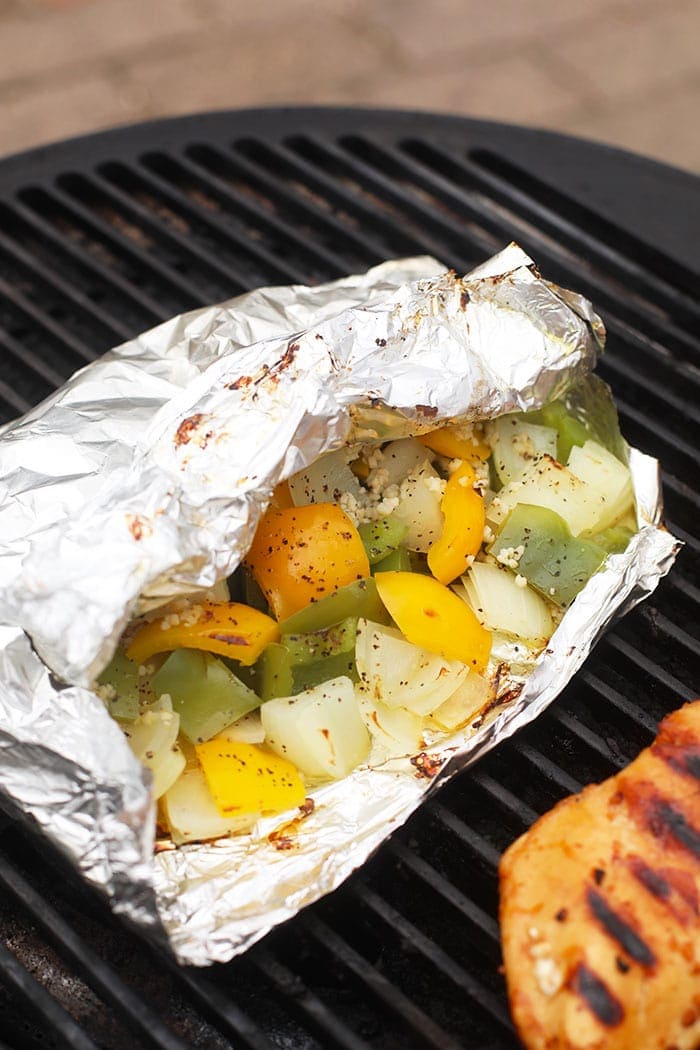
This recipe for how to cook peppers and onions on the grill is super simple, but a few small tips make a big difference in getting them perfectly tender and lightly caramelized every time:
- Use heavy-duty foil. I always reach for heavy-duty foil because it holds up better on the grill and is much less likely to tear. Regular foil can work, just double up the layers to help prevent leaks.
- Don’t overcrowd the packet. Try to keep the vegetables in an even layer instead of piling them too deep. This helps the heat circulate more evenly, so everything cooks at the same rate. If I’m cooking for a crowd, I’ll make 2 foil packets rather than one oversized one.
- Cut the vegetables evenly. Slice the peppers into ½-inch strips and the onions into thick half-moons so they finish cooking together. Thinner slices tend to overcook and become mushy before the thicker pieces are tender.
- Keep the packet sealed while it cooks. Opening the foil releases the trapped steam that tenderizes the vegetables, which can slow the cooking process. I only open the packet at the very end if I’m looking for a little extra char.
- Open the foil for extra char. On that note, if I want more caramelized edges, I open the packet during the last 3-4 minutes of grilling. Once the steam escapes, the vegetables are exposed to more direct heat and develop better color and a crisp-tender texture.
- Let the vegetables rest for a couple of minutes. After taking the packet off the grill, leave it sealed for 2 minutes before opening it. The residual heat finishes cooking the vegetables and allows the flavors to meld.
- Gas and charcoal both work. I’ve made this recipe on both types of grills with great results. Charcoal adds a little more smoky flavor, while a gas grill makes it easier to maintain steady grill temperatures. Either way, aim for about 400°F.
One of my favorite things about grilled peppers and onions is how easy they are to customize. I usually start with the base recipe (simple salt and black pepper), then adjust the seasoning depending on what I’m serving them with:
- Fajita-style: Add cumin and chili powder before grilling, then finish with a squeeze of lime after they come off the heat. These are perfect for Steak Fajitas, grain bowls, or a full Tex-Mex spread.
- Italian: Mix in dried Italian seasoning before grilling, then finish with a drizzle of balsamic vinegar. This version is slightly sweet and savory, and I love it piled onto sandwiches, tossed with pasta, or served alongside Grilled Chicken.
- Asian-inspired: Swap olive oil for sesame oil and add a splash of soy sauce and a pinch of red pepper flakes before grilling. After cooking, finish with toasted sesame seeds. The flavor is a little nutty and slightly spicy, and it works great with rice bowls, salmon, or grilled steak.
- Smoky Southwest: Season with smoked paprika, garlic powder, and a pinch of cayenne before grilling. This version has a deeper smoky heat that pairs really well with burgers, grilled sausages, or anything coming off a charcoal grill.
- Lemon herb: Keep the seasoning simple before grilling, then finish with lemon zest, oregano, and a squeeze of fresh lemon juice after cooking. It tastes bright and fresh, and it’s perfect for grilled fish, chicken, or lighter summer meals.
What to Serve With Them
These peppers and onions are one of those flexible grill sides I end up reaching for all summer long. They’re great straight from the foil packet, but they also work really well as a quick meal prep add-on throughout the week.
Here are a few ways I like to use them:
- With proteins: I like to serve them alongside Grilled BBQ Chicken Legs, Steak, Shrimp, or salmon. For kabobs, I like to thread the peppers and onions right onto skewers with the protein so everything cooks together and picks up a little extra char from the grill. Try my Chicken Fajita Kabobs, Classic Grilled Chicken Kabobs, or Grilled Gnocchi (for a veg twist)!
- As part of a meal: I’ll pile them onto hoagies alongside Spicy Peppers for a quick Philly-style sub, tuck them into tortillas for easy veggie fajitas, or toss them with warm pasta and a drizzle of balsamic when I want something fast but still flavorful. They also work really well spooned over rice bowls for an easy, filling dinner.
- With other grilled sides: I often serve them alongside Grilled Potatoes, Grilled Corn, or more grilled veggies when I’m putting together a full grill spread. They fit in easily wherever I need a simple, no-fuss vegetable side.
Store leftover grilled peppers and onions in an airtight container in the refrigerator for up to 4 days. They also freeze well. Spread them in a single layer on a baking sheet until frozen, then transfer them to a freezer-safe bag or container, where they’ll keep for up to 3 months.
When it’s time to reheat, I almost always use a hot skillet for 2-3 minutes. It helps restore some of the caramelized edges and keeps the peppers and onions from becoming overly soft. The microwave works in a pinch, but it steams the vegetables as they heat. The texture won’t be quite as good microwaved.
I don’t recommend reheating them in a new foil packet on the grill because they’ll continue steaming and can turn mushy.
More of My Favorite Grilled Vegetable Recipes
Can you use a grill basket instead of foil?
Absolutely! I use the foil packet method because it’s virtually foolproof and requires almost no cleanup, but a grill basket is a great option if I want a little more char. I simply toss the peppers and onions with the oil and seasonings and spread them in the basket. Then grill over medium-high heat for about 10-15 minutes, stirring occasionally.
What size should I cut peppers and onions for fajitas or sandwiches?
I usually slice the peppers into ½-inch strips and the onions into thick half-moons. That size gives them enough structure to hold up on the grill while still becoming nice and tender. For fajitas, sandwiches, burgers, or sausages, these slices are the perfect size.
Why are my grilled peppers and onions still crunchy?
If the vegetables are still crunchy after 20 minutes, the foil packet probably needs a little more time. I simply reseal the packet and grill for another 3-5 minutes. Thicker slices, a cooler grill, or an unsealed packet can all increase cooking time.
Do you need to peel grilled peppers?
Nope! Since I slice the peppers before grilling, I leave the skins on. They soften as they cook and add great flavor. Peeling is typically only necessary when roasting whole peppers, where the goal is to remove the heavily charred outer skin.
-
Preheat grill to 400ºF.
-
Prepare the vegetables by slicing the bell peppers into ½-inch strips and cutting the onion into thick half-moons.
-
Place veggies on a large sheet of tin foil.
-
Drizzle olive oil and toss to make sure all veggies are fully coated.
-
Season with minced garlic and a generous amount of salt and pepper.
-
Cover veggies with another piece of tin foil, then fold in the sides to create a foil pack.
-
Grill directly on the flames at 400ºF for about 20 minutes or until your veggies reach the desired texture.
A tight foil packet is what creates the steam that softens the vegetables. Loosely wrapped packets will take longer to cook and won’t get quite as tender.
Calories: 73 kcal, Carbohydrates: 6 g, Protein: 1 g, Fat: 5 g, Fiber: 2 g, Sugar: 5 g
Nutrition information is automatically calculated, so should only be used as an approximation.
More Grilled Veggie Recipes