
You may have gone to a restaurant, and after perusing the menu for a few minutes, your server approached your table to ask if you were ready to order. You put down your menu, looked up at them, and asked if a certain item was fresh. Your waiter then looked at you from the corner of their eye to see if you were being serious. On the surface, it may sound like an innocent question, but if this scenario was the setup for a comedic sketch, they might respond with something like, “No. We dig it out of the trash.” But they don’t do that, realize you’re being serious, and then pause while they figure out how to respond to such a loaded question without offending you.
I was a waiter at several different types of restaurants, from formal sit-down establishments to casual counter-service operations, and there were few ordering behaviors that sent me into a quiet panic like this one. I’d try to quickly profile the diner in an attempt to understand what they meant by “fresh.” You see, freshness can mean something different to a diner versus a restaurant worker. In my experience, restaurant workers use the term “fresh” to describe foods that are still safe to eat according to the food safety training many of us are required to undergo. Selling foods that do not fit into that definition is not only illegal, but it’s just bad business, and asking such a question can set the tone for your entire dining experience.
Diners may actually mean something else when they ask about freshness

The impression that a diner gives when they ask if the food is fresh at a restaurant is that they do not trust its workers to provide them with good — or even safe — food, and it may signal to the waitstaff that they’re serving one of the worst people to dine at a restaurant. A lot of the headache involved with fielding questions about “freshness” comes down to servers trying to determine your definition of the term and how it applies to that particular menu item. Do you mean made fresh to order, made fresh that day, or made without canned or frozen products? And even if the business does make everything fresh to order, do you want to know if the item is made from scratch? Without context, a server may struggle to answer that question.
At a casual diner where customers expect sassy service, it might be okay for waitstaff to ask for clarification, but at higher-end restaurants, trying to verbally determine what the customer means may come off as poor service. I’ve had entitled diners shout the word “fresh” repeatedly as if I were hard of hearing or attempt to say it in different languages, assuming that I didn’t speak English, before requesting to speak to the manager. Think about what you really want to know before asking a server if something is “fresh.” If your questions about freshness have more to do with quality and flavor, though, then the best course of action is to follow Anthony Bourdain’s advice and get on your server’s good side. They’ll guide you towards the best things to order and steer you away from things you should avoid.
Understanding where you’re eating and what you’re ordering can prevent server side-eye
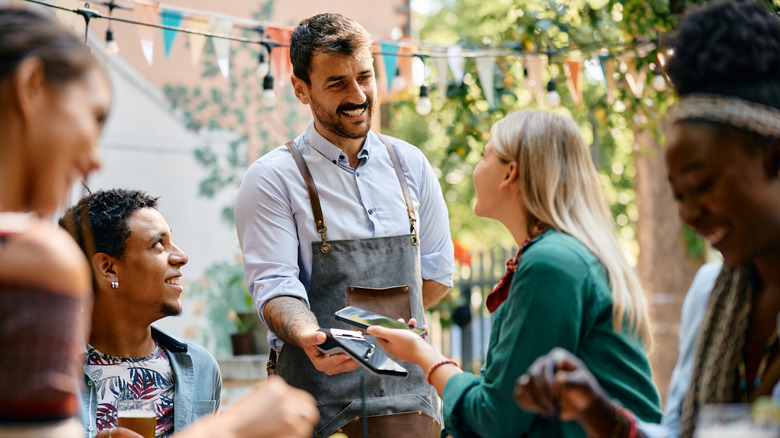
Being aware of the type of establishment you’re eating at can help you ask the right questions or nullify the need for them altogether. Many chain diners don’t make their food from scratch and may get items delivered to them frozen or boxed, which they then reheat and serve, like Denny’s hash browns. Asking if something is “fresh” at one of these types of eateries will probably get you more than a side-eye. There are some chains that make their food from scratch, but these businesses typically advertise this fact. Many fine-dining restaurants, on the other hand, will make almost everything in-house, and asking about their freshness can be offensive.
The time it typically takes to receive your meal is another clear indicator of how a restaurant prepares its food. If you can expect to receive your meal within minutes, it may be pre-made, but that’s not necessarily a bad thing. When I was working at a winery’s bistro, for example, we’d make a lot of soup from scratch using local ingredients and keep it in our cooler to serve throughout the week. We had a quick-service business model, so we also assembled our famous croque-monsieurs in the mornings and toasted them à la minute. Many other bistros and diners also cook foods to order that are best enjoyed hot and crispy. At the bistro, we also freshly assembled salads for each customer, which prevented them from getting soggy, but we never chopped the veggies to order, which would have exponentially slowed down our operation.