
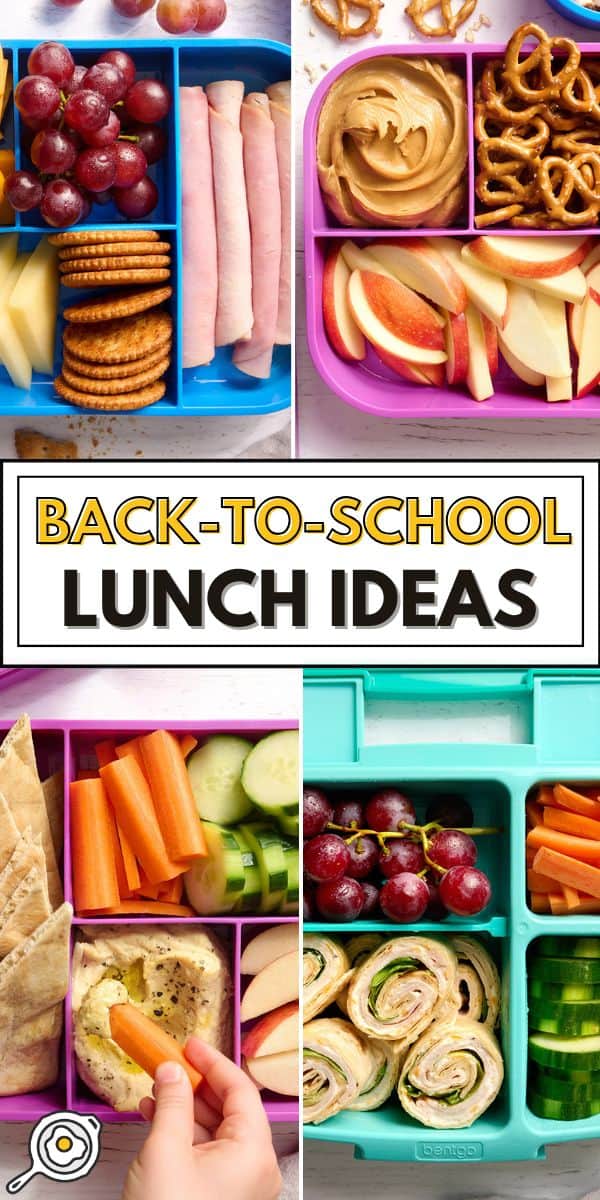
School lunch feels like a simple parenting task until you’re staring into the refrigerator at 7am with a half-asleep kid behind you. (While you’re also trying to figure out their breakfast, am I right?) On top of the time crunch, many of us are navigating specific school guidelines, and you don’t want to be that parent who sends the wrong thing (been there!) That’s exactly why I put together these 5 bento box combos to help you kick the week off on Monday and finish strong on Friday! Keep them on rotation, swap things out based on what your kid actually eats, and adjust as you go!

Pin this recipe for later!
All recipes are rigorously tested in our Nashville Test Kitchen to ensure they are easy, affordable, and delicious.
Make School Lunches Easier
When I’m talking with my kids about their upcoming lunches for the week (typically right before our weekly grocery haul), I try to offer options that include ingredients that can also be used in other meals, like dinner, or snacks for everyone. The lunch plan I’ve shared below is just 1 weeks’ worth of super easy options (Monday-Friday.) But let’s say you want to mix it up the following week; sending your kids with shredded chicken inside their quesadilla also means the rest of that shredded chicken could go into chicken noodle soup or chicken enchiladas for the whole family’s dinner!
Most of these back-to-school lunchboxes are as simple as slicing up some fruit or veggies and adding a protein and a grain. There’s also plenty of room to swap ingredients based on what your kids enjoy, or to adjust depending on their appetites! You can jump straight to the lunch box ideas below, or keep reading for my top tips and a few helpful facts before you get started.
- Go for full-size items instead of individual portions. I highly recommend buying full-size products to slash those brutal per-unit costs! Wholesale clubs pass their operational savings right down to us, and honestly, we’re way too smart to keep paying a premium just for individual plastic wrapping! For example, skip the pre-portioned baby carrots and go for a good old-fashioned bag of full-size carrots. Peel and cut them into sticks and alternate which days of the week they appear in your kid’s lunch.
- Bulk buy to save money (when it makes sense!) I buy shelf-stable foods like pretzels, whole-grain crackers, peanut butter, and canned beans in bulk only when I know my kids will eat them and I have room to store them. Just don’t commit to a giant box of snacks before your kids have tried them! Let them choose a few smaller packs first, then stock up once you know they’ll actually get eaten. I also don’t recommend buying fresh produce in bulk, since it often winds up going to waste due to a shorter expiration date!
- Check the school rules. For example, many schools don’t allow peanuts or tree nuts of any kind, while some schools are OK with them. Double-check before school starts. Also, my daughter’s school requested that we don’t send any food items in glass to help avoid painful accidents. So it’s not just the food you put IN the lunch boxes that can be subject to school rules! I’ve linked the lunch boxes and reusable bags I bought for my daughter at the end of this post, just in case you’re in the same boat.
- Batch cooking makes mixing up lunches easier. This week’s lunch plan doesn’t rely on batch cooking, but if you want to mix things up from week to week, it’s a great habit to get into! While assembling lunchboxes definitely counts as meal prep, batch cooking is a little different. It means prepping one versatile base ingredient in bulk, like a big batch of shredded chicken, crockpot dry beans, or a wholesome grain. You can flavor these bases differently throughout the week so the lunchboxes never get boring.
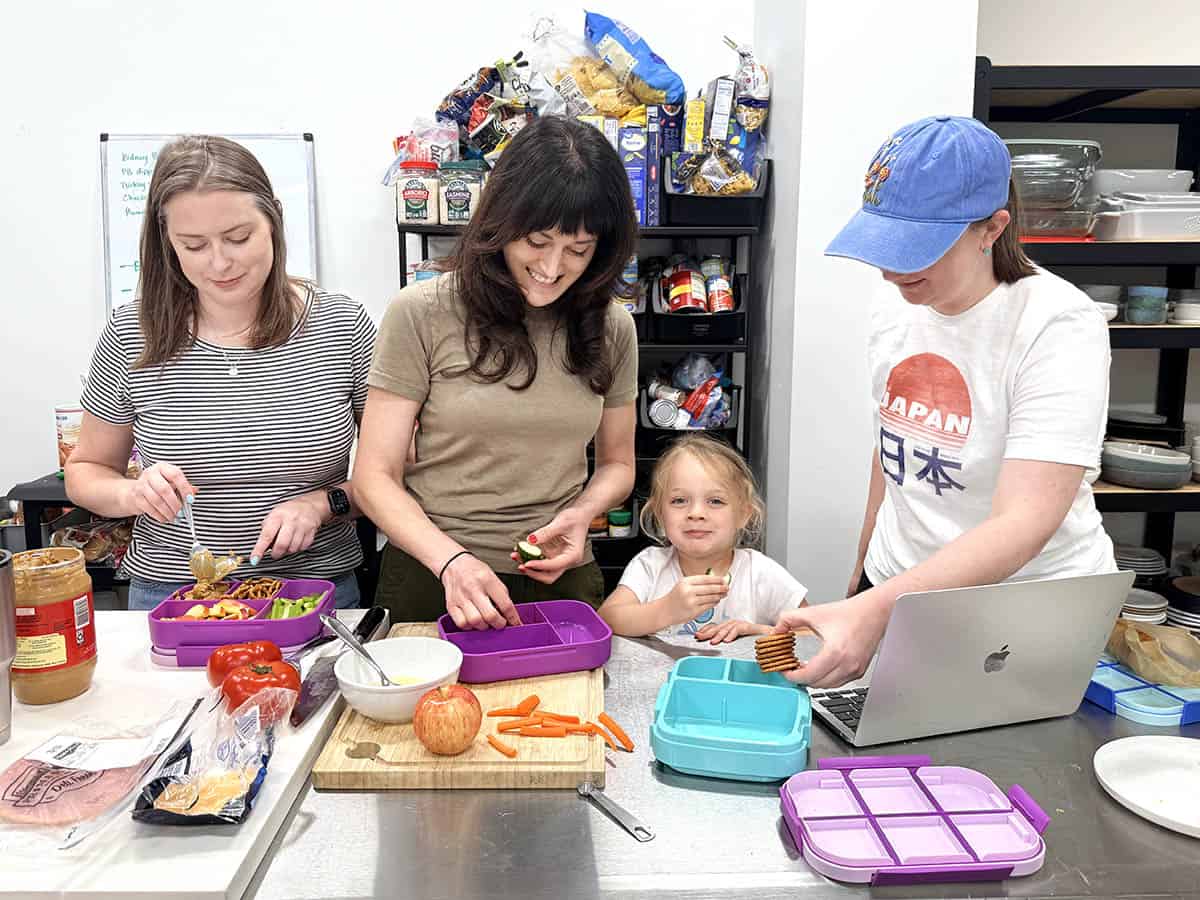
As of 2025, the average cost of a school cafeteria lunch was around $3.09 (School Nutrition Association 2025 Trends Report), which sounds reasonable until you consider what’s on the tray. (Not to mention, with inflation sky-high now and other economic factors at play in 2026, I’m willing to bet the average cost of cafeteria lunch will be a bit higher. Leave us a comment and let me know what you pay for your kid’s cafeteria lunch!)
School nutrition is in real flux right now. The Healthy, Hunger-Free Kids Act of 2010 pushed for more fruits, vegetables, and whole grains in cafeterias, but local food funding has since been cut, free meal eligibility has been tightened, and new dietary guidelines are still years away from reaching your child’s tray.
Nearly 90% of school nutrition directors also report worker shortages as a barrier to meeting nutritional standards. The result? Less variety, less fresh food, and fewer chances for kids to explore new flavors.
We’re making lunchboxes for kids here, so the likelihood of a gourmet Caesar salad being welcomed at kindergarten lunchtime might be a bit far-fetched. Instead, I’m keeping things SIMPLE, fresh, and balanced.
I have nothing but respect for cafeteria staff doing hard work under real constraints, but the system is working against them right now. Packing school lunches at home gives us something the cafeteria can’t always guarantee: variety and satisfaction.
The average cost of a packed lunch was $6.15 per day (Deloitte 2025 Back-to-School Report), but we’re going to try to get that cost down so it’s closer to the dollar amount kids spend in the cafeteria, all with nutrition and variety in mind.
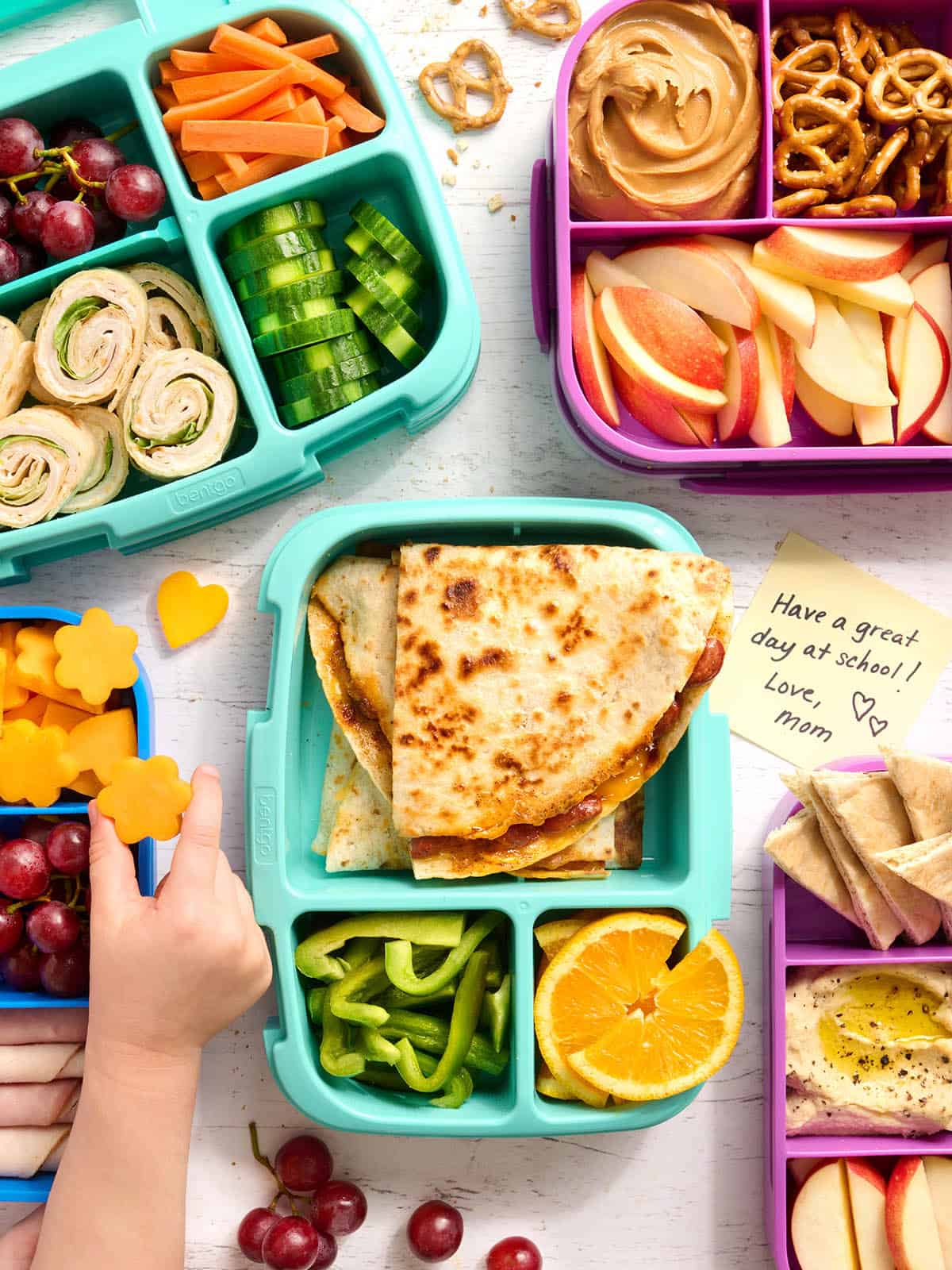
5 Back-to-School Lunch Box Ideas
These five bento boxes are built around the solid existing USDA guidelines, Budget Bytes’ recipes, and one simple goal of packing lunches your kid will actually eat…because food that comes home untouched is money wasted. I’ve also filled them with foods that taste great chilled with an ice pack or served at room temperature, so you can keep things simple and feel confident everything stays safe until lunchtime.
1. Turkey Pinwheel Lunch Box
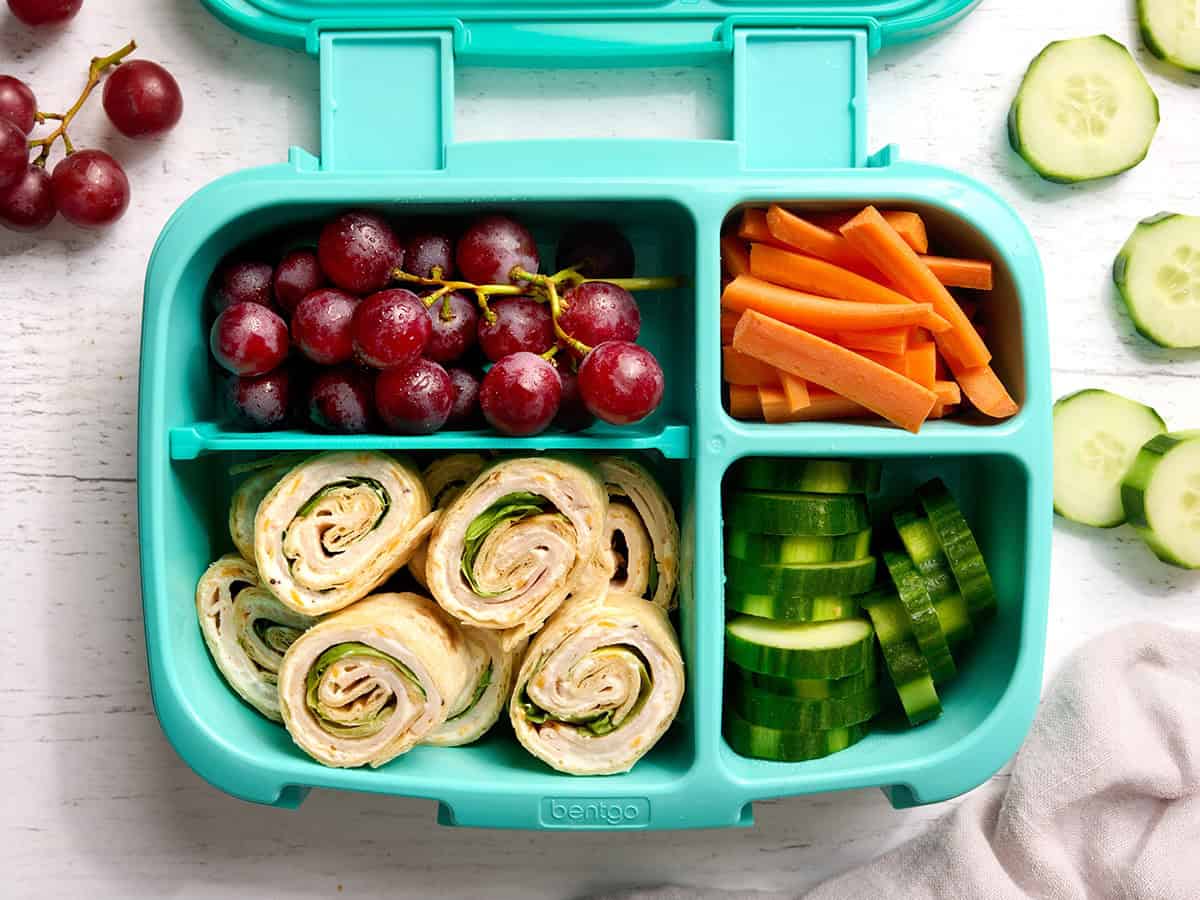
Cost: $3.16-$3.83
- Grain: 2 whole-wheat or flour tortillas ($0.60)
- Protein: 4 slices deli turkey ($1.80) and 2 Tbsp. cream cheese ($0.18)
- Veggie: ⅓ cucumber ($0.25) and/or 1 carrot ($0.22) (You can sneak in some greens like spinach if you have it on hand!)
- Fruit: ½ cup grapes ($0.33) and/or 1 orange ($0.45 when purchased in a 4 lb. bag)
Our turkey pinwheels use familiar ingredients that most kids already know and enjoy. The cream cheese helps keep the spirals together, making them easy to pack and a little less messy for kids to eat. I also love that they’re QUICK to assemble. They’re no more work than a regular sandwich, really, but my daughter is much more excited to see them in her lunch box!
I always recommend asking your kids which fillings and sides they actually like before packing their lunch. I find that getting them involved, even in a small way, usually means less food gets wasted. This lunchbox as a whole is also exceptionally budget-friendly because it relies on standard grocery staples like flour tortillas, deli turkey, cream cheese, and high-yield fresh produce like carrot sticks and cucumbers that can easily be reused throughout the week to minimize grocery waste. Win-win!
2. Cheese Board ‘Lunchable’ Box
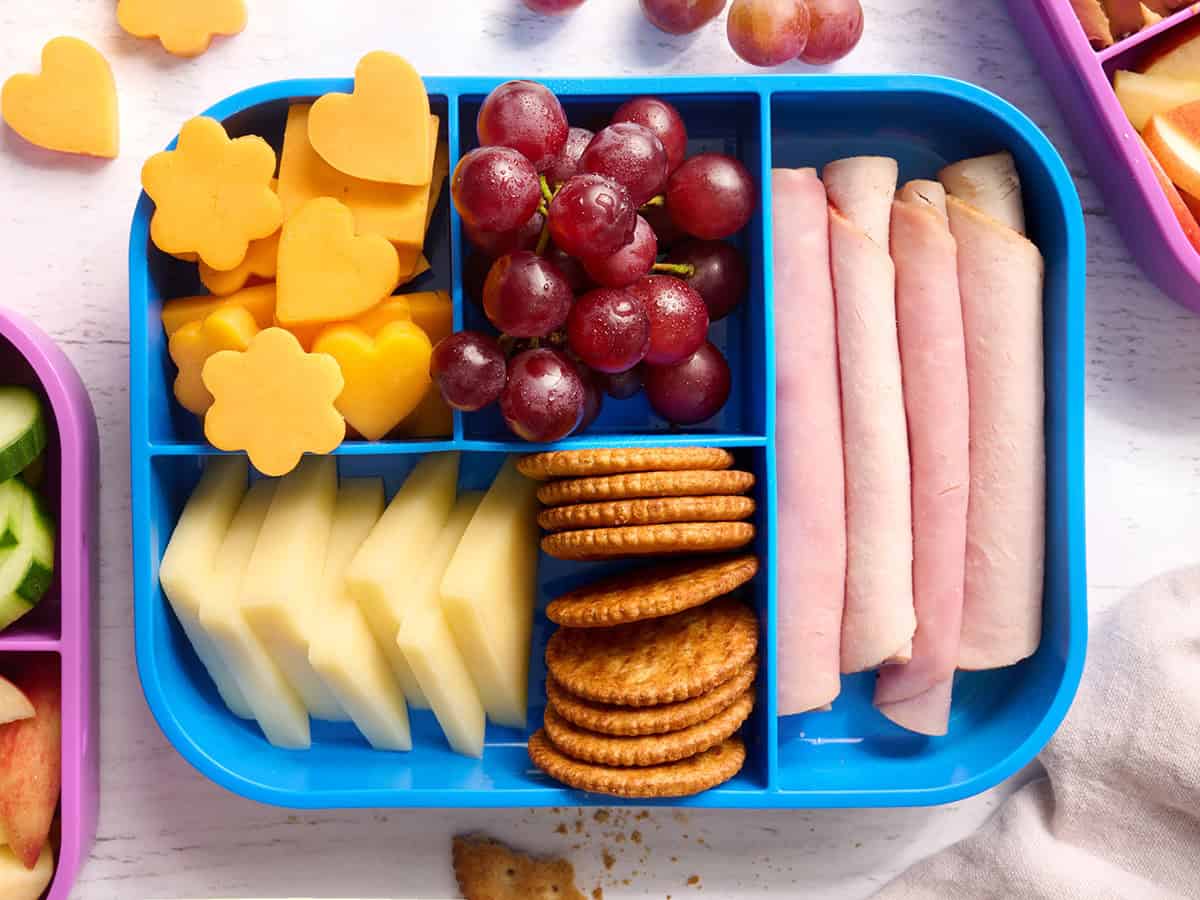
Cost: $1.81-$3.41
- Grain: 10 store-brand whole-grain crackers ($0.20)
- Protein: 2 oz. cheese ($0.46), plus 2 slices deli ham ($0.60) or 2 slices deli turkey ($0.90), if using
- Veggie: ⅓ cucumber ($0.25) and/or 1 carrot ($0.22)
- Fruit: ½ cup grapes ($0.33) and/or 1 orange ($0.45 when purchased in a 4 lb. bag)
This lunch is based on our cheese board lunch box, just made a little more kid-friendly. It’s basically a homemade version of the store-bought lunch kits kids already know (tell them they can help make their own Lunchables!). They can stack the crackers, cheese, and deli meat themselves, which I think makes lunch feel more fun and gives them some control over what they eat.
I also built this one around simple, wholesome ingredients that are easy to keep on hand. It’s a real budget hero because there’s no cooking involved, and you can prep it up to 3 days ahead using affordable blocks of cheese, any little odds and ends already in the refrigerator, whole-grain crackers, and shared fruit like grapes or oranges. Add an ice pack, and it’s ready to go.
3. Peanut Butter Dippers Box
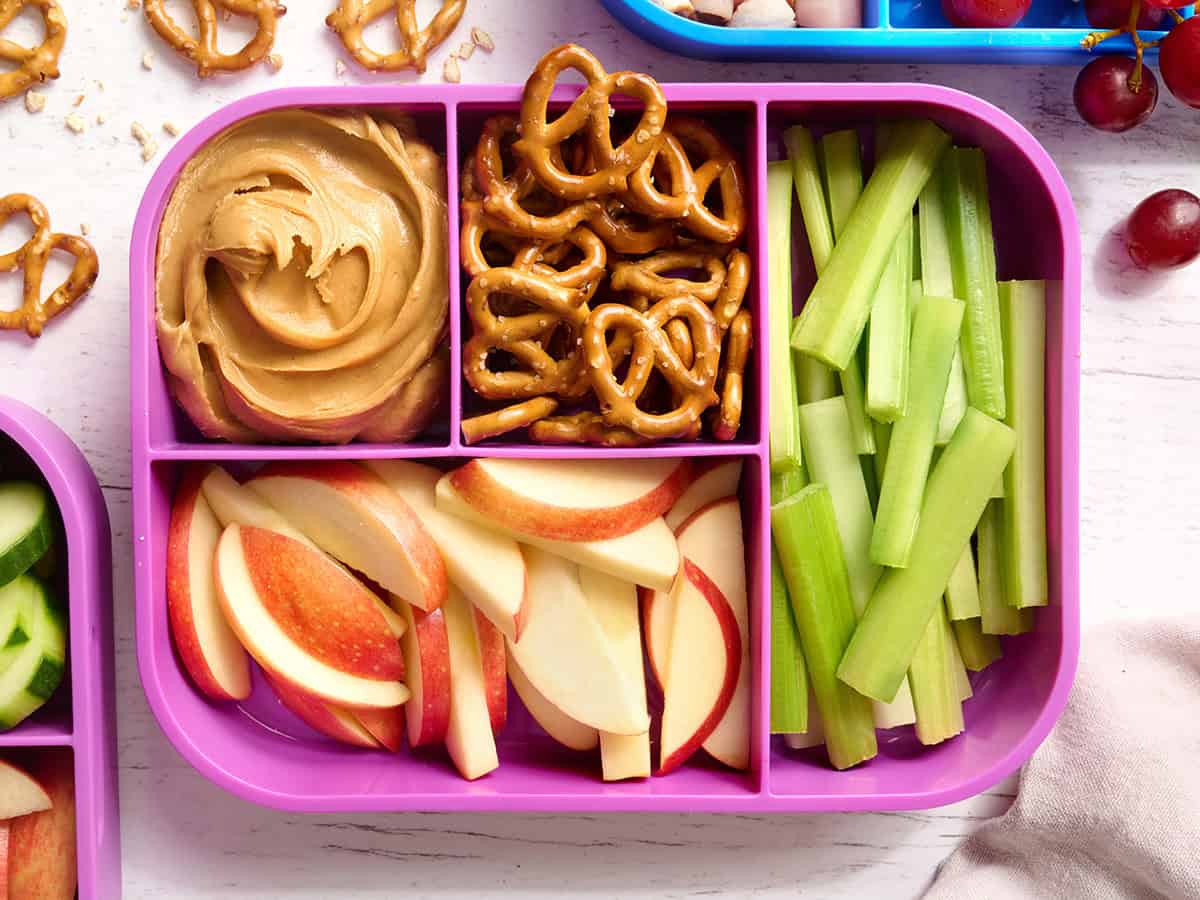
Cost: $1.09
- Grain: 22 store-brand mini pretzels ($0.16)
- Protein: 2 Tbsp peanut butter ($0.14)
- Veggie: 2 ribs celery ($0.52)
- Fruit: Apple slices ($0.27 – 1 apple from a 3 lb. bag of Gala apples)
I had to include a riff on our peanut butter lunch box for this back-to-school lunch post! Because give a kid a dip and lunch suddenly has an activity built right in. I went with celery and apples here since they’re classic peanut butter dippers and tend to last much longer than more delicate fruit like berries. There’s also very little chance of anything turning into a soggy mess before lunchtime. If you like, you can toss the apple slices with a little lemon juice to avoid them going brown (optional, but worth it if it means your kids will eat them).
This lunch box keeps grocery costs low with pantry staples like pretzels and peanut butter, plus fruits and veggies with a good shelf life. Peanut butter is also a secret nutrient powerhouse, if you didn’t know! It packs a punch of protein and healthy fats, which gives this simple lunch a little more staying power and will do a pretty darn good job at keeping your kiddos satisfied through the afternoon. And my favorite part of this whole lunch box is that I can throw it together in literally 2 minutes. It’s just a case of slicing the apple and celery, spooning in the peanut butter, and adding a handful of pretzels!
If peanut butter isn’t allowed at your child’s school, you can look for a nut-free spread that is seed-based (like Sunflower Butter) or almond butter if other nuts are ok and just peanuts aren’t allowed.
4. Cheesy Kidney Bean Quesadilla Box
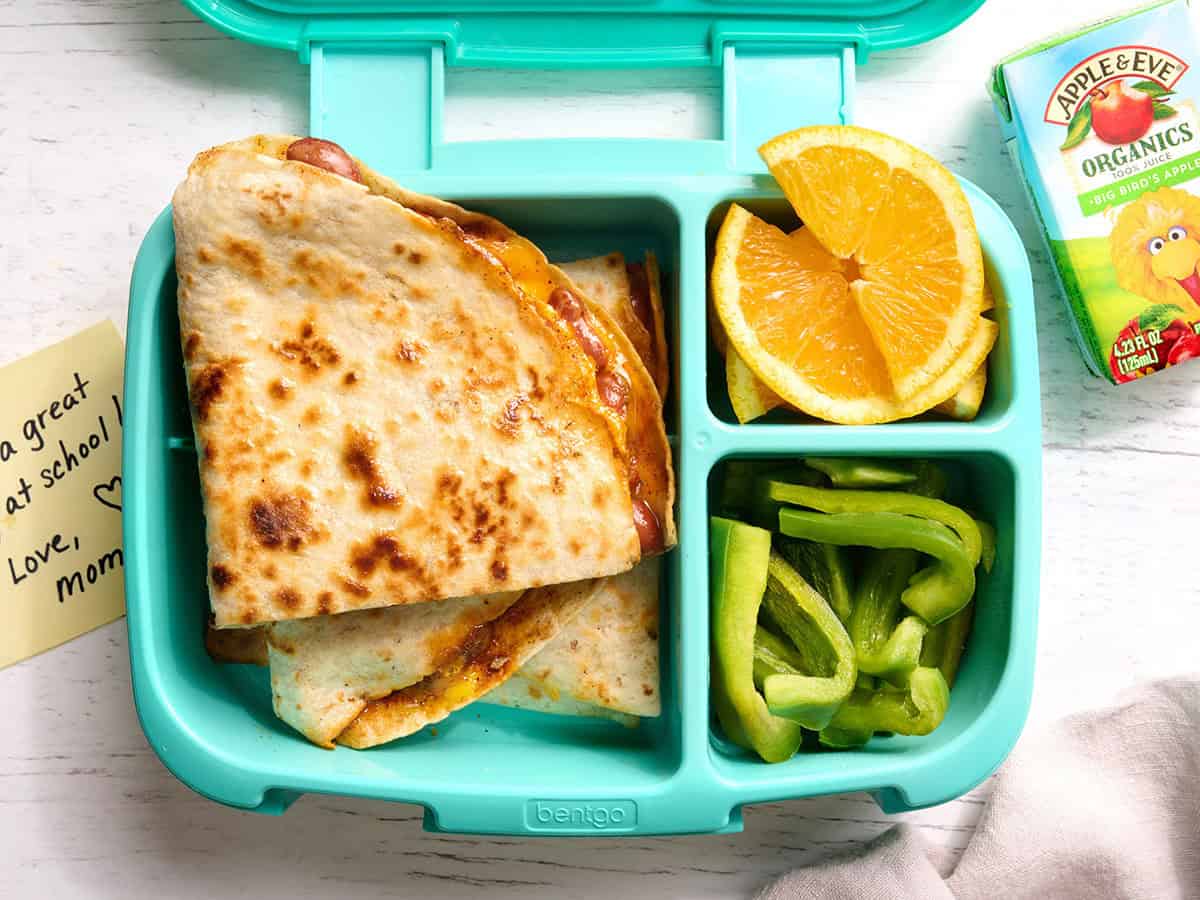
Cost: $1.41
- Grain: 1 whole wheat or flour tortilla ($0.30)
- Protein: about ¼ can of kidney beans ($0.21) and 1 oz cheddar cheese ($0.23)*
- Veggie: ½ sliced green bell pepper (any veggies you have on hand work here!) ($0.22)
- Fruit: Orange slices ($0.45 per orange if you get a 4lb bag)
(Note: This is a really simple version of my popular cheesy kidney bean quesadillas. I made the filling using only kidney beans and cheese to keep costs down, and make them more palatable for picky kids! If you have some spices and frozen veggies on hand, feel free to make the more elaborate version! For these photos, we made the simplified version.)
This option maximizes your grocery dollars by prioritizing a low-cost and high-nutrient plant-based protein. You don’t need me to tell you this, but canned kidney beans and a pack of tortillas only cost pennies per serving! Bring it all together with shredded cheese (utilizing the leftover cheese from the cheese lunch box from earlier in the week), and you should have just enough leftover to make these quesadillas stick together and taste nice and cheesy! Oh, and I can attest that they taste just as delicious at room temp or cold, so no need to reheat them! 😉
It’s a great ‘all-arounder’ lunch box because it’s a stellar vehicle for sneaking fiber and iron into a picky eater’s diet! You can also batch-cook or meal-prep the quesadillas over the weekend to get ahead for the week. I’d make a big batch, let them cool, and refrigerate them in an airtight container. These kidney bean quesadillas are a great option for dinner too, so make a few extra and use those leftovers for lunch the next day!
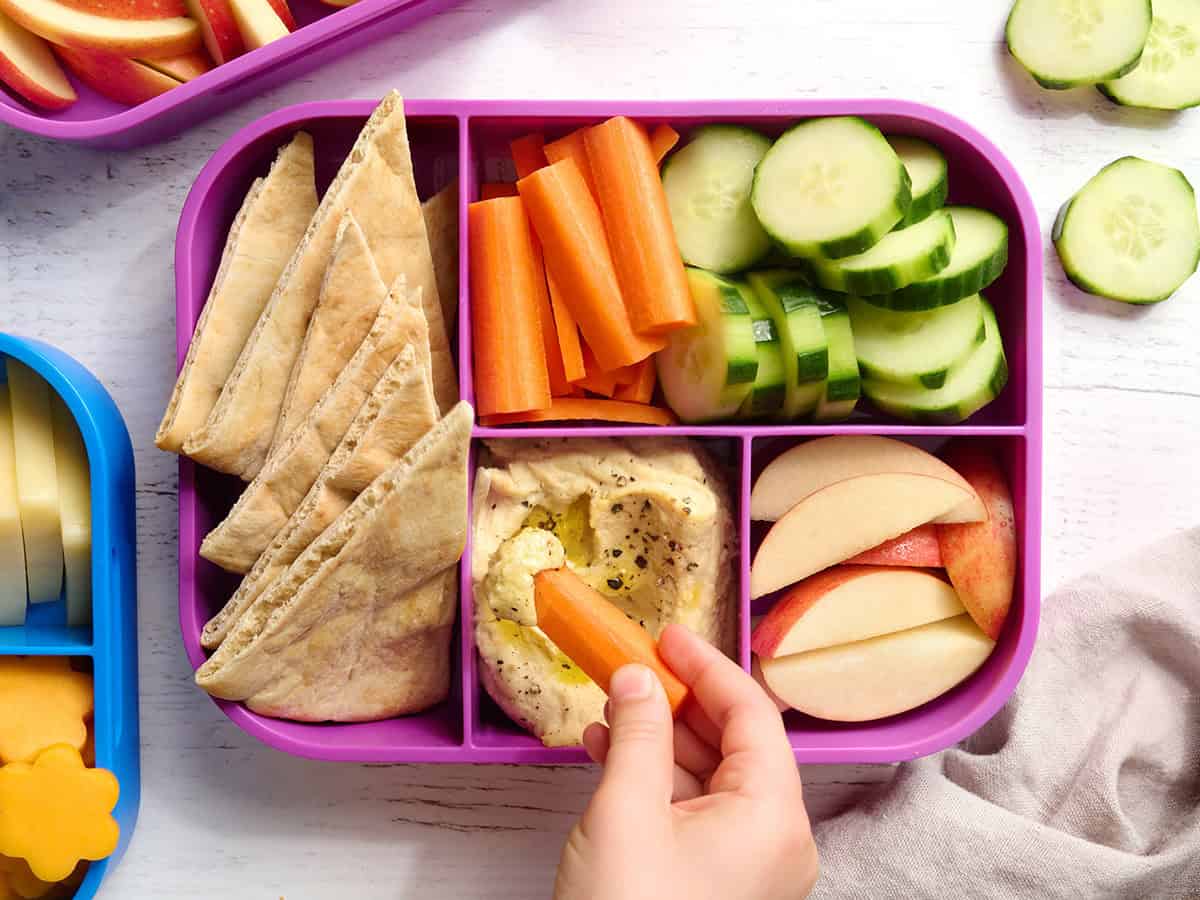
5. Hummus Box
Cost: $1.66-$1.91
- Grain: 1 whole grain pita, cut into 6 triangles ($0.54)
- Protein: ½ cup plain hummus ($0.57)
- Veggie: ⅓ cucumber ($0.25) and/or 1 carrot stick ($0.22)
- Fruit: ½ cup grapes ($0.33, any fruit you still have on hand works here!)
Hummus is a super affordable, nutrient-dense plant-based protein (especially when you make it yourself!), and the accompanying ingredients I’ve gone with, carrots and cucumbers for dipping, and grapes, can easily be shared across multiple school days to minimize food waste. My favorite hummus recipe is my white bean hummus. It’s a great option if your kid doesn’t love the usual chickpea-based hummus or if white beans are what you already have on hand! But don’t worry if you’re already pulling your hair out because you’re stressed and short on time…store-bought hummus is just fine! I based the cost for this back to school lunch on store-bought, store-brand hummus.
Again, the dipping is half the fun here. The pita triangles are easy for little hands to grab, and the carrots and cucumbers give them plenty to dunk into the hummus. This is definitely one where I recommend using a bento-style lunch box, because the separate compartments keep the hummus contained and stops the pita from getting soggy.
I’d also happily pack this one for my own lunch! There’s almost zero prep work, making it the fastest, no-cook morning lifesaver imaginable. And it’s exceptionally flexible, allowing me to easily clear out and utilize whatever fresh veggies are already lingering in the fridge.
The right containers make packing these lunches so much easier and help everything arrive in one piece instead of jumbled together at the bottom of a backpack. As I mentioned earlier, my daughter’s school has asked us not to send lunches in anything glass. These are the lunch boxes and reusable bags I’ve gone for this school year; they’re not only super practical, but really cute!
- Dishwasher-safe Reusable Snack Bags – Anything that reduces single use plastic is a win for me! These are also great for storing leftovers in the kitchen.
- Bentgo Bluey Lunchbox – These come in all kinds of different designs, but we’re a Bluey family!
- Planetbox Lunchbox – This one is my personal favorite because sometimes I use it to bring lunch or snacks to work, too! It’s like a little ‘snacklebox,’ and it also fits a full-size PB&J, which is one of my daughter’s other favorite lunch options.
Resources:
- 1. School Nutrition Association (SNA) Annual Reports: They regularly publish school nutrition trends and cost analyses tracking what it costs to produce meals versus what families are charged.
- 2. Education Data Initiative (School Lunch Debt & Cost Statistics): This national database tracks the exact $3.09 average public school lunch cost and compiles the national $556 annual average per student.