
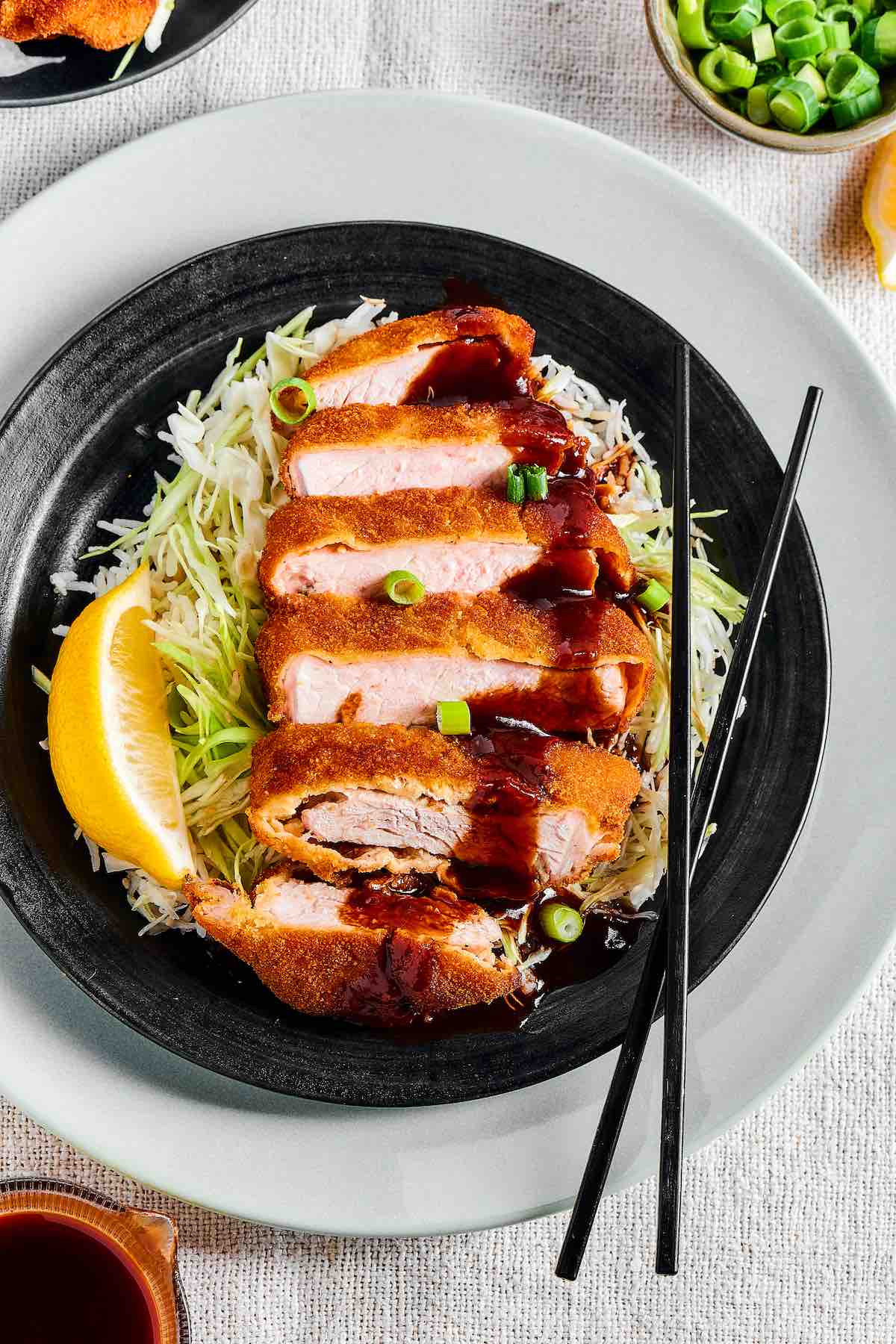
My pork katsu recipe features juicy pork cutlets coated in crispy panko breadcrumbs and drizzled with a homemade katsu sauce. It’s a Japanese restaurant favorite that’s surprisingly easy to make at home.
Pork katsu is one of those dishes I order almost every time I’m in Japan (yes, I’m still yet to find one as good in New York). After eating it on a few different trips, I took a day class and learned a simple version to make at home.
My version has juicy pork chops coated in crispy panko and served with homemade katsu sauce. It’s surprisingly easy to make and one of those dinners my partner requests every single week. Lucky I never get tired of it.
If you want an authentic Japanese version, I recommend Just One Cookbook’s tonkatsu recipe.
Arman’s tips before starting

Score the fat first. Before breading the pork, make. Few small cuts through the fat around the edges. It stops the pork from curling up as it fries, so it cooks much more evenly.
Let the breading sit for 10 minutes. I know it’s tempting to fry it straight away, but giving the coating a few minutes to stick to the pork makes a big difference. You’ll end up with a crispier crust that doesn’t fall off.
Don’t overcook the pork. I always use a meat thermometer and remove the pork from the oil once it reaches 145°F. After a 5 minute rest, it’ll be perfectly juicy.
Give each cutlet some space. If you crowd the pan, the oil cools down and the Panko won’t crisp up properly. I always fry in batches if I need to.
Skim out the crumbs between batches. Those little bits of panko burn quickly, so I like to scoop them out before adding the next cutlet. It keeps the oil clean and the crust golden.
Test the temperature of the oil. The ideal frying temperature for pork katsu is around 340-350°F. I use the same meat thermometer to double check after each batch. The oil usually drops every time you remove the cutlets.
Key Ingredients
Here’s what you’ll need, along with my kitchen notes. Full measurements are in the recipe card below.
- Boneless pork loin chops. These are my go-to because they stay juicy while still getting that crispy, golden coating. If they’re a little thick, I lightly pound them to an even thickness. You can also use boneless pork loin cutlets if you can’t find them.
- Salt and black pepper.
- Flour. This helps the egg an panko stick to the pork. If you need the recipe to be gluten-free, a good gluten-free flour blend works too (Bob’s Red Mill or King Arthur Flour).
- Large eggs. To help the breadcrumbs cling to the pork.
- Panko breadcrumbs. Don’t substitute these if you can help it. They’re lighter and flakier than regular breadcrumbs, which is what gives pork katsu its signature crispy coating. Gluten-free panko works too.
- Katsu sauce. I skip the bottled stuff and make my own with ketchup, Worcestershire sauce, soy sauce, and a little sugar. It takes a couple of minutes and tastes so much better.
- Oil. For frying. Use a neutral oil with a high smoke point, like canola or vegetable oil.
How to make pork katsu
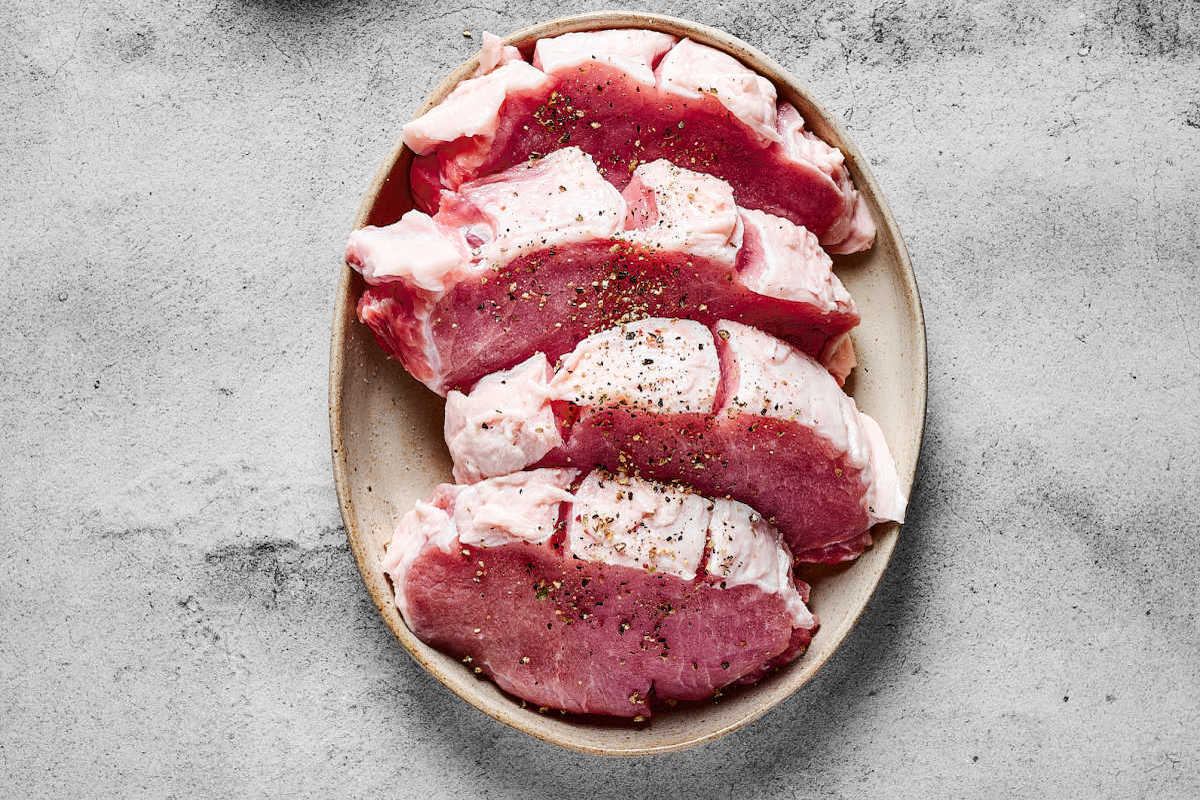
Step 1- Prep. Score the fat then season the pork with salt and pepper. Add the flour, whisked eggs, and bread crumbs to three separate bowls.
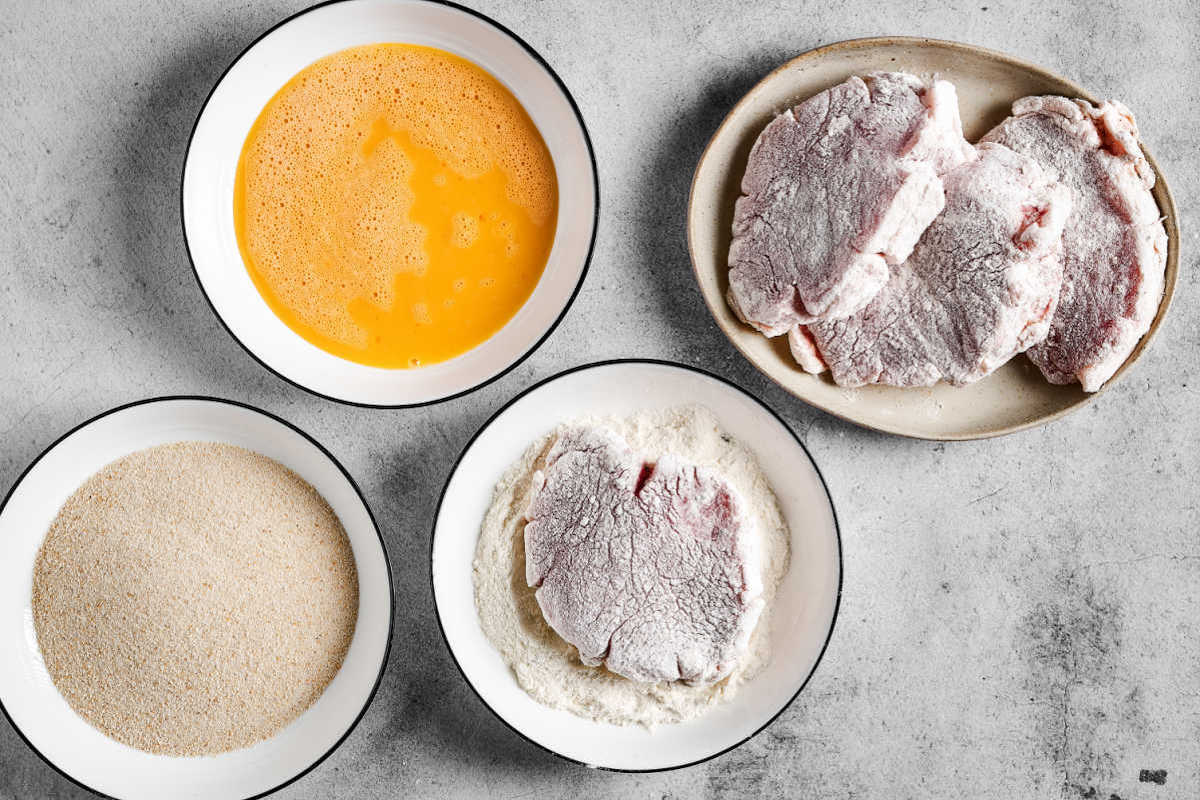
Step 2- Dredge. Dip the pork in the flour, shaking off the excess. Next, dip it in the beaten egg, followed by the panko. Repeat the process until all the pork is breaded.
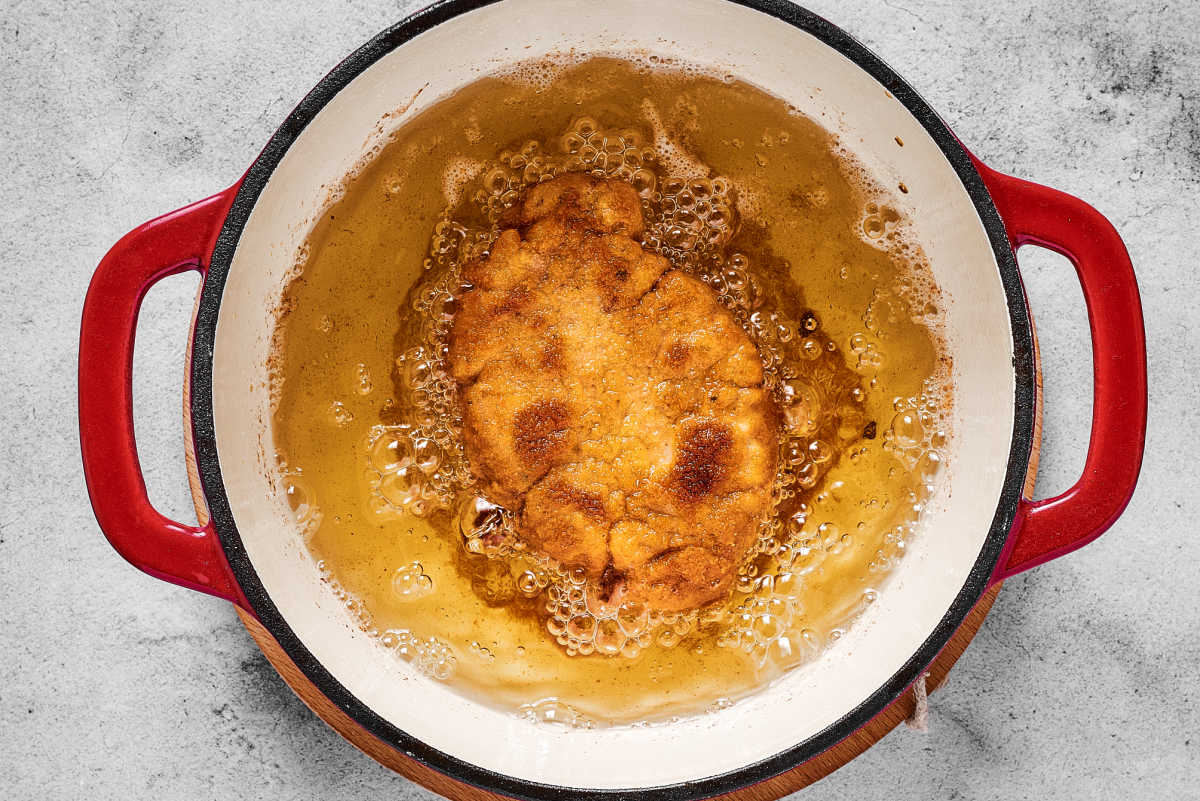
Step 3- Fry. Add oil to a non-stick pan or skillet over medium heat. Once hot, add the pork and fry until golden brown.
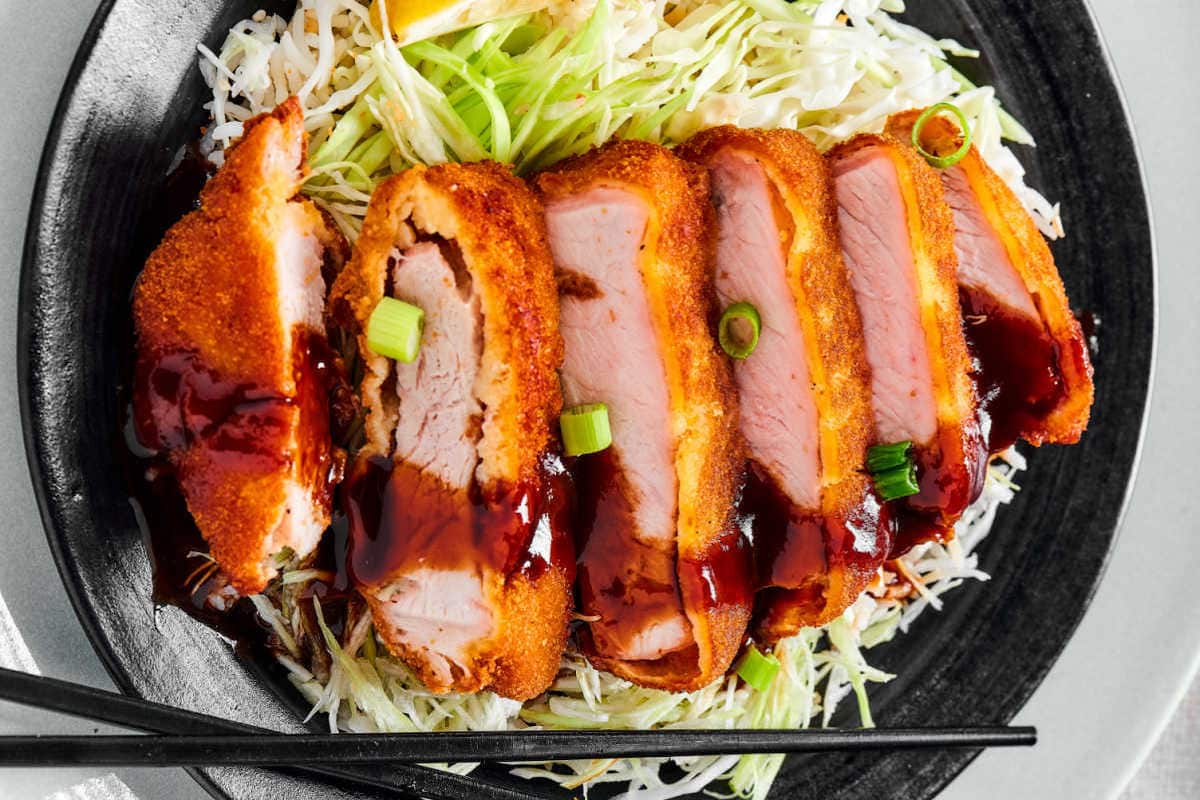
Step 4- Serve. Slice the katsu and drizzle with tonkatsu sauce.
How to make baked pork katsu
If you aren’t a fan of deep frying, you can bake the breaded pork cutlet instead.
To bake, preheat the oven to 200C/400F. Dredge the pork, then place it on a greased baking sheet and bake for 25 minutes, flipping halfway through. Once the pork reaches an internal temperature of 165F, it’s ready to slice and serve.
More of my favorite Japanese dishes
-
Score the pork by making a few cuts in the fat around the edges. Season the pork with salt and pepper.
-
Add the flour, eggs, and panko to three separate bowls.
-
Dip the pork in the flour, shaking off any excess. Next, dip it in the egg, followed by the panko. Repeat the process until all the pork is breaded. Let the pork sit for about 10 minutes so the breading sticks.
-
Add oil to a non-stick pan or skillet. Once hot (aim for 340-350°F), add the pork and deep-fry for 2-3 minutes, flipping halfway through.
-
Once the pork is golden brown, remove it from the pan and place it on a wire rack so the excess fat can drain while it stays crispy. Recheck the oil temperature and repeat the process until all the pork is fried.
-
Slice the pork katsu and drizzle with katsu sauce.
TO STORE: Let the pork katsu cool completely, then refrigerate it in an airtight container for up to 5 days.
TO FREEZE: Freeze the cooled pork cutlets in a freezer-safe container for up to 3 months. I like separating each cutlet with a sheet of parchment paper so they don’t stick together.
TO REHEAT: Reheat the pork in a skillet over medium heat, in the oven, or in the air fryer until hot and crispy again. I avoid the microwave since it softens the panko coating.
Serving: 1servingCalories: 346kcalCarbohydrates: 19gProtein: 33gFat: 18gSodium: 1142mgPotassium: 551mgFiber: 1gVitamin A: 73IUCalcium: 45mgIron: 2mgNET CARBS: 18g
Originally published January 2023, updated and republished August 2026