

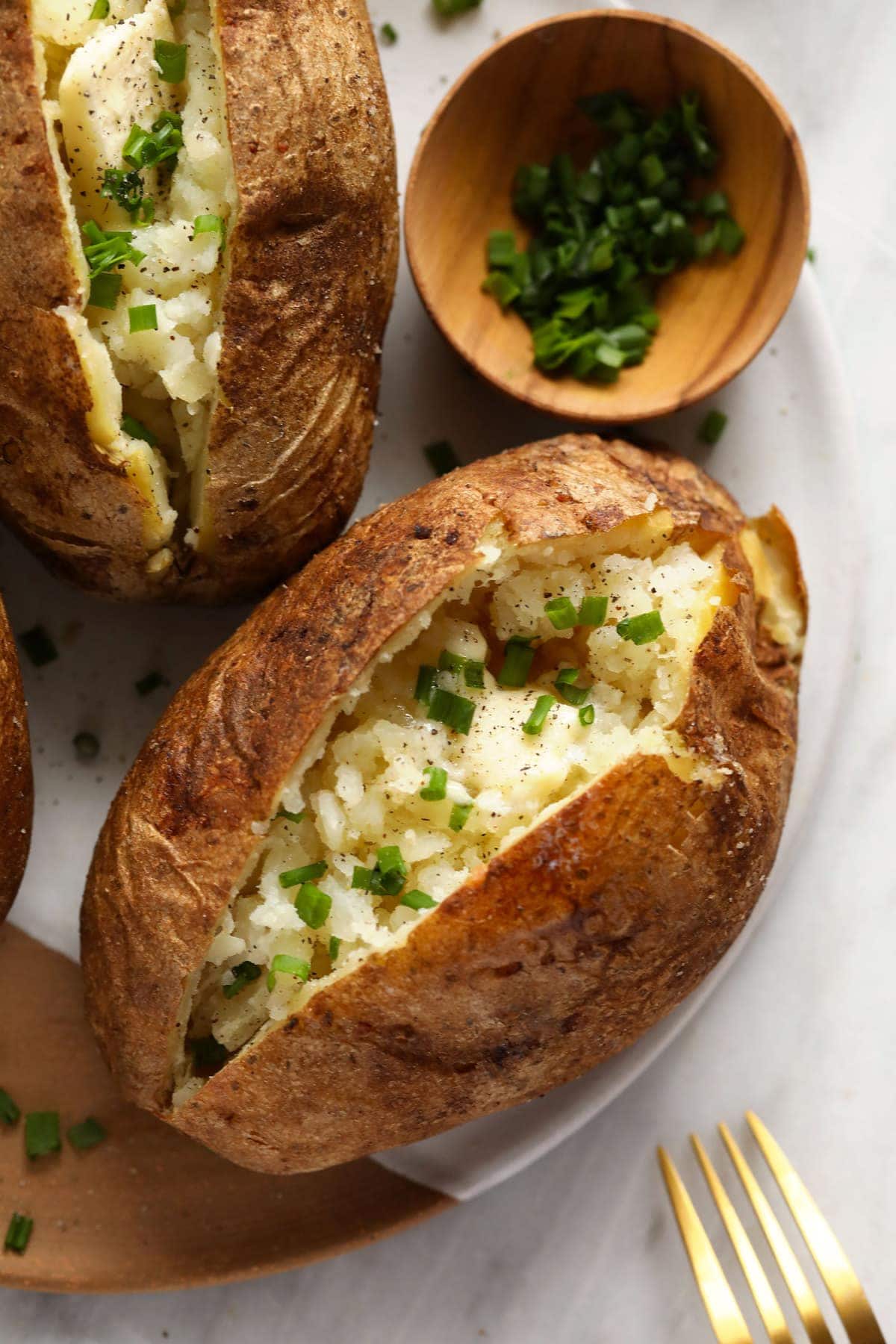
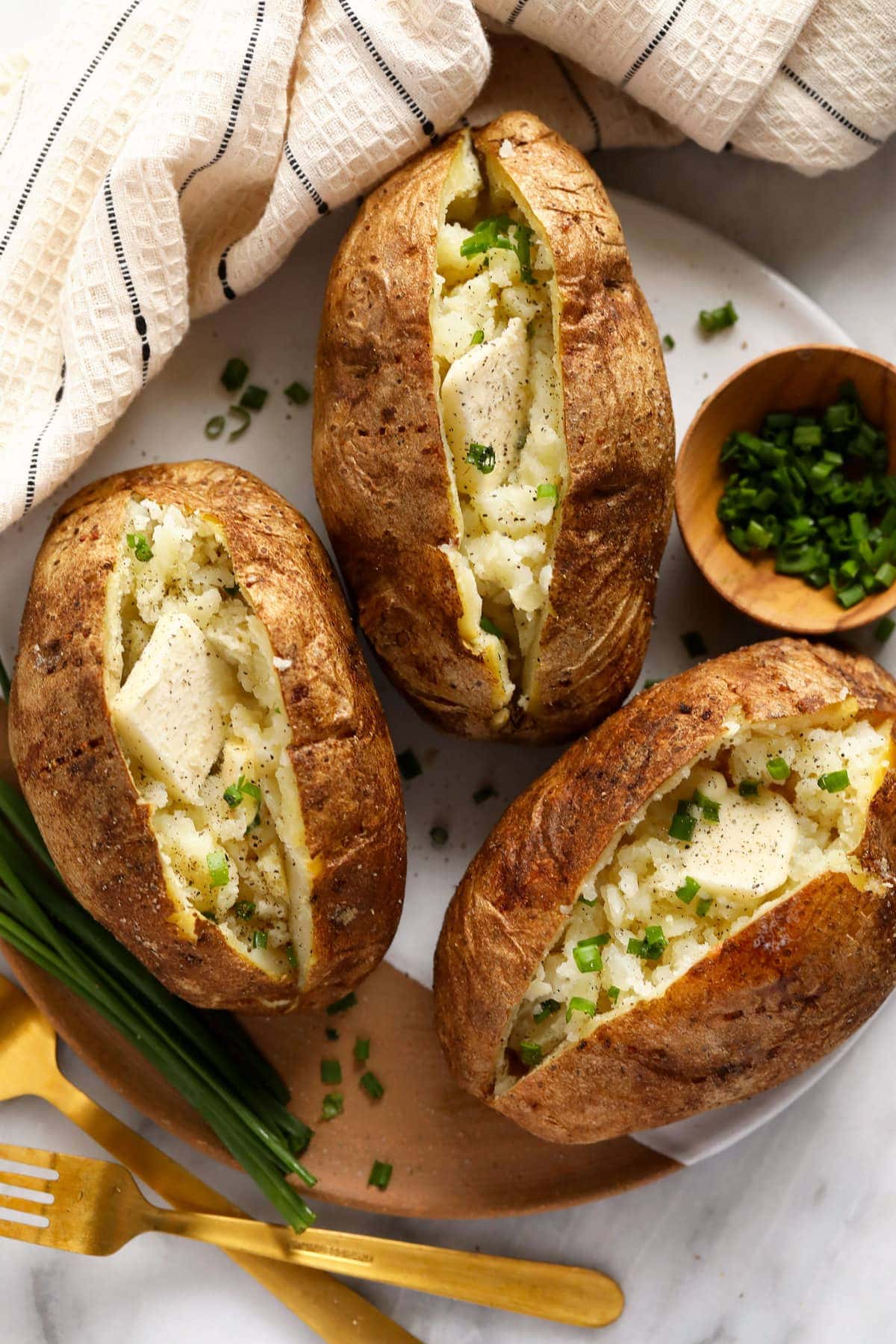
My method for a baked potato in oven gives you crisp, salty skin and a steamy, fork-fluffy russet center—no foil required. If you have wondered how to bake a potato for a classic steakhouse-style side or an easy build-your-own dinner, I keep the method straightforward and the toppings flexible.
Why You’ll Love This Baked Potato
- Crispy skin, fluffy middle: This baked potato in oven method uses dry, unwrapped potatoes and direct oven heat—not foil—to support a crisp skin and a tender center.
- Three simple ingredients: Russet potatoes, oil, and coarse salt do the essential work; black pepper and toppings are optional.
- Flexible side or meal: Serve one as a steakhouse-style side, set out a potato bar, or turn leftovers into dinner with thoughtful toppings.
- Easy to scale: Make as many as you need as long as the potatoes sit in a single layer with room for air to circulate.
Best Potatoes for Baking
I reach for medium-to-large russets because their high-starch, low-moisture flesh bakes up drier and fluffier, and their thicker skin holds up well to oil and coarse salt. Yukon Golds are delicious but creamier and less fluffy, so they create a different result. When you are deciding how to bake a potato, choose similarly sized russets; I find that makes timing and doneness much more predictable.
What You Need
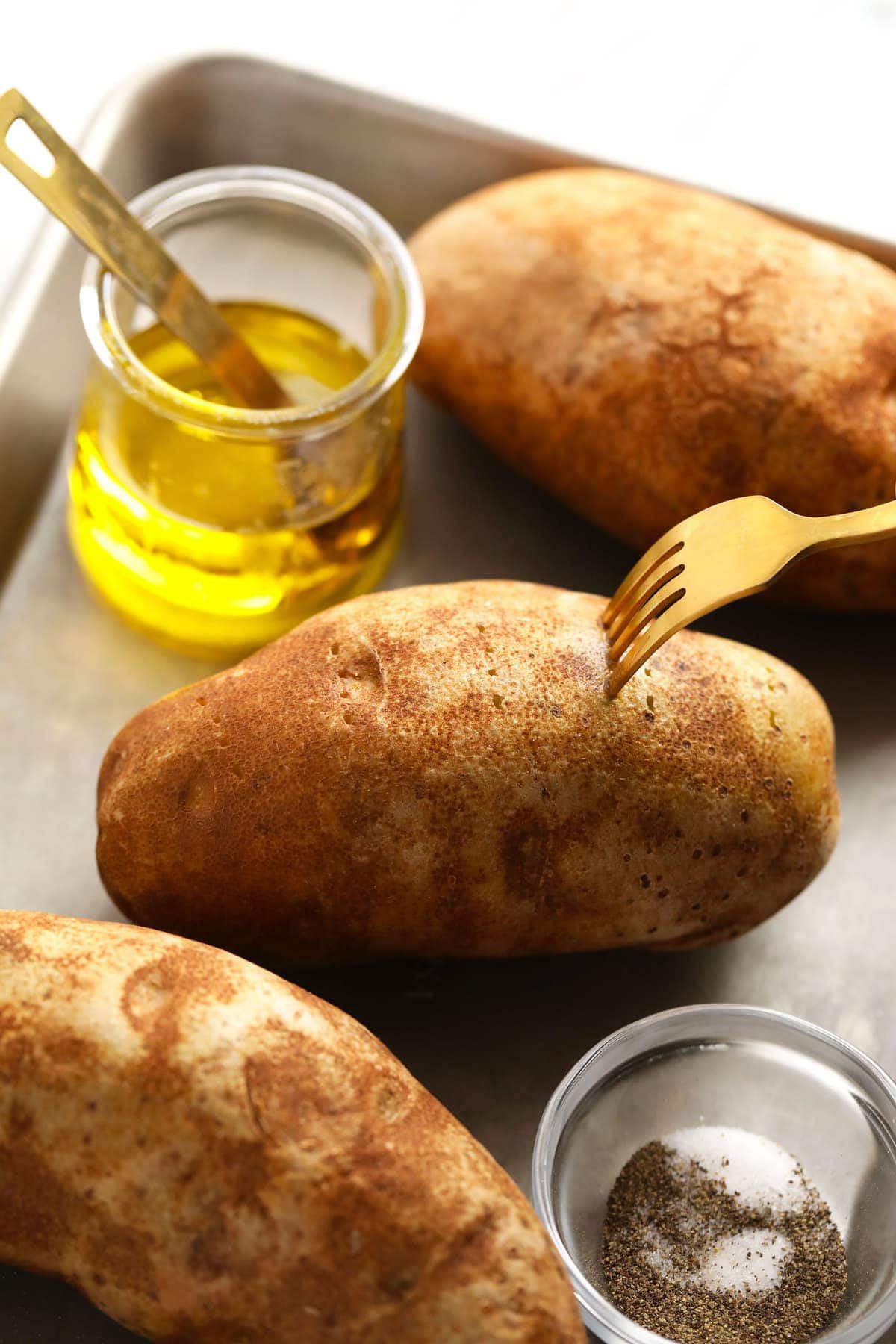
- Russet potatoes: Choose firm, similarly sized potatoes without green patches or major soft spots.
- Olive oil: A light coating promotes browning and gives coarse salt something to adhere to.
- Coarse kosher salt: It creates a flavorful, lightly crunchy skin; use fine salt in a smaller amount if that is what you have.
- Baking sheet and optional wire rack: A rack supports more even air circulation and a sheet catches drips, while a bare sheet is still workable and simpler to clean.
Tips for a Crispy-Skinned Baked Potato in Oven
For a baked potato in oven with a crisp skin, I thoroughly dry scrubbed potatoes before oiling them. Surface water turns to steam, which works against browning; a few fork pricks also let steam vent while the potatoes cook.
Leave the potatoes unwrapped when the skin is part of the appeal, not merely a vessel for toppings. Foil traps water vapor around the potato, which steams and softens the skin; choose baked potatoes in foil only when a soft, steamed jacket is the goal.
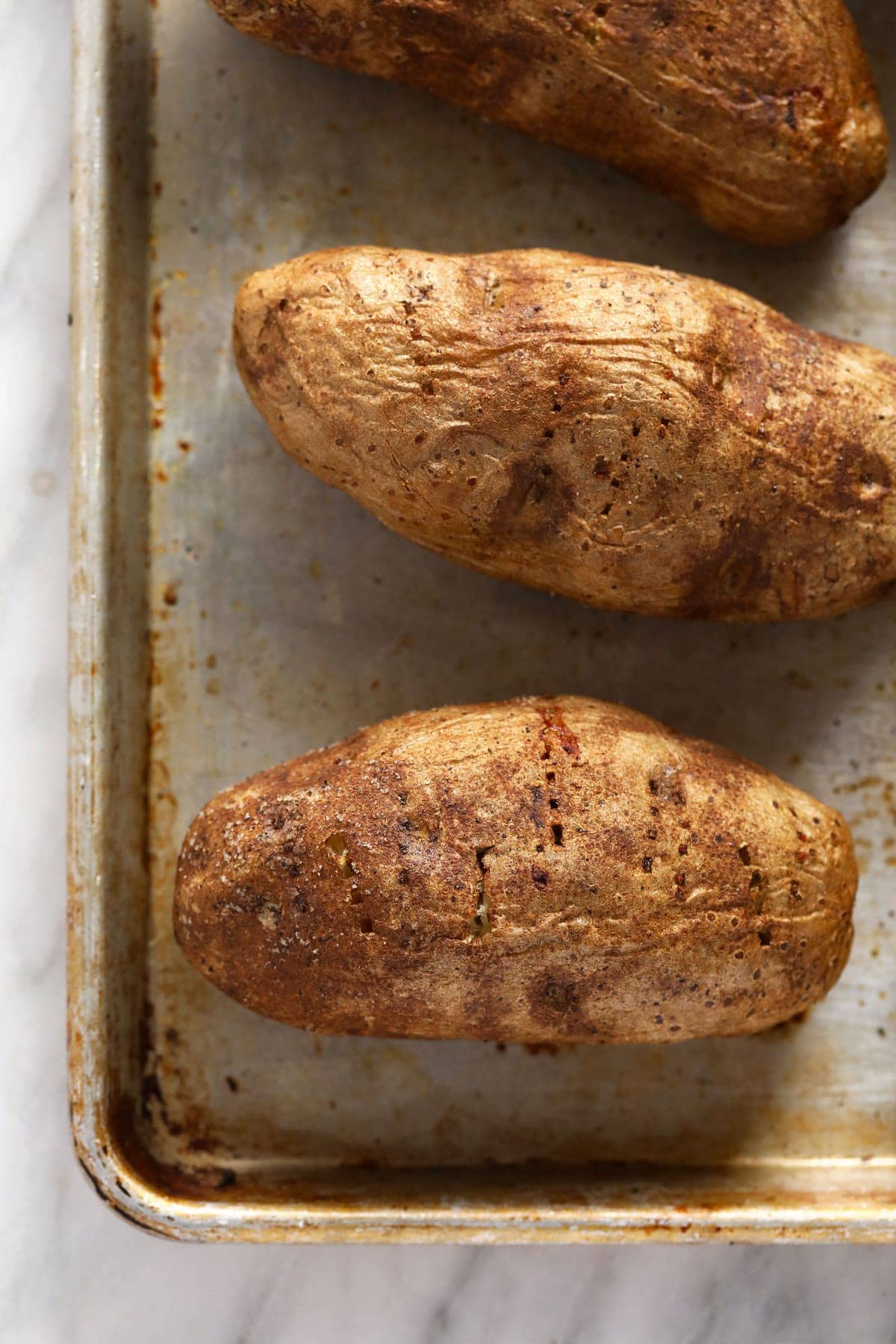
Size drives the bake time more than any rigid single number. For similarly sized baked potatoes in oven, use the guide below as a check, then rely on the texture: the skin should be deeply crisped, a fork or thin skewer should slide into the center with very little resistance, and the potato should gently give when you squeeze it with an oven mitt. An instant-read thermometer reading 205–210°F in the center is a helpful final confirmation.
| Oven temperature | Potato size | Typical bake time |
|---|---|---|
| 425°F | Medium russet (8–10 ounces) | 50–65 minutes |
| 425°F | Large russet (12–16 ounces) | 65–80 minutes |
| 400°F | Medium russet (8–10 ounces) | 55–70 minutes |
Baked Potato Topping Ideas
This baked potato recipe is a great reason to set out a topping bar so everyone can build a potato to their own taste.
- Classic: Butter, sour cream or Greek yogurt, chives, cheddar, bacon, salt, and black pepper.
- Hearty dinner: Spoon beef chili over the potato with shredded cheese and scallions; leftover chili turns this side into a filling meal.
- Vegetarian: Broccoli, cheddar, and Greek yogurt or a creamy cheese sauce.
- Fresh and punchy: Hot honey, green sauce, or salsa with a pinch of flaky salt.
What to Serve with Baked Potatoes
An oven baked potato has a rich, starchy profile, so I like to balance it with a crisp green vegetable or a bright salad that brings lemon, vinegar, or fresh herbs to the plate. Try sautéed green beans for a bright, lemony vegetable counterpoint, and add a protein only when you want to make a full dinner.
Storage and Reheating
Cool leftovers promptly, transfer them to an airtight container, and refrigerate them for 3–4 days. Reheat in the oven or air fryer for the best chance of restoring the skin’s texture; a microwave is faster but leaves the skin softer. I often bake potatoes ahead for easy stuffed-potato lunches and add cold or delicate toppings after reheating.

FAQs
For a potato with crisp skin and a fluffy center, 400–425°F is a dependable range. At 425°F, the skin browns and crisps more quickly; 400°F is helpful when the potatoes need to share the oven with another dish. In either case, potato size matters more than the clock, so look for crisp skin and a center that yields easily to a fork or thin skewer.
A medium russet potato generally takes about 50–60 minutes at 400°F, while very large potatoes can take longer. Rather than relying only on time, test the center: it should offer almost no resistance to a fork or thin knife, and an instant-read thermometer should read roughly 205–210°F in the center.
Not if you want crispy skin. Foil traps steam around the potato, which makes the skin soft and steamed. Leave the potatoes unwrapped for a crisp, salty skin; use foil only when a softer skin is the intended result.
Yes. A few fork pricks let steam escape as the potato cooks. This is a quick step that supports even baking and prevents pressure from building up inside the potato.
A done baked potato has dry, crisp skin and a center that a fork or thin skewer slides into easily. When you gently squeeze it with an oven mitt, it should give rather than feel firm in the middle. For an additional check, the center should register about 205–210°F.
Yes. Bake and cool them promptly, then refrigerate in an airtight container for up to 3–4 days. Reheat in the oven or air fryer if crisp skin matters most, then split and add fresh toppings just before serving.
-
Rimmed baking sheet
-
Wire rack (optional)
-
Instant-read thermometer (optional)
-
Heat the oven to 425°F and set a wire rack, if using, over a rimmed baking sheet. Set 4 thoroughly dried medium russet potatoes on the sheet, prick each a few times with a fork, and keep them unwrapped; the pricks vent steam and the open surface helps the skin crisp rather than steam.
-
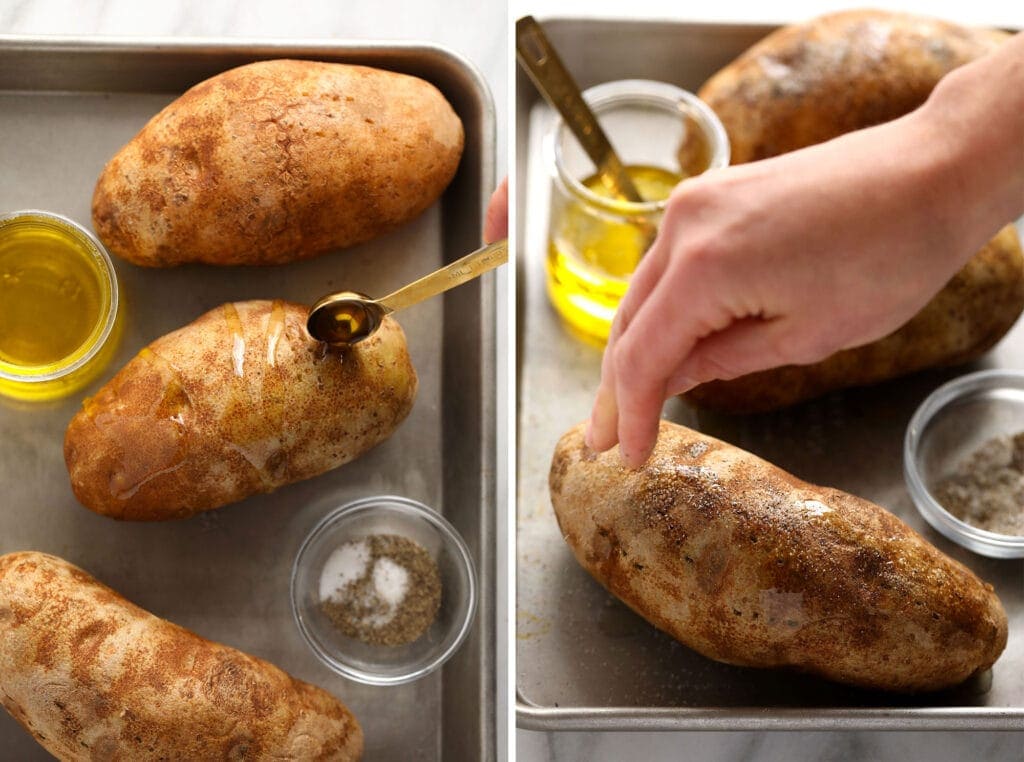
On the rimmed baking sheet, rub the potatoes all over with 2 tablespoons olive oil, then season with 2 teaspoons coarse kosher salt and the optional 1/4 teaspoon black pepper. Arrange them in a single layer with space between each potato so the 425°F oven heat can circulate and brown the oil-coated skins.
-
Bake the potatoes on the rack or directly on the rimmed baking sheet at 425°F for 50–65 minutes, turning them once about halfway through if they sit directly on the sheet. Start checking at 50 minutes: the skins should be deeply crisped and a fork or thin skewer should slide into the center with very little resistance; larger potatoes can need 65–80 minutes.
-
Remove the rimmed baking sheet from the oven when the potatoes give gently under an oven-mitt-covered hand and register 205–210°F in the center, if using an instant-read thermometer. Rest them on the sheet for 5 minutes, then split and fluff the hot center with a fork before adding butter and preferred toppings; this brief rest makes the potatoes easier to handle without softening the skin.
- For a soft, steamed skin, use the linked foil method in the post rather than wrapping this crisp-skin version.
- Potato size is the best guide to bake time; use the doneness cues rather than the clock alone.
[adthrive-in-post-video-player video-id=”qsvHkQ1v” upload-date=”2022-03-14T00:00:00.000Z” name=”How To Bake A Potato” description=”It’s time to learn how to make a perfect baked potato. These baked potatoes have perfectly crispy skin with a buttery smooth inside.”]
Calories: 230 kcal, Carbohydrates: 37 g, Protein: 4 g, Fat: 7 g, Fiber: 4 g, Sugar: 2 g
Nutrition information is automatically calculated, so should only be used as an approximation.