
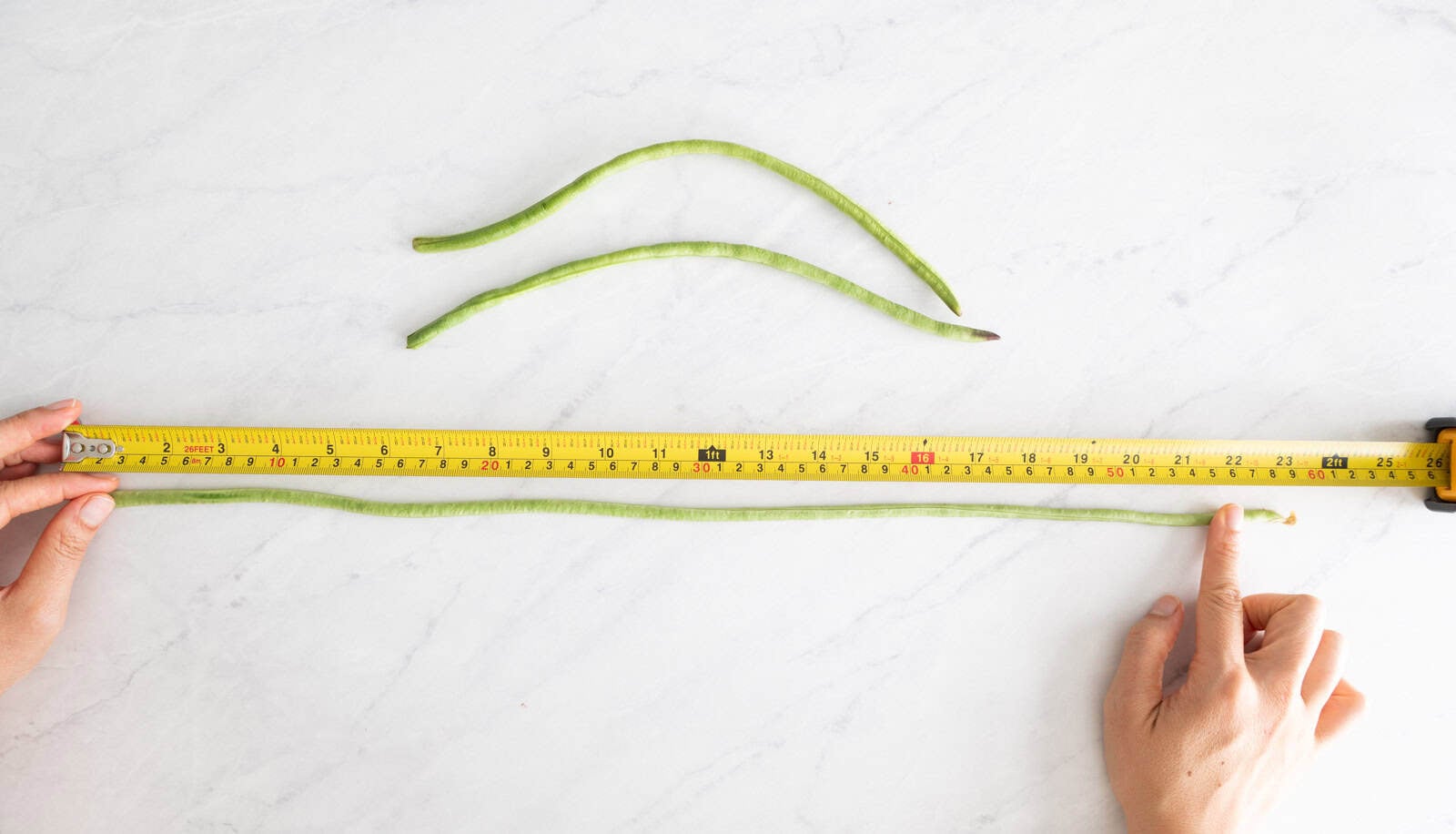
During the summer months, I get delighted when I see bundles of yardlong beans lining the stalls at the farmers market. Also known as Chinese long beans, snake beans, or asparagus beans (even though they’re not related to asparagus), these serpentine beans purportedly can grow up to 3 feet long. However, the beans you would find at the farmers market or Asian grocers are usually between 1 to 2 feet long. (Note: I’ll be calling these vegetables yardlong beans or long beans throughout the post.)
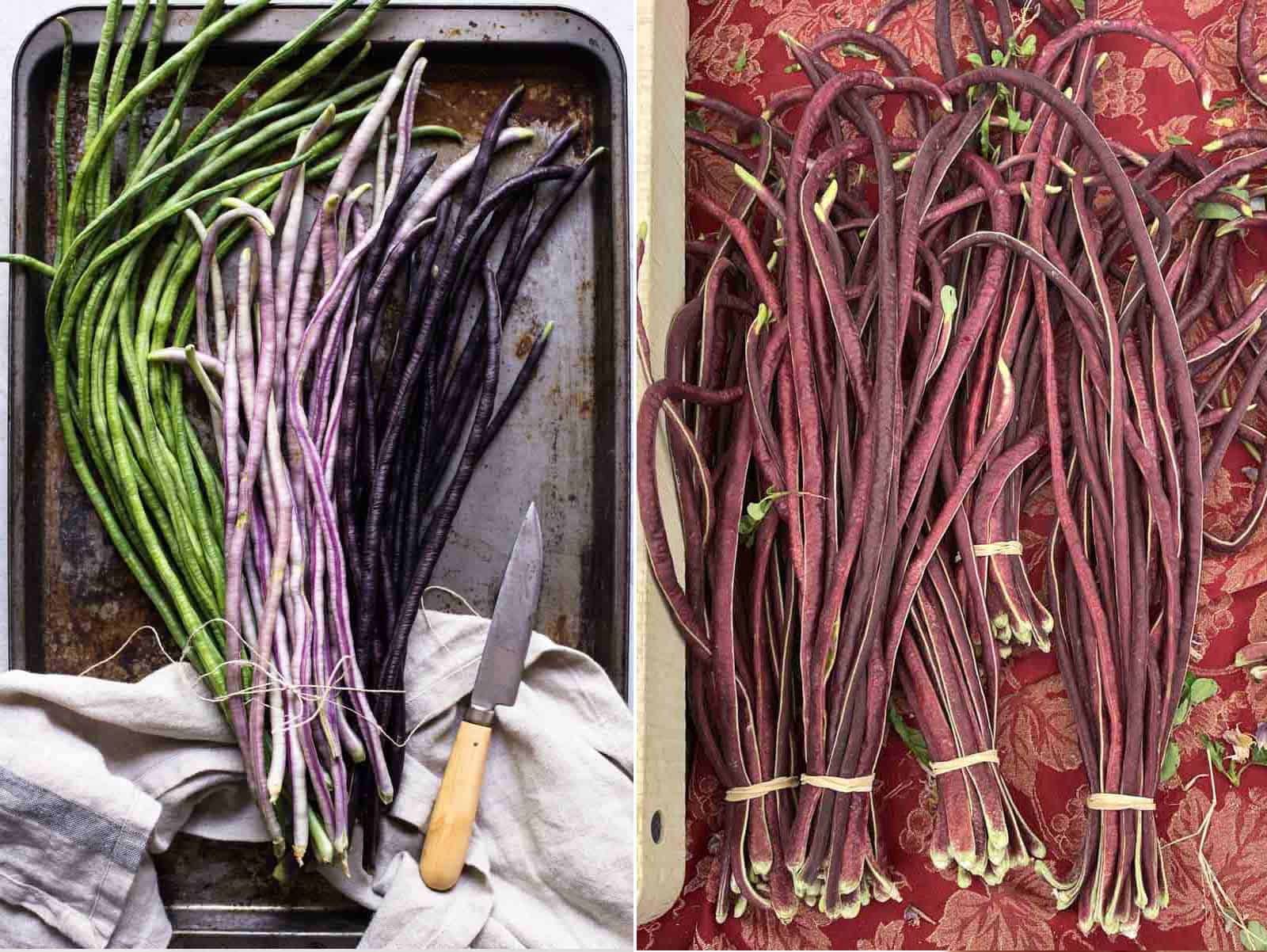
Rich in vitamins A & C, yardlong beans can come in many different shades, most commonly light jade green or forest green. At farmers markets in Sacramento and San Francisco, I’ve seen varieties that come in different shades of purple or burgundy. The dark purple and burgundy beans tend to have thicker skins than the green ones.
In Chinese, these beans have several names. Here are some of the common ones: 豆角 (pronounced dau gok in Cantonese and dou jiao in Mandarin); and 長豆 (literally “long bean,” pronounced cheung dau in Cantonese; chang dou in Mandarin).
LONG BEANS VS GREEN BEANS
Besides the length, there are several key differences between long beans and green beans. First, the exterior of long beans are rougher and slightly thicker compared to green beans. The thickness of the skins give long beans a bit more of a snap and a squeaky quality when you bite into them. Second, yardlong beans are less fleshy around the seed compared to green beans. In terms of taste, I find that long beans are slightly sweeter and have a stronger bean flavor.
HOW TO CHOOSE AND STORE YARDLONG BEANS
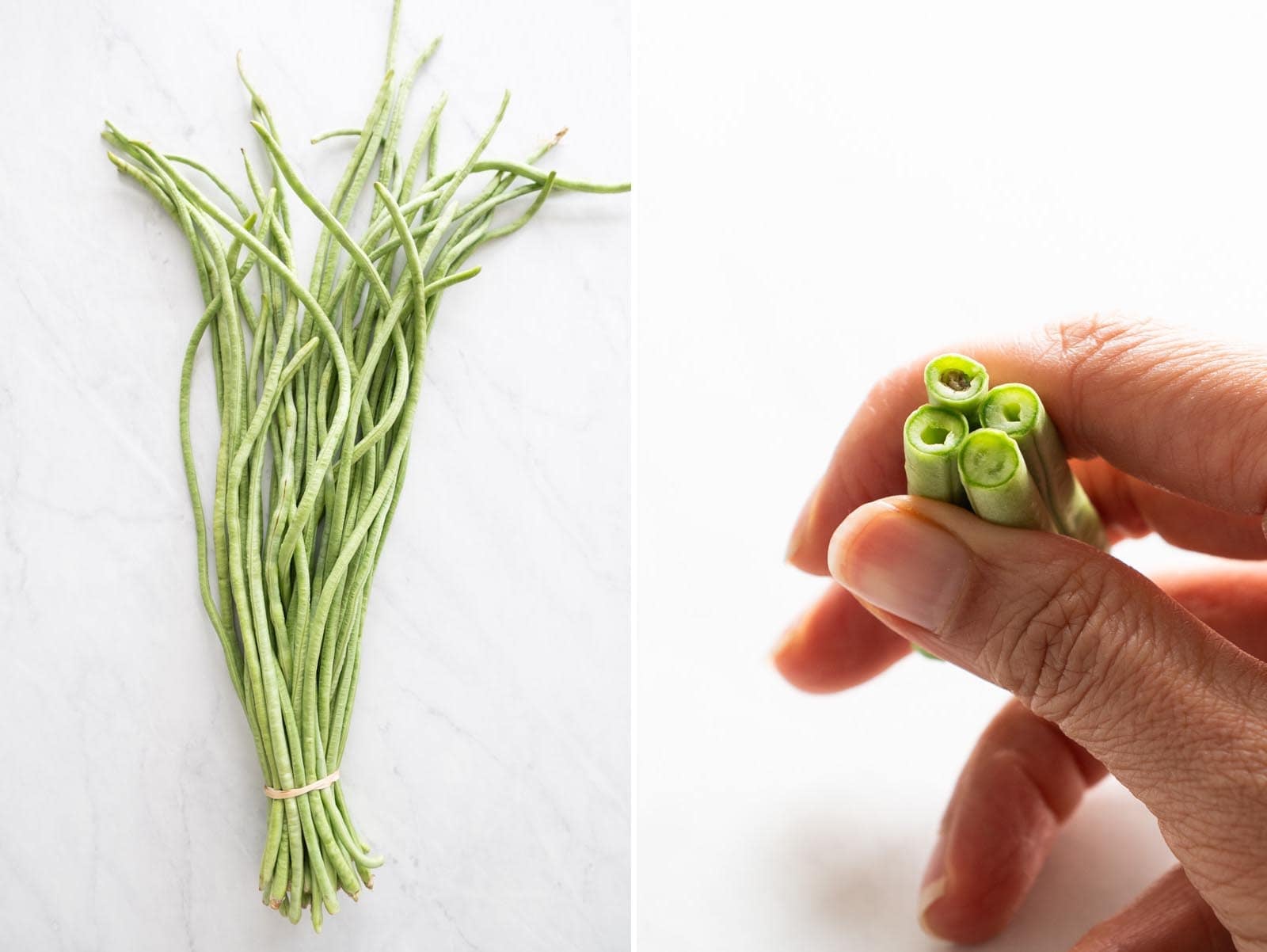
Yardlong beans are usually sold in bunches that weigh roughly a pound. I prefer tender beans, which are thinner (about 1/4-inch wide). Tender, younger beans have smaller seeds inside the pod and the skin and flesh are wrapped tightly around the seeds (see photo above, right).
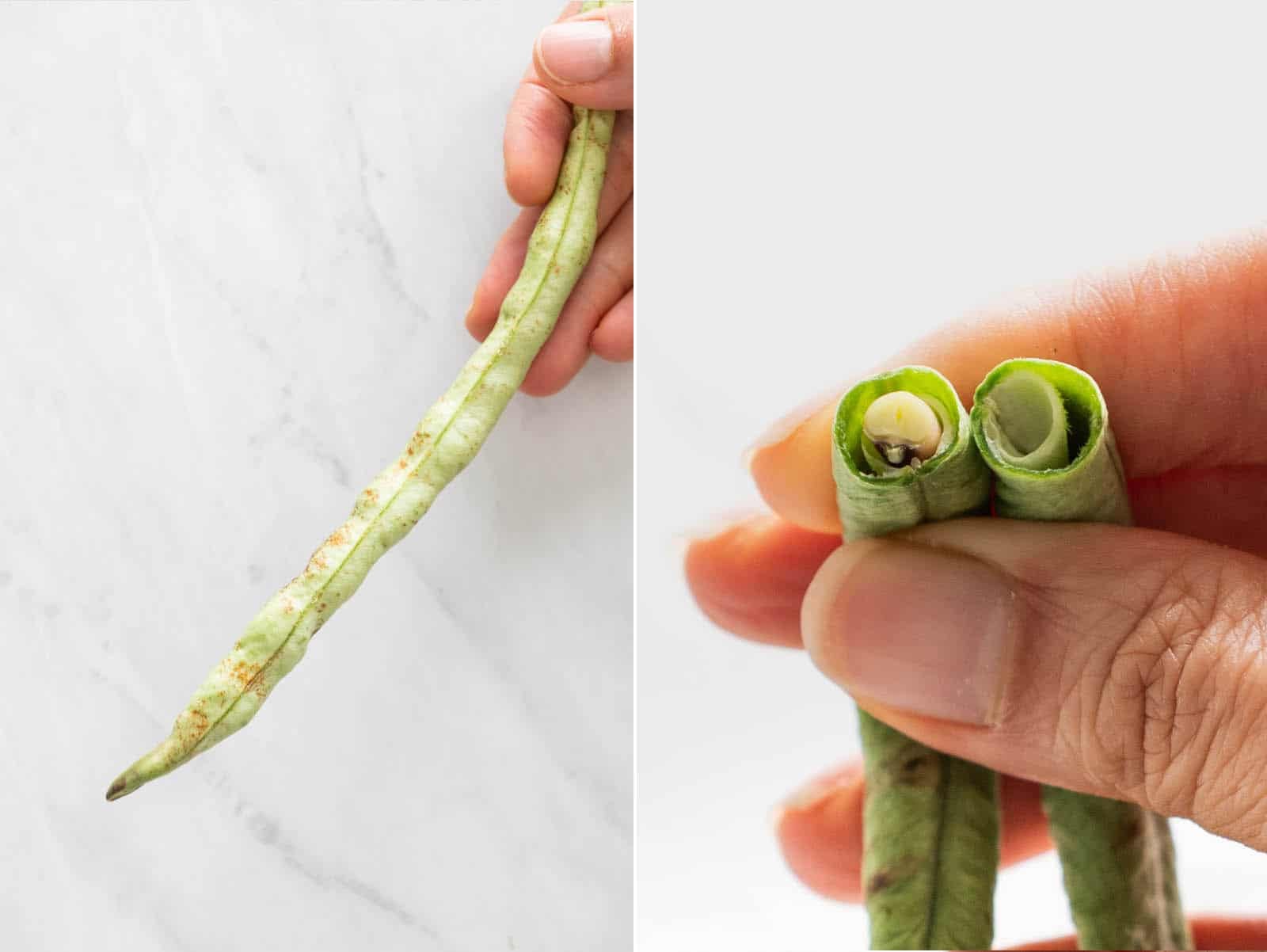
More mature beans (ones that have been left on the vine for longer before picking) have rougher, looser skin wrapped around bulging seeds. The seeds usually will have absorbed the nutrients from the other parts of the bean, barely leaving any fleshy parts (see photo above, right). So when you bite into the beans, all you’re getting are the skin and seeds. Personally, I like fleshier beans, but some people love eating the loose skin on mature pods.
When selecting between bunches of long beans, choose ones that do not have brown spots throughout the beans. Brown spots indicate that the beans have been harvested for a long time and are past their prime. You also want beans that are supple throughout. Beans that aren’t as fresh will start to dry out around the ends. Store the beans in a plastic bag or the crisper drawer of your fridge for up to a week.
HOW TO COOK WITH LONG BEANS
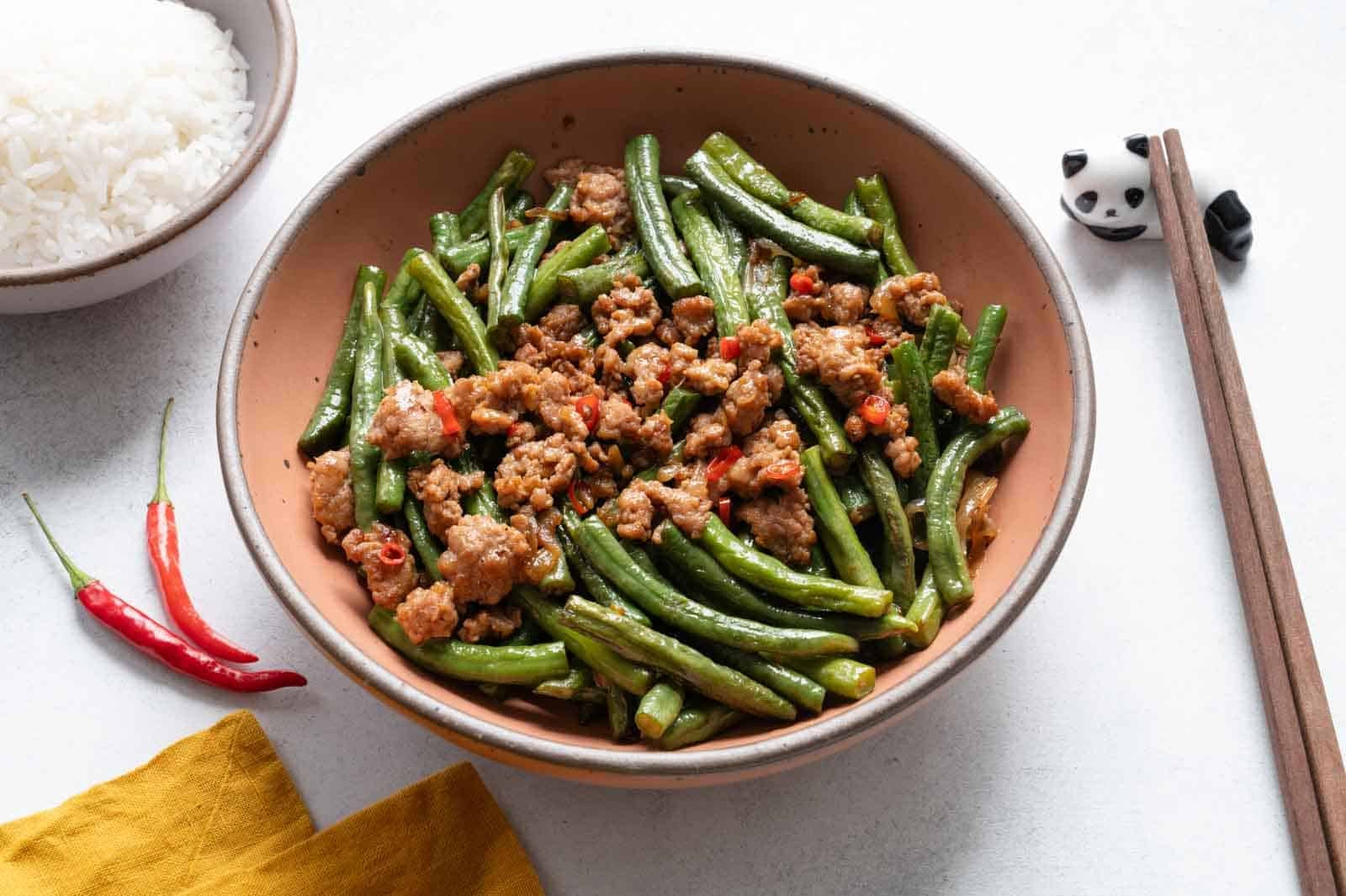
There are many ways to prepare yardlong beans. Most commonly, you’ll find them in stir fry recipes, such as my long bean stir fry with pork. (By the way, that recipe is one that I wrote for Abridged, Sacramento region’s PBS KVIE news website.) It’s a simple recipe that’s great for weeknights. You can also use these long beans in place of green beans in dishes, such as my Chinese garlic green beans.
Because yardlong beans have thicker skins, they hold up very well in curries and longer braises. You can also blanch the beans quickly and add them to salads. I don’t like eating these beans raw as much because they have a slightly bitter bite. Moreover, the beans sweeten slightly once they’re cooked. Here are some cookbooks in my collection that have long bean recipes (affiliate links):
- Hot Sour Salty Sweet by Jeffrey Alford & Naomi Duguid (2000): This is a great cookbook that features recipes from different countries in Southeast Asia. In this cookbook, you’ll find long bean recipes for a jungle curry and som tam with yardlong beans.
- The Chinese Way by Betty Liu (2024): There’s recipes for pickling long beans and a pickled long bean stir fry with pork.
- Filipinix by Angela Dimayuga & Ligaya Mishan (2021): You’ll find recipes for kare-kare (oxtail peanut stew with vegetables); sinigang (sour tamarind broth with pork and vegetables); and pinkabet (vegetables stewed in fermented shrimp paste).
- Madhur Jaffrey’s Curry Nation by Madhur Jaffrey (2021): This cookbook features curry recipes throughout the United Kingdom, including a potato and long bean curry! You’ll probably have better luck finding used copies of this cookbook online.
I hope you find this yardlong bean introduction helpful! Let me know how you enjoy eating these beans!