
With a subtle sweetness and meaty texture, lobsters have become the crème de la crème of seafood establishments across the world. And while we’d certainly advocate ordering the lobster dish, you do run the risk of the meal being soured once that dreaded check arrives. The sad reality is that lobster isn’t getting cheaper any time soon. If you’re looking to cut costs without cutting flavor, one seriously underrated alternative to consider is langostinos, often sold as “squat lobsters.”
If you were to compare lobsters and langostinos side by side, langostinos look like adorable mini lobsters. But they’re not as closely related as appearances would suggest. While they both fall under the broad order of decapods, your standard American lobsters belong to the Astacidea infraorder, whereas langostinos belong to the Anomura infraorder. In less science-y terms, this means that langostinos are more closely related to hermit crabs and porcelain crabs than they are to lobsters.
Despite these differences, however, their respective tastes and textures are remarkably similar — although langostinos have a slightly sweeter flavor and a more delicate texture, which some argue makes them superior to their luxurious counterparts. It also helps that they’re generally less expensive, which can significantly cut costs. These factors have made them a natural choice for restaurants looking to offer customers a cheaper lobster alternative.
One important difference worth noting is that lobster provides edible meat across multiple parts of its body, including, but not limited to, the tail, claws, and legs. In contrast, the primary edible portion of langostinos is the tail meat. That’s why you’ll usually find multiple langostinos making up a single dish, whereas one lobster tends to be more than enough.
The best ways to cook and serve langostinos
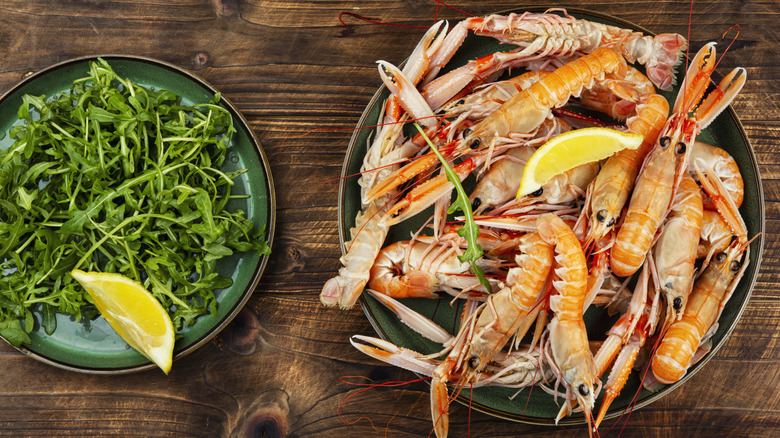
One common misconception both langostinos and lobsters share is that fresh is always best. This is only half true. Sure, if you live near the coast where they can be purchased right after being caught, you’re in for a treat. But even if you live in a landlocked part of the country, frozen seafood can be quite high-quality. Commercially caught langostinos are often flash-frozen shortly after being caught, helping preserve their flavor and texture.
If you’re working with frozen langostinos, make sure they’re completely thawed before cooking. You could leave them overnight in the refrigerator, but if you’re short on time, place them in a sealed bag and submerge it in cold water until thawed, changing the water every 10 minutes. Don’t be tempted to cook them while they’re still icy in the middle, as you’ll end up with uneven cooking and a rubbery texture. If you’re working with just the tail meat, you can also remove the dark digestive tract with a pair of tweezers — a toothpick works in a pinch, too.
When it comes to cooking, two of the simplest options are boiling or grilling. Both yield excellent results but bring something very different to the table. Boiling is the quick-and-easy route, and the method to choose when you want the sweet flavor and delicate texture of the meat to take center stage. Grilling is a little more involved, but with an excellent payoff. Split the langostinos lengthwise, place them cut-side down on the grill, and let the heat work its magic. From there, you’ve got the perfect canvas for flavors like garlic butter, fresh herbs, or a punchy sauce.