
These Easy Grilled Vegetable Skewers turn zucchini, summer squash, mushrooms, peppers, and red onion into a colorful side with lightly charred edges in about 15 minutes on the grill! A balsamic lemon-garlic marinade adds plenty of fresh, savory flavor to every bite.
162 CAL 19g CARBS 8g FAT 7g PROTEIN 3
Easy Grilled Vegetable Skewers Recipe
Whenever I’m already grilling dinner, I try to get the vegetables out there too. It keeps me from bouncing between the kitchen and the grill, and these skewers are one of my easiest ways to use up whatever zucchini, peppers, onions, or mushrooms are hanging around in the fridge!
They’re especially good for a Labor Day BBQ when I’m trying to use up the last of those fresh summer vegetables before the season shifts. Toss everything with the marinade, thread the vegetables onto skewers, and grill until tender and browned. You can easily change the vegetables or seasoning based on what you have and what else is on the menu!
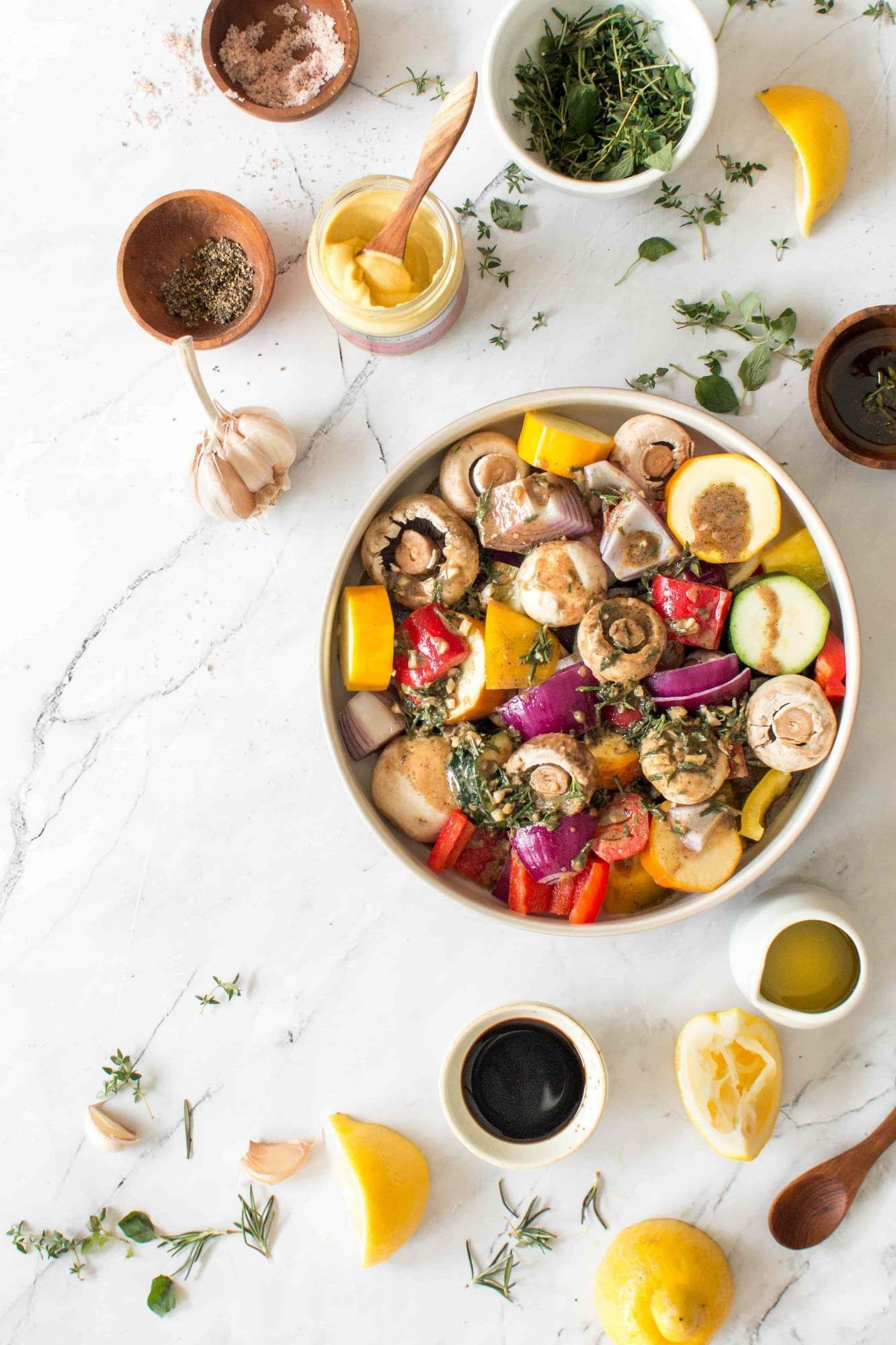
Before You Get Started
A few small prep details make the vegetables easier to skewer and help everything cook at the same pace.
- Wooden skewers: Soak about 8 wooden skewers in water for 15-30 minutes before grilling. Metal skewers can be used immediately.
- Even pieces: Keep the zucchini, squash, peppers, and onions close to the same size so one vegetable isn’t finished long before the others.
- Onion prep: Leave the red onion pieces a few layers thick instead of separating them completely. They’ll stay more securely on the skewer as they soften.
- Fresh herbs: Parsley, basil, cilantro, thyme, and rosemary all work well with the balsamic, lemon, and garlic marinade, so use what fits the rest of your meal.
How to Make Grilled Vegetable Skewers
Once everything is chopped, the marinade and skewers are quick to put together.
1. Make The Marinade
Whisk together the balsamic vinegar, olive oil, lemon juice, Dijon mustard, garlic, fresh herbs, salt, and pepper.
Add the chopped vegetables and toss until evenly coated. Let them sit for about 15 minutes to soak up the marinade.
2. Thread The Skewers
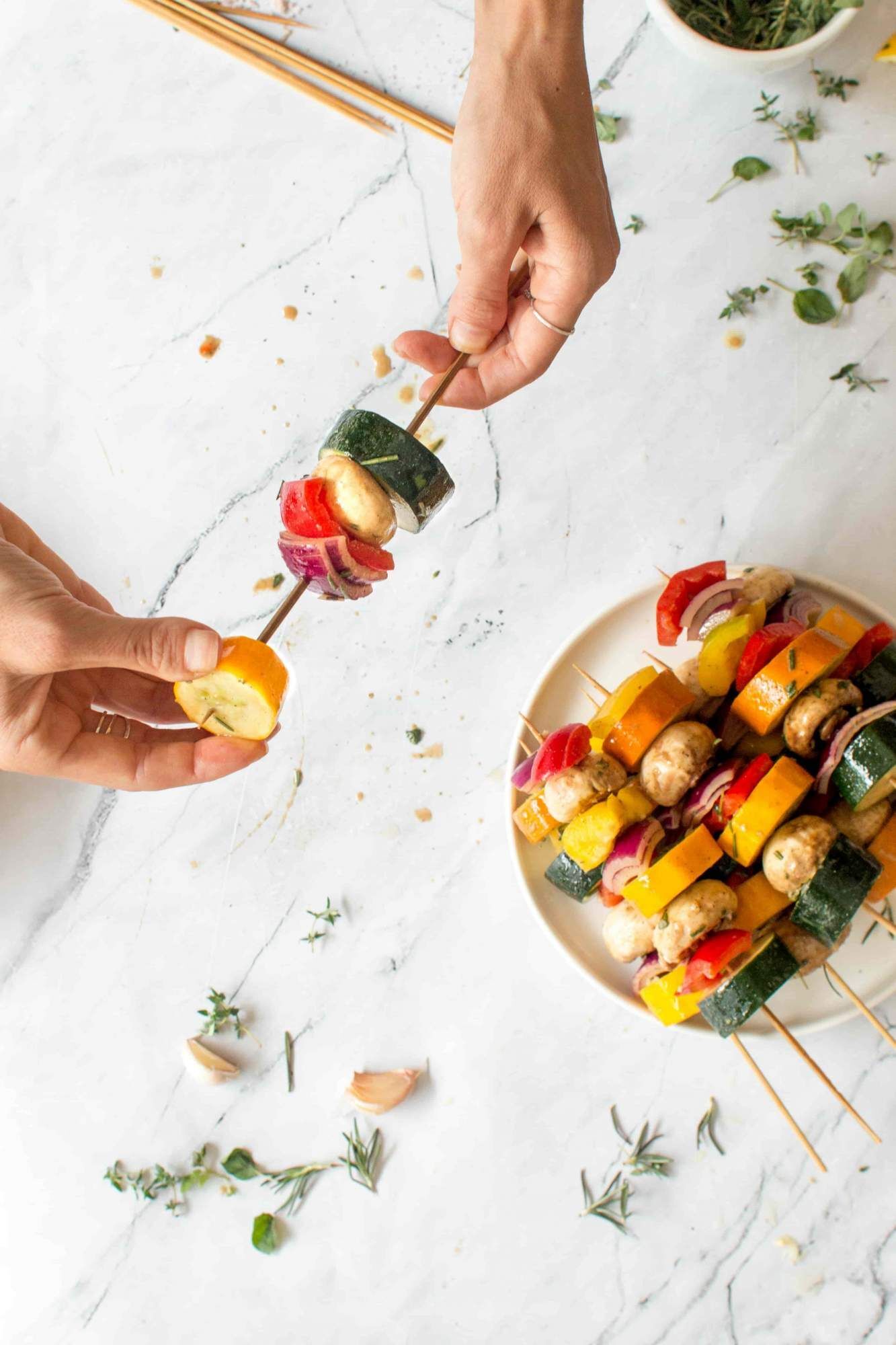
Thread the zucchini, summer squash, red onion, peppers, and mushrooms onto the prepared skewers.
Pro tip: Leave a little space between the vegetables instead of pressing them tightly together. More exposed surface means more direct heat and better browning.
3. Grill The Vegetables
Grill the skewers for 6-8 minutes, then flip and cook for another 4-6 minutes until the vegetables are tender and lightly charred.
Pro tip: For more color on every side, rotate the skewers every 3-4 minutes instead of only flipping them once.
4. Finish And Serve
Drizzle the vegetables with a little extra olive oil or balsamic vinegar if desired. Finish with fresh herbs, salt, and pepper to taste.
Recipe Ideas and Variations
The basic recipe is easy to take in a completely different direction with a new marinade, seasoning blend, or a little something sweet!
- Add pesto: Toss the vegetables with homemade or store-bought pesto for plenty of basil and garlic flavor.
- Go Southwestern: Combine olive oil and lime juice with fajita seasoning for smoky skewers that pair especially well with chicken or steak.
- Make them spicy: Use olive oil, lemon, and Cajun seasoning for a little heat. I especially like this version with grilled shrimp or fish!
- Use barbecue sauce: Brush the vegetables with your favorite barbecue sauce for a sweet and smoky variation that fits right into a classic BBQ spread.
- Add fruit: Pineapple, peaches, or plums caramelize beautifully on the grill and work especially well with barbecue or citrus flavors.
- Change the seasoning: Italian seasoning, lemon pepper, or curry powder can easily change the flavor to match the rest of your meal.
Best Vegetables for Kabobs
Choose vegetables with similar cooking times when possible, then give denser options a head start before they hit the grill.
- Best all-around choices: Zucchini, summer squash, bell peppers, red or sweet onions, mushrooms, and cherry tomatoes all cook well together.
- Potatoes and root vegetables: Baby potatoes, red potatoes, sweet potatoes, carrots, and butternut squash should be boiled or microwaved until just tender before threading them onto skewers.
- Corn: Cut corn on the cob into small rounds before adding it to the skewer. Once cut down, it can cook alongside the other vegetables.
- More options: Eggplant, asparagus, broccoli, cauliflower, and cabbage can all work well. Cut them into sturdy pieces that are large enough to stay securely on the skewer.
Recipe Tips and Tricks
These are the little details I’ve found most useful when making mixed vegetable kabobs.
- Keep proteins separate: Chicken, steak, pork, shrimp, and tofu can all use similar seasonings, but separate skewers give you better control over the cooking time of each ingredient.
- Stop spinning vegetables: Flat metal skewers make vegetables easier to turn. With round skewers, threading larger vegetables onto two parallel skewers also keeps them from rotating.
- Thread mushrooms through the center: Push the skewer through the stem and center of the mushroom instead of the thin edge of the cap, which is more likely to split.
- Short on marinating time: Grill the vegetables with olive oil, salt, and pepper, then add pesto, dressing, balsamic vinegar, citrus, Parmesan, or fresh herbs after cooking.
- Use the small pieces too: If you end up with vegetable pieces that are too small or awkward for the skewers, add them to a grill basket instead of tossing them.
- Separate slower vegetables: If you want to use something denser that still needs more cooking time, give it its own skewer. That way you can leave it on the grill without overcooking the zucchini or mushrooms.
What to Serve with Grilled Vegetable Skewers
I love pairing these with a grilled protein so the entire meal can stay outside!
- Pesto Chicken: Herby pesto chicken is an especially good match for the lemon, garlic, and fresh herbs in the vegetables.
- Grilled Salmon: Smoky grilled salmon and colorful vegetable skewers make an easy summer dinner with very little indoor cooking.
- Grilled Pork Chops: Juicy grilled pork chops make these skewers hearty enough for a family dinner or backyard BBQ.
- Grilled Pineapple Barbecue Chicken: Pair this with the barbecue or pineapple variation for a sweet and smoky summer meal.
- Garlic Lemon Shrimp Kabobs: The garlic and lemon flavors work naturally with the marinade on the vegetables, and both sets of skewers can go on the grill together.
- Green Chile Turkey Burgers: These burgers are a great match for the Southwestern or Cajun vegetable variation at a summer cookout.
Storage & Reheating
The vegetables soften slightly after refrigeration, but the leftovers are still useful for quick lunches and dinners.
- Storage: Store the cooked vegetables in an airtight container in the refrigerator for up to 3 days.
- Freezer: Freezing isn’t recommended for best texture. Zucchini and summer squash become much softer after thawing.
- Reheating: Warm the vegetables briefly on the grill or in a hot skillet to bring back some of the browned texture. The microwave works when you’re short on time.
- Leftovers: Remove the vegetables from the skewers and add them to pasta, wraps, quesadillas, salads, grain bowls, or scrambled eggs.
Frequently Asked Questions
Here are some of the most commonly asked questions about this recipe:
Can I make vegetable skewers ahead of time?
Yes. Chop the vegetables up to a day ahead and store them covered in the refrigerator. Mix the marinade separately, then toss everything together about 15 minutes before assembling and grilling the skewers.
Why are my vegetable skewers sticking to the grill?
Make sure the grill grates are clean and fully heated before adding the skewers. The oil in the marinade also helps prevent sticking. Give the vegetables time to develop some color before trying to turn them. They’ll usually release more easily once the surface has browned.
Can I make these on a gas or charcoal grill?
Yes. Both work well for vegetable skewers. A gas grill makes the heat easy to control, while charcoal adds more smoky flavor. Remove the skewers once the vegetables are tender and browned around the edges.
Why are some vegetables still firm while others are overcooked?
This usually happens when vegetables with very different densities are placed on the same skewer. Dense vegetables like potatoes, carrots, and winter squash need to be partially cooked first or grilled separately. Keeping all the pieces fairly similar in size also helps them cook more evenly.