
This post may contain affiliate links. As an Amazon Associate, I earn from qualifying purchases. Please read my disclosure.
Fasolakia is a recipe that always reminds me of traditional family meals I enjoyed growing up. Tender green beans, Yukon Gold potatoes, ripe tomatoes, and fresh parsley slowly simmer together until every bite is rich, comforting, and full of classic Greek flavor. It is a simple dish that only takes me 40 minutes to make and can be eaten as a meal on its own or alongside other Mediterranean meals.
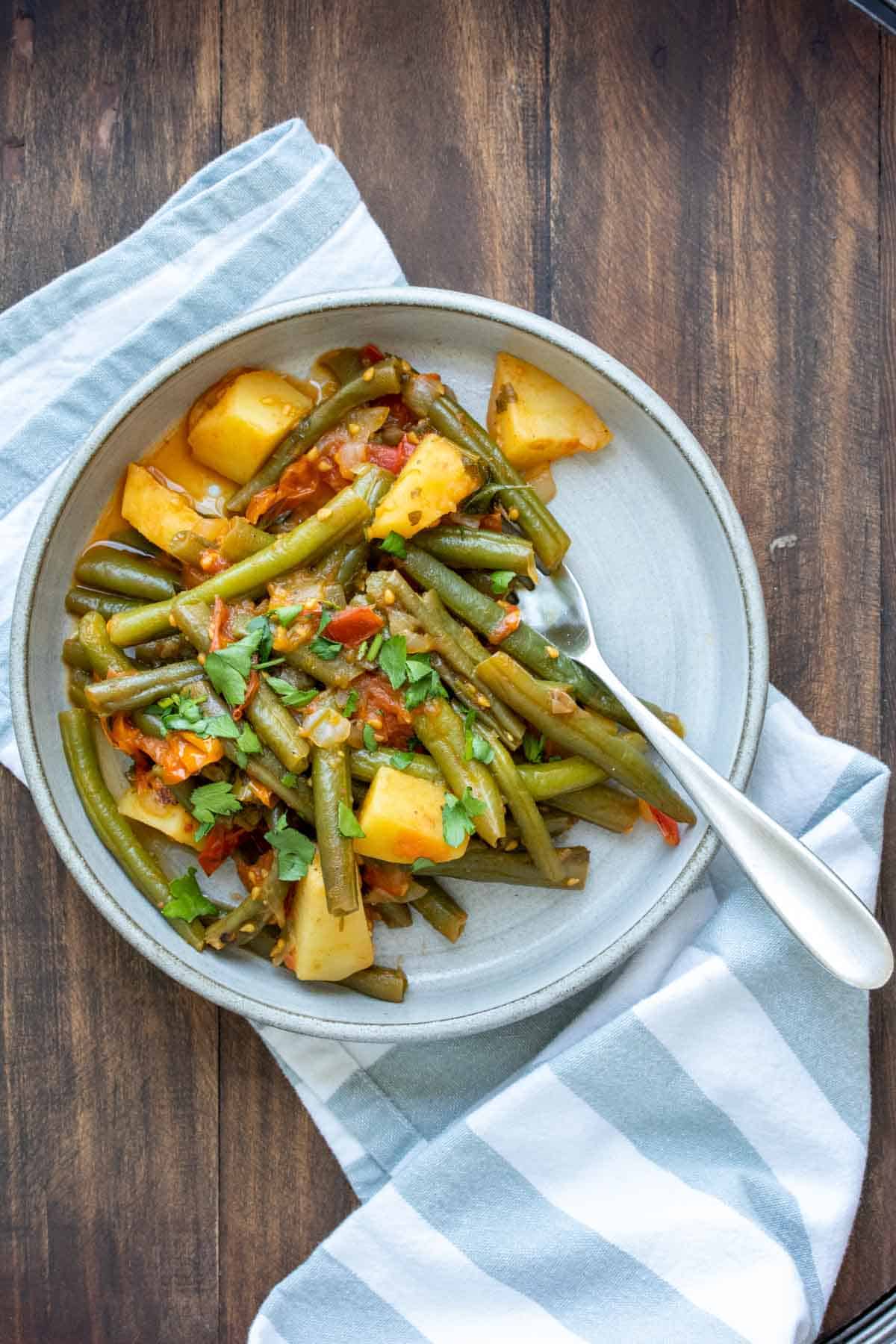
Greek green beans, or Fasolakia, is a traditional dish that is enjoyed throughout the year as either a hearty side or a main course. The vegetables slowly cook together, allowing the tomatoes to create a naturally rich sauce that coats every green bean and potato. They are similar to roasted green beans and potatoes, but much saucier. Try this recipe as a side for your next meal.
I first learned how to make fasolakia from my mom, and it is still one of the recipes that makes me feel closest to my Greek heritage, along with kourabiedes, of course. She never needed a written recipe; she just measured with her heart and knew when the vegetables were perfectly tender, and the sauce had reduced just enough. After making it with her so many times, I made a concerted effort to write it down so I could pass it along to friends and family.
I may be slightly biased in my love for this fasolakia recipe because of my Greek roots, but how can you not love a dish that turns the most basic vegetables into something so comforting? The potatoes become creamy, the tomatoes break down into a sauce, and the green beans stay perfectly tender without becoming overly limp. As far as wholesome goes, this is a recipe I advocate for as a mom, Greek, and health coach.
After making Greek green beans for so many years, I understand why my mother never needed a recipe. I start by gently cooking the onions until they are soft and and sweet, before adding the potatoes to pick up a little color. Next, I add the tomatoes, allowing them to slowly release their juices. Once I stir in the green beans, parsley, water, and seasoning, everything simmers together until the vegetables are tender and the sauce has reduced enough to coat every bite.
Whenever I have my family over, this is one of the dishes I always make that is guaranteed to satisfy everyone. During one family dinner, my aunt sat in the kitchen as she watched me make my fasolakia, and audibly gasped when she saw me adding a drizzle of olive oil and no more. This was followed by a flabbergasted “But why?” You see, traditionally fasolakia uses a heavy amount of olive oil, usually about 1/3 of a cup per pound of vegetables. She could not believe that this was how I had been making it all these years. My husband laughed and said I better not mention my oil-free recipe that uses vegetable broth instead. Ha! Be sure to make this recipe for your next family gathering.
🥘 Ingredients
The ingredients may be humble, but each of them has an important job when it comes to creating authentic flavor for this fasolakia recipe. This is what I use:
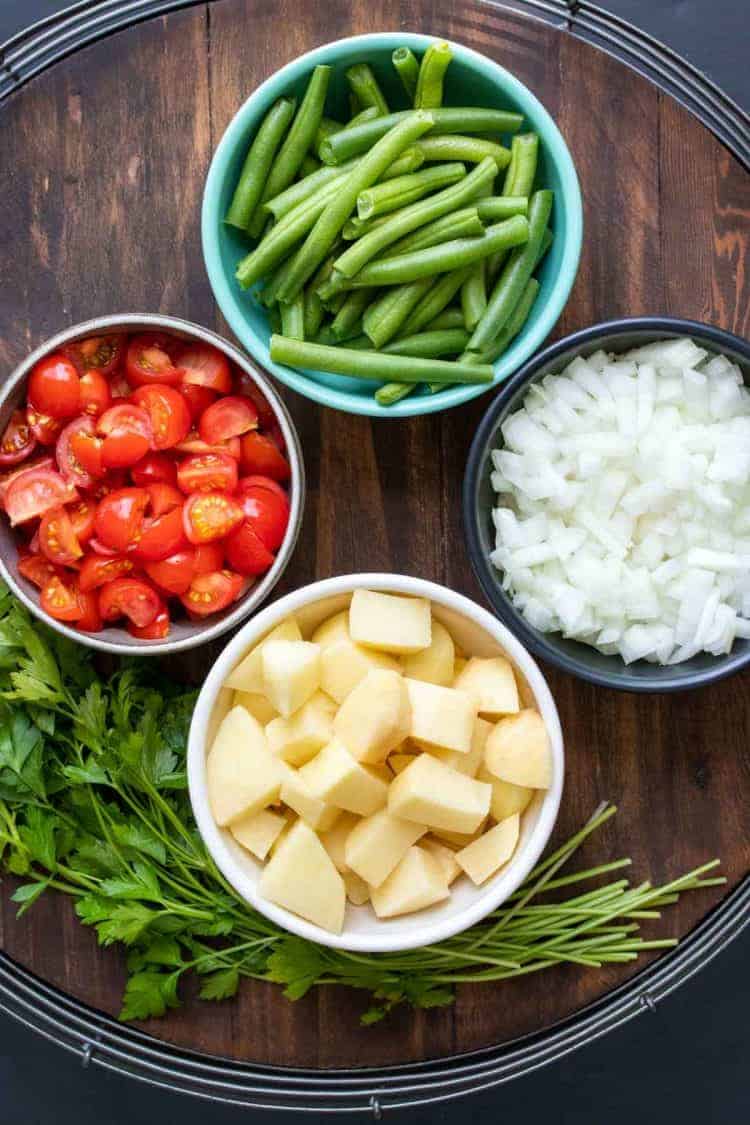
Sweet or yellow onion: I gently saute this to build a naturally sweet and aromatic base for the vegetables.
Yukon gold potatoes: These become wonderfully creamy as they cook, soaking up all of the tomato sauce.
Olive oil: A drizzle of olive oil helps soften the onions and bring all the flavors together. If I want to keep the recipe oil-free, vegetable broth works well too.
Fresh string beans: Green beans are the heart of this recipe, and I always use fresh beans when I can since they stay tender while still holding their shape during the long simmer.
Fresh tomatoes: These break down into a rich rustic sauce. I like using ripe, flavorful tomatoes for the best outcome.
Chopped parsley: I use plenty of fresh parsley to add brightness and that fresh herbal flavor that is found in so many Greek recipes.
Water: A little water creates just enough liquid for the vegetables to gently braise while the tomatoes develop into a thick sauce.
Sea salt and black pepper: These simple seasonings enhance the natural sweetness of the vegetables without interfering with the fresh Mediterranean flavors.
🔪 How To Make
These are the basic steps I follow to bring authentic Greek flavor to my fasolakia:
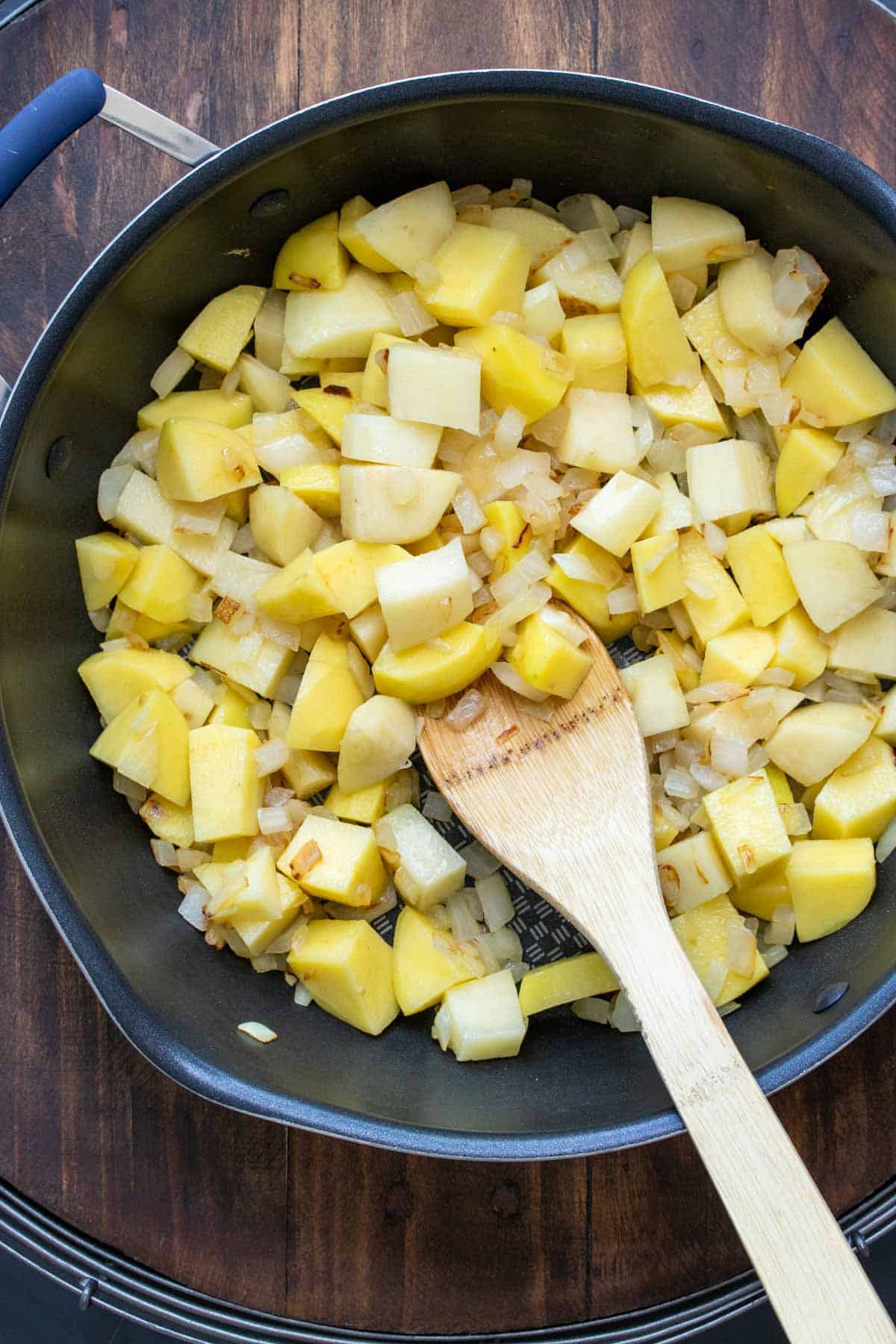
Saute onions and potatoes: I cook the onion in olive oil or broth until softened, then add the potatoes and let them cook for a few minutes so they begin developing flavor.
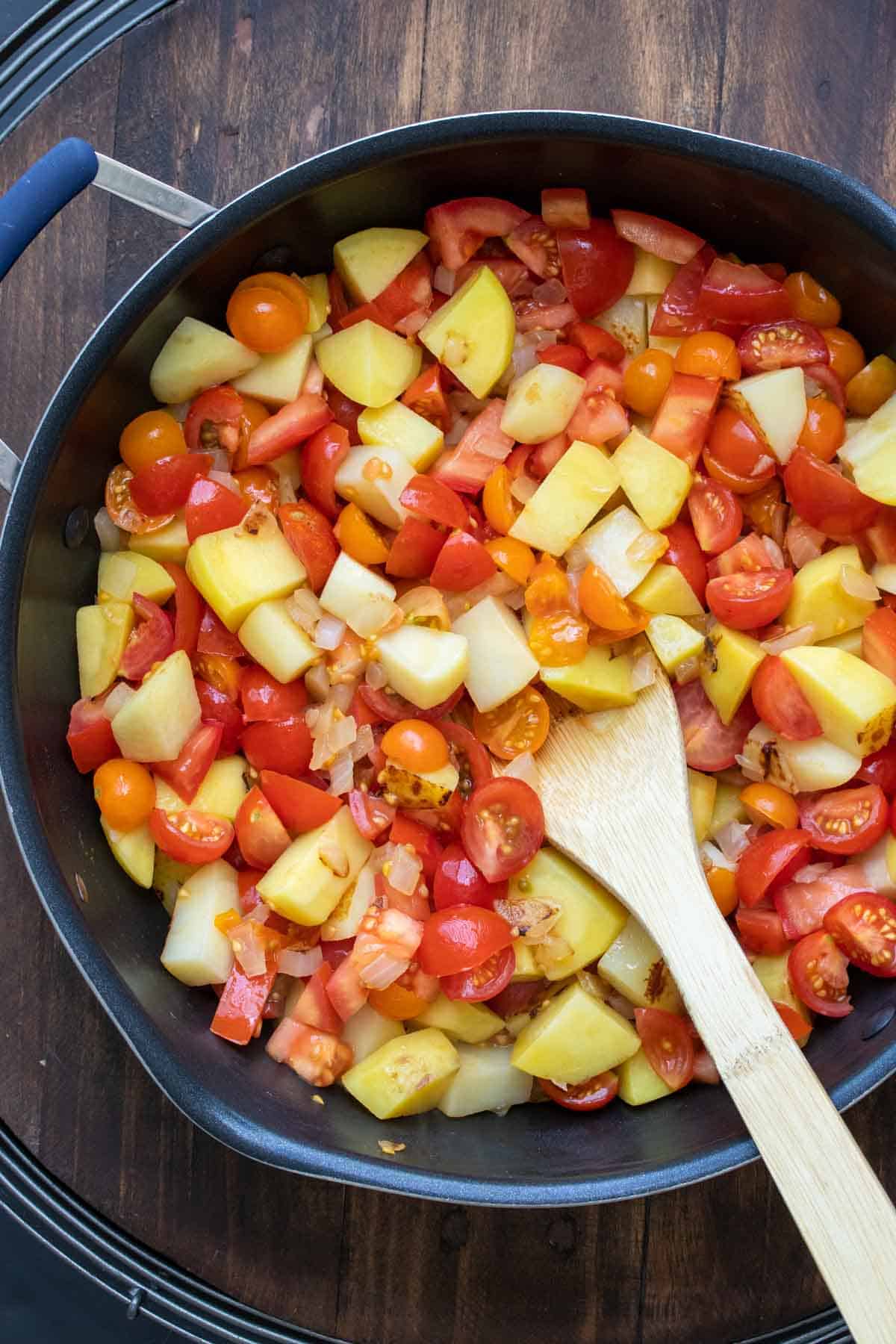
Add the tomatoes: Next, I stir in the chopped tomatoes and cook them until they begin breaking down, releasing their juices.
Add the beans and remaining ingredients: I add the green beans, parsley, water, salt, and pepper, then cover the pot.
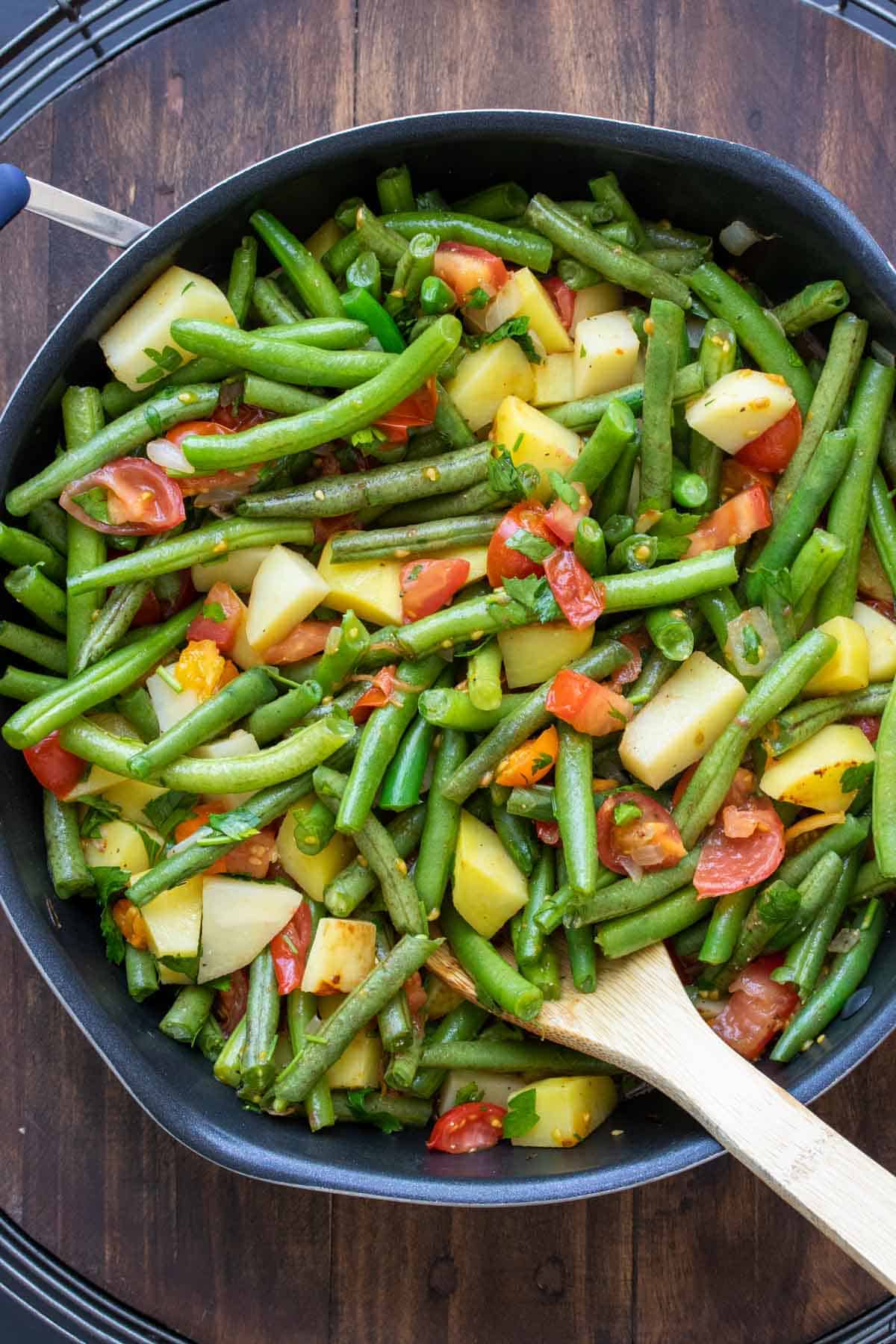
Simmer: Then I let everything simmer for about 20 minutes until the vegetables are perfectly tender and the sauce has thickened.
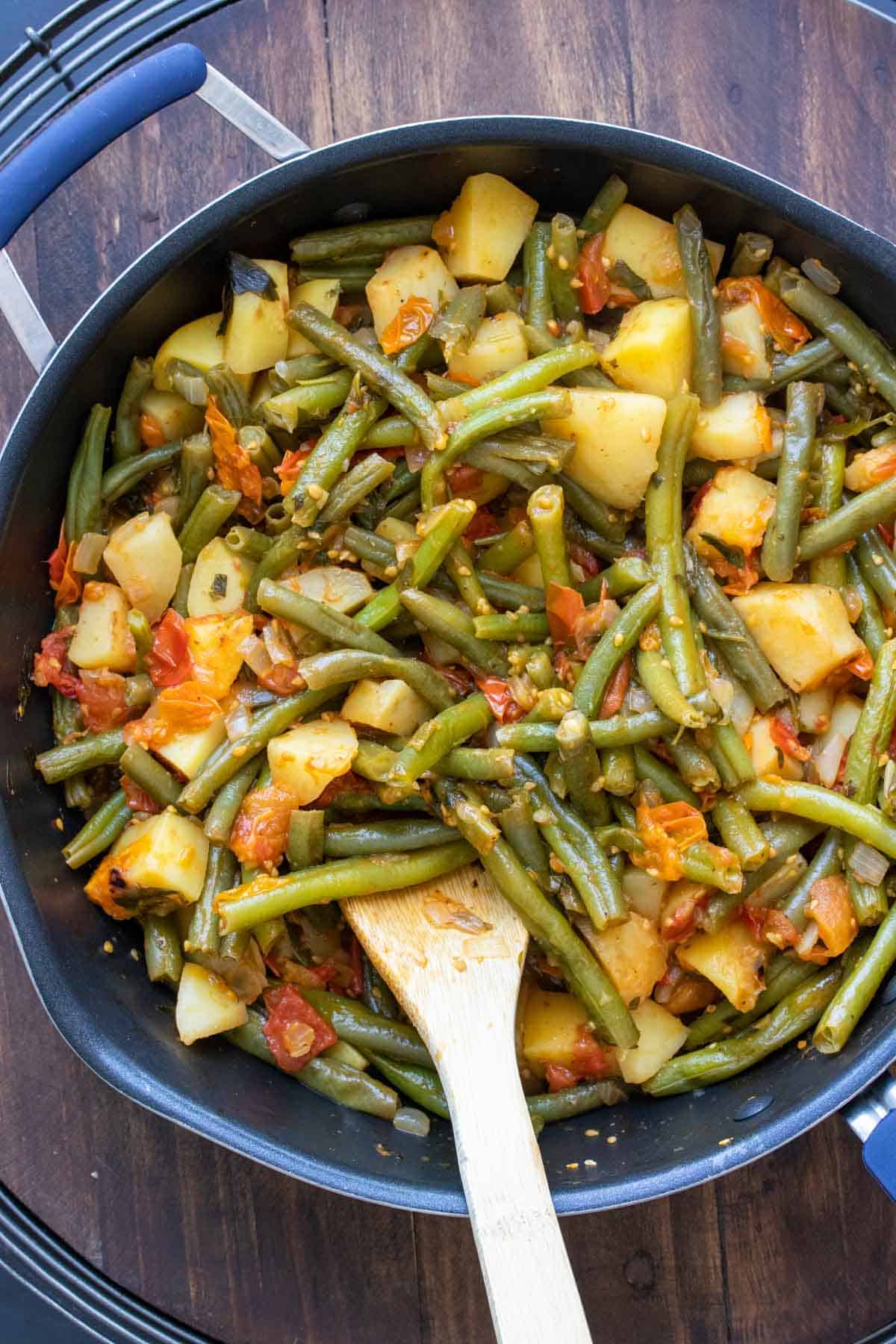
Serve: I serve the fasolaki warm with plenty of the tomato sauce spooned over the vegetables and a little extra parsley scattered on top.
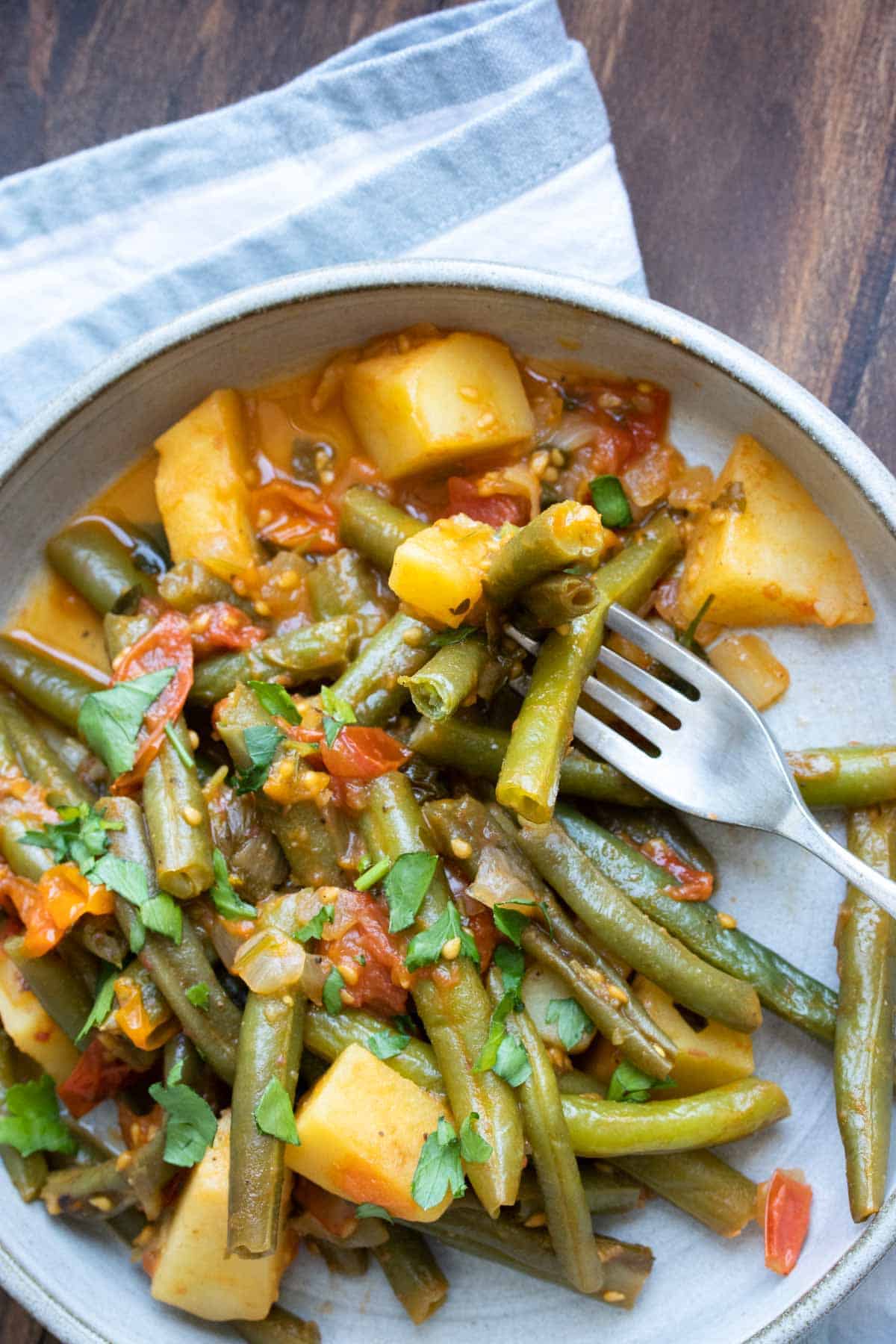
My #1 Secret Tip for this fasolakia recipe is to let the tomatoes cook down naturally instead of rushing the simmer. As they break down, they create the rich sauce that Greek green beans are known for.
Other Tips To Keep In Mind:
- Fresh beans: I always use fresh green beans as they hold their texture the best during the simmering. Frozen beans can work, but they become a little softer.
- Cut evenly: I keep the potato pieces about the same size to make sure everything finishes cooking at the same time without some pieces falling apart while others stay firm.
- Ripe variety: The better the tomatoes taste, the better the finished sauce will be. I like using a mix of ripe red Roma, plum, and cherry tomatoes.
- Do not skip parsley: Parsley is key to balancing the richness of the tomato sauce. I like stirring most of it into the pot and reserving a little for garnish just before serving.
- Let it rest: I usually let the fasolakia sit for about 10 minutes after cooking, giving the sauce more time to thicken, and the vegetables a chance to absorb even more flavor.
📖 Variations
After learning how to make traditional fasolakia from my mom, I started making a few simple variations depending on what I had in the kitchen. Be sure to give these versions a try too:
Lemony fasolakia: Just before serving, I stir in a squeeze of fresh lemon juice and a little grated lemon zest. This gives the vegetables an even fresher Mediterranean flavor, which I love serving in summer.
Olive and herb: I add kalamata olives, a pinch of dried oregano, and a spoonful of capers over the finished fasolakia and turn it into a showstopping side dish. My extended family all love this version.
Hearty bean: When I want to turn it into a more filling main course, I add a can of drained butter beans, or cannellini beans during the final 10 minutes of simmering, and stir in a handful of baby spinach just before serving. My boys love this meal after a long day of school activities.
🍽 Serving Suggestions
Now that you know how to make these traditional Greek green beans, I recommend serving them with some other delicious dishes from the same cuisine. You can start with yemista Greek stuffed tomatoes and peppers and serve the fasolakia with vegan pastitsio.
If I am serving this as a light meal, I like to include a side of vegan feta cheese and gluten free focaccia to mop up any extra sauce on the plate. And when it is part of a much larger spread, I start things off with Greek vegan spanakopita, followed by vegan Greek salad or vegan farro salad. Then I serve the green beans with Greek vegan moussaka. And if I did not bring out a tray of healthy vegan baklava to finish things off, I would never hear the end of it.
🧊 Storing And ♨️ Reheating
Refrigeration: I store leftovers in an airtight container in the refrigerator for up to 5 days.
Freezing: This recipe freezes really well. I let everything cook completely before transferring it to a freezer-safe container, and keep it for up to 3 months.
Reheating: If frozen, I thaw the fasolakia in the refrigerator overnight, then warm it gently in a skillet over medium-low heat or in the microwave until heated through. I stir in a splash of water to loosen the sauce if it has thickened too much.
❓Recipe FAQs
When there is still quite a bit of liquid once the vegetables are tender, I simply remove the lid and let everything simmer for another 5-10 minutes. This allows the excess moisture to evaporate naturally while concentrating the tomato flavor.
Yes. When I do not have fresh tomatoes at home, I use diced canned tomatoes instead. I prefer good quality tomatoes with no added seasonings so I can control the final flavor. Depending on the variety, you may need to simmer the sauce a little longer to reduce the extra liquid, or add a pinch of sugar to offset the tartness.
f my potatoes are still firm after the green beans have softened, they have usually been cut a little too large or need more time to cook. This can happen when I use waxy potatoes instead of Yukon Gold. I like cutting the potatoes into even edges, and if the pan starts looking dry before the potatoes are tender, I add a small splash of water or vegetable broth, cover the pan again, and continue simmering until they are fork-tender.

Love this plant based side dish recipe? Please leave a 5-star rating 🌟 in the recipe below and/or a review in the comment section further down the page!
You can also FOLLOW ME on FACEBOOK, INSTAGRAM, and PINTEREST to see more delicious, healthy, family-friendly food, and if you have any questions, I’m here to help!
Fasolakia (Greek Green Beans)
Fasolakia is a recipe that always reminds me of traditional family meals I enjoyed growing up. Tender green beans, Yukon Gold potatoes, ripe tomatoes, and fresh parsley slowly simmer together until every bite is rich, comforting, and full of classic Greek flavor. It is a simple dish that only takes me 40 minutes to make and can be eaten as a meal on its own or alongside other Mediterranean meals.
Servings: 6
Calories: 160kcal
- My #1 Secret Tip for this fasolakia recipe is to let the tomatoes cook down naturally instead of rushing the simmer. As they break down, they create the rich sauce that Greek green beans are known for.
- Fresh beans: I always use fresh green beans as they hold their texture the best during the simmering. Frozen beans can work, but they become a little softer.
- Cut evenly: I keep the potato pieces about the same size to make sure everything finishes cooking at the same time without some pieces falling apart while others stay firm.
- Ripe variety: The better the tomatoes taste, the better the finished sauce will be. I like using a mix of ripe red Roma, plum, and cherry tomatoes.
- Do not skip parsley: Parsley is key to balancing the richness of the tomato sauce. I like stirring most of it into the pot and reserving a little for garnish just before serving.
- Let it rest: I usually let the fasolakia sit for about 10 minutes after cooking, giving the sauce more time to thicken, and the vegetables a chance to absorb even more flavor.
Calories: 160kcal | Carbohydrates: 36g | Protein: 6g | Fat: 1g | Saturated Fat: 1g | Sodium: 375mg | Potassium: 1063mg | Fiber: 8g | Sugar: 9g | Vitamin A: 2515IU | Vitamin C: 66mg | Calcium: 96mg | Iron: 3mg