
This post may contain affiliate links. As an Amazon Associate, I earn from qualifying purchases. Please read my disclosure.
Cold evenings in Seattle always make me crave curry, and more specifically, a pot of rajma masala. I simmer kidney beans, tomatoes, ginger, and warm spices together until I have a thick and creamy plant-based curry. It is hearty, gluten-free, and ready for my family in just under an hour, making it great for easy weeknight dinners.

Rajma masala is an Indian comfort food I always return to when I want something nourishing and substantial without spending hours cooking. A lot of my plant-based curries center around lentils or chickpeas, like my chana aloo masala, but this one uses tender kidney beans, softened onions, and garlic, which reach new levels of comfort. Take a break from the everyday legumes and give this rajma masala a try this week!
Since this curry is so creamy, I started making it for my kids when they were starting to eat solids. This was back when they were significantly less picky. A few years went by, and suddenly my daughter decided that she no longer liked beans and that the only curry she would eat was my vegan tikka masala. I told her that I would make a special “soup” for her instead, and blended up the rajma masala until no beans or vegetables were visible. She basically licked the bowl clean. Ha! Thank goodness we have overcome that stage.
A bowl of rajma masala appeals to me as a mom and a nutritionist. Kidney beans are packed with fiber, plant-based protein, iron, and potassium, which means this meal keeps everyone satisfied for hours without tasting heavy. The beans turn soft and creamy while the tomato sauce develops into a rich, savory, and slightly acidic sauce seasoned with warm spices.
My rajma masala works so well, thanks to the layering of ingredients throughout the cooking process. I start by sauteing the onions and bell peppers until they soften and become slightly sweet and caramelized around the edges. Then I stir in the garlic, ginger, tomatoes, and spices so everything cooks down into a thick masala base. After that, I add the kidney beans into the pot so they absorb all the flavors. Right at the end, I mash a small portion of beans, then finish with lemon juice and cilantro for brightness.
I have a friend who lived in the UK for most of her life, which meant lots of baked beans on toast and curry dinners. Since moving to the United States, she claims the beans and curries just taste different over here. When she came to visit me in Seattle, I made this rajma masala without thinking, purely because it was quick, easy, and I was having a chaotic day.
Once she tasted it, she said it was like her two favorite things had a baby. Ha! Of course, now I have to make her my vegetarian baked beans to see if those earn her stamp of approval. Be sure to make this curry if you want a quick, satisfying dish that leaves a lasting impression on anyone who eats it.

🥘 Ingredients
For this rajma masala recipe, I use everyday ingredients that slowly cook into a thick and richly seasoned curry. This is everything I need to pack this dish with texture and warmth:
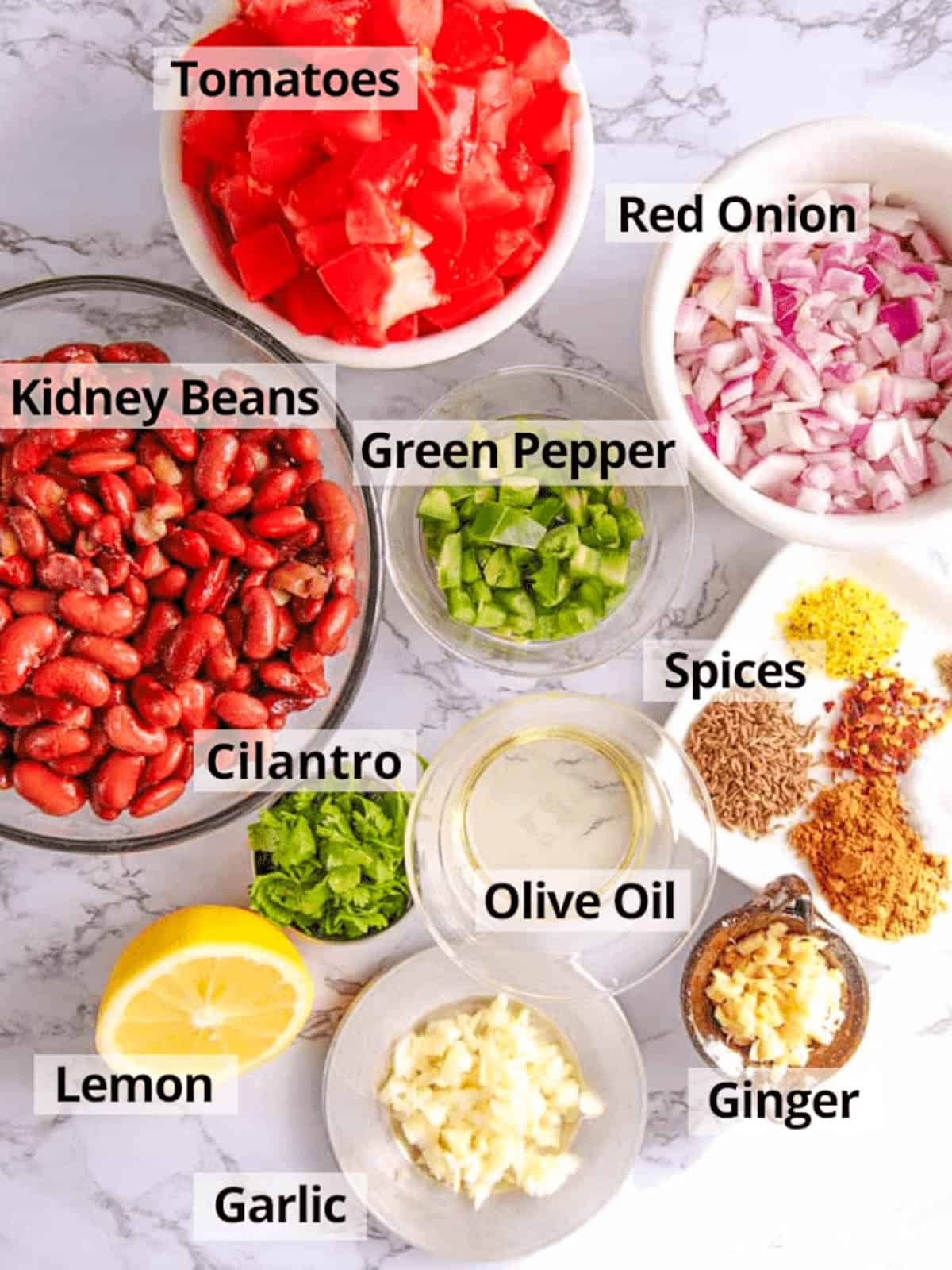
Red kidney beans: I use canned kidney beans for convenience, and they become creamy after simmering.
Red onion: This adds natural sweetness as it cooks down in the masala base.
Green bell pepper: I like using green bell pepper for a slightly earthy flavor that balances the acidity of the tomatoes.
Fresh tomatoes: These break down while simmering and help create the thick curry sauce. Roma tomatoes work especially well here.
Garlic: Fresh garlic mellows as it cooks and adds a savory note throughout the dish.
Fresh ginger: I add this for warmth and a light sharpness that keeps the dish from tasting too heavy.
Spices: I use cumin seeds, garam masala, and red pepper flakes to create an authentic masala flavor.
Olive oil: This helps soften the vegetables and carries the spices throughout the sauce.
Cilantro and lemon juice: I stir lemon juice and freshly chopped cilantro through the curry at the end to brighten the flavors.
🔪 How To Make
I make this rajma masala in a large pot and use a gradual simmering process. This is how I do it:
Soften the vegetables: I heat the olive oil in a large saucepan over medium heat, then add the diced onion and green bell peppers. After about 5 minutes, the onions and peppers should become soft and lightly golden around the edges.
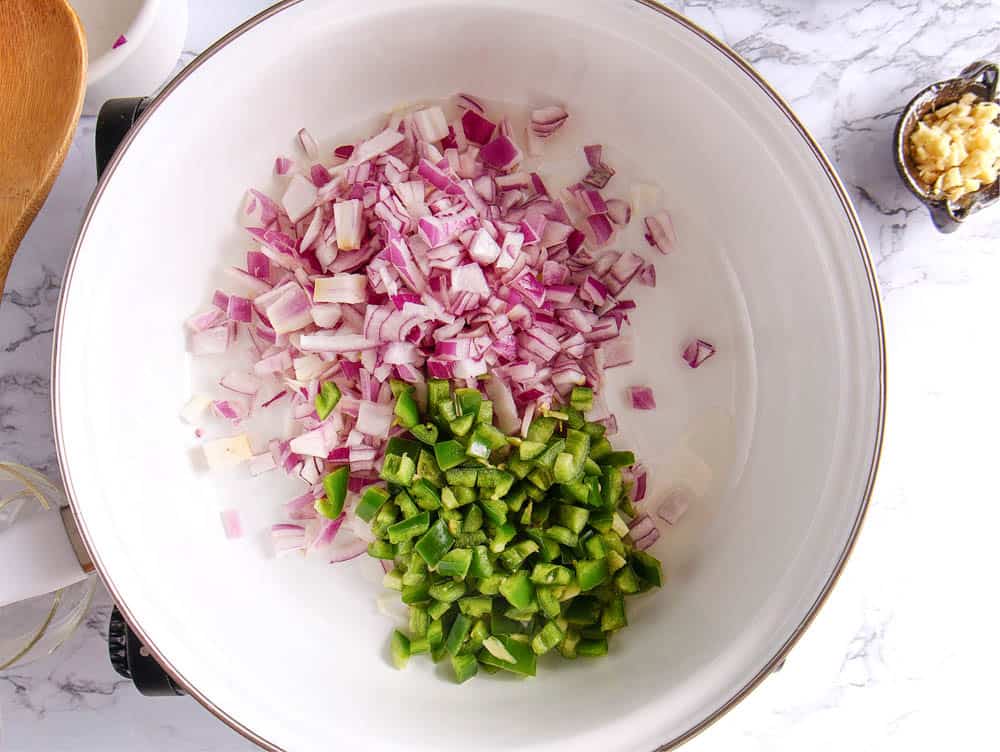
Build the masala base: Next, I stir in the garlic, ginger, chopped tomatoes, cumin seeds, garam masala, red pepper flakes, salt, and black pepper.
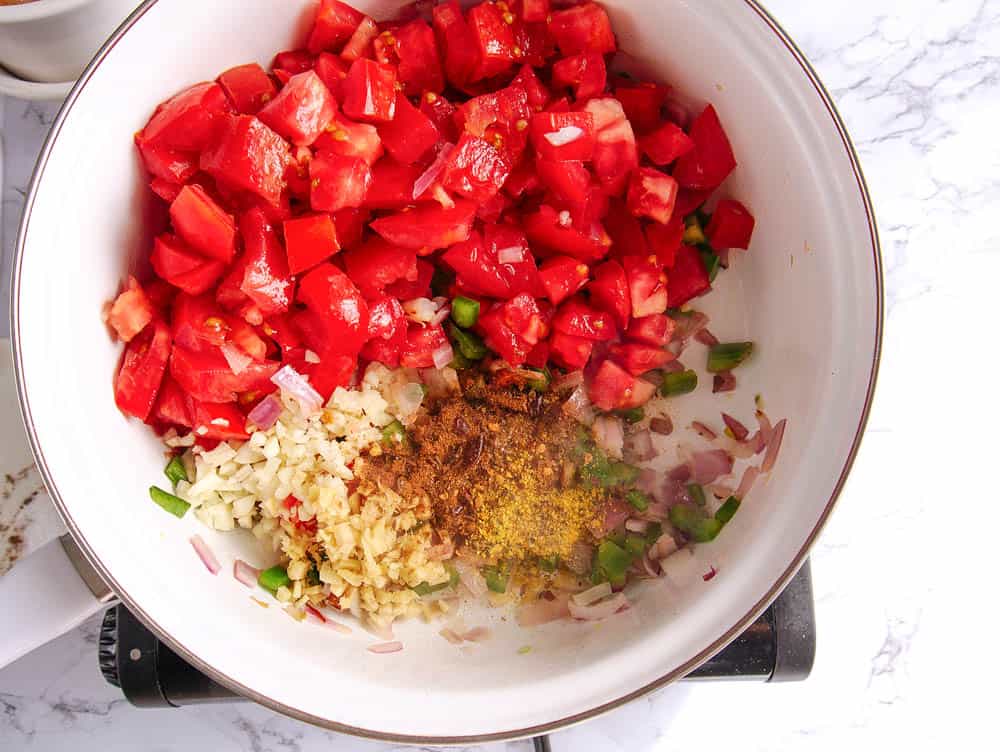
Cook: I cook until the vegetables have softened and the tomatoes have released their juices.
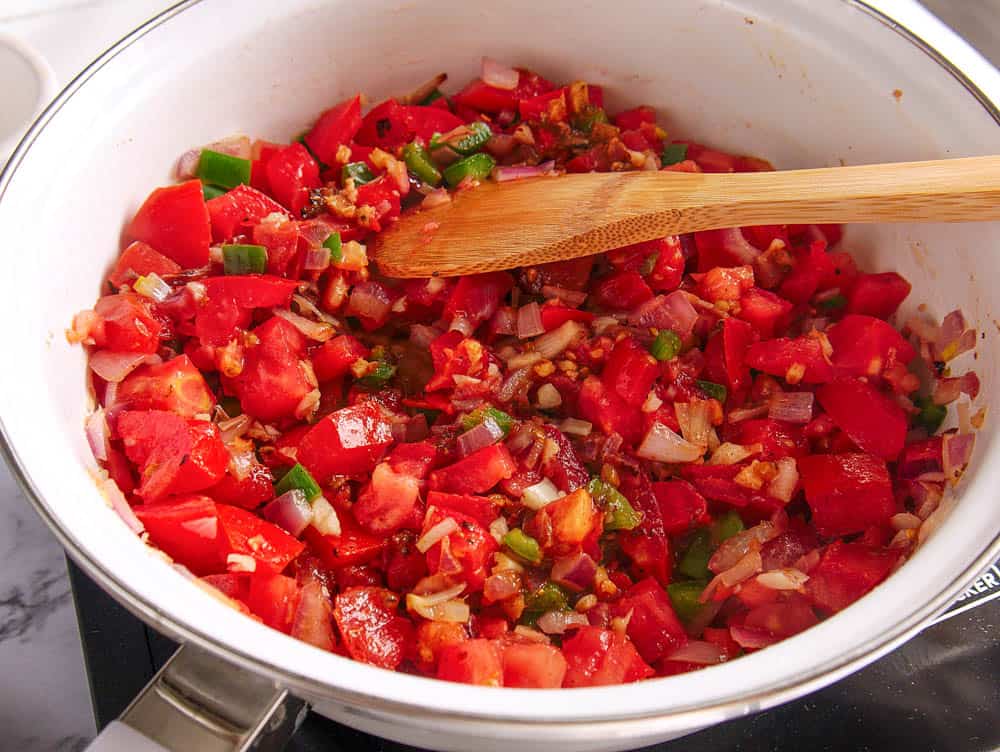

Add beans and seasonings: Then, I add the kidney beans and stir everything well so the beans are fully coated in the sauce. I let the curry simmer uncovered for 10-15 minutes, stirring occasionally until the tomatoes break down and the sauce becomes thicker.
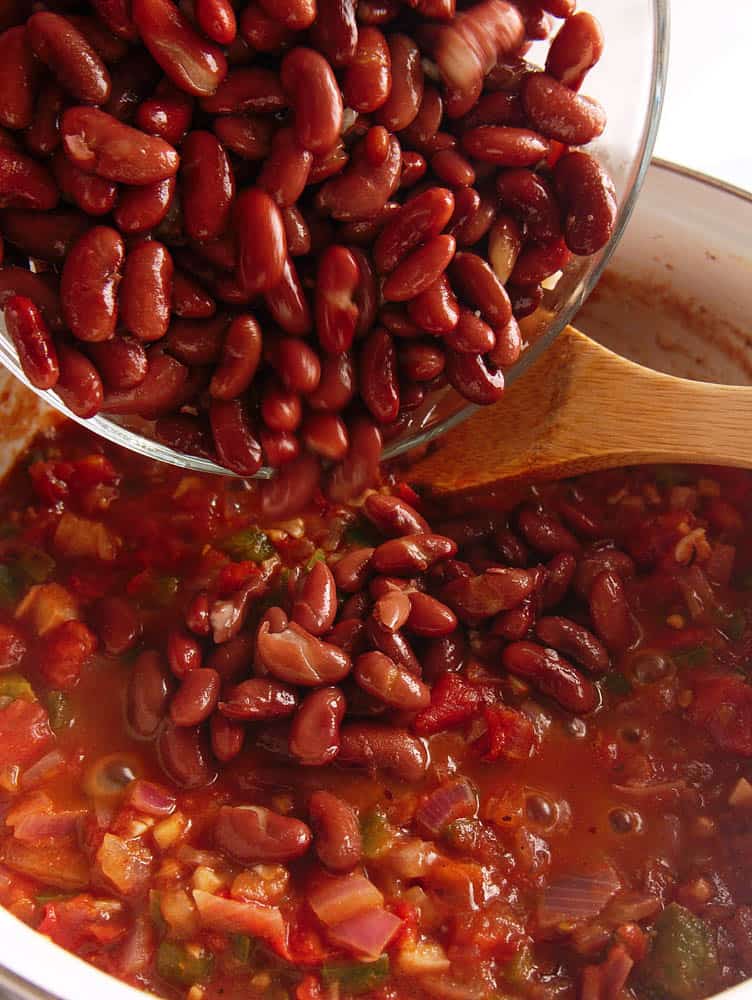
Thicken, finish, and serve: I mash a small portion of the beans directly in the pot using a potato masher, then stir through the lemon juice and cilantro before serving.

My #1 Secret Tip for this Rajma Masala recipe is to let the tomatoes cook down fully before adding the kidney beans. If the tomatoes still taste sharp or watery, the curry will not develop that thick and rich texture that makes rajma taste authentic.
Other Tips To Keep In Mind:
- Toast spices: Letting the cumin seeds cook in the oil for a minute helps bring out their nutty flavor.
- Use ripe tomatoes: Sweeter ripe tomatoes balance the spices much better than underripe ones.
- Simmer uncovered: I cook the rajma uncovered to help excess liquid evaporate so the sauce thickens naturally.
- Rest briefly: I let the curry rest for 5 minutes before serving, which helps the sauce and flavors settle.
- Reserve some masala: I keep 1 teaspoon of garam masala aside, and stir it through the curry once it is off the heat and ready to be served. This reinvigorates the flavors.
- Add dried fenugreek: A pinch of kasuri methi gives the masala a truly authentic flavor.
📖 Variations
This rajma masala has been tweaked and adjusted many times over the years, but these are 3 variations I keep returning to at my family’s request:
Spinach rajma: Add 2 cups chopped spinach during the last few minutes of cooking for extra nutrients and a touch of color. I like using baby spinach as it softens into the sauce nicely, and my kids hardly even notice it.
Smoky version: I add 1/2 teaspoon smoked paprika and one chopped roasted red pepper for a smokier flavor. My husband loves this version with grilled naan.
Extra hearty: I mix in 1 cup diced potatoes while the tomatoes simmer so they absorb the spices as they cool. I love making this version on cold winter nights as it serves as a more substantial curry.
🍽 Serving Suggestions
One of the best ways of enjoying rajma masala is spooned over some fluffy 4 ingredient cilantro lime rice, with warm vegan flatbread on the side instead of naan bread. Be sure to add a bright side dish like Indian spiced bok choy to really bring the entire meal together.
I made this curry a few days ago and could not decide between rice or authentic Guyanese roti. In order to have the best of both worlds, I opted for a small serving of pressure cooker quinoa and roti. Ha! I included a few traditional Indian samosas and Indian cabbage with peas.
🧊 Storing And ♨️ Reheating
Refrigeration: I store leftover rajma masala in an airtight container in the refrigerator for up to 5 days. The sauce thickens slightly as it sits.
Freezing: I let the curry cool completely before transferring it to a freezer-safe container and freezing it for up to 3 months.
Reheating: If frozen, I thaw the curry in the refrigerator overnight. Then I reheat gently on the stovetop with a splash of water to loosen the sauce. If reheating from frozen, I thaw it overnight in the refrigerator first for the best texture.
❓ Recipe FAQs
Hard beans usually have not been cooked long enough, or may have been older dried beans that take more time to soften. If I am using dried kidney beans, I soak them overnight first and then simmer them until fully tender, before adding them to the curry. Acidic ingredients like tomatoes can also slow down softening, so I make sure the beans are mostly cooked before combining everything.
Kidney beans split slightly if cooked too quickly at a rolling boil or become overcooked. I usually keep the heat at a gentle simmer instead of boiling aggressively, which helps the beans hold their shape better while still becoming creamy inside. The good news is that split beans still taste perfectly fine and can actually help thicken the gravy naturally.
Bitterness happens if the spices burn slightly while cooking or if the tomatoes are overly acidic. When that happens, I usually balance the flavor with a small splash of coconut cream, a pinch of sugar, or a little extra lemon juice, depending on what the curry needs. Letting the rajma masala simmer a bit longer also helps mellow and round out the flavors.


Love this plant based Indian recipe? Please leave a 5-star rating 🌟 in the recipe below and/or a review in the comment section further down the page!
You can also FOLLOW ME on FACEBOOK, INSTAGRAM, and PINTEREST to see more delicious, healthy, family-friendly food, and if you have any questions, I’m here to help!
📋 Recipe Card
Rajma Masala (Kidney Bean Curry)
Cold evenings in Seattle always make me crave curry, and more specifically, a pot of rajma masala. I simmer kidney beans, tomatoes, ginger, and warm spices together until I have a thick and creamy plant-based curry. It is hearty, gluten-free, and ready for my family in just under an hour, making it great for easy weeknight dinners.
Servings: 4 servings
Calories: 258kcal
-
In a large saucepan set over medium heat, add the oil, onions and pepper, and cook, stirring occasionally, for 5 minutes.
-
Add the garlic, tomatoes, gingerroot, cumin seeds, Garam Masala, lemon pepper, and dried red pepper flakes
-
Simmer the mixture, stirring occasionally, for 10 minutes.
-
Add the beans and salt and pepper to taste, and cook, stirring occasionally, for 10-15 minutes more.
-
To achieve a thicker curry, you can mash some of the kidney beans with a potato masher and simmer on low heat for another 5 minutes, uncovered. Stir in the lemon juice and cilantro, and let it heat through for 1-2 more minutes.
-
Serve warm with a sprouted wheat tortilla or naan on the side. Or serve with brown rice or quinoa.
- My #1 Secret Tip for this Rajma Masala recipe is to let the tomatoes cook down fully before adding the kidney beans. If the tomatoes still taste sharp or watery, the curry will not develop that thick and rich texture that makes rajma taste authentic.
- Toast spices: Letting the cumin seeds cook in the oil for a minute helps bring out their nutty flavor.
- Use ripe tomatoes: Sweeter ripe tomatoes balance the spices much better than underripe ones.
- Simmer uncovered: I cook the rajma uncovered to help excess liquid evaporate so the sauce thickens naturally.
- Rest briefly: I let the curry rest for 5 minutes before serving, which helps the sauce and flavors settle.
- Reserve some masala: I keep 1 teaspoon of garam masala aside, and stir it through the curry once it is off the heat and ready to be served. This reinvigorates the flavors.
- Add dried fenugreek: A pinch of kasuri methi gives the masala a truly authentic flavor.
Calories: 258kcal | Carbohydrates: 43g | Protein: 14g | Fat: 5g | Saturated Fat: 1g | Polyunsaturated Fat: 1g | Monounsaturated Fat: 3g | Sodium: 597mg | Potassium: 1015mg | Fiber: 13g | Sugar: 6g