
Before your morning coffee even finishes brewing, tariffs have already added a surcharge to your breakfast table. If your usual $100 grocery run is suddenly topping out at $140, you’re not miscounting, and you’re definitely not alone. From seasonal price spikes on imported Mexican tomatoes to broad aluminum tariffs inflating the cost of a modest can of beans, these trade duties are steadily creeping into everyday household budgets and breaking our confidence at checkout. As of June 2026, it’s estimated that families have had to spend over $3,500 more on goods and services since 2025.
We can’t negotiate international trade deals, but we can protect our food budgets. Instead of spiraling, let’s talk about what tariffs actually do to grocery prices, what we can do about it, and how to shop around them.

Pin this recipe for later!
All recipes are rigorously tested in our Nashville Test Kitchen to ensure they are easy, affordable, and delicious.
This article was created in partnership with Campaign for a Family Friendly Economy and Michigan Families for Fair Care.
Grocery bills are surging in 2026 due to packaging tariffs on metal cans, import duties on produce and seafood, and middleman markups—not just standard inflation. Re-costing popular 2024 recipes in July 2026 revealed price jumps between 27% and 46%.
3 Ways to Lower Your Register Total:
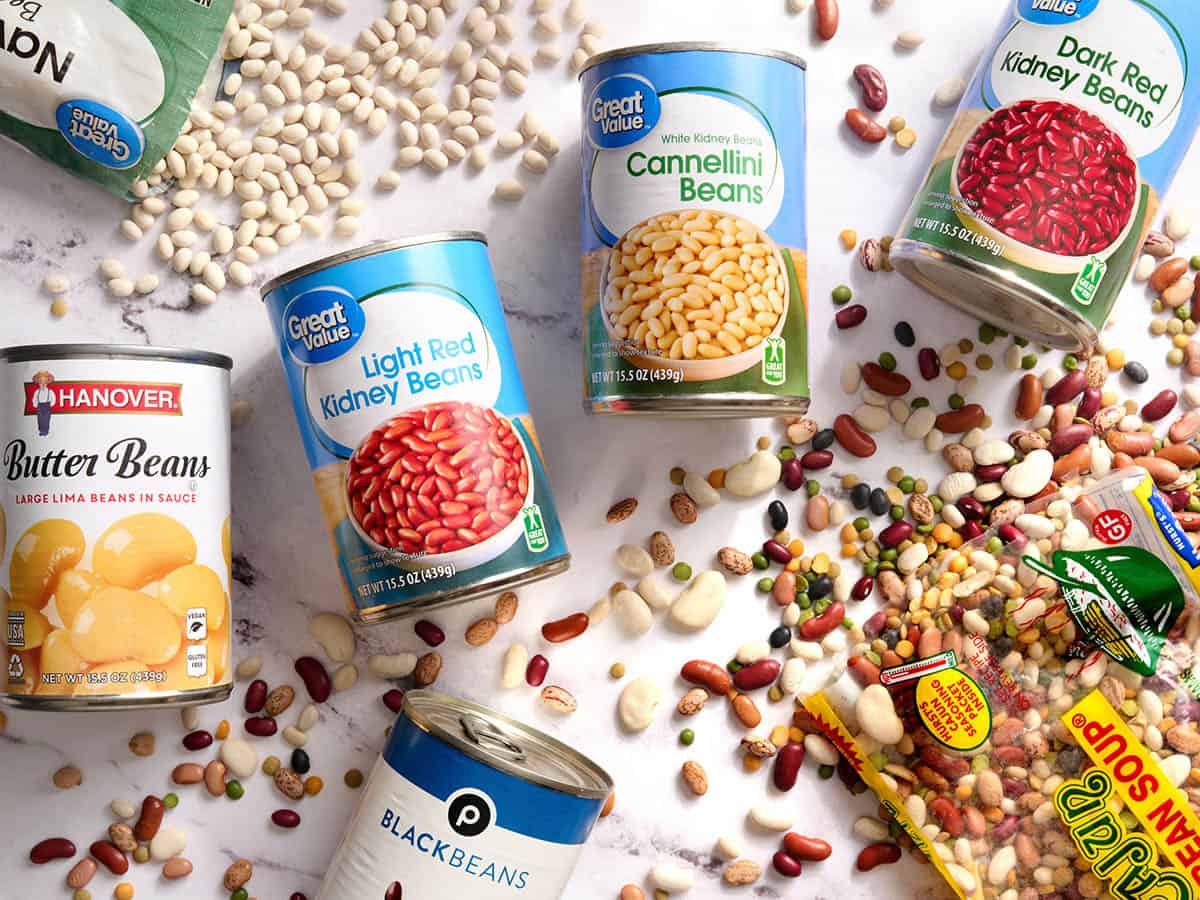
- Kick the Can: Steel tariffs make canned beans and tomatoes costly. Swap them for dry bagged beans, frozen items, or boxed cartons.
- Go Domestic: Choose U.S.-grown produce, domestic store-brand pasta, and local cheeses to completely bypass tariffs.
- Pivot Proteins & Produce: Trade tariff-heavy beef and imported shrimp for eggs, chicken, or dry beans. Swap pricey imported veggies (like Mexican tomatoes) for budget-friendly domestic produce like zucchini.
Learn more: Congress has voted numerous times to support and continue the current administration’s tariff policies. Find out how your elected officials most recently voted on whether or not to reject cost-raising tariffs on Canada by clicking on this link.
3 Steps to Outsmart Tariff Hikes at the Grocery Store
1. Kick the Cans (Go Dry, Frozen, or Boxed)
Canned foods are taking a double hit right now—not because of what’s inside the can, but because of the metal on the outside.
The Metal Crunch:
- Drink Cans (Aluminum): Over half of our raw aluminum comes directly from Canada, with the rest imported from the UAE and China.
- Food Cans (Steel): The U.S. imports roughly 80% of the tin-coated steel used for canned beans, soup, and tomatoes from Canada, Japan, Germany, and South Korea.
The Ripple Effect: Importers pay steep taxes at the port, pass those costs to food brands, and the brands pass them directly to your receipt.
THE BUDGET SWAP: Whenever possible, skip the canned aisle. Grab fresh produce, frozen bags, or cardboard-boxed ingredients packed in the U.S. to bypass metal tariffs entirely.
2. Trade Fancy Imports for Domestic Store Brands
That imported Italian pasta might look artisanal, but European food imports are getting walloped with massive tariffs right now, heavily inflating the sticker price.
- THE PROBLEM: Overseas specialty products carry high foreign trade taxes that jack up prices before they hit the shelf.
- THE FIX: Stick to American-made grains and dairy—especially store brands.
THE CASE FOR STORE BRANDS: Products like Walmart’s Great Value pasta are made right here in the U.S. using domestically grown and processed durum wheat. Because that box never crosses an international border, it incurs $0 in import tariffs.
3. Pivot Your Protein Strategy
Beef is hitting record price highs thanks to a rough double-whammy: historic domestic cattle shortages combined with high import tariffs on foreign meat.
To keep your food bill grounded, rethink your main dish:
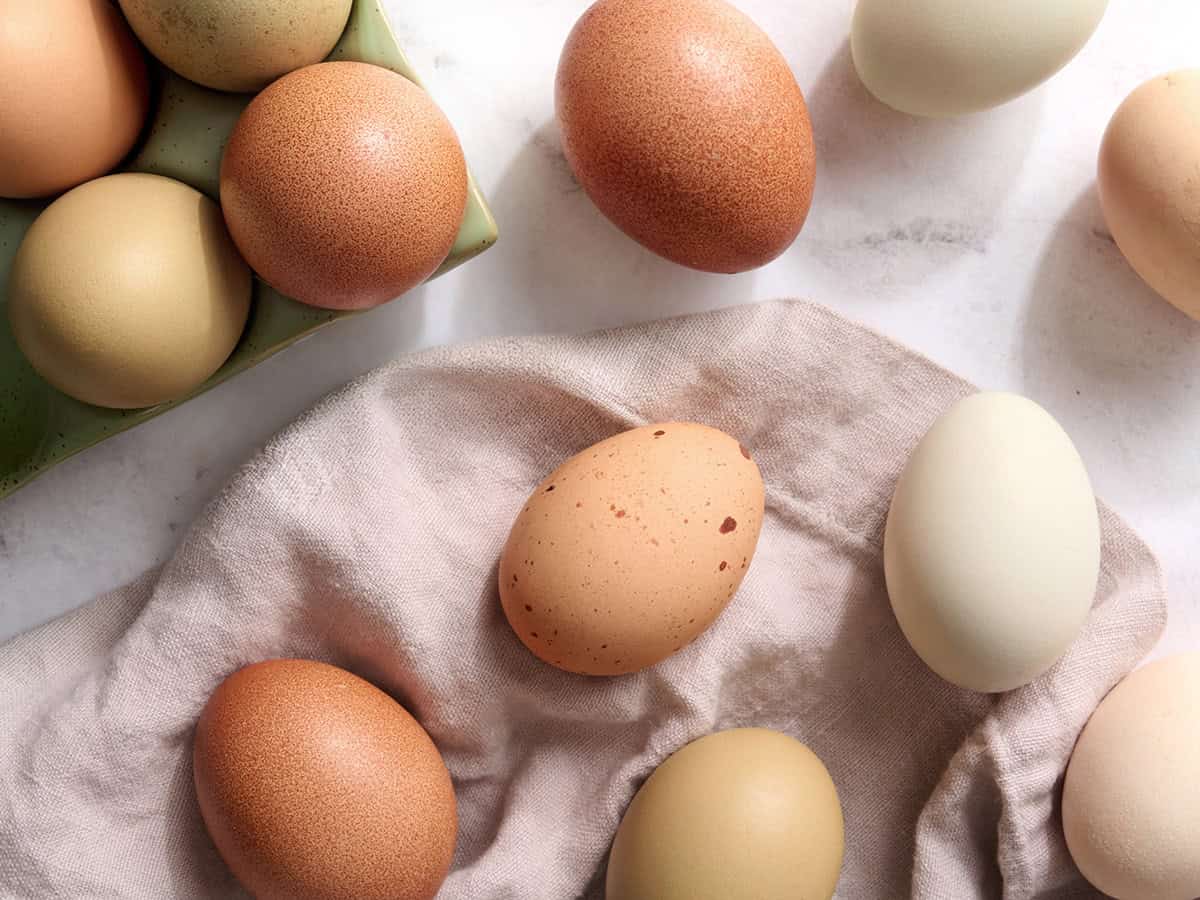
- Lean into Eggs: Egg prices are finally settling down after recent spikes.
- Pivot to Poultry: Domestic chicken remains one of the most cost-stable meats on the shelf.
- Embrace Plant Proteins: Swap out ground beef for dry bulk beans and legumes to stretch chilis, your favorite stews, and taco nights for a fraction of the cost.
Coffee and Bananas
Imported coffee and bananas are finally getting some relief. After placing steep tariffs on Brazilian and Colombian green coffee in mid-2025, the administration reversed course, acknowledging that neither crop is grown domestically in commercial quantities. While the Supreme Court struck down the original tariff framework, the administration has since pursued alternative legal avenues to impose new, broad tariffs.
Dairy, Wine, and Spirits
European imports such as cheese, wine, and spirits continue to face tariffs even after the Supreme Court struck down broad emergency tariffs. To make matters worse, America’s middleman distribution system marks up those taxes at every step, turning a small tariff at the port into a much higher price tag on the shelf.
Confectionery
Imports of sugar, chocolate, and other sweets from Europe and Canada continue to face elevated costs due to high sugar tariffs and supply chains affected by international trade restrictions. Even with cocoa now exempt from reciprocal tariffs, import allowance limits on sugar keep domestic candy manufacturing and European chocolate imports at high price points.
Ground Beef
The United States relies heavily on imported lean beef trimmings from Australia and Brazil to blend with domestic fat trimmings for ground beef. Pricing friction on these imports, paired with the record-low domestic cattle supply, has driven retail ground beef prices up significantly.
Frozen Fries
Frozen potato products, heavily imported from Canada and Belgium, remain exposed to standard bilateral tariffs and import logistical overhead, keeping wholesale restaurant costs elevated. (Our answer? Learn to make your own fries from scratch using domestically-grown potatoes!)
Seafood
Over 80% to 90% of seafood consumed in the U.S. is imported. Exporters in Vietnam, India, Indonesia, and Canada remain subject to non-IEEPA trade measures (such as anti-dumping tariffs and Section 301 tariffs), ensuring seafood inflation continues to outpace long-term baselines.
If a food product is heavily processed, wrapped in metal, or stamped with an overseas country of origin, it is likely to absorb tariff costs. Stick to raw, bag-packaged, or domestically grown staples to build a highly resilient, almost tariff-proof pantry.
What’s on the Horizon?
While the Supreme Court ruled in February that this administration’s prior use of tariffs was illegal, a fresh round of tariffs targeting 60 trading partners was announced in July with baseline tariffs from 10% to 12.5%. Tariffs as high as 50% on Canada and 25% on Brazil were also announced, and the war has no end in sight. That means categories like beef, coffee, and sweets continue to face significant upward pressure when it comes to your grocery budget.
Here is how the data breaks down according to the latest USDA monthly updates:
- Beef: The USDA forecasts full-year price increases in the 5.5% to 7.5% range, with retail beef prices tracking 12% to 15% higher year-over-year earlier in the spring due to multi-decade-low cattle herds.
- Sugar & Sweets: Projected for a 6.9% to 7.2% increase this year, driven primarily by high cocoa costs and processing price jumps in candy and confectionery.
- Nonalcoholic Beverages: Forecasted at a 5.7% increase—well above its 20-year baseline—due to elevated green coffee import costs and packaging trade pressures on metal cans.
- Eggs: Experiencing a massive downward correction, with a forecasted annual drop of 27% to 30.7% as flock numbers recover from avian flu disruptions.
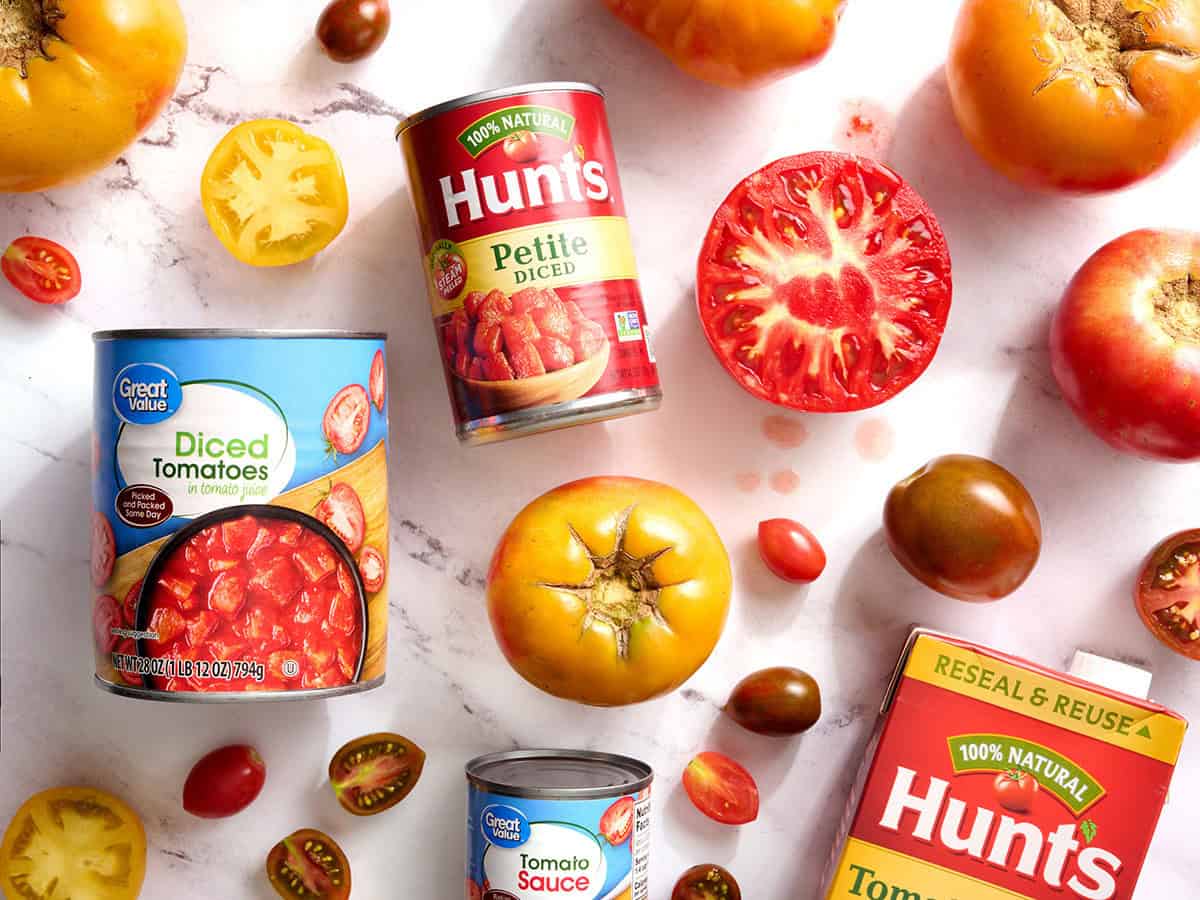
- Fresh Vegetables: Forecasted at a 6.8% overall increase for the year, reflecting a sharp split in the produce section. While domestic staples like fresh potatoes remain steady at a modest 1.4%, tariffs and refrigerated transport costs have driven massive spikes in weighted heavyweights like tomatoes (up 19.5% year-over-year) and lettuce (up 32.1%).
After the chaotic post-pandemic grocery spikes of 2022 and 2023, grocery inflation finally flattened out in 2024 to a calmer, more steady baseline. Comparing 2024 recipes to today’s prices gives us a clean “before and after” snapshot, allowing us to isolate how recent packaging tariffs and trade policy shifts (rather than general inflation) are driving up the cost of everyday dinners.
I re-costed three popular 2024 Budget Bytes recipes using current July 2026 prices. Here is the line-by-line breakdown of how trade markups hit your dinner plate:
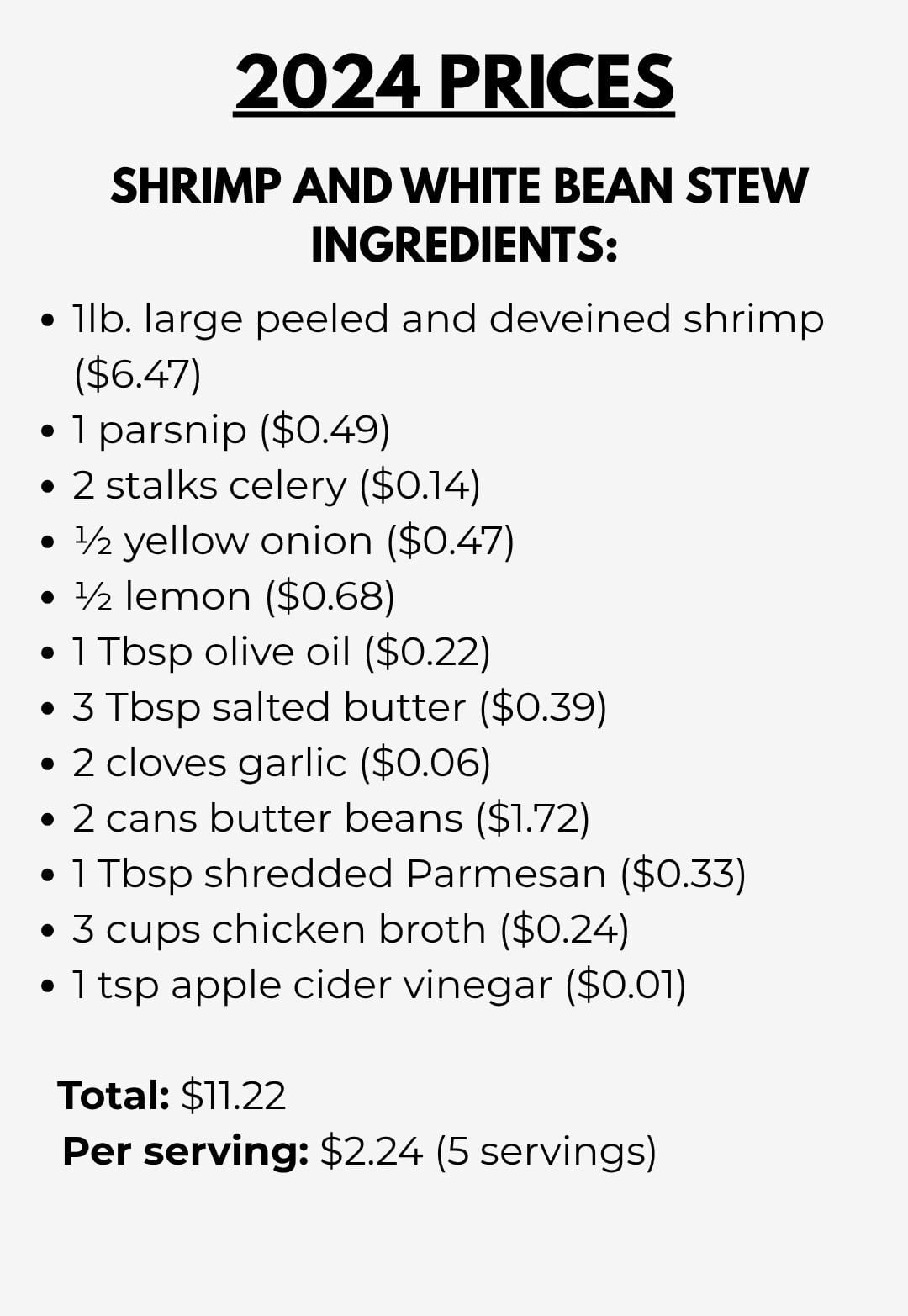
1. Shrimp and White Bean Stew Recipe (Last updated 2024)
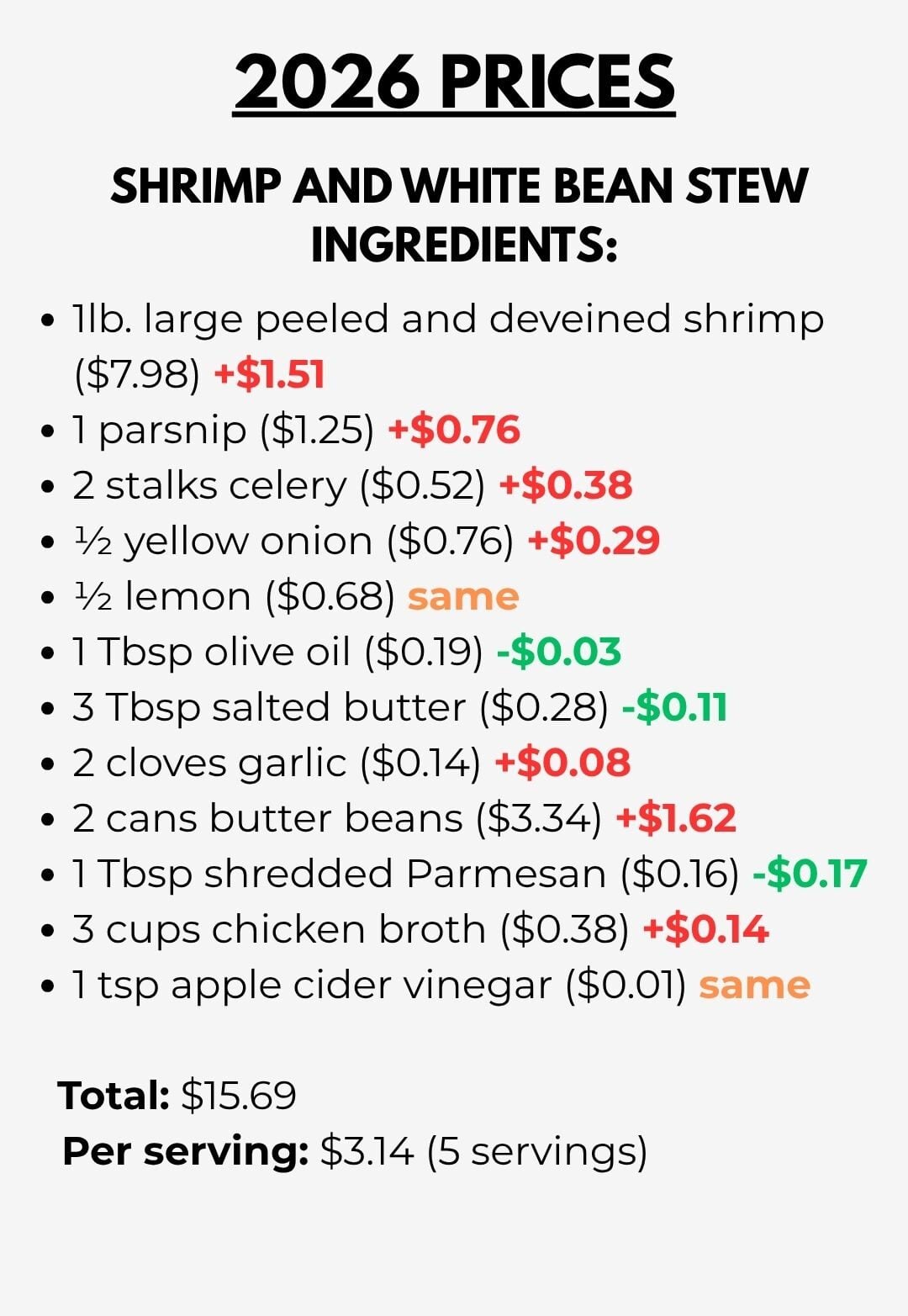
2026 Total: $15.69 / $4.47 higher cost / 39.84% increase
The Problem: In this single recipe, two 15 oz cans of butter beans jumped by $1.62—accounting for over 36% of the meal’s entire price increase. That isn’t because butter beans suddenly became hard to grow; it’s because the food-grade tinplate steel used to make the cans is subject to heavy import tariffs.
Around 90% of the shrimp consumed in the U.S. is imported from overseas aquaculture hubs. That makes shrimp highly vulnerable to a “triple threat” of costs: ocean shipping rates, port tariffs, and refrigerated diesel transport surcharges. In this recipe, 1lb of shrimp shot up by $1.51 (+23%)!
My advice: Head over to the dry grain aisle and buy a bag of dry butter beans (or navy beans) in bagged packaging. A single 1lb bag of dry beans costs roughly the same as one can, but yields the equivalent of three to four cans once cooked, completely dodging the “metal packaging tax” and producing way more food! We have a great blog post to help you kick the can of beans if you’re cooking dry beans for the first time.
Swap the shrimp for U.S. chicken breast or domestic pork, both of which are fully produced within domestic supply chains and remain insulated from foreign trade taxes, or double up on the beans (made from bagged dry beans, of course!)
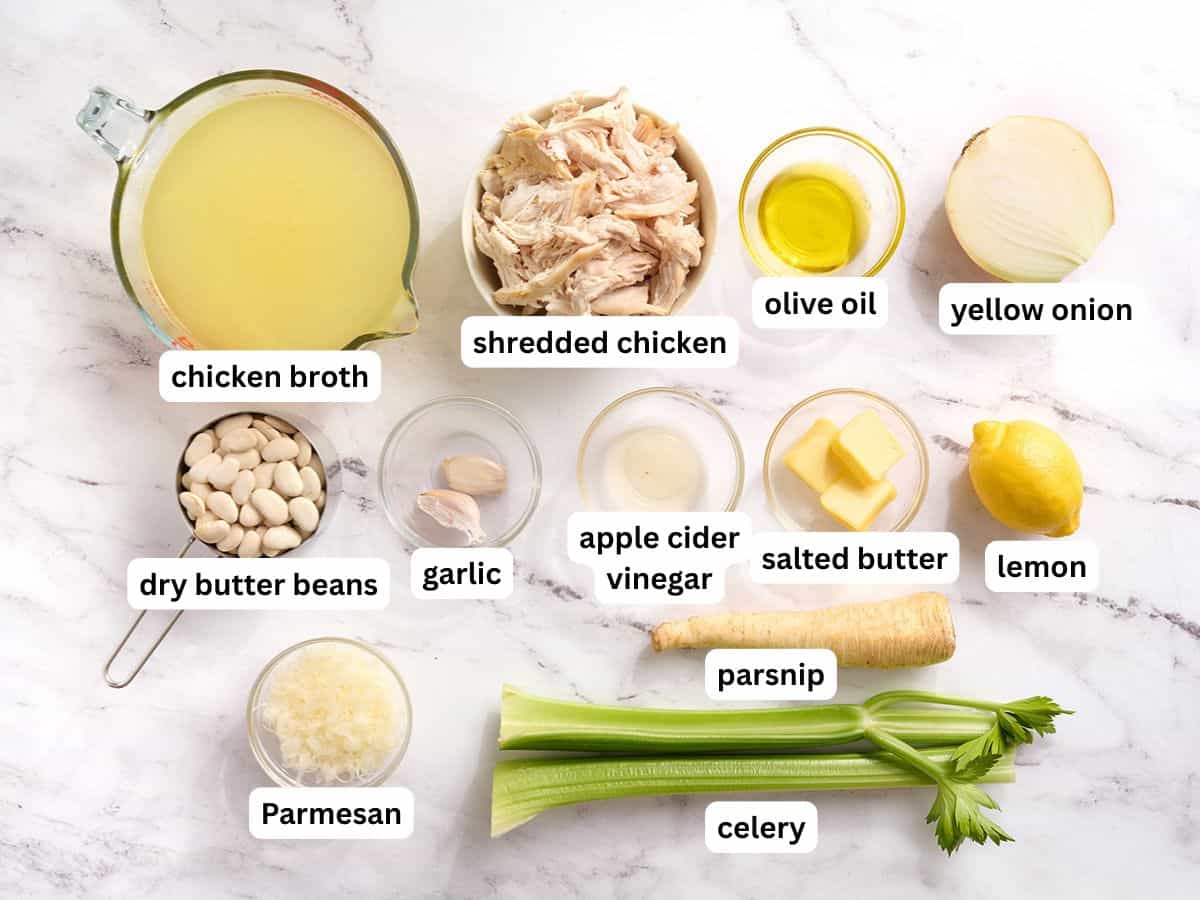
Pro-Tips: If you dread the time it takes to soak dry beans, batch-cook a whole bag in your slow cooker or Instant Pot on the weekend, then freeze them in 1.5-cup portions (the size of one standard can). You get the instant convenience of canned beans without paying the tariff-inflated price tag.
Check the country-of-origin label on the bag of shrimp if you’re craving the original intent of this recipe. Swapping imported farmed shrimp for domestic wild-caught Gulf shrimp or U.S.-sourced whitefish keeps your money in the domestic market which means you’ll avoid import tariffs.
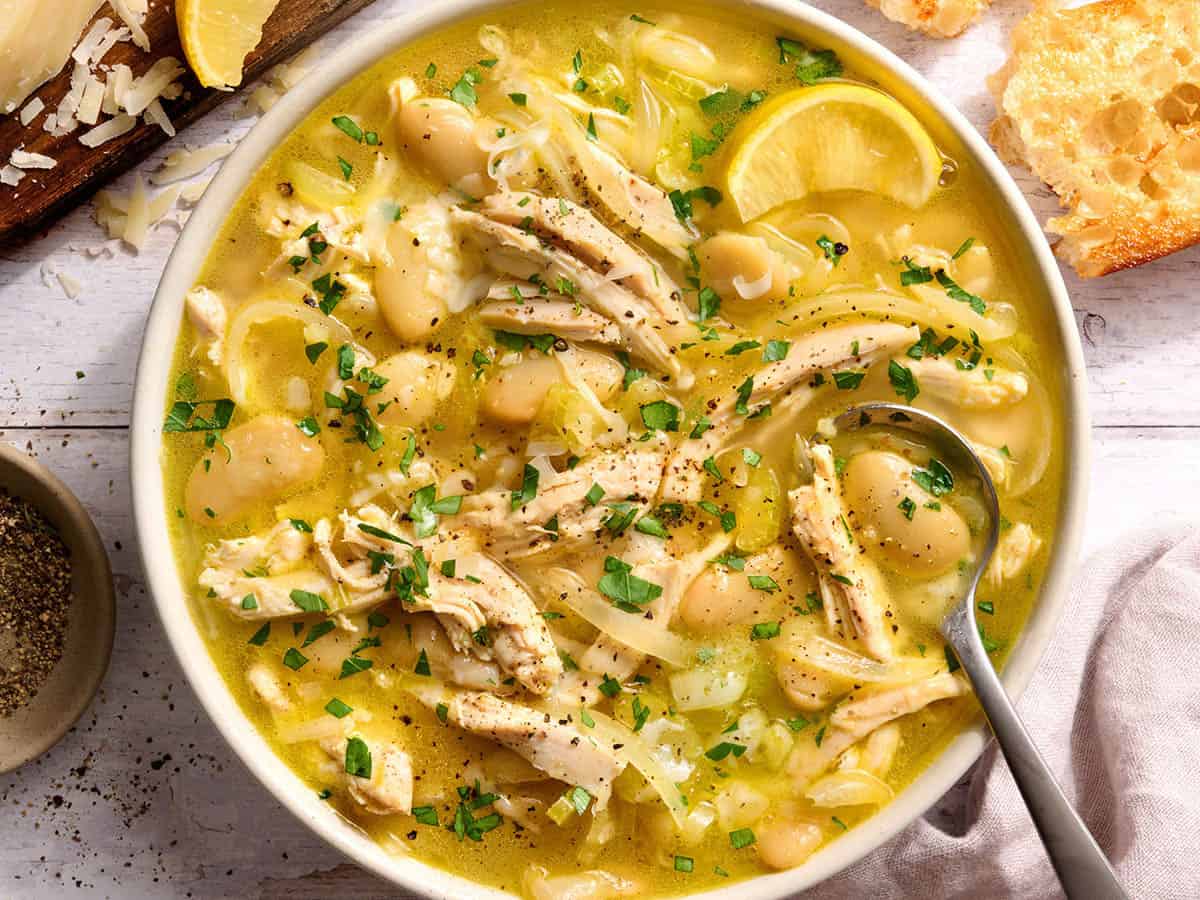
2. Tuscan White Bean Stuffed Tomatoes Recipe (Last updated 2024)
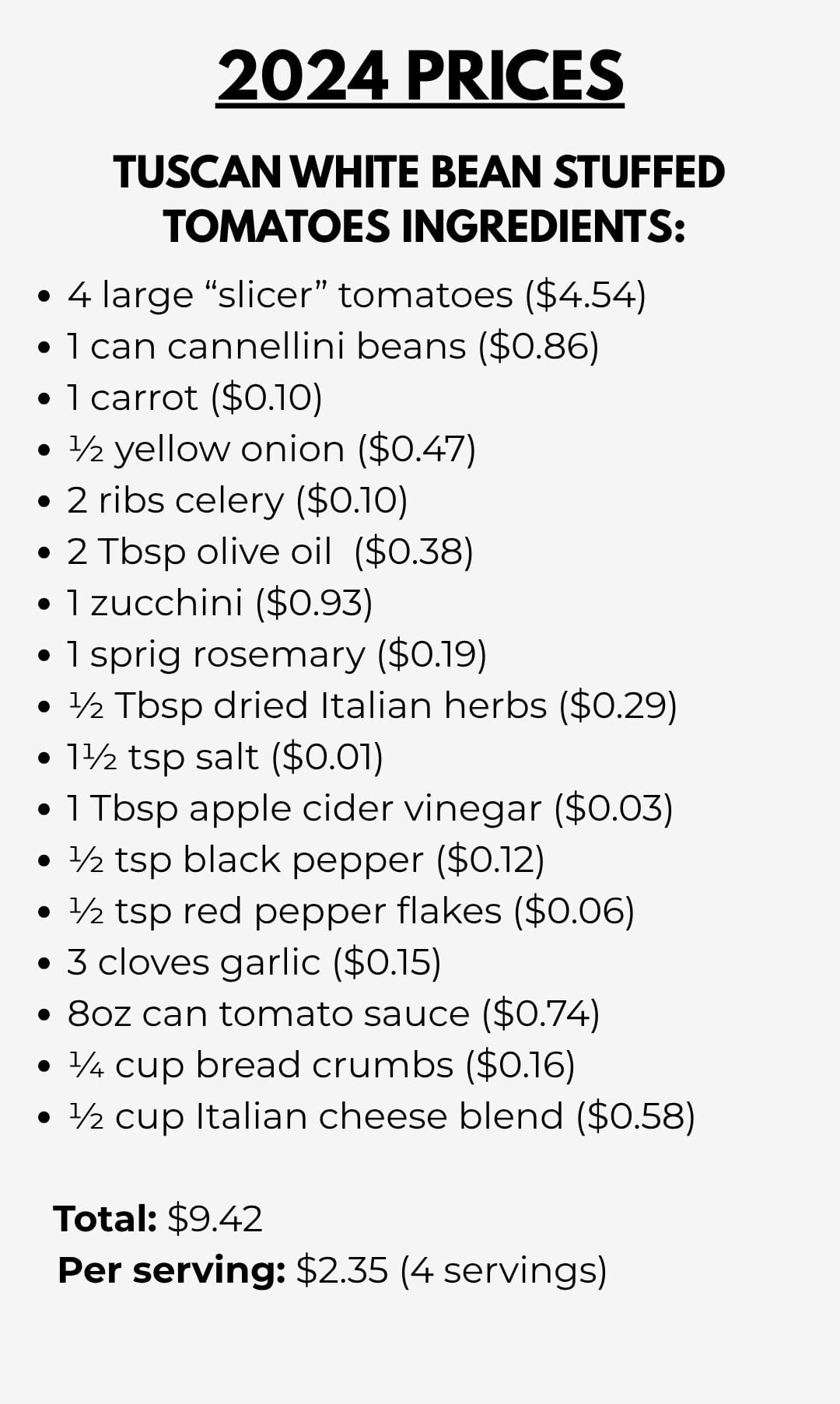
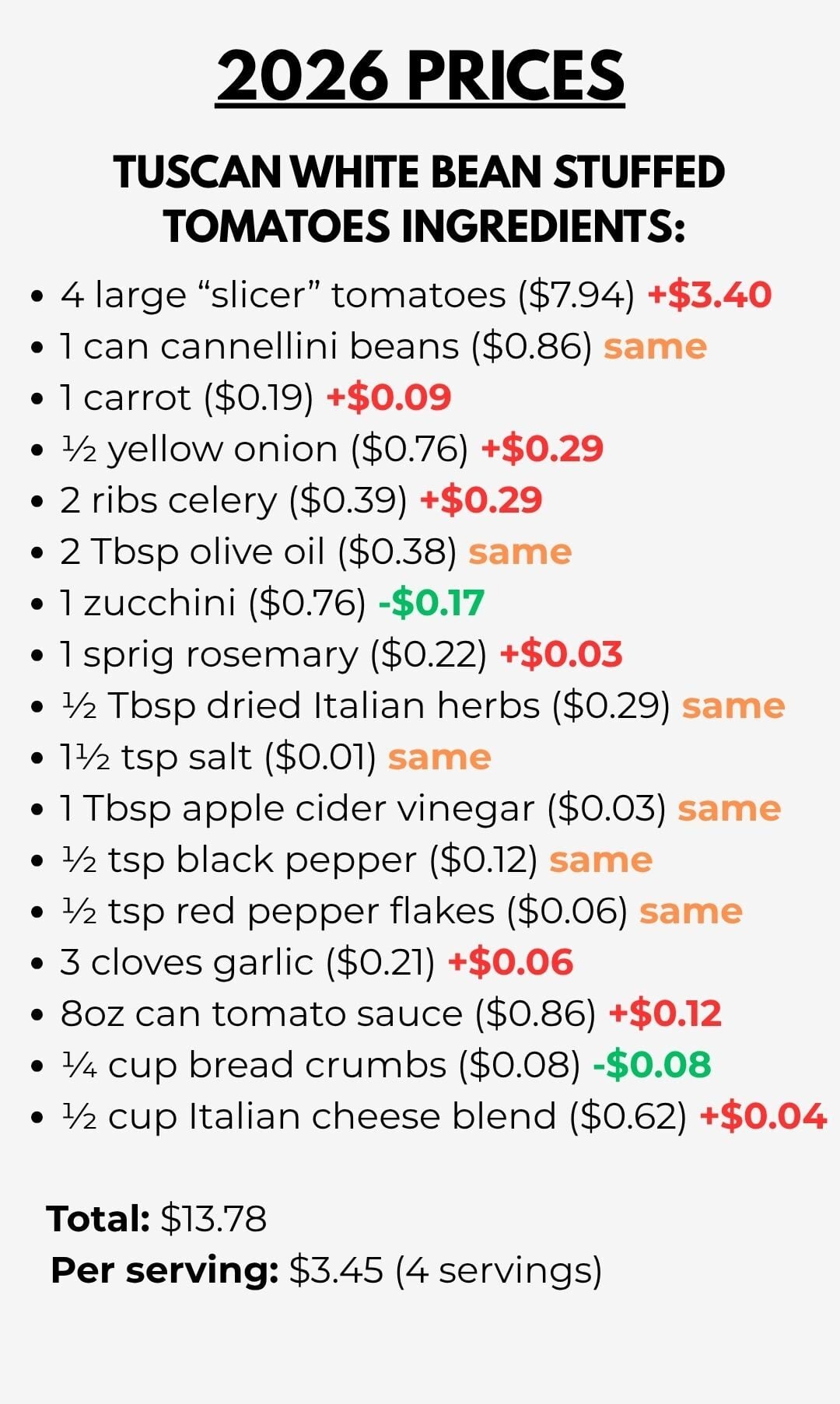
Total: $13.78 / $4.36 higher cost / 46.28% increase
TOMATOES? Are you kidding me? No, I’m not.
Mexico supplies roughly 70% of all fresh tomatoes consumed in the United States. Even during peak tomato season, American farms simply do not grow enough slicer tomatoes to meet national grocery demand. Not to mention, a lot of people don’t live close to a local farmer’s market to buy local produce.
The withdrawal from the U.S.-Mexico Tomato Suspension Agreement triggered a 17% tariff on imported Mexican tomatoes. Because grocery chains still rely heavily on Mexican imports to keep store shelves full, that 17% import tax is passed straight to consumers at the register.
What About Celery, Onions, and Carrots?
The jump in cost of these traditionally humble ingredients reflect broader diesel freight surcharges and higher fertilizer costs paid by farmers due to the war in Iran.
My Advice: Pivot and Save $3.50+. Don’t stuff $2 tomatoes, stuff zucchini instead! In this recipe, four fresh slicer tomatoes cost almost $8.00. Meanwhile, fresh zucchini actually dropped in price. Zucchini is harvested locally across the U.S. with greater abundance during summer with minimal specialized refrigeration needs, keeping it cheap.
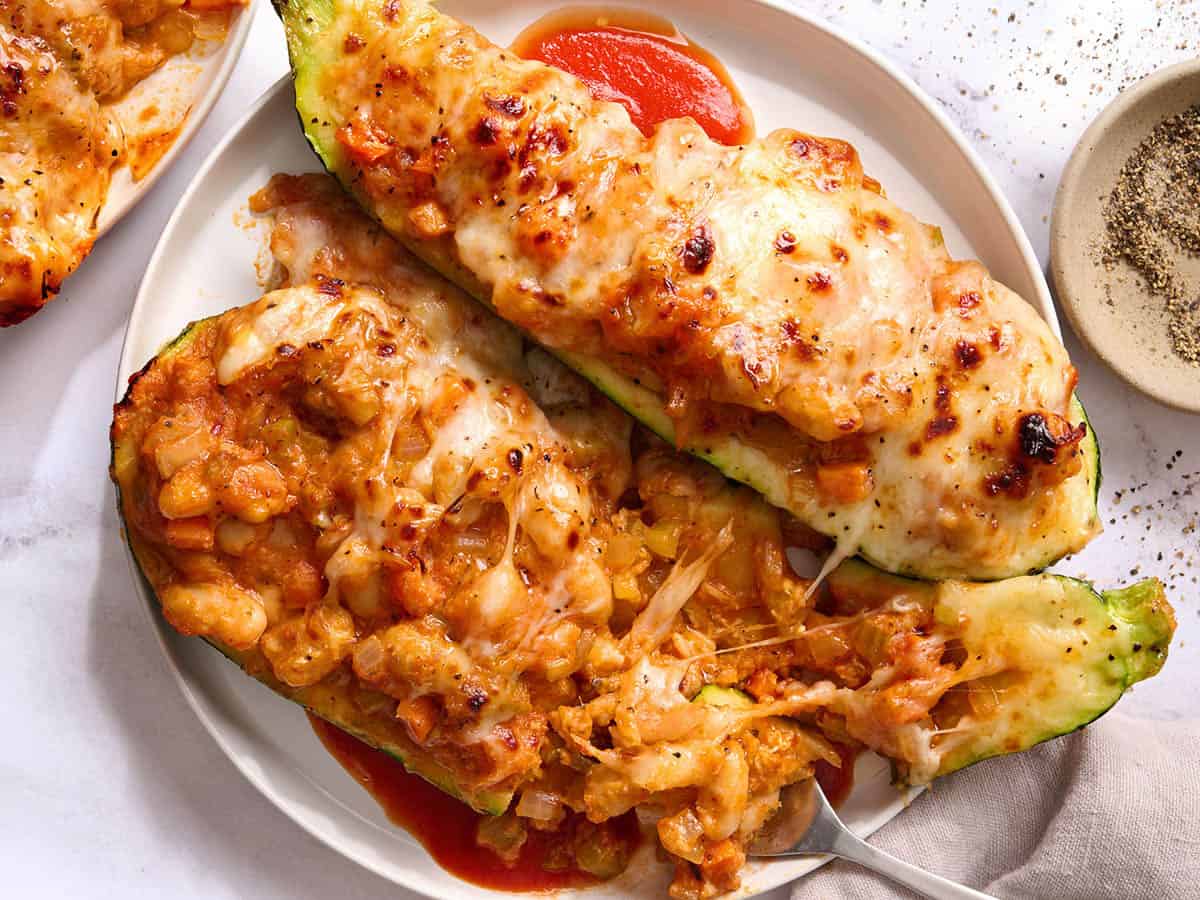
Slice two large zucchinis in half lengthwise, scoop out the centers, and stuff them with the white bean mixture to make “Zucchini Boats.” You keep the exact same Tuscan flavor profile, enjoy great texture, and instantly slash over $3.50 off the meal’s cost. We have another great zucchini boat recipe with sausage for any meat lovers out there, too.
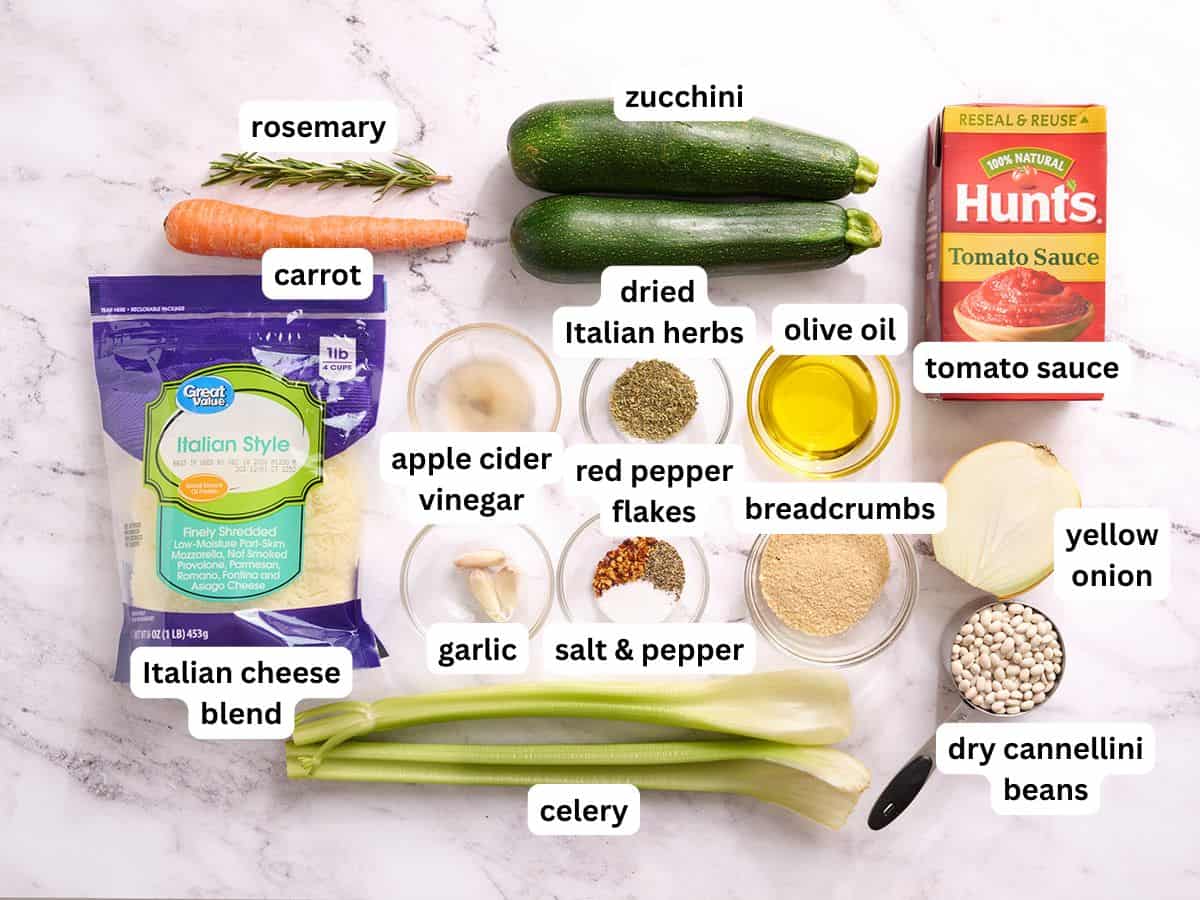
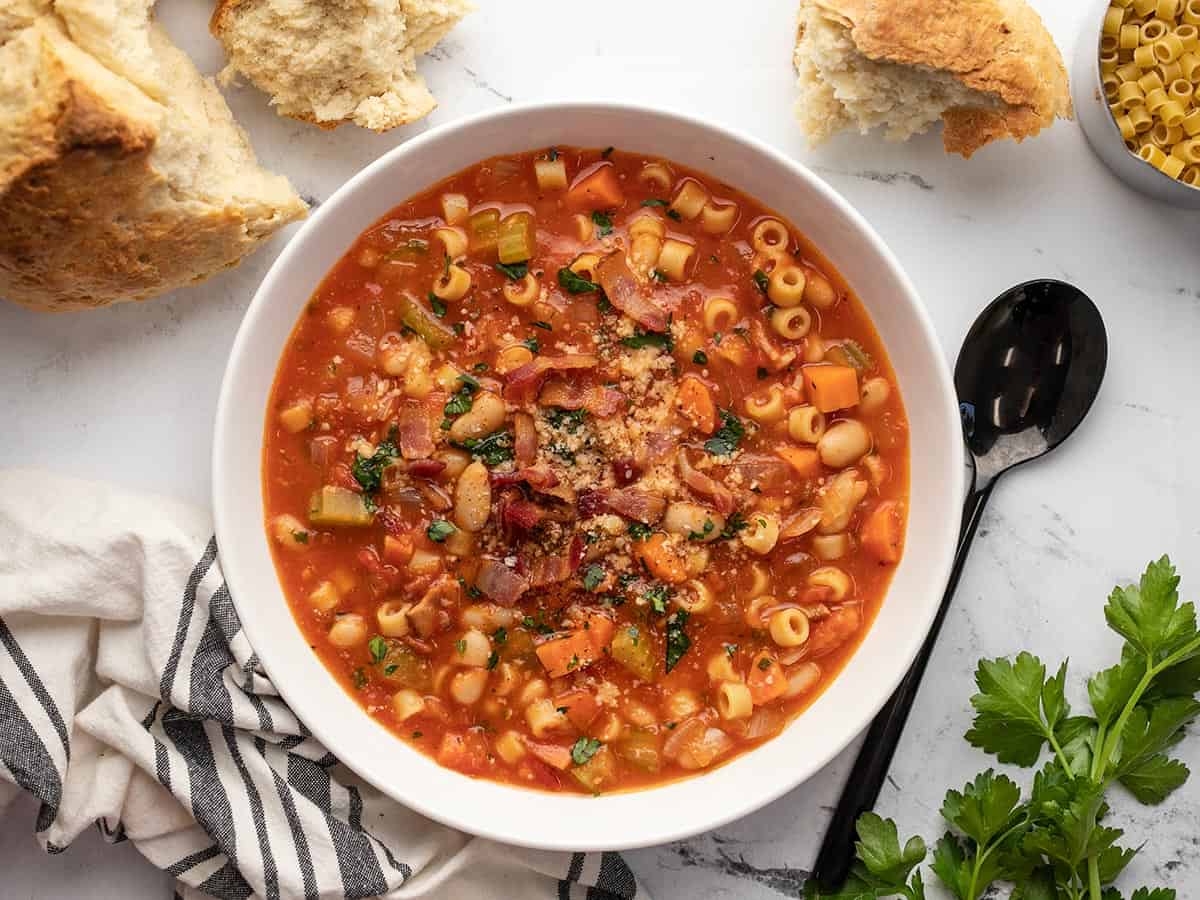
3. Pasta e Fagioli Recipe (Last updated 2024)
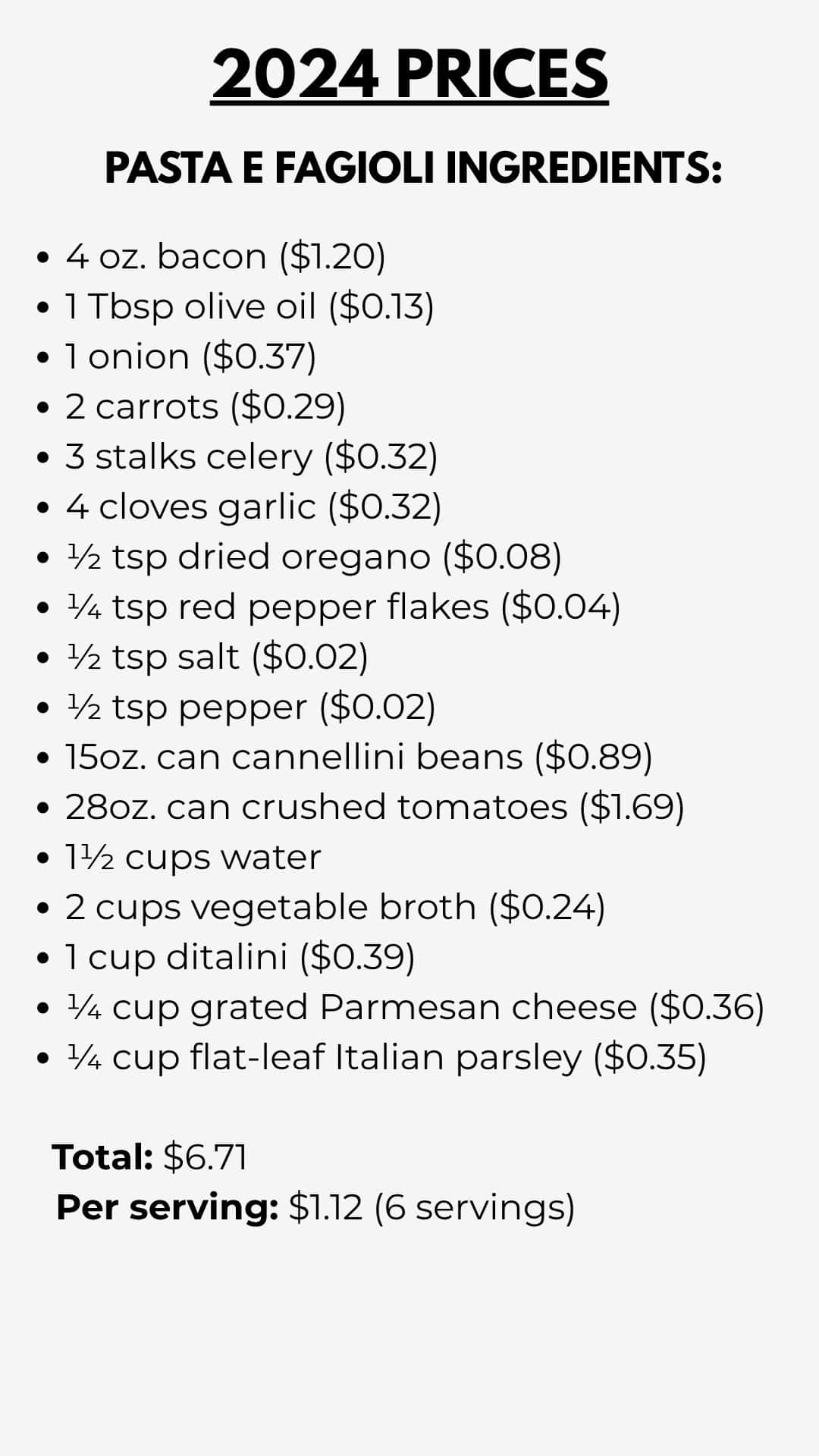
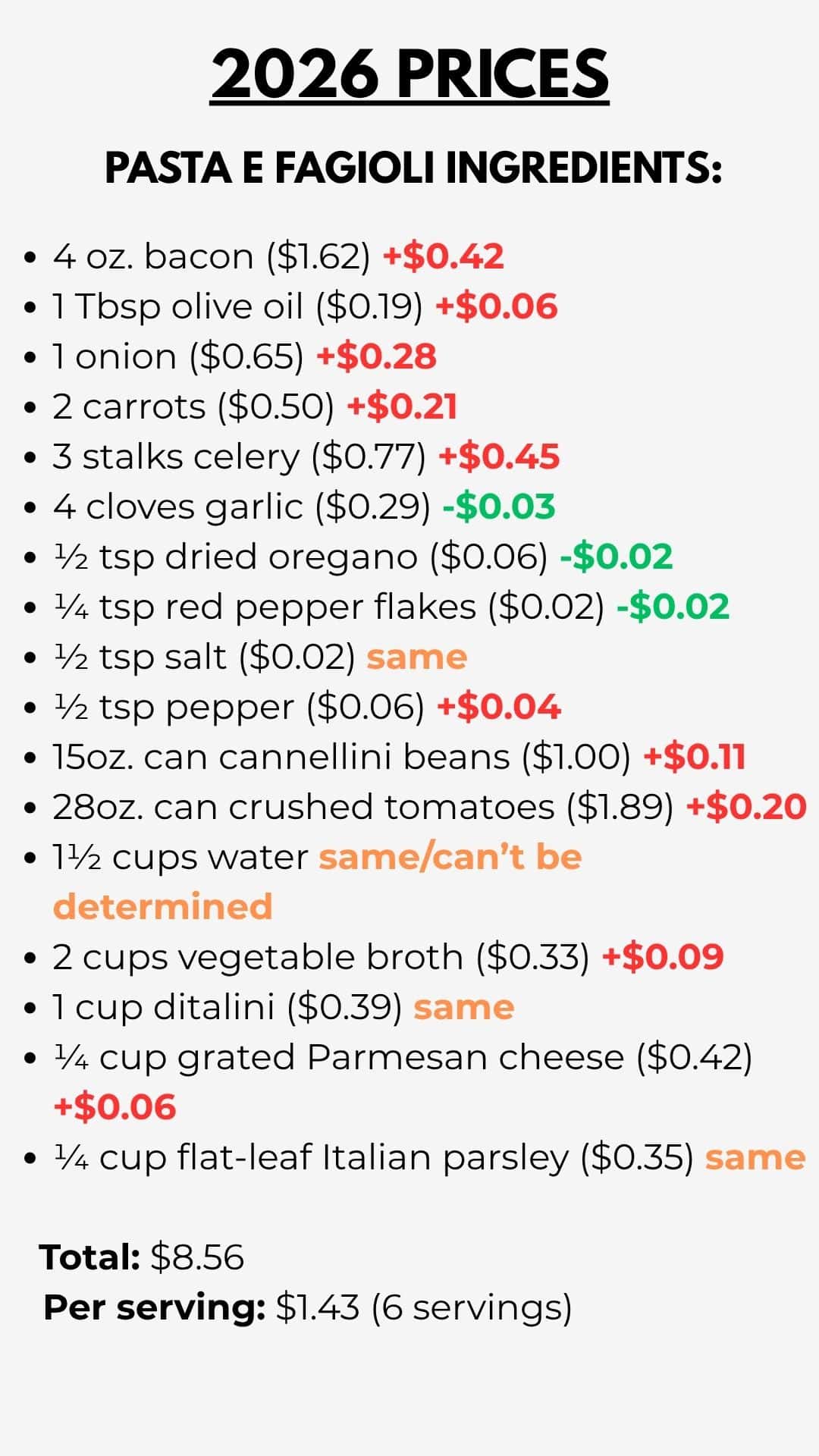
2026 Total: $8.56 / $1.85 higher cost / 27.57% higher cost
The “Metal Can” Swap: Buying canned tomatoes and canned beans added $0.31 in direct tariff-and-packaging inflation to this recipe. Swapping to dry beans (which come in plain plastic bags) or buying tomatoes locally-grown or processed in glass jars/cardboard cartons helps you sidestep the tinplate steel tax.
The Domestic Win: By sticking to standard domestic ditalini pasta instead of imported Italian brands, the pasta portion of this meal stayed completely flat—proving that domestic staples are still your best defense against trade inflation.
Bypass Tariffs at Your Local Farmers Market:
If you’re set on fresh ‘maters during tomato season, skip the giant grocery chains. Supermarkets rely on massive regional distribution networks hit by tariffs and long-haul refrigerated trucking costs. While local farm stands and regional growers have also faced higher costs for fuel, fertilizer, equipment, and repairs, and fewer opportunities for exports, they sell directly to you, bypassing foreign tariffs, middleman distributors, and long-distance diesel surcharges altogether. I’m always an advocate for supporting local farmers whenever possible, but it’s a luxury many Americans don’t have access to, depending on where you live.
Understanding why your grocery bill is climbing is only half the battle; the next step is finding out where your members of Congress stand on tariffs and the war in Iran; their legislative votes directly impact your daily budget. As the 2026 midterm elections near, get informed, check your elected officials’ voting records, and start conversations with your friends and neighbors about the costs everyone is feeling at the grocery store.

SOURCES
1. Household Inflation Costs (General Goods & Groceries) Primary Source: U.S. Congress Joint Economic Committee (JEC)
Details: The JEC publishes inflation fact sheets tracking the financial impact of inflation on American households. This specific report estimates the additional annualized costs for U.S. families, noting an increased expenditure of over $3,500 on goods and services since 2024, which includes a $310 increase for groceries.
2. Retail Grocery Prices (Tomatoes, Coffee, Bananas, Rice) Primary Source: U.S. Bureau of Labor Statistics (BLS) | USDA ERS Food Price Outlook
Details: The BLS tracks monthly average retail prices per pound across U.S. urban areas for fresh tomatoes, coffee, bananas, and long-grain rice. The USDA Economic Research Service (ERS) synthesizes this data in its monthly Food Price Outlook report.
3. Commodity & Wholesale Producer Indexes (Soybeans, Beer, Maple Syrup)
Primary Source: USDA National Agricultural Statistics Service (NASS) & BLS Producer Price Index (PPI)
Details: Monthly farm-gate prices for soybeans (per bushel) are published in the USDA NASS Agricultural Prices report. Producer price shifts for wholesale beer (per keg) and commercial maple syrup production are tracked under the BLS Producer Price Index series for beverage and food manufacturing.
4. Tariff Policies & International Trade Context. Primary Source: USTR Official Releases | USITC DataWeb
Details: Tomatoes: Governed by updates to the Fresh Tomato Suspension Agreement administered by the U.S. Department of Commerce. Beer Packaging: Covered under Section 232 tariff orders on foreign-produced aluminum. Pork & Soybeans: Retaliatory duty schedules published by China’s Ministry of Finance and monitored in the USDA Foreign Agricultural Service (FAS) Global Agricultural Information Network (GAIN) reports.