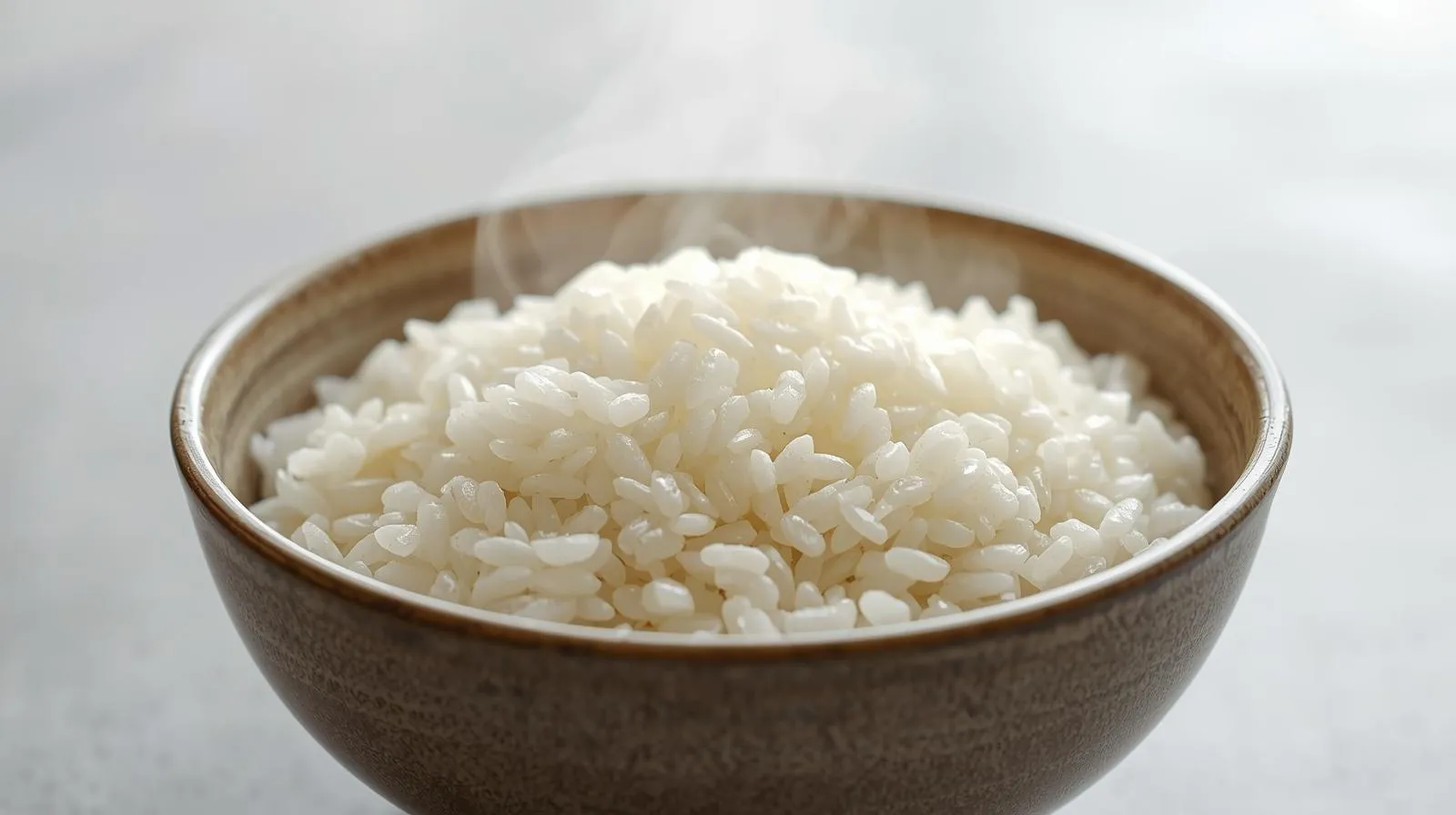
Rice is the most consumed staple in Indian households.
Whether it’s white rice, brown rice, or basmati, chances are you eat it daily.
But here’s what stops many of my patients: How many calories are actually in my bowl of rice? Am I eating too much? Should I switch to a healthier alternative?
These questions come up constantly in my nutrition practice. The confusion around rice calories prevents people from making informed dietary choices.
Some avoid rice completely, thinking it’s “bad,” while others eat unlimited amounts, thinking it’s harmless.
The truth? Rice is neither a superfood nor a villain—it’s a staple that needs understanding.
Today, I’m breaking down exactly what you need to know about a bowl of rice, the nutritional facts, and how to include it smartly in your diet based on your health goals.
What Is Rice? A Quick Overview

Rice is a grain that’s been feeding civilizations for thousands of years.
It’s primarily composed of carbohydrates with small amounts of protein and minimal fat.
Different types offer different nutritional profiles—white rice, brown rice, basmati, and red rice each have unique properties.
A typical bowl of rice served at Indian meals is roughly 200-250 grams (cooked weight). This is what most people eat in a single serving at lunch or dinner.
How Many Calories in 1 Bowl of Rice?
Let’s get straight to the number everyone asks.
A medium bowl of cooked rice (200 grams) contains approximately 240-260 calories.
The exact number depends on the rice type and water content. Here’s the detailed breakdown:
| Rice Type | Serving Size | Calories (kcal) | Water Content |
|---|---|---|---|
| White Rice | 200g (1 bowl) | 260 | High |
| Brown Rice | 200g (1 bowl) | 248 | High |
| Basmati Rice | 200g (1 bowl) | 245 | High |
| Red Rice | 200g (1 bowl) | 256 | High |
| Small serving (150g) | 150g | 195 | High |
| Large serving (250g) | 250g | 325 | High |
What This Means: A medium bowl of rice is roughly 260 calories, which is slightly more than upma (224 calories) but less filling due to lower fiber content.
The calorie density depends heavily on how much water is used during cooking—softer, fluffier rice has more water and slightly fewer calories per gram.
Complete Nutritional Breakdown: What’s in Your Rice Bowl?
Beyond calories, here’s what a 200g bowl of white rice provides:
| Nutrient | Amount (200g) | Why It Matters |
|---|---|---|
| Calories | 260 kcal | Energy source |
| Carbohydrates | 58g | Primary energy, brain fuel |
| Protein | 4.3g | Muscle maintenance |
| Fat | 0.6g | Minimal fat content |
| Fiber | 1.1g | Very low, aids digestion minimally |
| Sugar | 0.2g | Negligible |
| Sodium | 5mg | Virtually no salt |
| Cholesterol | 0mg | Zero dietary cholesterol |
The Critical Insight: White rice is approximately 89% carbohydrates, 7% protein, and 2% fat. This is a carb-heavy food with minimal fiber.
This matters because low fiber means lower satiety—you’ll feel hungry sooner after eating rice compared to fiber-rich foods like upma or brown rice.
The protein content (4.3g) is insufficient as a standalone meal component.
This is why traditional Indian meals always pair rice with dal (lentils), which provides additional protein. Rice + dal becomes a complete protein meal.
Why Rice Calories Vary? Understanding the Differences

Not all rice bowls are created equal. Several factors change the final calorie count:
Five Factors That Change Rice Calories:
- Water Used During Cooking: More water creates fluffier, lighter rice. Less water creates denser rice. A very soft rice bowl might be 240 calories, while a dense bowl could be 280.
- Rice Type: White rice (260 cal) differs from brown rice (248 cal) and basmati (245 cal). These differences are small but accumulate over weeks.
- Oil/Ghee Added: If rice is cooked with ghee or oil, calories increase significantly. Plain boiled rice has minimal added fat.
- Portion Size: A heaping spoon more changes 260 to 290 calories quickly.
- Accompaniments: Rice paired with butter, ghee, or coconut oil becomes much heavier. Plain white rice is light.
Real Example: A bowl of fluffy, boiled white rice with water = 240 calories. The same amount of ghee rice (rice cooked in ghee) = 320+ calories. Same rice, different preparation method, 80 extra calories.
The Complete Picture: Why Rice Needs Context
Here’s what most nutrition articles miss: rice by itself is incomplete nutrition.
A bowl of rice provides energy (carbs) but lacks:
- Adequate protein for muscle maintenance
- Sufficient fiber for digestive health
- Micronutrients for overall wellness
This is why Indian meals evolved to always pair rice with accompaniments:
- Rice + Dal = Complete protein (essential amino acids)
- Rice + Vegetables = Added fiber and micronutrients
- Rice + Yogurt/Curd = Probiotics and additional protein
- Rice + Fish/Meat = Complete protein and B vitamins
A “rice meal” isn’t just 260 calories of rice—it’s 260 calories of rice plus 150 calories of dal plus vegetables. Understanding this context prevents the common mistake of thinking rice alone is your meal.
Health Benefits of Rice (In Context)
Despite being carb-heavy, rice offers genuine benefits:
1. Quick Energy Source:
The carbohydrates in rice digest relatively quickly, providing fast energy. This is why athletes often eat rice before or after workouts.
2. Easily Digestible:
White rice is gentle on the digestion, making it suitable for people with sensitive stomachs, young children, and the elderly.
3. Affordable Nutrition:
Rice provides affordable calories for populations in lower-income brackets. Nutritionally, this matters.
4. Gluten-Free:
Natural rice contains no gluten, making it safe for celiac disease or gluten sensitivity.
5. Naturally Low in Fat:
At 0.6g fat per 200g serving, rice is heart-friendly when not cooked with excessive ghee.
Is Rice Healthy? The Honest Assessment
Rice isn’t inherently unhealthy or healthy—it depends on context.

Rice Works Well When:
- Combined with protein (dal, fish, chicken, eggs)
- Paired with vegetables for fiber and micronutrients
- Eaten in moderate portions (200g, not 400g)
- Part of a balanced meal with variety
- Paired with curd or yogurt for probiotics
Rice Becomes Problematic When:
- Eaten as the sole component of a meal (just rice, nothing else)
- Consumed in excessive portions (more than 250g)
- Prepared with excessive oil, ghee, or butter
- The main food for people with diabetes (without fiber counterbalance)
- Eaten multiple times daily without nutritional variety
The key principle: context determines health value.
White Rice vs. Brown Rice: Which Should You Eat?
This is the question I get asked most frequently. Let me give you the evidence-based answer:
| Factor | White Rice | Brown Rice |
|---|---|---|
| Calories | 260 | 248 |
| Fiber | 1.1g | 3.5g |
| Protein | 4.3g | 5.4g |
| Digestion | Quick (high GI) | Slow (lower GI) |
| Satiety | Lower | Higher |
| Taste | Mild, pleasant | Nutty, chewy |
| Cooking Time | 15-20 min | 40-45 min |
| For Weight Loss | Less suitable | More suitable |
| For Diabetes | Less suitable | More suitable |
| For Athletes | Better (quick energy) | Better (sustained energy) |
My Recommendation: Brown rice is nutritionally superior for most people due to higher fiber and protein.
However, not everyone can eat brown rice (due to digestive issues, time constraints, or personal preference).
A practical approach: eat brown rice 3-4 times per week, and white rice 2-3 times.
This gives you fiber benefits while keeping meals enjoyable.
Rice for Different Health Goals
1. For Weight Loss:
Use brown rice instead of white (3.5g fiber vs. 1.1g). Pair with protein and vegetables.
Keep portions to 200g. The higher fiber keeps you fuller longer, reducing overall calorie intake at the meal.
2. For Diabetes Management:
Brown rice is your best choice due to its lower glycemic index.
Always pair with protein and high-fiber vegetables. Never eat rice alone. Consider millets or broken wheat as alternatives. Portion control is critical.
3. For Muscle Gain:
Rice provides carbs for energy during workouts. Pair with protein sources (dal, fish, eggs) to maximize muscle building.
Athletes can eat 250-300g portions since they burn the calories through training.
4. For Heart Health:
White rice is fine as long as it’s not cooked in ghee or oil.
Brown rice is slightly better. Focus on pairing, not on rice type.
5. For Digestive Issues:
White rice is gentler than brown rice. Cook it soft and pair with simple accompaniments. Brown rice might be too rough on sensitive digestive systems.
Practical Tips for Healthier Rice Meals
- Measure Your Rice: Use a standard rice bowl or cup to know exactly how much you’re eating (roughly 200g cooked).
- Pair Intelligently: Always include dal, vegetables, or protein. Never eat rice alone.
- Reduce Ghee: Cook rice with water, not ghee. Add ghee later if desired, but use sparingly.
- Add Vegetables: Mix cooked vegetables into rice after cooking. This adds volume, fiber, and micronutrients.
- Use a Plate Method: Half plate vegetables, quarter plate protein, quarter plate rice. This automatically balances your meal.
- Eat With Curd: A spoonful of curd with each bite aids digestion and adds probiotics.
- Alternate Grains: Don’t eat rice every single meal. Rotate with roti, millets, or oats.
FAQs: Quick Answers to Common Rice Questions
Is white rice bad for health?
No, white rice isn’t inherently bad. It becomes problematic when eaten in large portions without protein or vegetables, or consumed multiple times daily by people with diabetes. In normal portions as part of balanced meals, white rice is fine. Brown rice is nutritionally superior, but white rice isn’t dangerous.
How much rice should I eat per day?
Most adults need 200-250g cooked rice per day (roughly one bowl). If eating rice twice daily, 150g per meal is better. More than 300g rice daily tends to create carb excess in typical diets. Adjust based on your activity level—athletes can eat more.
Can I eat rice every day if I’m trying to lose weight?
Yes, but with conditions: eat brown rice only (higher fiber), limit to 150-200g per meal, pair with high-protein dal or vegetables, and eat only once daily. Or switch to alternatives like ragi, jowar, or dalia 3-4 days weekly. Variety prevents weight loss plateaus.
Is basmati rice healthier than regular white rice?
Nutritionally, they’re nearly identical (245 vs. 260 calories per 200g). Basmati has slightly lower glycemic index and tastes better to many people, but the health difference is minimal. Both should be treated the same nutritionally.
What’s the best rice for diabetics?
Brown rice is best for diabetics due to higher fiber and lower glycemic index. However, even better options exist: red rice, millets (ragi, jowar), broken wheat (dalia), or oats. If eating rice, brown rice + vegetables + protein is the safest approach.
How does rice compare to other grains like roti or upma?
Roti (200g) = 280 calories, similar to rice but with more protein and fiber. Upma (200g) = 224 calories with superior fiber. For satiety and nutrition, upma or brown rice beats white rice. For quick energy, white rice wins.
Also Read:
Final Thoughts: Rice as Part of Healthy Eating
Rice is neither evil nor miraculous—it’s a practical staple that feeds billions. The question isn’t whether to eat rice, but how to eat it wisely.
A 200-calorie bowl of rice deserves pairing with equal nutrition from other components.
When rice is part of a balanced meal with protein, vegetables, and perhaps curd, it supports healthy eating. Eaten alone or excessively, it becomes problematic.
In my practice, I don’t tell patients to avoid rice.
I teach them to include rice as one component of balanced meals, to rotate it with other grains, and to pair it thoughtfully with protein and vegetables.
This approach works for weight loss, diabetes management, and general health.
Your bowl of rice is fine. Make sure what’s alongside it is equally nutritious.