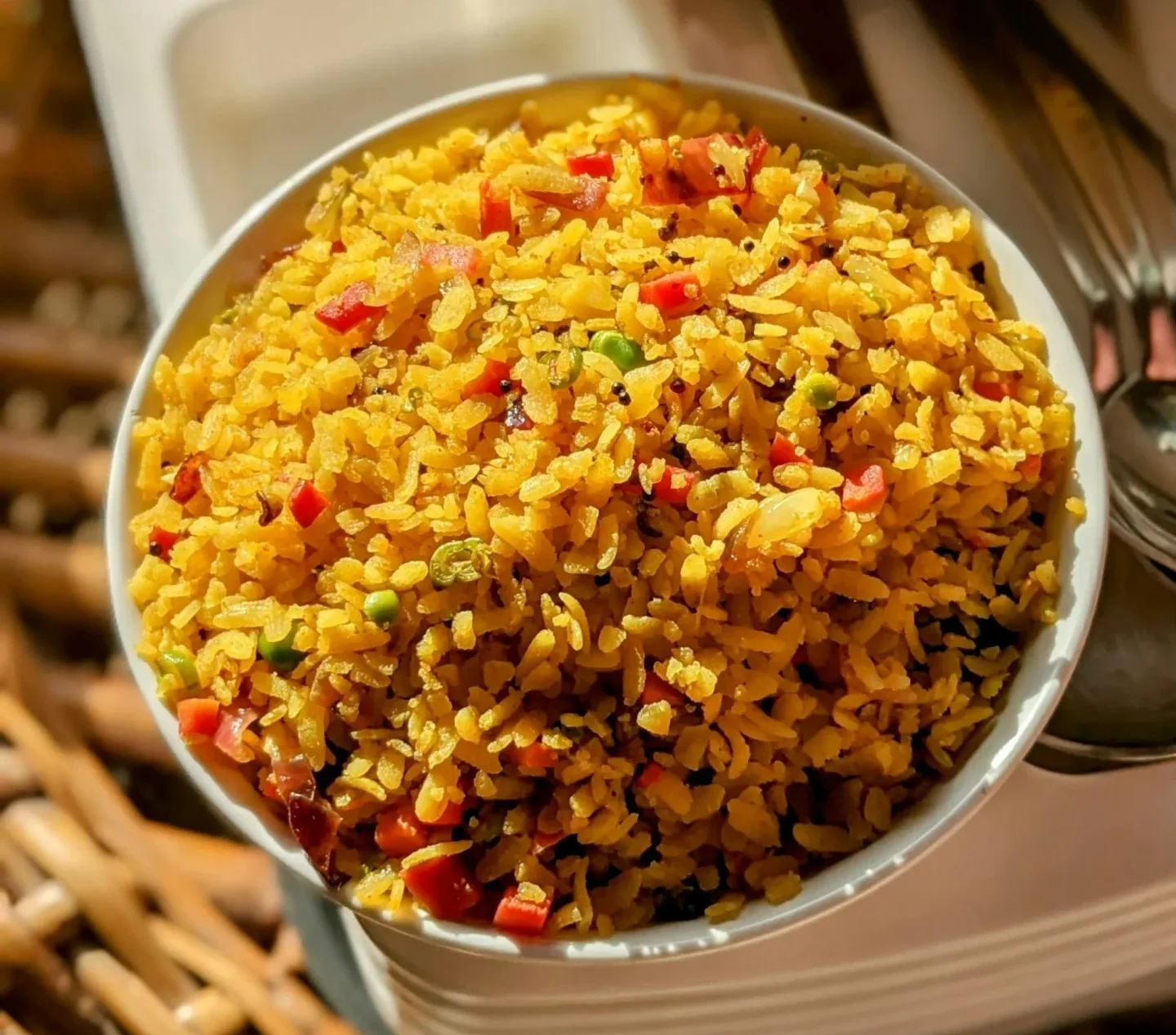
Poha is one of India’s quickest breakfasts. Those flattened rice flakes soak up flavors in minutes, creating a light, satisfying meal.
But the question I hear from patients constantly is: How many calories are in poha? Is it lighter than upma? Can I eat it if I’m dieting?
The good news? Poha is genuinely one of the better breakfast options available. In my practice, I recommend poha to patients seeking lighter meals that digest easily.
Today, I’m giving you the complete breakdown—calories, nutrition, benefits, and how to make it work for your health goals.
What Is Poha? A Quick Overview

Poha (also called avalakki, chivda, or flattened rice) is rice that’s been parboiled, dried, and then flattened into thin flakes.
It’s quick to cook—just 5 minutes with hot water—making it ideal for rushed mornings.
What makes poha special is its lightness.
Unlike heavier breakfast options, poha is easy on the digestive system while still being filling.
Most people feel satisfied after a bowl of poha without feeling stuffed.
How Many Calories Are In 200g Poha?
Here’s the answer you’re looking for.
A medium bowl of poha (200 grams) contains approximately 201-210 calories.
This makes poha one of the lightest breakfast options available. Let me show you the comparison:
| Serving Size | Calories (kcal) | What It Represents |
|---|---|---|
| Small bowl (100g) | 100-105 | Light breakfast, child portion |
| Medium bowl (200g) | 201-210 | Standard adult breakfast |
| Large bowl (300g) | 302-315 | Heavy meal for very active people |
Why This Matters: At just 201 calories, poha is lighter than upma (224), white rice (260), or brown rice (248).
Yet it’s more filling than you’d expect due to its volume. The flakes take up space in your bowl and stomach, creating satiety with minimal calories.
This makes poha exceptional for weight loss. You get a full-feeling bowl of breakfast at approximately 200 calories—hard to beat in the nutrition world.
Complete Nutritional Breakdown: What’s in Your Poha Bowl?
Beyond calories, here’s what 200g of poha provides:
| Nutrient | Amount (200g) | Why It Matters |
|---|---|---|
| Calories | 201-210 kcal | Energy for the day |
| Carbohydrates | 44g | Primary energy, steady release |
| Protein | 4.1g | Basic muscle maintenance |
| Fat | 1.2g | Minimal fat, light on digestion |
| Fiber | 2.8g | Supports digestive health |
| Sugar | 0.3g | Almost no added sugar |
| Sodium | 280mg | Moderate, manageable |
| Cholesterol | 0mg | Zero dietary cholesterol |
The Macronutrient Picture: Poha is approximately 70% carbohydrates, 10% protein, and 2% fat with 2.8g fiber.
This composition makes it a light, easily digestible meal, ideal for sensitive stomachs, young children, the elderly, and people recovering from illness.
The fiber content (2.8g), while not exceptional, is sufficient to support basic digestive function and provide moderate satiety.
Combined with the light weight on the stomach, poha is excellent for morning digestion.
Why Poha’s Calories Vary: The Variables

Two bowls of poha can have different calorie counts based on preparation:
Five Factors That Change Poha Calories:
- Oil/Ghee Added: Light tempering uses minimal oil (200 calories). Heavy ghee tempering can add 50+ calories.
- Vegetables Included: Raw or cooked vegetables add negligible calories but increase volume and nutrients.
- Peanuts or Cashews: These add texture but increase calories—10g peanuts add 55 calories.
- Puffiness Level: Fluffier poha cooked longer has more air (fewer calories). Dense poha weighs more (more calories).
- Water Content: More water makes it lighter. Less water makes it denser.
Health Benefits of Poha
Extremely Easy to Digest: Poha is among the easiest breakfast options to digest. Those recovering from stomach issues, pregnant women, or young children tolerate poha beautifully.
Incredibly Light: Despite being filling, poha doesn’t weigh on the stomach. You finish breakfast feeling satisfied but not stuffed—a rare quality in breakfasts.
Low in Fat: At 1.2g fat per 200g serving, poha is exceptionally light on the digestive system and heart-friendly.
Iron-Fortified Options: Some commercial poha is fortified with iron and B vitamins, making it nutritionally enhanced for anemia prevention.
Quick Preparation: 5 minutes from start to finish makes poha perfect for busy mornings.
Is Poha Healthy? The Assessment
Yes, poha is healthy. It’s lighter and easier to digest than most other breakfast options. However, like all foods, how you prepare it matters.
Poha Is Healthiest When:
- Made with minimal oil (1 tablespoon maximum)
- Loaded with vegetables (peas, carrots, onions)
- Served with fresh lime juice (aids digestion)
- Portion-controlled (200g, not 400g)
- Paired with protein (side of curd or egg)
Poha Needs Caution When:
- Cooked with excessive oil or ghee
- Served with fried accompaniments
- Made with added salt beyond taste requirements
- Eaten alone without protein (doesn’t provide a complete meal)
- The only meal for people with diabetes can spike blood sugar due to refined rice)
Poha vs. Other Breakfast Options: How It Compares
| Breakfast Option | Calories (200g) | Fiber | Protein | Best For |
|---|---|---|---|---|
| Poha | 201 | 2.8g | 4.1g | Light digestion, weight loss |
| Upma | 224 | 5.4g | 5g | Satiety, balanced nutrition |
| White Rice | 260 | 1.1g | 4.3g | Quick energy |
| Brown Rice | 248 | 3.5g | 5.4g | Weight loss, sustained energy |
| Oatmeal | 300 | 8g | 10g | Maximum satiety |
| Bread (4 slices) | 320 | 6g | 12g | Convenience |
The Takeaway: Poha is exceptionally light and digestible. For pure lightness, poha wins. For satiety, upma wins. For nutrition, brown rice or oatmeal win.
Poha for Different Health Goals

For Weight Loss: Poha is ideal. At 201 calories with 2.8g fiber, it satisfies without overloading on calories. Eat 4-5 times weekly with vegetables and minimal oil.
For Digestive Issues: Poha is your best choice. It’s gentle, light, and rarely causes discomfort even for sensitive systems.
For Diabetes: Traditional poha made from white rice flakes might spike blood sugar. Brown rice poha or grain-free poha alternatives are better. Always pair with protein.
For Muscle Gain: Poha alone is insufficient (only 4.1g protein). Pair with eggs (boiled or fried) or curd to make it a complete meal.
For Heart Health: Poha is excellent. Low fat (1.2g), no cholesterol, light preparation makes it heart-friendly.
Practical Tips for Healthier Poha
- Measure Accurately: Use a standard bowl or cup to know you’re eating 200g.
- Minimize Oil: Use 1 tablespoon oil maximum. The tempering should enhance taste, not increase calories.
- Load Vegetables: At least 1 cup of chopped vegetables (peas, carrots, cucumber, onions).
- Add Fresh Elements: Lime juice, fresh coriander, and ginger add flavor without calories.
- Include Protein: Serve with a side of curd, boiled eggs, or legumes.
- Timing Matters: Eat poha early morning or for early breakfast. It’s light and may leave you hungry if eaten too early.
- Serve Fresh: Best within 5 minutes of preparation. It gets soggy if left sitting.
FAQs: Quick Answers About Poha
Is poha good for weight loss?
Yes, poha at 201 calories is excellent for weight loss. The light, voluminous nature satisfies hunger with minimal calories. Eat with minimal oil and vegetables 4-5 times weekly. Pair with protein (curd or eggs) for better satiety throughout the morning.
Can I eat poha every day?
Yes, poha can be eaten daily. However, rotate with other breakfast options (upma, oatmeal, roti) for nutritional variety. Different foods provide different micronutrients, so variety prevents nutritional deficiency.
Is poha lighter than upma?
Yes, poha (201 cal, 2.8g fiber) is lighter than upma (224 cal, 5.4g fiber). Poha is better for digestion and extreme lightness. Upma is better for satiety and sustained energy. For pure lightness, poha wins.
Is poha good for pregnant women?
Yes, poha is excellent for pregnancy. It’s light, easy to digest, and doesn’t trigger nausea common in pregnancy. Add vegetables for micronutrients and serve with curd for additional calcium and protein.
Does poha have more calories than rice?
No, poha (201 cal) has fewer calories than white rice (260 cal) or brown rice (248 cal). Poha is lighter while still being filling due to its flaky nature.
Is poha good for diabetics?
Traditional white rice poha might spike blood sugar. Brown rice poha or alternatives like oats are better. If eating traditional poha, always include protein and vegetables to moderate blood sugar impact.
Also Read:
Final Thoughts: Poha as Your Light Breakfast Choice
Poha is underrated in nutrition discussions.
It’s one of the few breakfast options that’s genuinely light yet satisfying—a rare combination.
At 201 calories and easy to digest, poha is a nutritionist’s recommendation for people seeking simpler breakfasts.
The key is preparing it thoughtfully.
Minimal oil, loaded vegetables, fresh lime juice, and perhaps a protein side transform poha from “okay breakfast” to “optimal nutrition.”
In my practice, many patients who struggle with heavy breakfast options find poha transformative.
If you’re tired of heavy breakfasts, poha deserves a try.