
Francisco Araya and Fernanda Guerrero have built their own culinary language around the Pacific Ocean. With Chile on one shore, Japan on the other, and Singapore suspended between them, the menu at the world’s first Michelin-starred Chilean restaurant becomes a bridge across impossible distances.
The Pacific is not one ocean but many. It touches the coasts it claims with confident perseverance, cold and sometimes furious, generous and merciless. It sends clean light over Japanese fish markets at dawn, then throws fog across Chilean mornings like a thick veil. It pulls kelp and shellfish from the depths, then leaves them on the edge of land like offerings to gods. For centuries, it has carried boats, trade, adventure, and the restless human need to know what lies beyond the horizon. A whole geography moves to its rhythm, and those who live along its edges learn early: the ocean decides, and you adapt or you drown.
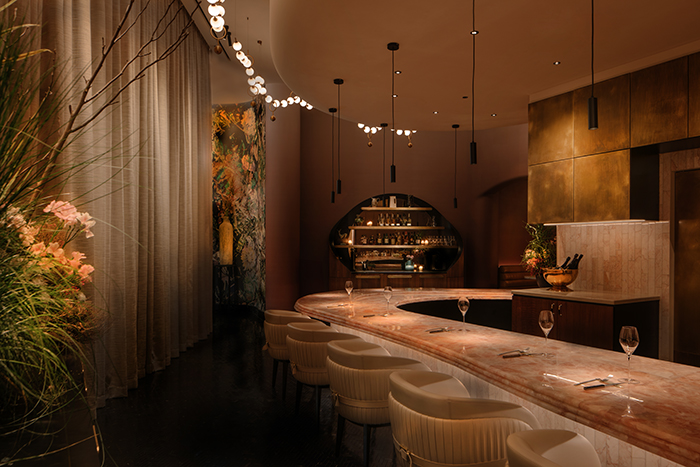
But inside restaurant Araya in Singapore, a city that exists because empires needed a port between East and West, something shifts. It’s not an escape from the Pacific, but a strait through which it enters softly, translated into a unique culinary language that tastes like salt and sounds like home even when you’ve never been there. Rose quartz holds the counter like a stone taken from the earth before borders were drawn. A sunset-ombre glow holds the horizon in place, that liminal hour when day hasn’t died but night is already waking. The room stays calm the way the sea stays calm when it is deciding what it will do next.
You come expecting culinary excellence, another Michelin-starred performance in a city thick with them. You find something stranger and more honest: a coastline translated into ritual, Chile expressed through the intertwined life stories of two people who refused to stay in one place, who chose each other and chose motion, and who discovered that an ocean is not a barrier but a wild road made of water. Difficult to cross, sure, but crossable if you’re willing to risk everything for what waits on the other side.
The Titan’s Work: Two Who Refuse to Be One
Some restaurants are born from singular visions, the product of one genius who controls every element with an iron fist. Araya, instead, is forged by two visions that complete each other the way land completes water.
Francisco brings the restlessness that gets you in trouble, the kind of hunger that pushes a boy into a kitchen at five years old and keeps pushing until every cautious voice, his parents suggesting Information Technology school and friends recommending stability, falls silent in the face of what hands already know. He brings the explorer’s refusal to accept that the map is finished, the conviction that there are always new territories even in something as old as cooking. Creativity as compulsion.
Fernanda brings what restaurants need to survive the first winter and the fiftieth: structure built from instinct or hospitality learned not from textbooks but from a childhood spent watching her family feed strangers until they became friends.
Their partnership works because neither tries to be the other. He cooks with the Pacific’s salinity and discipline, with techniques borrowed from masters on both sides of the ocean and then made his own. She answers with warmth, with bread that tastes like childhood, with the quiet understanding that hospitality is not not transaction but gift. These two rhythms have learned to beat as one, creating something that could not exist if either stood alone.
Together, they do what titans do: they bridge impossible distances.
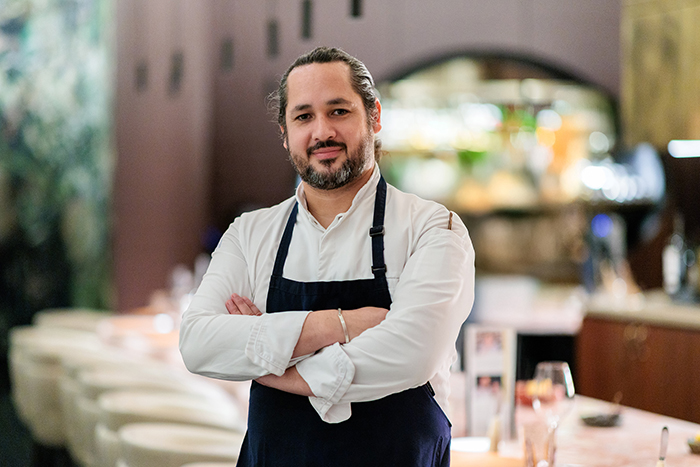
A Boy Who Refused The Safe Path
Francisco Araya started cooking at five with a great uncle’s guidance, learning that food is a language you can speak before you have words for it. It was always part of his life, woven into the fabric of who he was, but never something he imagined as a career until computer science studies felt like a cage built from other people’s expectations.
He enrolled in culinary school in Chile. Then Argentina, because one country’s techniques are never enough when you’re hungry for everything. Then home again to work at an Asian-influenced restaurant considered the country’s finest, where he learned that Chile and Asia could speak to each other.
“Asia came to my life without me looking for it” he says in a restaurant in Singapore that serves Chilean food filtered through Japanese discipline, and the irony is visible: “Look at where I am now.”
From the beginning, Francisco dreamed of elBulli, the molecular temple on the Catalan coast where Ferran Adrià rewrote the culinary rules that generations followed until he questioned those. Francisco applied. And applied again. He remembers the rejections from Albert Raurich, each one citing his youth as if hunger and talent could be measured in years lived.
So he went to Mugaritz instead, to Andoni Luis Aduriz’s kitchen where madness and precision danced around each other like lovers who couldn’t decide whether to embrace or fight. The Mugaritz team recognized something in him, call it obsession or talent, and they helped him with a recommendation that finally got him into Ferran Adrià’s kitchen.
Between Mugaritz and elBulli, he returned to Santiago for four months and worked alongside Rodolfo Guzmán in the early days of Boragó, when that restaurant was still figuring out what it meant to cook Chilean ingredients with the seriousness usually reserved for French haute cuisine. “It is a beautiful memory of seeing a restaurant born” he says.
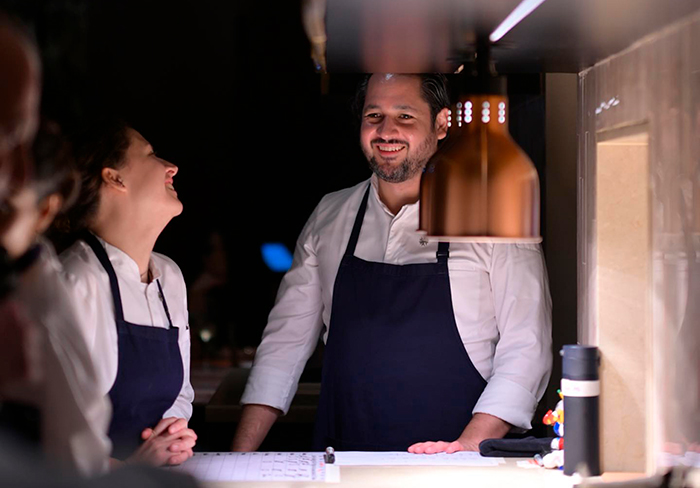
At elBulli, Francisco absorbed a philosophy that shapes his cooking to this day: creation as a daily practice and innovation as discipline. The understanding that new dishes are built through the refusal to accept that anything is finished.
Back in Santiago, the world felt smaller. He ran the kitchen for a Spanish community club, feeding expatriates their own memories, giving them tastes of home that made them close their eyes and travel across an ocean without leaving their chairs. It was good honest work, but it wasn’t enough. And then Asia called again.
In 2012, he maxed out his credit cards to open an eight-seat counter in a Tokyo backyard, Tokyo 81. A year later, Michelin awarded him a star. He was twenty-nine, an age when most chefs are still learning to run a section.
But Japan gave him something more valuable than a star: permission. Permission to be Chilean in a world that often treated Latin American cuisine as ethnic food that belonged in casual restaurants with cheap prices and plastic chairs. Japan taught him that being Chilean was different, yes, but not inferior to being Japanese. That his ingredients carried as much history and complexity as theirs. That his techniques, born from necessity and poverty and the endless creativity of people who had to make something from nothing, were as valid as centuries of kaiseki tradition.
That realization unlocked everything that came after and explains Araya’s backbone today, precision without rigidity and a respect for Japanese seafood that doesn’t read as trend-chasing or cultural appropriation but as genuine conversation between two coastal cultures that have more in common than geography would suggest.
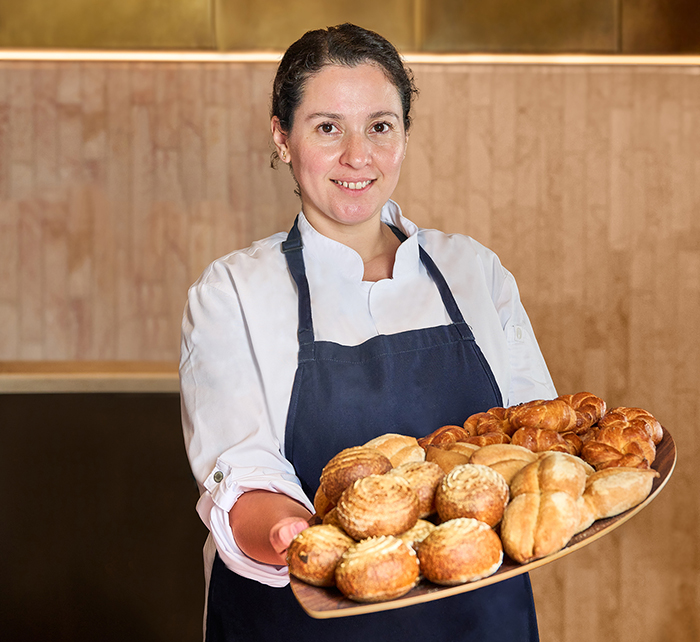
Born In The Kitchen, Built By The Sea
When asked about her beginnings, Fernanda Guerrero’s answer comes without hesitation: “I was born in a restaurant.”
Not metaphorically. Not as a figure of speech. Her family owned Las Brisas Marinas, The Sea Breezes, and ran it for thirty-two years, three decades of feeding people, of turning strangers into regulars into friends, of learning that a restaurant is not a business but a commitment to show up every day and care for people you may never see again. She grew up in that kitchen alongside parents and sisters, even living in the same building until she was five, so that the sounds and smells of cooking weren’t separate from life but were life itself.
She grew up eating like an adult, accustomed to home cooking executed with the care that only comes when you’re feeding people you love. She jokes that she discovered fries and instant noodles embarrassingly late in life because they simply weren’t part of her reality in a restaurant where shortcuts were betrayals.
Fernanda attended the same culinary school as Francisco, their paths crossing in classrooms where they learned techniques that felt sterile compared to what they already knew from growing up with food. She worked at Indómita winery’s restaurant, learning how wine and food could speak to each other, how the right pairing could make both greater than they were alone. Then she moved to Viña del Mar, the garden city by the sea, and there their paths crossed again, this time in a way that would change everything.
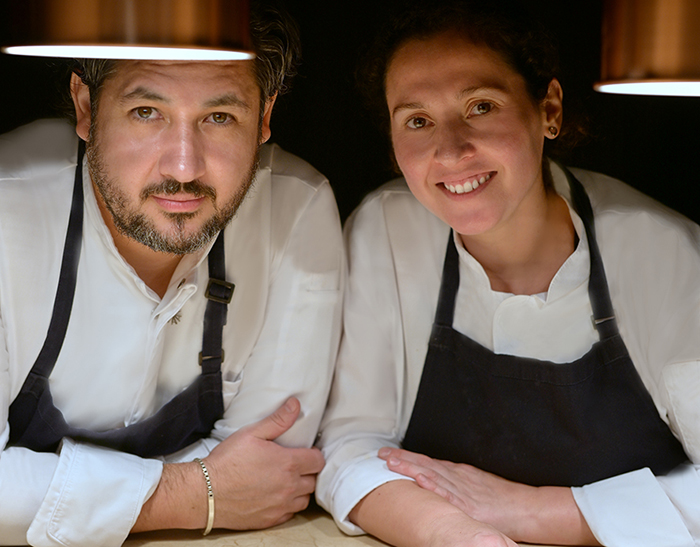
Here’s where the story swerves away from the telenovela narrative that Latin American love stories are “supposed” to follow. Chileans, Francisco and Fernanda will tell you, are closer to Japanese than to their Latin American neighbors when it comes to emotional expression.
The decision to be together and move halfway across the world wasn’t swept up in passion or sealed with poetry. It was pragmatic, almost brutally honest: they liked each other, they worked well together, and the worst that could happen was failure. And even failure would make a good story, would give them something to tell their grandchildren about the time they were young and brave and stupid enough to bet everything on a dream.
Movement As Survival, Motion As Truth
The two became a couple in 2014, and from the start, their partnership was built on motion. Not the frantic motion of people running from something, but the purposeful motion of explorers who understand that standing still is a kind of death, that restaurants, like relationships, or lives, requires the willingness to risk what you’ve built in pursuit of what you might become.
When Francisco asked Fernanda to move to China, she said yes. They worked at Napa Wine Bar Kitchen in Shanghai, a restaurant anchored by a cellar of 1,500 labels that told stories from every wine region worth knowing. For years, they fed expatriates and locals alike, building a reputation bottle by bottle, service by service, learning to cook for palates that had tasted everything and were hard to surprise.
Then the pandemic arrived and the world rewrote all the rules overnight. But Francisco and Fernanda didn’t freeze. They pivoted and created Table, a bistro concept that kept them moving, when movement meant survival.
Singapore was the next crossing. The place where everything finally clicked into place. Araya opened in late 2023, and the recognition that followed didn’t trickle in slowly but arrived like a tsunami. The Straits Times named it the best new fine-dining restaurant of 2023. Michelin followed in 2024 with a star. The Best Chef Awards added a One Knife distinction in 2025.
A Name That Carries Maps And Myths
Araya is Francisco’s surname first, the name his father gave him, the name that marks him as Chilean before he opens his mouth. Its origin is found in the Basque Country, on the northern coast of Spain, where Araya appears as a place name evoking valleys. Meanwhile, in Japanese, the sound can be written with characters that suggest a “wild valley”.
The double meaning isn’t an accident. It’s a gift, a Pacific dialect built from two old languages. Chile brings narrative, memory, heat that lives in your chest long after the meal ends. It brings the creativity of a country that has survived earthquakes and dictatorships and economic collapses by learning to make something beautiful from whatever remains. Japan brings discipline, seafood intelligence accumulated over centuries of living from the ocean, and a way of working that treats provenance not as marketing but as the fundamental respect you owe to the thing that died so you could eat.
Francisco calls it “Chilean with a Japanese twist,” which is accurate, and he adds: “Mineral soils and a cold Pacific mean surprisingly similar products”.
One Ocean Shaping Two Far Lands
That’s why Japanese fish and shellfish sit at the core of the meal, not because Japanese fish are “better” in some abstract way, but because they’re close enough to Singapore to arrive with the speed and quality that this kind of cooking demands, aligned with the restaurant’s obsession with marine terroir.
Around that core, the kitchen writes in a South American grammar: Merken, the smoked chili from the Mapuche people of southern Chile, carrying flavors of smoke and earth and the survival of a culture that refused to disappear. Cochayuyo, a seaweed that arrives seasonally from Chilean shores, connecting this restaurant to waters eight thousand miles away. Nods to Indigenous traditions that predate borders and nation-states.
Fernanda reduces the philosophy to a single line, the way she reduces most things to their essence: “We focus on one product, more than one region.”
The Room Where Titans Built A Bridge
Emma Maxwell designed the dining room, and she understood the assignment: proximity as philosophy, closeness as the foundation of everything that follows. The counter is the main event, the stage where the performance happens but also the place where performance dissolves into something more honest. Guests sit close enough to watch the choreography, to ask questions, to notice the small decisions that define a restaurant’s personality: which knife for which cut, which oil for which fish, the exact moment when something moves from raw to perfect.
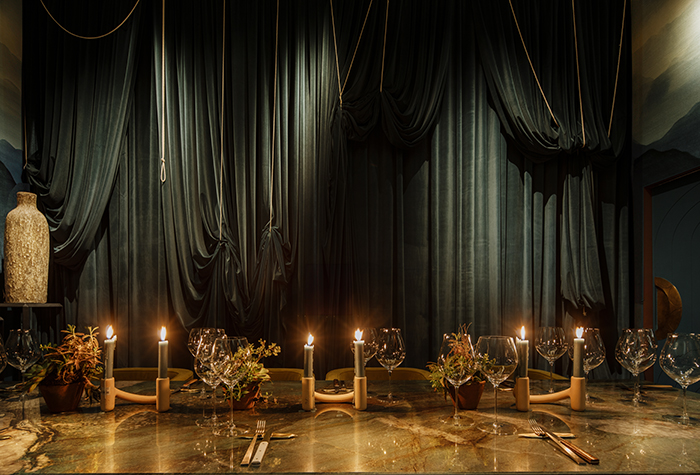
Dishes are finished in front of them. There’s no mystery, no pretense that food appears by magic. You see the work. The work earns your respect by refusing to hide. There’s also a private dining room called ‘Patagonia’, named for that impossible region at the bottom of the world where Chile finally runs out of land and ice takes over. Throughout the interior, Chile threads through the space with cues that feel lived-in rather than staged.
The tasting format follows journeys, not categories, because categories are how bureaucrats organize the world and journeys are how humans actually experience it. Cost, coast, is marine, pulling everything from cold waters and treating it with the respect you owe to the ocean’s gifts. Andes widens the spectrum, bringing in altitude and earth and the ingredients that grow where air thins and temperatures swing wildly from day to night. There are shorter lunch options too, including a four-course menu for busy days when people need to eat well but don’t have three hours to give, but the standards never lower.
The menu’s flavors are intense but fresh. And here a pattern repeats: dishes that hit you with their primary flavor immediately (this is fish, this is earth, this is smoke) and only after that first impact do you notice the layers of complexity beneath, the careful construction that makes the whole greater than its parts.
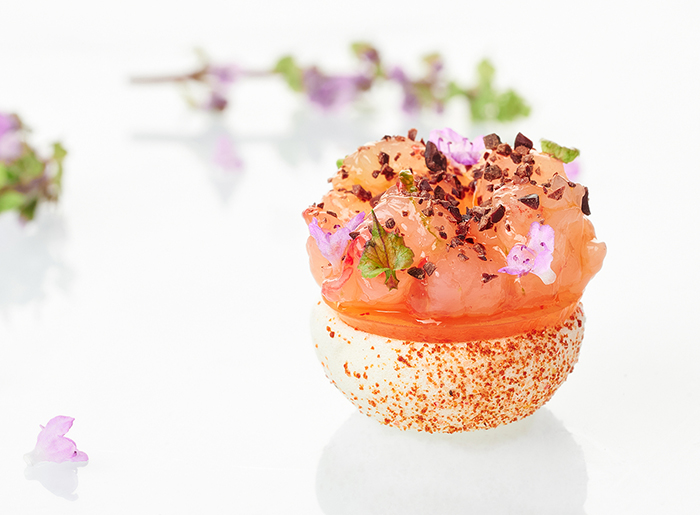
Dishes that make Chileans reconnect to their land in ways they didn’t expect, that bring grown adults to tears at the counter because they’re tasting their grandmother’s kitchen or their childhood summers or the country they left behind. And dishes that make everyone else simply enjoy the ride, discovering ingredients and flavors and combinations they didn’t know existed.
“We’ve had guests crying at the bar after trying the empanada,” Fernanda says, and there’s pride in her voice but, moreover, the acknowledgment of what food can do when it’s made with enough care. “Or some of our dishes that take them back to Chile in a bite. But we still make it our mission to create dishes that any guest from anywhere will enjoy and connect to.”
That’s the titan’s work made visible: building a bridge that Chileans can walk across to return home and that everyone else can walk across to discover something new.
The Plates Tell Stories The Ocean Wrote
If Araya has a signature opening move, after the sequence of snacks that wake the palate and prepare it for what follows, after the first visit from la panera, the bread basket, it’s the ceviche. Ceviche is the most recognizable coastal dish in the Americas. The cleanest door into the restaurant’s logic.
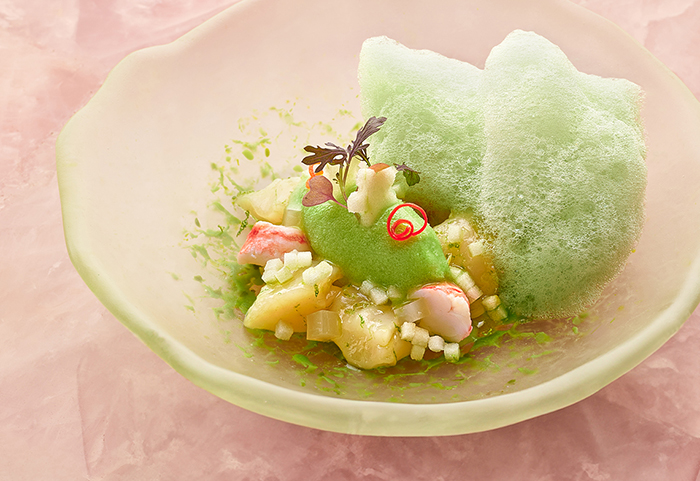
Francisco’s leche de tigre, he says, was born while he was in Japan, and you taste that lineage in the control, it’s sharp enough to cut through the richness of fish but not so sharp that it becomes the only thing you taste. He serves it with Hokkaido scallops, sweet and clean, their marine flavor enhanced rather than masked. Oca and daikon add textural contrast and a kind of earthy sweetness. Avocado sorbet completes the circle, bringing creaminess and cold and the understanding that temperature can be a flavor.
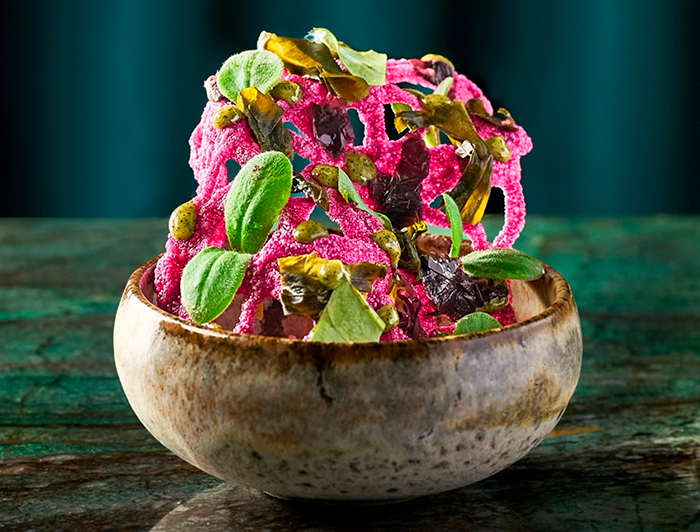
The Coral is another favorite, a dish that announces Chile’s Indigenous heritage with pride. Mashua, the Andean tuber that grows at altitudes where most plants surrender. Quinoa, the grain that sustained empires before Europeans arrived with wheat and the assumption that their ingredients were superior. Oyster leaves. Borage. Huacatay sauce, that untranslatable Andean herb that tastes like mint and earth and something else you can’t name. Pickled seaweed connects it all back to the ocean.
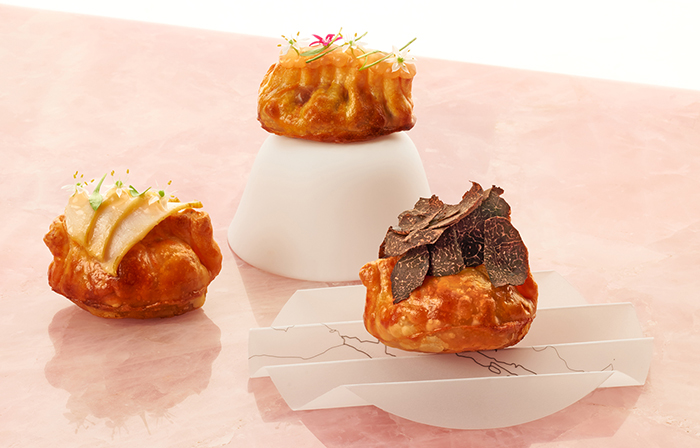
Then the empanada arrives, and something shifts in the room. Instantly legible across cultures, everyone understands a filled pastry, even if they’ve never heard the word empanada. But according to the team, this is the dish that catches guests off guard, the one that makes them unexpectedly emotional. Something about it travels deeper than flavor alone.
That’s Araya’s quiet power, the titan’s strength expressed in a pastry you can hold in your hand. It travels eight thousand miles from Chilean kitchens to a counter in Singapore, then returns you to something intimate, something you thought you’d lost or never had but recognize immediately when it appears on your tongue.
Even when proteins from the land take center stage, the ocean refuses to leave. Picaña with chimichurri, grilled Wagyu beef rump cap, rich and marbled, that style of cooking and cutting that Argentina perfected but that belongs to all of South America now, still carries traces of sea. Cochayuyo chimichurri weaves marine elements through terrestrial richness, kelp and herb and acid creating something that shouldn’t work but does because it’s true to how people actually eat in Chile. “There’s always a marine element on the plate,” Francisco says.
The Liquid Language Of Distance
The beverage program follows the same logic as the kitchen. Every glass tells a story, extends the map, reinforces the understanding that this meal is a journey across an ocean and you’re traveling whether you realize it or not.
Francisco is blunt about the regional default, the pattern he’s deliberately breaking. Many Asian fine dining lists tilt heavily towards French and Italian, Burgundy and Bordeaux, Piedmont and Tuscany, the same prestigious regions that have dominated wine culture for so long that sommeliers sometimes forget there are grapes growing elsewhere. Safe choices. Expected choices.
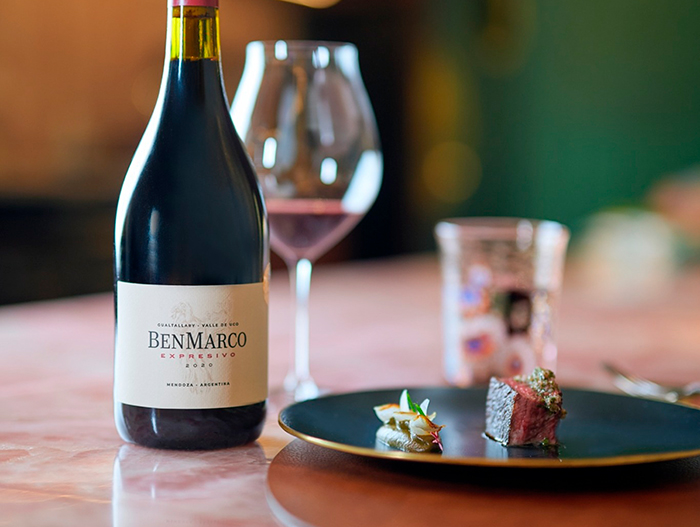
“We wanted a wine list from the Americas” he says, and you can hear the quiet rebellion in his voice. The list stretches from Oregon to Patagonia, connecting the entire Pacific coast of the Americas, proving that great wine doesn’t require French soil or Italian sunshine, that the New World has learned to make bottles that rival anything Europe produces.
Cocktails and zero-proof drinks follow the same route. Kombucha with yerba mate, that South American tea that tastes like earth and energy and the gaucho culture of endless plains. Pisco sour, Peru and Chile’s eternal argument made liquid, the drink that both countries claim as their own and that both make brilliantly. A Negroni that plays with tequila instead of gin, bitter and complex and Mexican. Pisco infused with cacao and brown sugar, sweet and rich and impossible to place anywhere except the imagination.
Fernanda’s Territory: Where Memory Lives
After following Francisco’s recommendation, Fernanda stepped away from the hectic intensity of the savory kitchen and embraced the pastry world, which she now recognizes as her real home and passion. Not a retreat, but a territory where the work requires precision and patience and the understanding that some things cannot be rushed.
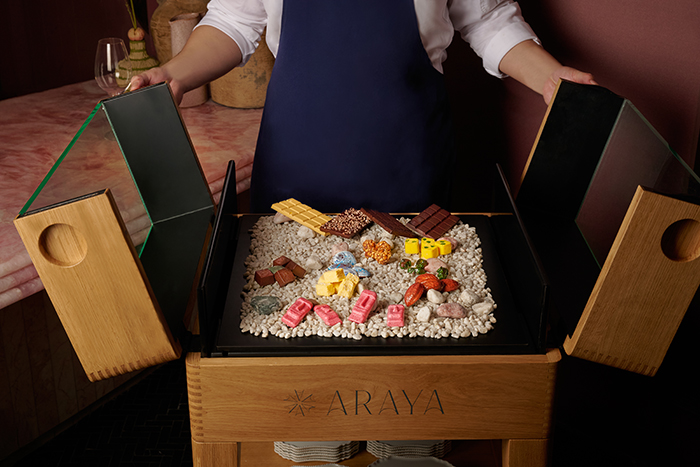
At Araya, that translates into an array of Chilean breads that complete her partner’s dishes and, of course, the desserts and petit fours that close the meal and linger in memory long after you’ve left.
La panera, the bread basket that arrives early, before the meal properly begins, is a statement by Fernanda, a declaration of identity made from flour and water and yeast and heat. There are three breads that encapsulate national identity, each one telling a different story about Chile.
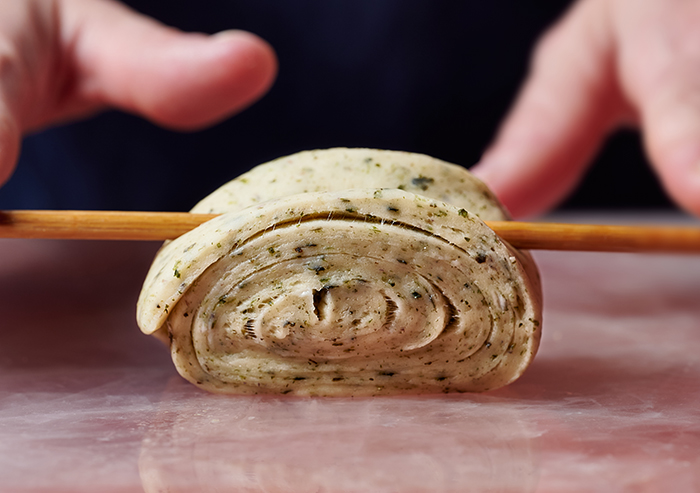
Chapalele, a potato-forward sourdough that comes from the island of Chiloé, where potatoes aren’t just an ingredient but the foundation of survival, where hundreds of varieties grow in volcanic soil and feed people through winters that would starve them otherwise. Dense, substantial, the kind of bread that keeps you going when there’s nothing else.
Marraqueta, Chile’s everyday “French bread,” though calling it French is misleading, it’s been so thoroughly adopted and adapted that it’s more Chilean than French now. The bread you eat every day, at every meal, the bread that doesn’t need butter because it’s already perfect.
And Bocado de dama or lady’s morsel, traditionally made with pork fat, here reimagined with wagyu fat because Francisco and Fernanda are in Singapore and certain ingredients make sense and others don’t. Rich, flaky, slightly sweet, the kind of pastry that makes you close your eyes and forget where you are.
Butter arrives with its own accents, merken and seaweed, because even butter at this table carries the Pacific’s mark. Comfort and identity in a few bites. Fernanda doesn’t give herself license to explore the way Francisco does. She doesn’t chase innovation for its own sake or try to reinvent traditions that work perfectly as they are.
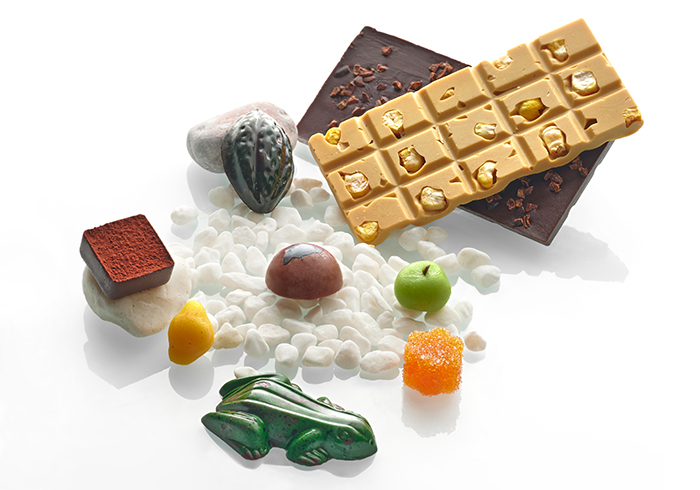
“Contrary to what Francisco does, I focus on doing purely Chilean breads and desserts because I want people to leave the restaurant with a bigger understanding of who we are as a culture,” she explains.
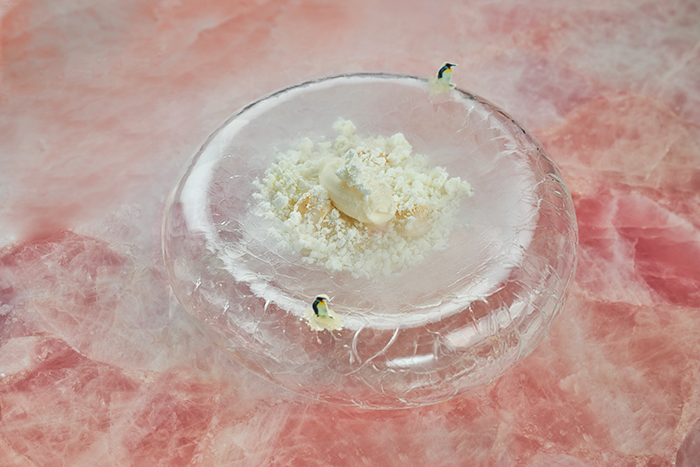
Dessert stays in the same vein: more narrative than sweetness. Fernanda’s Antarctica is built around winter flavors and a sense of territory that most people forget Chile possesses: berries that grow where ice meets land, goat’s milk ice cream because goats can survive where cows would die, cinnamon and marshmallow and dulce de leche creating layers of texture and temperature and nostalgia.
She notes that Chile also has territory in Antarctica, that the country stretches further south than most people realize, all the way to where the map ends and ice takes over. Then she breaks the solemnity with a line that keeps the room human, that reminds everyone that seriousness and joy aren’t opposites. “You can’t eat the penguins there,” she says, and you can hear the smile in her voice, “but you can eat the ones on the plate.”
What Remains When People Leave
People come in curious and leave surprised. They discover ingredients they didn’t know they missed, tastes they didn’t realize they’d been craving until they appeared on the tongue and triggered something, something essential, something true. They taste something familiar and realize it has been sharpened, clarified, returned with more intention than it originally carried. They get emotional over an empanada, that simple pastry somehow containing their grandmother’s kitchen or the country they left behind chasing dreams.
Or over bread that lands like childhood, that tastes exactly like Saturday mornings or Sunday dinners or the thousand small moments when food meant safety and love and the understanding that someone cared enough to feed you well.
That is the myth Araya builds, the story that will outlast the restaurant itself, the tale that people will tell when they talk about the Chilean place in Singapore where two chefs bridged an ocean and made it look easy even though nothing about it was easy, even though every day is a choice to keep building this impossible thing they’ve created.
Francisco cooks with techniques learned in three countries and synthesized into something that belongs to none of them exclusively and all of them partially. Fernanda answers with the understanding that a meal needs softness as much as it needs sharpness. Together they move like a true tandem: savory and sweet, challenge and comfort, discipline and welcome.
The Pacific is the largest ocean on Earth, covering more than sixty million square miles, containing more water than all the other oceans combined. It has no single identity, no unified character. It is many things to many people: barriers and highway, graveyard and birthplace, emptiness and abundance, terror and transcendence.
But at Araya, for the length of a meal, for the time it takes to eat your way from coast to coast, from Chile to Japan and back again, the Pacific becomes what it has always secretly been for those willing to see it: a connection.
The myth is still being written. But sitting in their room, watching Francisco and Fernanda work in the kind of synchronized rhythm that only comes from years of choosing each other every single day, you understand that what Araya offers is a bridge where two coasts finally meet.
ARAYA
Duxton 83 Niel Road, Duxton Hl, #01-08, access via, Singapore 08981
www.arayarestaurant.com
The post Araya Singapore: How To Build A Culinary Bridge Across An Ocean appeared first on Honest Cooking and Travel.