
These days, if TikTok is any indication, it’d be easy to think that all you need to eat for a healthy diet is protein. But for years, experts have been stressing the importance of getting more of a different nutrient: fiber. According to the most recent data, more than 95 percent of Americans aren’t getting the 22 to 34 grams of fiber recommended by the USDA and United States Department of Health and Human Services1. And this nutrient deficit can lead to devastating health consequences, including higher cholesterol2, higher risk of colon cancer3, and higher risk of metabolic disease4.
Luckily, the tides seem to be changing for fiber. Last month, Tufts University highlighted the ever-growing popularity of fibermaxxing5, a trend that sees health influencers purposefully aiming to consume at least their target fiber intake, if not more.
The fact that folks have finally shifted their attention to mindfully consuming more fiber is unsurprising to Jennifer Lee, the paper’s author and a scientist at the Jean Mayer USDA Human Nutrition Research Center on Aging at Tufts University. She says that the rising trend of fibermaxxing reflects a growing interest not just in increasing our lifespan, but increasing our healthspan. In other words, the general population’s interest in fiber could help us thrive — not only living longer, but specifically achieving more years of good health.
“There is a nine-year gap between living to a certain age in good health and then living in poor quality of health at the end of your life,” Lee says. “Behavioral or nutritional strategies that can keep someone healthy are very on trend right now.” And fibermaxxing is definitely part of that.
Can You Max Out on Fiber?
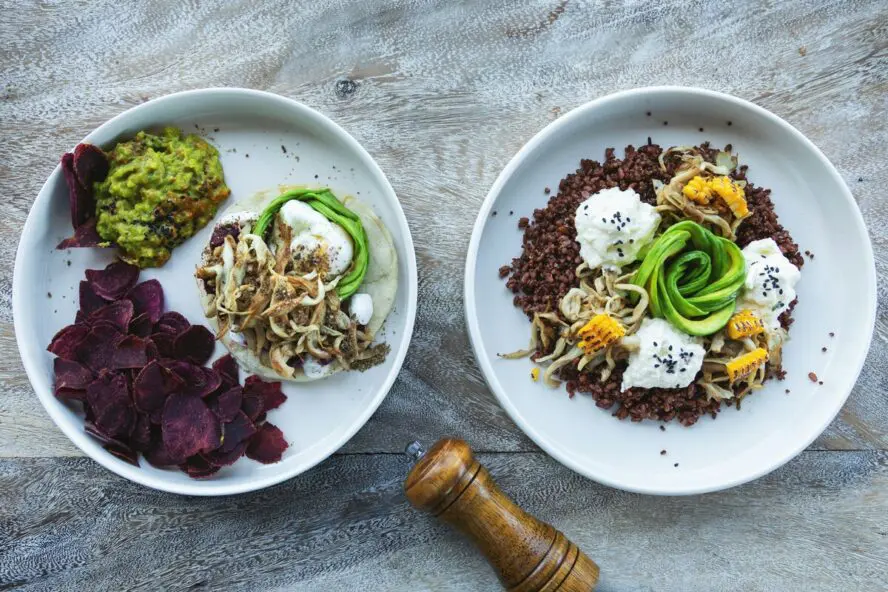
When you hear about fibermaxxing for the first time, it’s not uncommon for the term to raise alarm bells. Quite a few health and nutrition trends seem to throw moderation out the window, and it’s not always in our best interest to adopt the more-is-more mentality that seems to be characteristic of fibermaxxing.
But there’s no need to fear, according to Yasi Ansari, RDN, senior dietitian at UCLA Santa Monica Medical Center, who assures us that provided there are no pre-existing conditions like Crohn’s or IBS, there’s no upper limit to how much fiber one can consume6. That said, Ansari notes it’s best to increase fiber slowly to reduce the potential for gastrointestinal symptoms like gas, bloating, or constipation.
Tara M. Schmidt, RDN, LD, a lead registered dietitian at Mayo Clinic, agrees. “If you’re doing it from whole foods, you’re going to increase your intake of plants — fruits, vegetables, whole grains, beans, legumes. So that’s a good trend in my book.”
And while Lee notes that supplements can make it easier to fibermax, it’s absolutely possible to get every last gram of fiber from natural food sources as long as you plan your meals mindfully.
A Balanced Approach to Fibermaxxing

Natural sources of fiber are chiefly plant-based: fruits, vegetables, whole grains, nuts, and seeds. And to fibermax effectively, consuming a wide range of these foods is key. This is in large part due to the fact that there are two major kinds of dietary fiber — soluble and insoluble — both of which are essential to reap the full health benefits of the macronutrient.
Soluble fiber, as its name suggests, dissolves in water, forming a “gel-like substance,” according to Lee. This substance slows digestion and helps keep you feeling fuller longer. Insoluble fiber, meanwhile, cannot be dissolved. Instead, its role is to add bulk to stool, helping prevent constipation and facilitating regular, healthy bowel movements. Foods rich in soluble fiber include apples, avocados, bananas, and cruciferous vegetables, while those rich in insoluble fiber include oatmeal, whole grains, nuts, and seeds. When it comes to the ratio of soluble vs. insoluble fiber, Lee recommends consuming about twice as much insoluble fiber as soluble fiber each day to balance your fiber intake and really maximize the nutritional benefits of this trend.
By getting your recommended daily intake of fiber, you’ll promote healthy digestion, reduce your risk of high cholesterol and a variety of other health consequences, and potentially even help get rid of ‘forever chemicals’ in your body. As far as health trends go, this is the kind wxe can get behind.
Sources:
- https://pmc.ncbi.nlm.nih.gov/articles/PMC6124841/
- https://www.sciencedirect.com/science/article/pii/S0002916522042241
- https://pmc.ncbi.nlm.nih.gov/articles/PMC4588743/
- https://pmc.ncbi.nlm.nih.gov/articles/PMC10498976/
- https://www.sciencedaily.com/releases/2026/03/260307213252.htm
- https://www.uclahealth.org/news/article/fibermaxxing-sound-nutrition-trend
