
This post may contain affiliate links. As an Amazon Associate, I earn from qualifying purchases. Please read my disclosure.
I make this chickpea and potato curry with tender potatoes, chickpeas, tomatoes, and warming spices in one pot for a satisfying weeknight dinner in under an hour. The curry simmers until thick and saucy with layers of cumin, coriander, and garam masala that remind me of my favorite Chana Masala but with more vegetables for extra heartiness. It’s way easier than takeout and so much better for you!
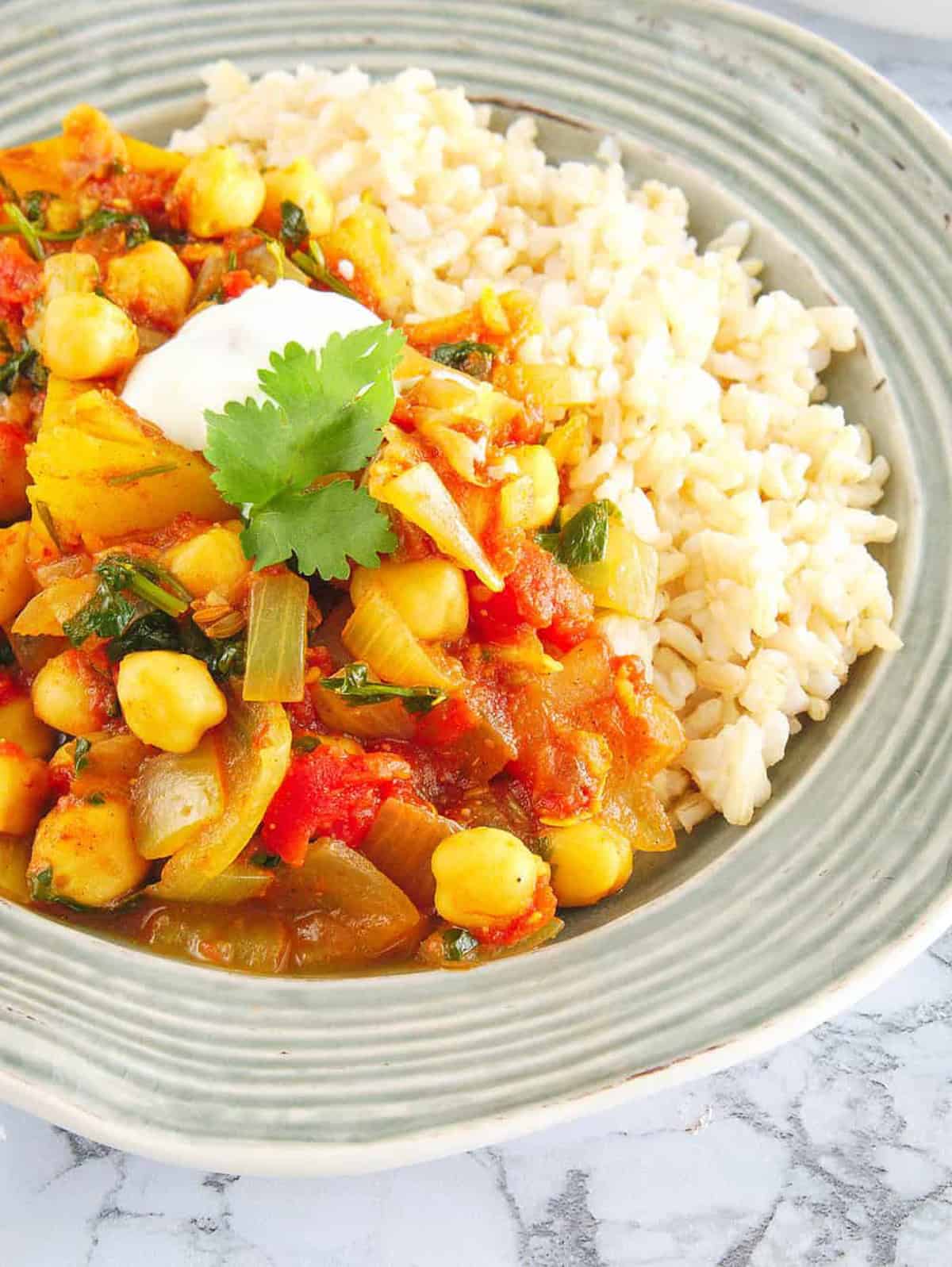
Last year I was craving something warm and comforting after a long day, but I didn’t want to deal with multiple pots and pans the way traditional Indian cooking usually requires. I had chickpeas and potatoes in my pantry along with my go-to spice blend, so I threw everything into my Dutch oven and let it simmer while I helped my kids with their homework.
An hour later, the kitchen smelled incredible and I had this thick, flavorful curry ready to serve over rice. My kids ate two full bowls each, and my husband asked if I could make it again the next week!
Since then, this one pot chickpea curry has become my go-to on busy weeknights. I love that it tastes like I spent hours cooking when it really comes together in about 45 minutes of mostly hands off time. I recommend making a double batch because the flavors get even better the next day!
I love that this chickpea and potato curry gives my family a meal packed with plant protein, fiber, and vegetables without feeling heavy. I use chickpeas because they provide 9 grams of protein and 9 grams of fiber per serving, and the potatoes add heartiness that keeps everyone satisfied for hours. Plus, simmering everything in one pot means I only have one dish to clean at the end.
One of the best parts of this recipe is how toasting the spices with the onions and garlic releases their oils and creates layers of flavor that develop as the curry simmers. I add the cumin seeds first so they crackle and become fragrant, then stir in the ground spices for 30 to 60 seconds before adding the vegetables. This technique keeps the spices from burning while building that deep, complex taste you get in restaurant curries.
The tomatoes break down as the curry cooks and create a thick sauce that coats the chickpeas and potatoes. I love how the baby spinach wilts right into the curry in the last 5 minutes and adds extra nutrients without changing the flavor. This curry is also super versatile and I can swap in different vegetables or adjust the spice level based on what my family is in the mood for!
🥘 Ingredients
My chickpea and potato curry recipe uses the following fresh ingredients:
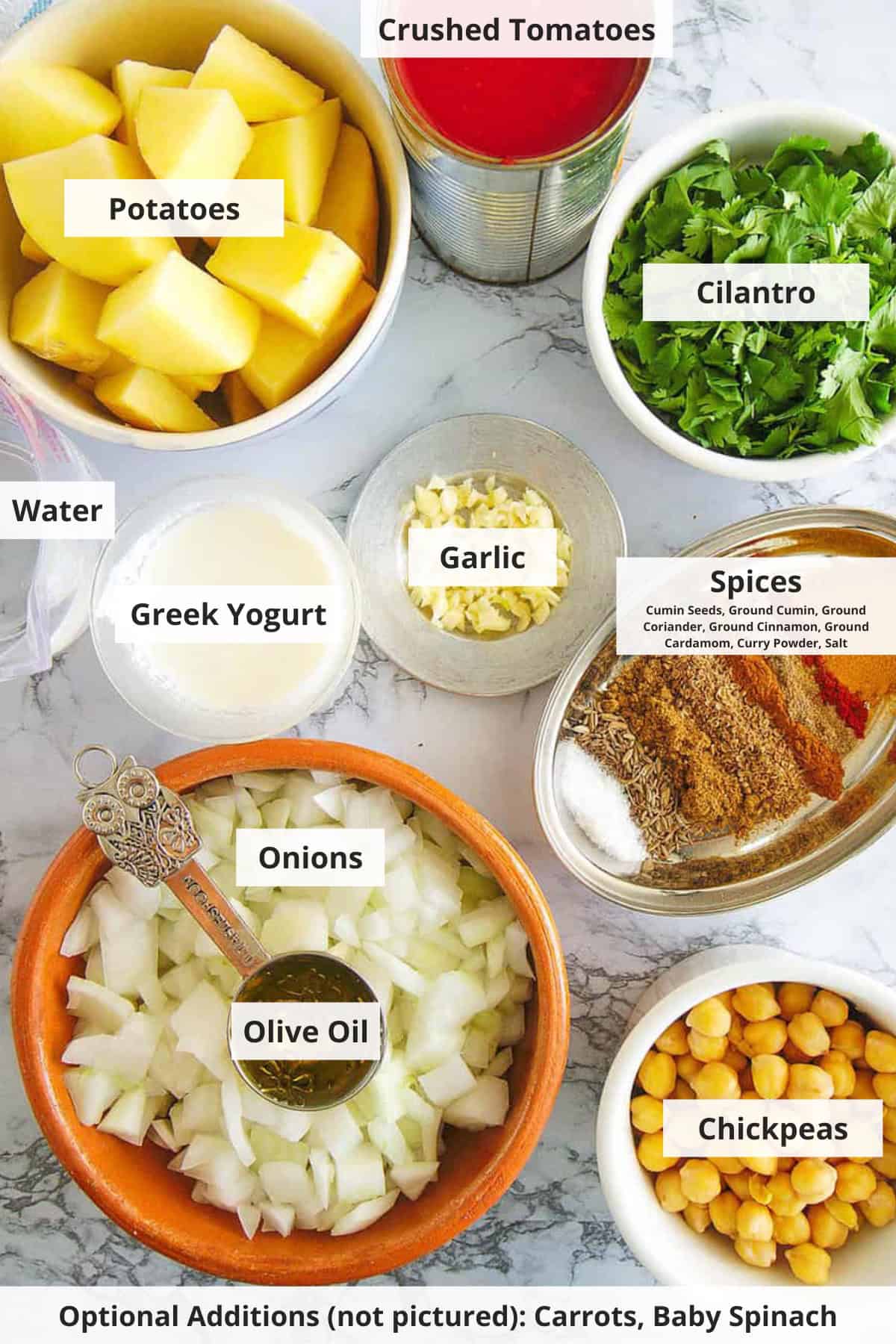
Olive Oil: I use extra virgin olive oil to sauté the aromatics and help the spices bloom. Any neutral oil like avocado oil or coconut oil also works well.
Aromatics And Vegetables: I like to use red or yellow onion diced small, fresh garlic cloves minced, new potatoes quartered and scrubbed (baby red potatoes work great too), and whole carrots diced. For extra greens, I add baby spinach chopped in the last 5 minutes of cooking.
Spices: I chose a combination of cumin seeds and ground cumin because the seeds add texture and the ground spice gives depth. I also use ground coriander, ground cinnamon, cardamom, and curry powder to build layers of flavor. If I only have ground cumin, I use 1 ½ teaspoons total since cumin seeds are milder than ground cumin.
Chickpeas: I use canned chickpeas rinsed and drained to save time and add plant protein. I rinse them well to remove excess sodium from the canning liquid.
Tomatoes: I always recommend crushed tomatoes, preferably fire roasted, to create a base that breaks down into a rich sauce as it cooks. The fire roasted version adds a subtle smoky flavor that makes this curry taste even more complex.
Fresh Cilantro: I use fresh cilantro chopped and stirred in at the end to add brightness and fresh flavor.
Substitutions
Potatoes: I usually use new potatoes or baby red potatoes, but yukon gold or russet potatoes cut into 1 inch cubes work well. Keep in mind that waxy potatoes like yukon gold hold their shape better than starchy potatoes.
Chickpeas: Instead of canned chickpeas, I sometimes use dried chickpeas soaked overnight and pressure cooked for 12 minutes. Homemade chickpeas have slightly more protein and fiber than canned.
Spices: I typically use the full spice blend listed, but if I’m short on time I use 2 tablespoons of curry powder instead of all the individual spices. The flavor will be different but still delicious.
Greens: Instead of baby spinach, kale or Swiss chard works well. I recommend chopping them smaller since they take longer to wilt than spinach.
🔪 How To Make
These are the steps I use to make sure this curry comes out perfectly every time:
Prep Vegetables: I chop all my vegetables first so everything is ready when I need it. This makes the cooking process much smoother and prevents the spices from burning while I’m still cutting ingredients.
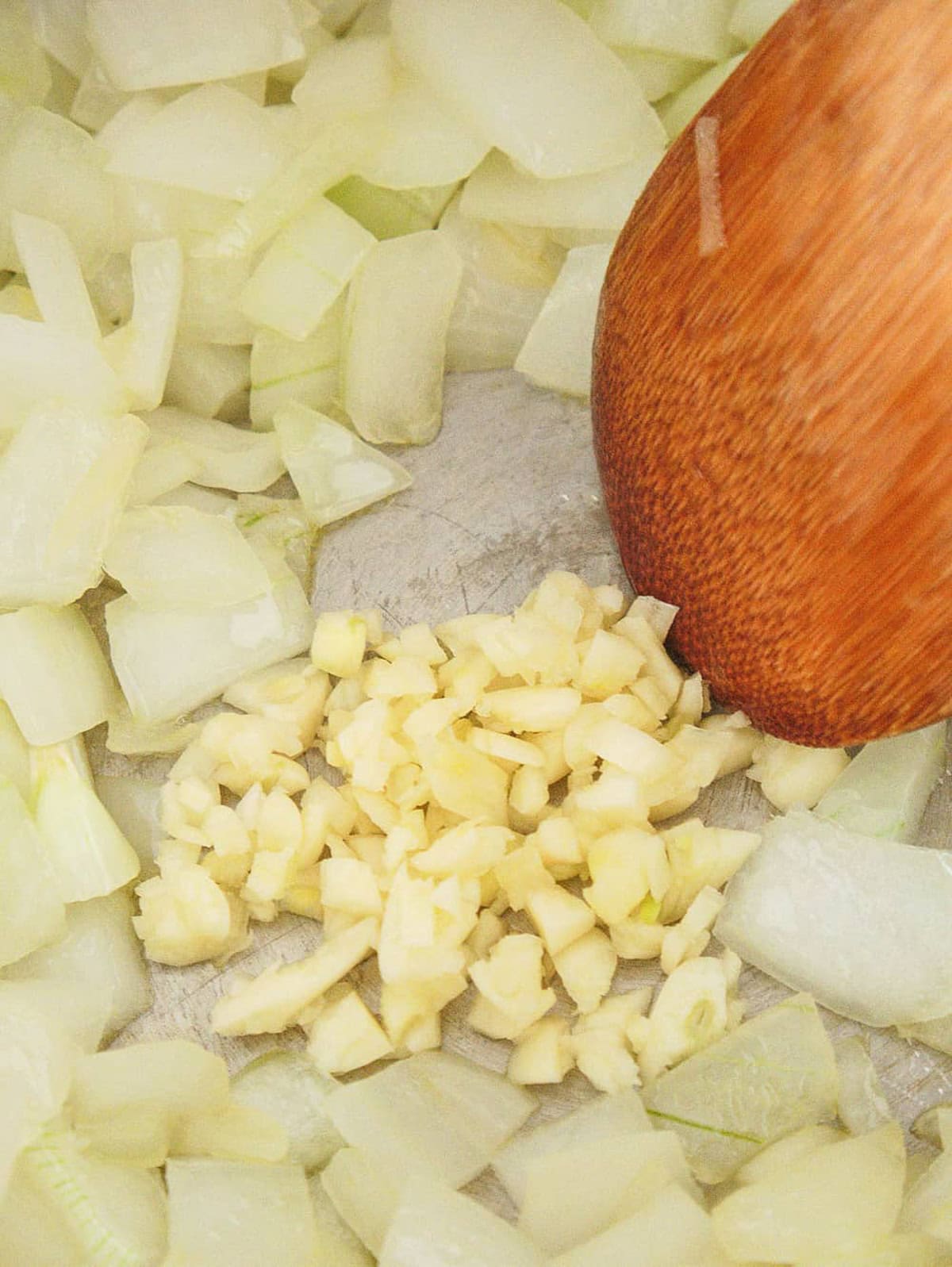
Sauté Aromatics: I heat olive oil in a Dutch oven or large pot over medium heat. I add the onions and cook, stirring often, until they become fragrant and begin to brown, about 5 to 6 minutes. I add the garlic and cook, stirring, until fragrant, about 1 minute.
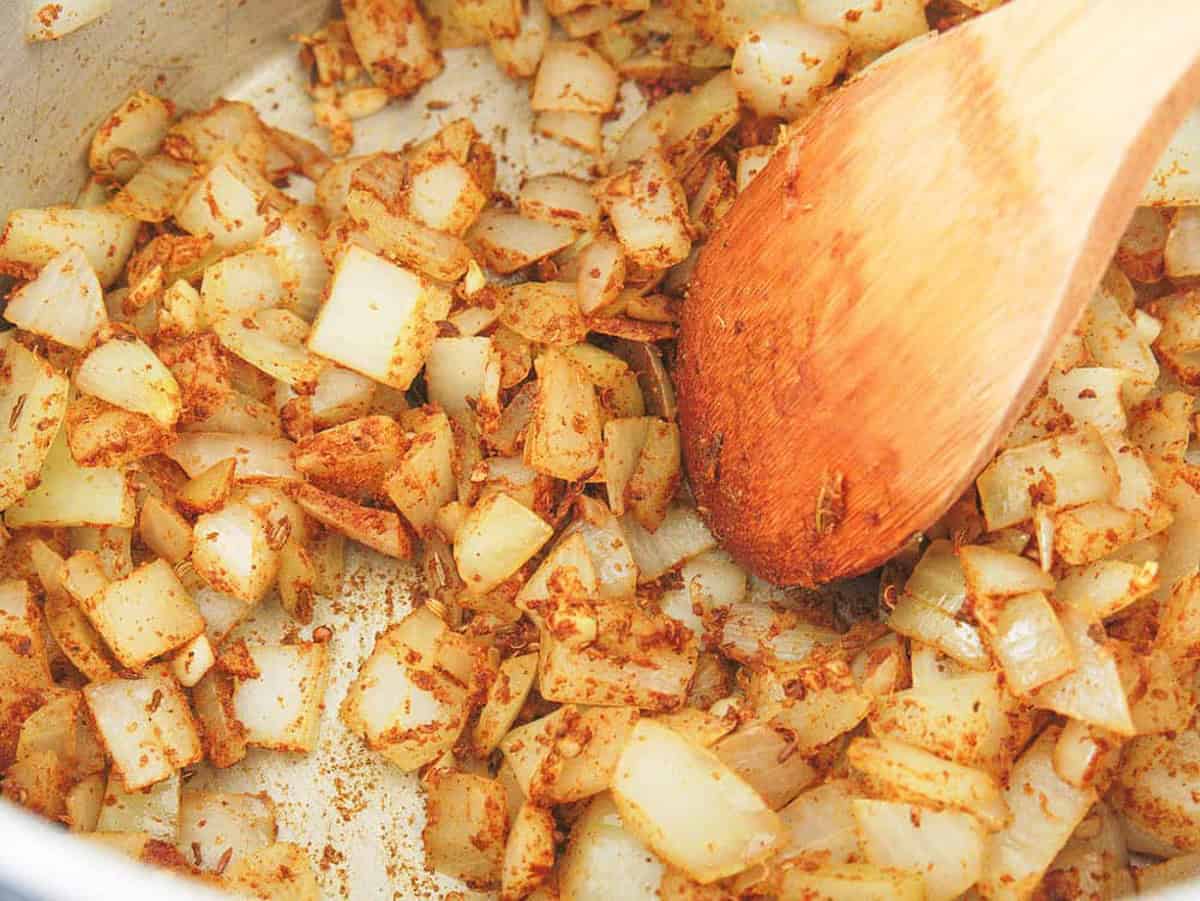
Toast Spices: I add the cumin seeds, ground cumin, coriander, cinnamon, cardamom, and curry powder and cook, stirring, until fragrant, 30 to 60 seconds. I watch carefully during this step because spices can burn quickly.
Add Potatoes And Carrots: I stir in the potatoes, carrots, water, and salt and bring everything to a simmer. I cover and cook for 10 minutes so the potatoes start to soften.
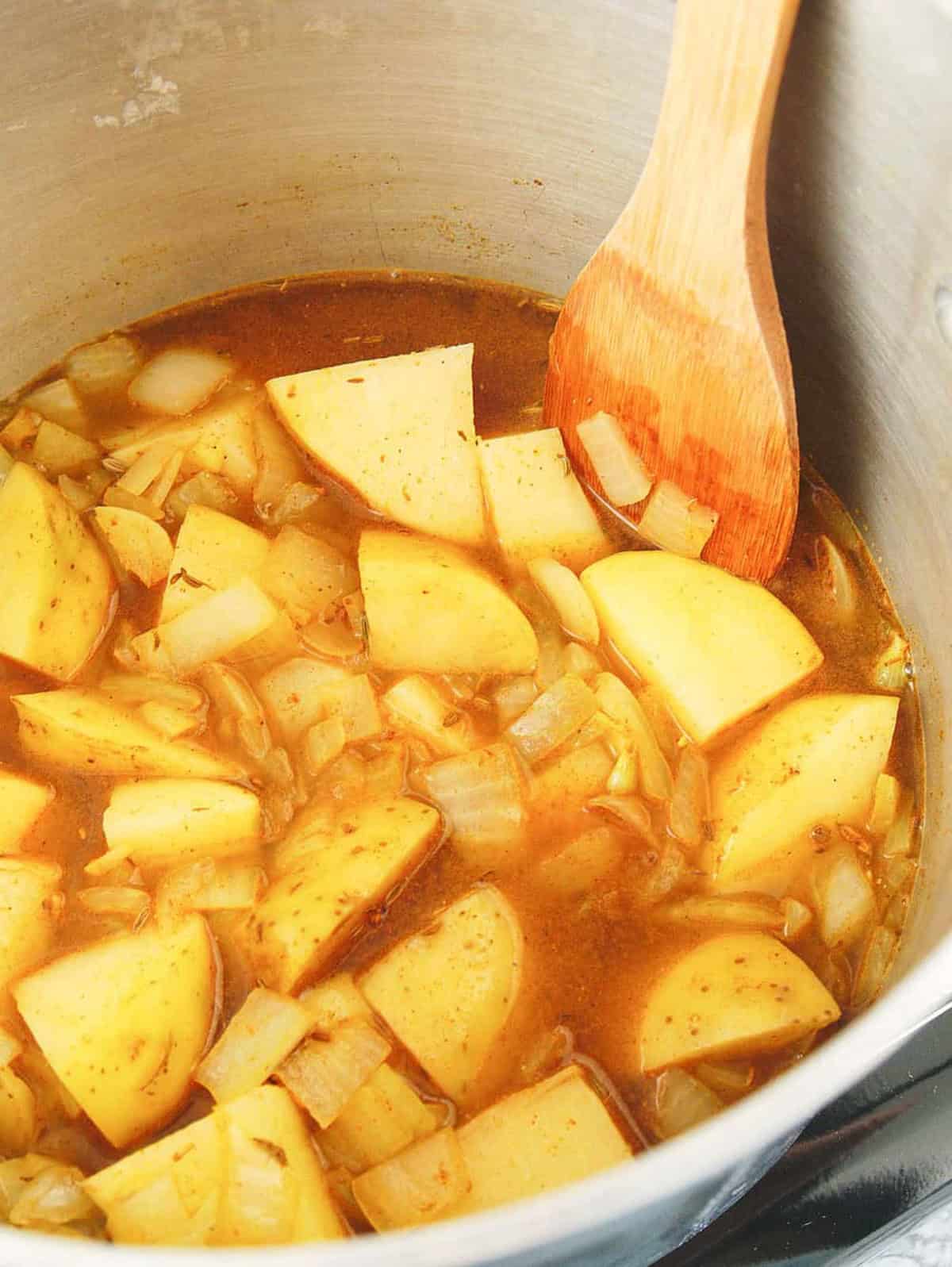
Add Chickpeas And Tomatoes: I add the chickpeas and crushed tomatoes and stir to combine. I bring the curry to a simmer, then reduce the heat to low and simmer partially covered, stirring occasionally, until the potatoes are tender, 30 to 35 minutes. I add 1/2 cup water if needed to keep the curry from getting too thick.
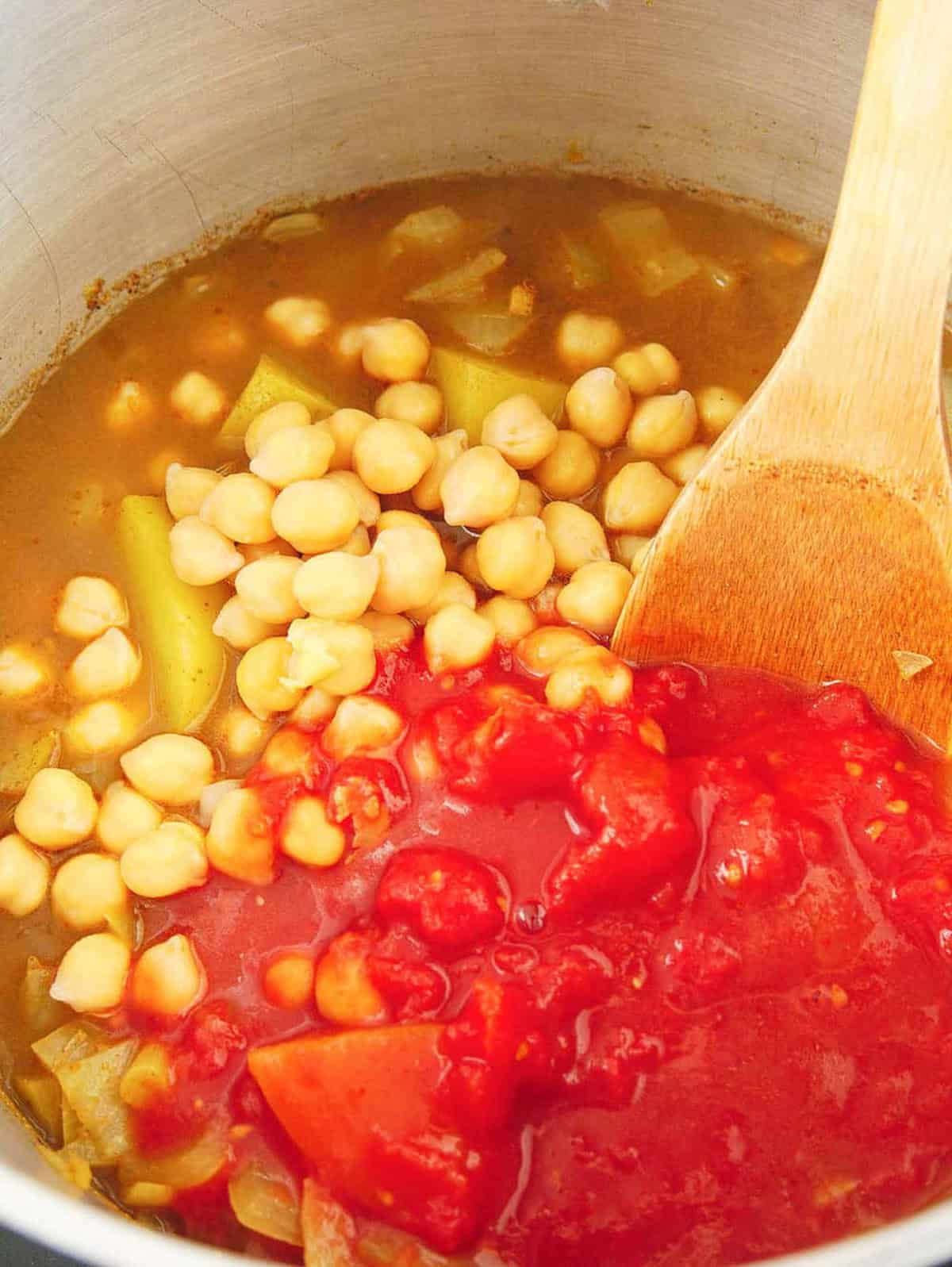
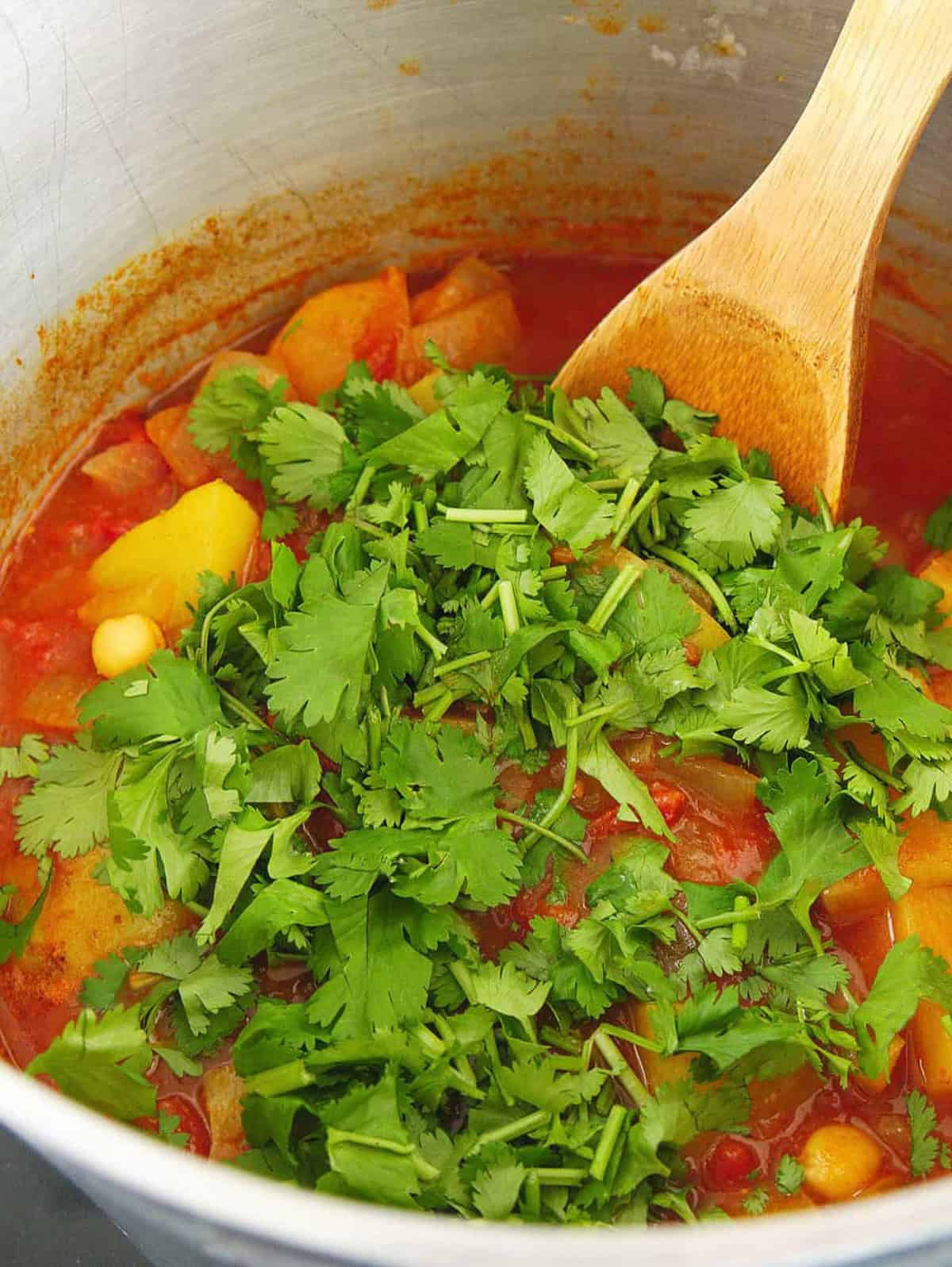
Finish With Greens: If using baby spinach, I add it when there is 5 minutes left in the cooking time. I stir in the cilantro at the end right before serving.
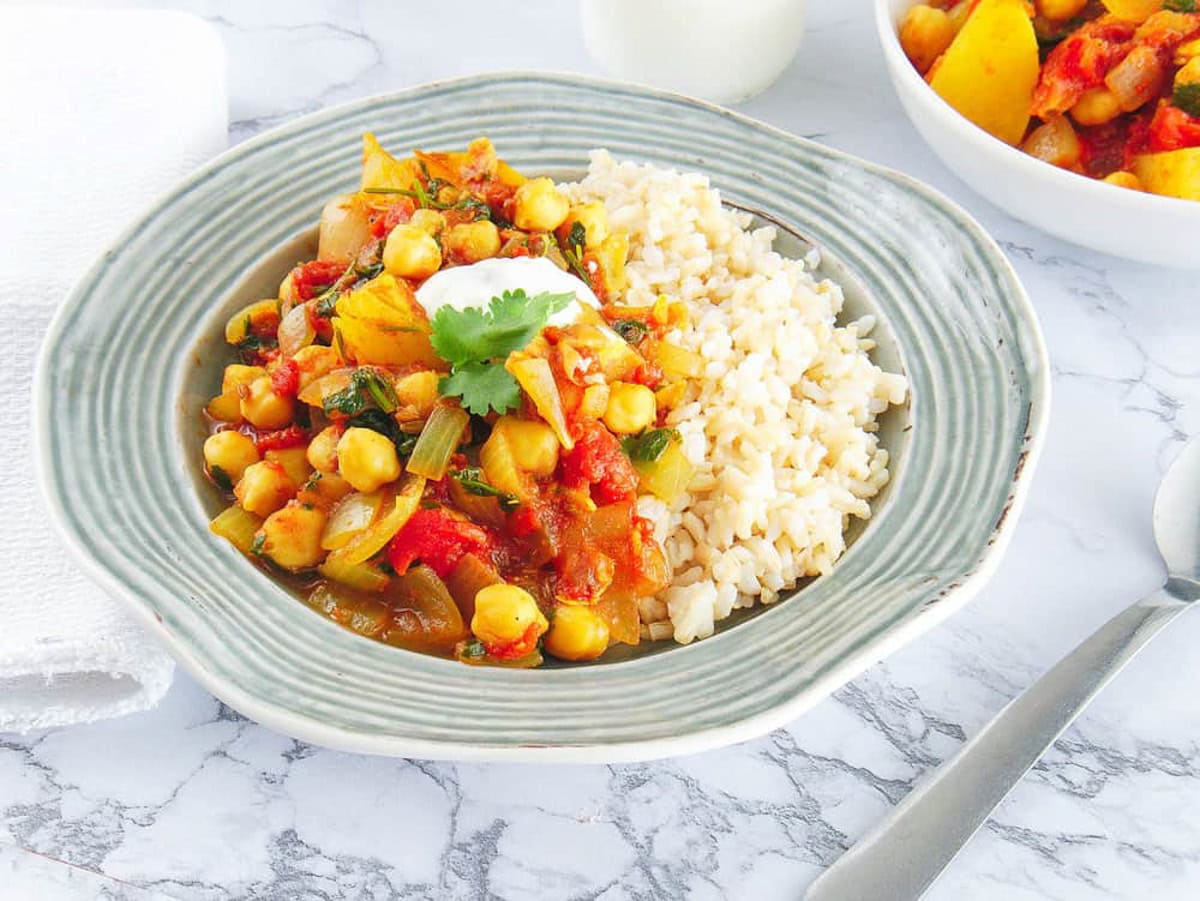
Serve Warm! I like to serve this immediately, with rice or naan on the side for a complete meal.
My #1 Secret Tip for this recipe is to toast the spices in the oil with the onions and garlic before adding any liquid. This step releases the essential oils in the spices and creates a much deeper flavor than if you just add them to the curry later. I stir constantly for 30 to 60 seconds until I can smell the spices becoming fragrant.
Other Tips To Keep In Mind:
- Use Fresh Spices: I always use the freshest spices I can find because they have a more distinct flavor than older spices that have been sitting in my pantry for years. I replace my spices every 6 to 12 months for the best results.
- Cut Potatoes Evenly: I make sure to cut the potatoes into similar sized pieces so they cook at the same rate. Uneven pieces mean some will be mushy while others are still firm.
- Don’t Skip The Simmer Time: I let the curry simmer for the full 30 to 35 minutes so the flavors have time to develop and the sauce thickens. Rushing this step results in a watery curry that doesn’t taste as rich.
- Add Water As Needed: I check the curry every 10 minutes during the simmer time and add 1/4 to 1/2 cup water if it looks too thick. The curry should have a thick gravy like consistency that coats the back of a spoon.
- Let It Rest: I leave the curry on the counter for 5 to 10 minutes after cooking so the flavors can settle. This makes it easier to serve and the sauce clings better to the chickpeas and potatoes.
📖 Variations
I like switching up this curry with different flavors and ingredients I have on hand. Here are some of the variations I use the most:
Coconut Cream: I stir in 1/2 cup of full fat coconut milk during the last 5 minutes of cooking. This creates a creamy, rich curry that my kids absolutely love!
Extra Veggie Loaded: I add 1 cup of chopped zucchini and 1/2 cup of frozen peas (or extra greens) along with the chickpeas. The extra vegetables make the curry even heartier and add more nutrients.
Spicy: I add 1/4 teaspoon of cayenne pepper, 1/4 teaspoon of crushed red pepper, or 1 diced green chili with the other spices. Another option is to serve the curry with hot sauce on the side so everyone can adjust their own spice level.
🍽 Serving Suggestions
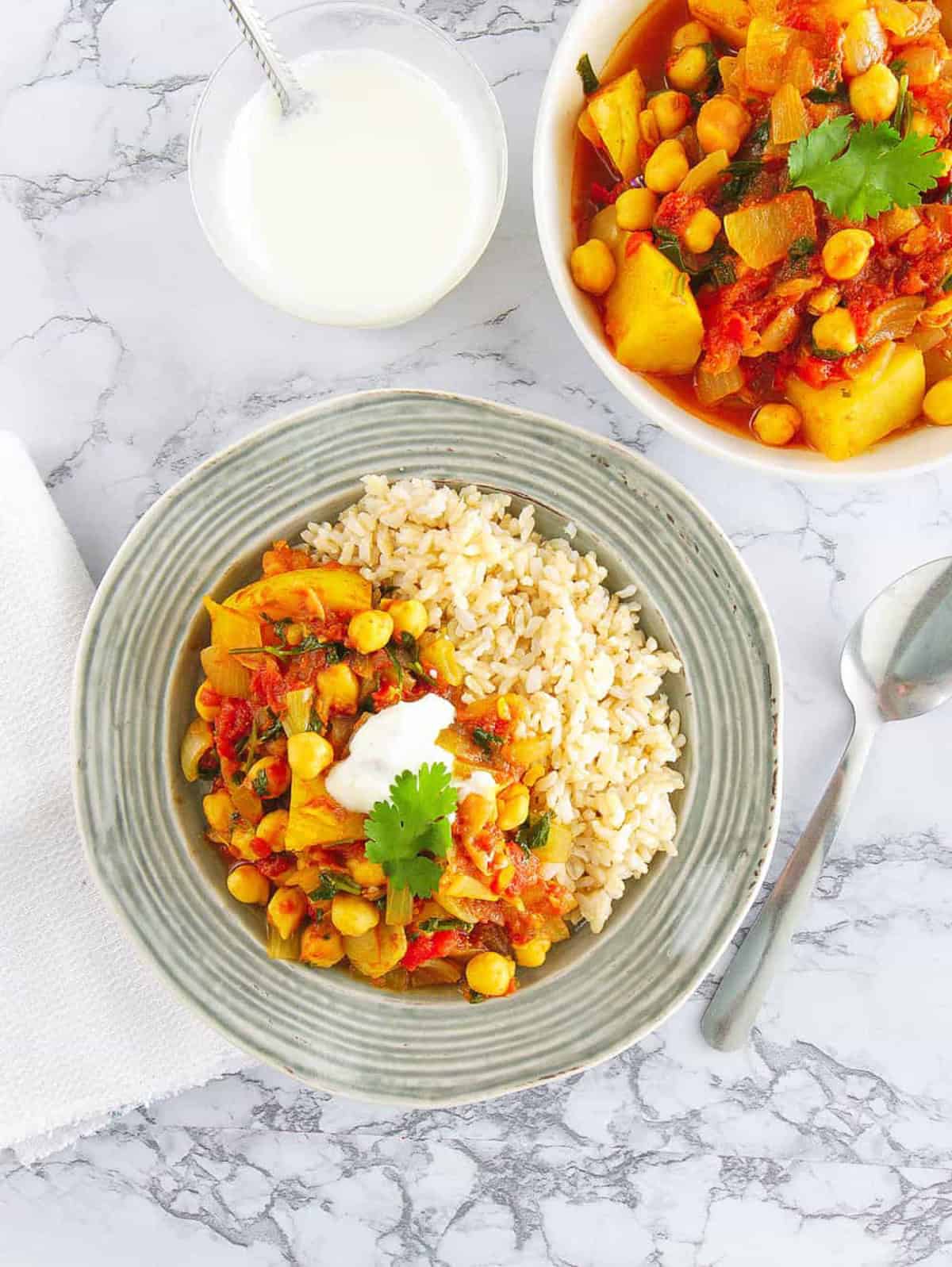
I typically serve this curry with brown rice, millet, or quinoa on the side. The grains soak up all that sauce and make it a complete meal. For a fancier grain, I’ll serve it with my vegan biryani. I also love pairing it with my homemade vegan naan bread or sprouted wheat tortillas for scooping.
When I want some extra protein, I add a dollop of plain Greek yogurt on top (the cool tang balances the spices perfectly), or I make a cucumber raita for extra freshness. For a full Indian feast, I make my cauliflower sabzi with peas and carrots or this vegetable vindaloo alongside the curry.
🧊 Storage Directions
Refrigeration: I let the curry cool completely, then transfer it to an airtight container. I store it in the fridge for up to 4 days. The flavors actually get better after a day or two!
Freezing: I freeze portions of the completely cooled curry in airtight containers or freezer bags for up to 3 months. I thaw it in the fridge overnight before reheating.
Reheating: I place the curry in a pot over medium heat and warm it for 5 to 10 minutes, stirring occasionally, until hot all the way through. Another option is to reheat in the microwave in 1 to 2 minute intervals. I add a splash of water or vegetable broth if the curry looks too thick after reheating.
❓Recipe FAQs
When my potatoes turn to mush, it’s usually because I cut them too small or stirred the curry too much during cooking. I make sure to cut the potatoes into 1 inch pieces and only stir the curry every 10 minutes or so to check on it. Waxy potatoes like new potatoes or yukon gold also hold their shape better than starchy russet potatoes.
A bland curry happens if you don’t toast the spices long enough, don’t use enough salt, or use old spices that have lost their flavor. I always toast the spices with the onions and garlic for 30 to 60 seconds until fragrant, and I use fresh spices whenever possible. Adding extra salt at the end to taste also helps bring out all the flavors.
If my curry turns out too thin, I simmer it uncovered for an extra 10 to 15 minutes so more liquid evaporates. Another option is to mash a few spoonfuls of the potatoes and chickpeas with the back of a fork, then stir them back into the curry to naturally thicken the sauce.

Love this plant based indian recipe? Please leave a 5-star rating 🌟 in the recipe below and/or a review in the comment section further down the page!
You can also FOLLOW ME on FACEBOOK, INSTAGRAM, and PINTEREST to see more delicious, healthy, family-friendly food, and if you have any questions, I’m here to help!
📋 Recipe Card
Chickpea And Potato Curry
I make this chickpea and potato curry with tender potatoes, chickpeas, tomatoes, and warming spices in one pot for a satisfying weeknight dinner in under an hour. The curry simmers until thick and saucy with layers of cumin, coriander, and garam masala that remind me of my favorite Chana Masala but with more vegetables for extra heartiness. It’s way easier than takeout and so much better for you!
Servings: 6 servings
Calories: 226kcal
-
Chop all your veggies. Heat oil in a Dutch oven (or a large pot) over medium heat.
-
Add onions to the pot and cook, stirring often, until fragrant and beginning to brown, 5 to 6 minutes. Add garlic and cook, stirring, until fragrant, about 1 minute.
-
Add cumin seed, ground cumin, coriander, cinnamon, cardamom, curry powder and cook, stirring, until fragrant, 30 to 60 seconds.
-
Add potatoes, carrots, water and salt; bring to a simmer. Cover and cook for 10 minutes. Add chickpeas and tomatoes; stir to combine.
-
Bring the stew to a simmer. Reduce heat to low and simmer, partially covered, stirring occasionally and adding 1/2 cup water, if needed, until the potatoes are tender, 30 to 35 minutes. If using baby spinach, add when there are 5 minutes remaining in the cooking process. Stir in cilantro at the end.
-
Once you’re ready to eat, you can serve this with naan, rice or yogurt.
- Chop all your vegetables first for easy preparation.
- Ideally use a dutch oven, if not make sure you have a big enough pot.
- Use a combination of cumin seeds and cumin. If you only have ground cumin use 1 ½ teaspoons total as cumin seeds are not as strong in flavor as ground cumin. Make sure to toast the spices until they are fragrant.
- You can always switch up the veggies in this recipe, or additional veggies of your choice and reduce the amount of potatoes.
- Add or reduce the spices to fit your taste.
- Use fresh spices whenever possible. They have a more distinct flavor.
- Serve this with brown rice, millet, quinoa or any whole grain on the side. You can also serve this with a sprouted wheat tortilla or whole wheat naan and plain Greek yogurt!
Adapted from EatingWell.com
Calories: 226kcal | Carbohydrates: 42.5g | Protein: 9g | Fat: 3.3g | Saturated Fat: 0.4g | Sodium: 802mg | Potassium: 686.5mg | Fiber: 9g | Sugar: 1.9g