
This post may contain affiliate links. As an Amazon Associate, I earn from qualifying purchases. Please read my disclosure.
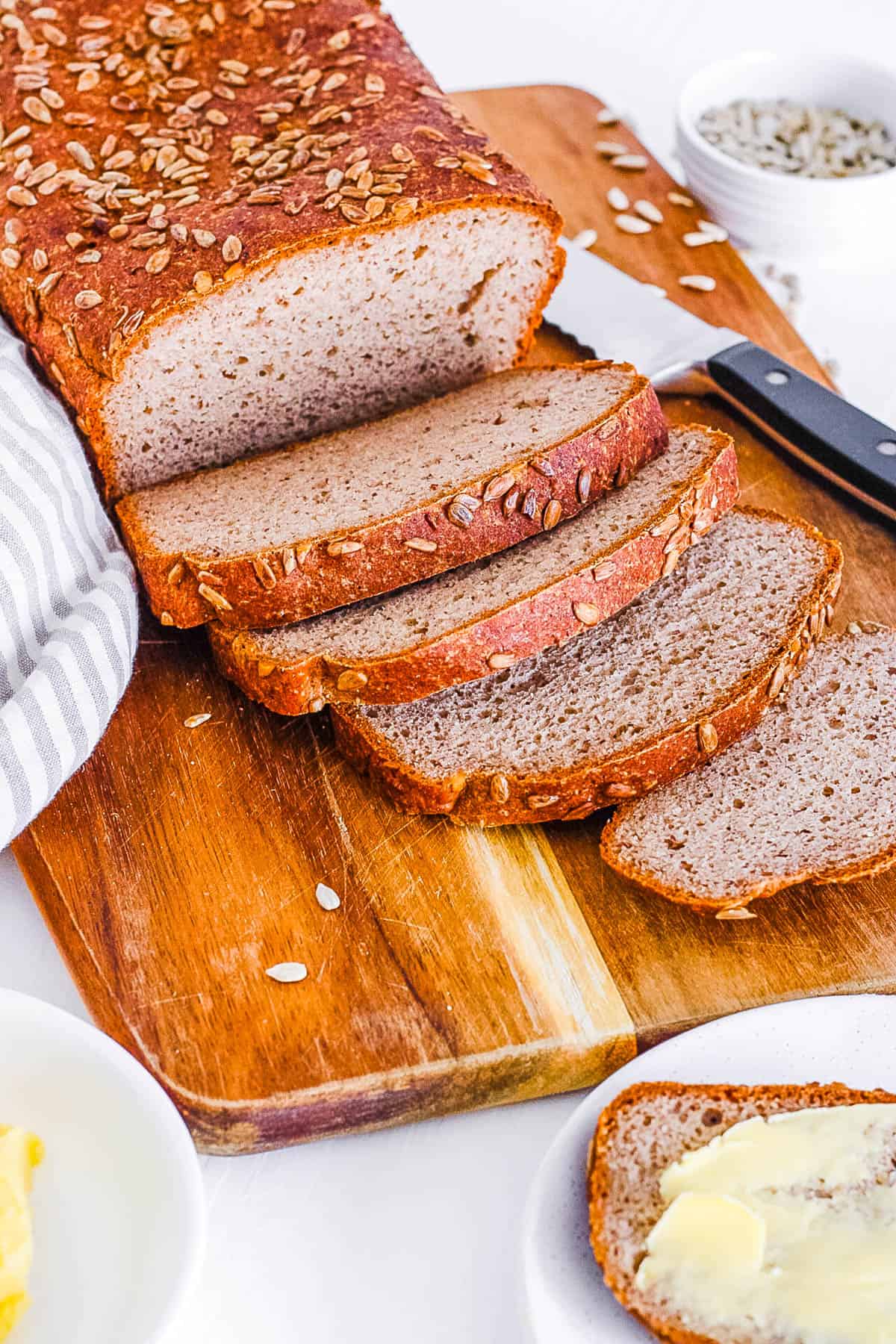
Nothing beats slicing into my homemade buckwheat bread while it is still fresh from the oven. I make it with buckwheat flour, psyllium husk, and yeast, and bake it up into a soft interior with a lightly golden crust. It has a gentle nutty flavor and is ideal for toasting, sandwiches, or as a side for soups.
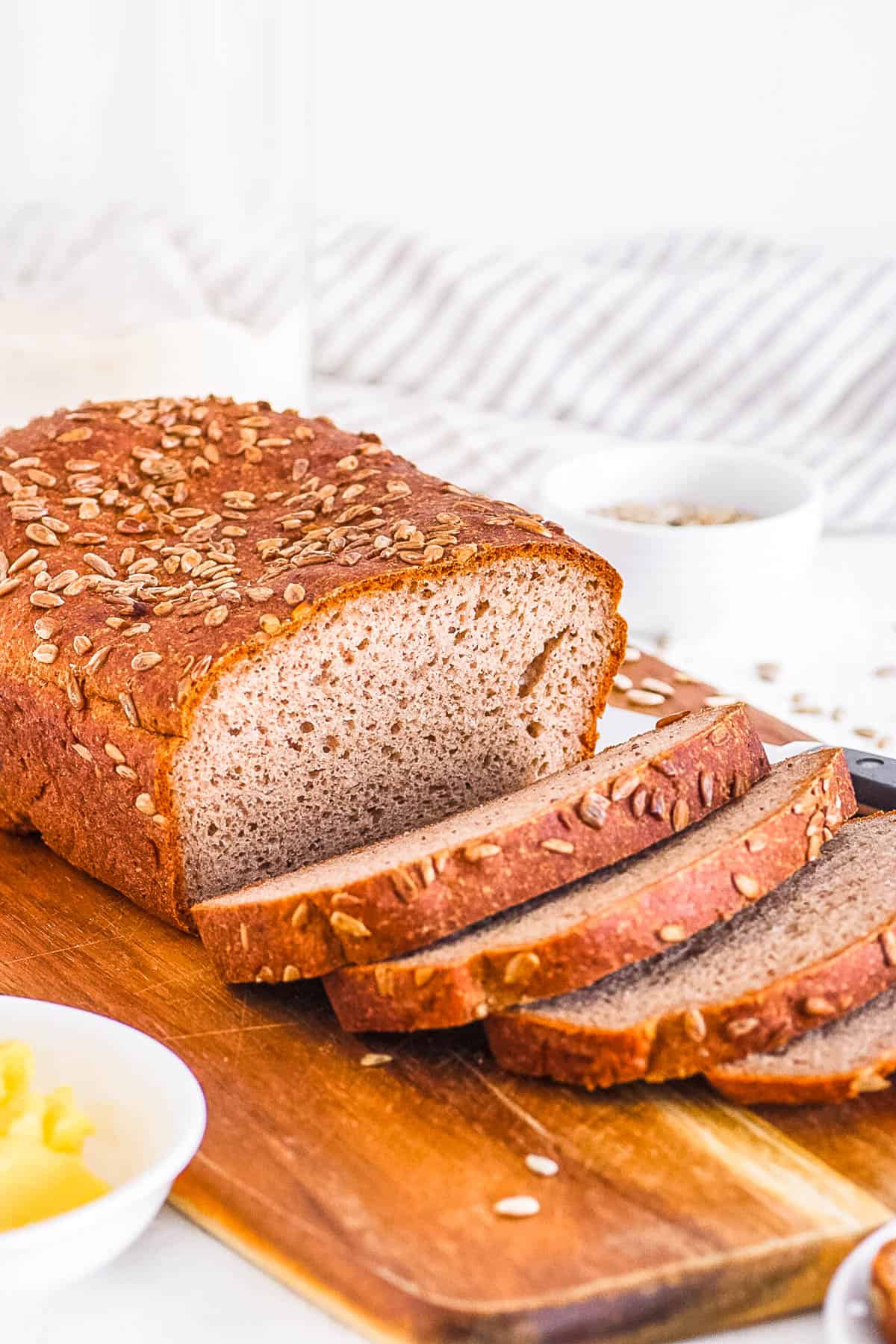
This homemade buckwheat bread is a wonderful option when I want something hearty with more character and wholesome ingredients than store-bought bread. It is also my recipe of choice when I do not have the time to bake my easy buckwheat sourdough bread. If you like bread that does more than just hold toppings, try this buckwheat bread recipe, and enjoy the earthy, nutty taste that pairs well with sweet and savory toppings.
I created this recipe when I got bored with my same-old bread recipes. And even after trying out most of the healthy bread brands, I still missed that unbeatable quality that only homemade bread can offer. Many of my earlier versions were too heavy, and it took a few attempts before I got the texture just right. Of course, I made sure not to give it to my picky eaters until I had perfected this loaf. They are, after all, my biggest and most adorable critics. The first time I made it for them, they tried to con me into letting them have it with Nutella, claiming they might like it more that way. Ha! Nice try.
Homemade bread is incredibly easy to make, but this homemade buckwheat bread has that freshly made flavor and an impressive nutrient profile. I love using buckwheat as it is packed with high-quality protein, fiber, and antioxidants that may support heart health. The flaxseed and psyllium improve digestive health while helping to create a softer crumb. As a nutritionist and a mom, I respect that a staple food item like bread can do so much with such basic ingredients.
Despite this bread being vegan, it does not differ very much from traditional bread when it comes to the technique. One stark difference is that I begin by creating my flax egg, and give it time to thicken up while I combine my dry ingredients in a stand mixer. Then I add the flax egg along with my other wet ingredients to the mixer and stir with a paddle attachment. Once my dough has formed, I spread it into the loaf pan and let it rise just once before baking, until it has formed a crispy crust.
This homemade buckwheat bread is made so frequently in my house that my husband can make it with his eyes closed. At our last dinner party, we had a few of my husband’s colleagues over, and served this bread alongside some soup. Everyone kept directing compliments to me, but I made sure to tell them it was my husband’s handiwork. A few colleagues were skeptical, and as proof, my husband took a freshly baked loaf to work while I was traveling. He proved his point, but he also came home with about 6 bread orders. Ha! Make this loaf as part of your next meal prep, but be prepared to never go back to store-bought loaves again.
Latest Recipe Video!
🥘 Ingredients
For this buckwheat bread, I use basic baking staples that I almost always have on hand. This is everything I use:
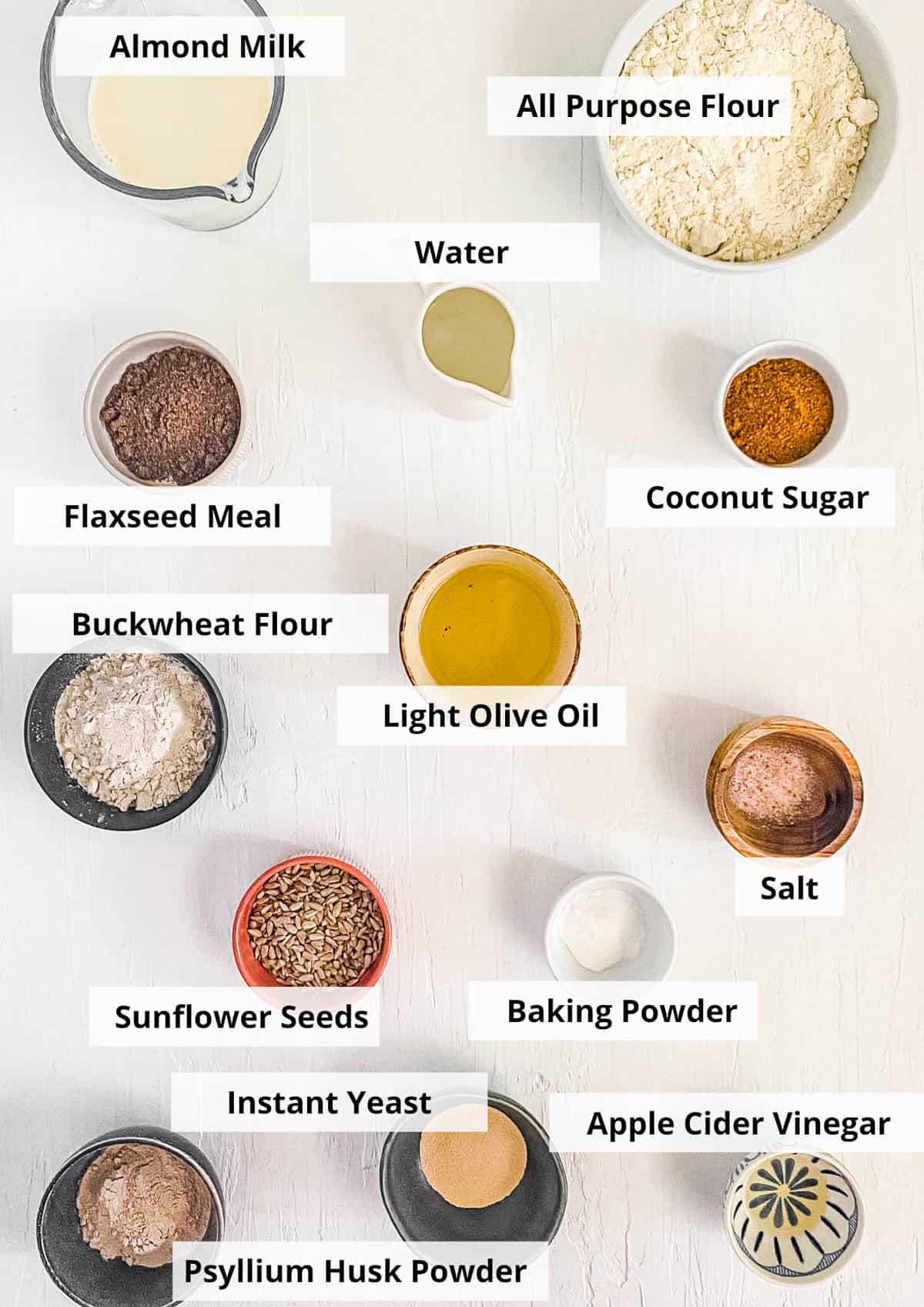
Flax eggs: I use ground flaxseed and water to make flax eggs for binding.
Buckwheat flour: This adds the signature nutty flavor and impressive nutrient profile.
Psyllium husk powder: I use this for elasticity and structure.
Leavening agents: Baking powder and instant yeast give my loaf a good rise and a fluffy texture.
Coconut sugar: I add a touch for balance and to help activate the yeast.
Olive oil: A mild olive oil adds richness and moisture without needing butter.
Apple cider vinegar: This supports the rise and flavor.
Almond milk: I use this to hydrate the dough.
Sunflower seeds: A scattering of sunflower seeds over the top of the unbaked dough provides a delicious crunch once the bread is baked.
🔪 How To Make
The process for making this homemade buckwheat bread is quite simple and very hard to mess up. This is how I make it:
Prepare loaf tin: First, I line a loaf pan with parchment paper.
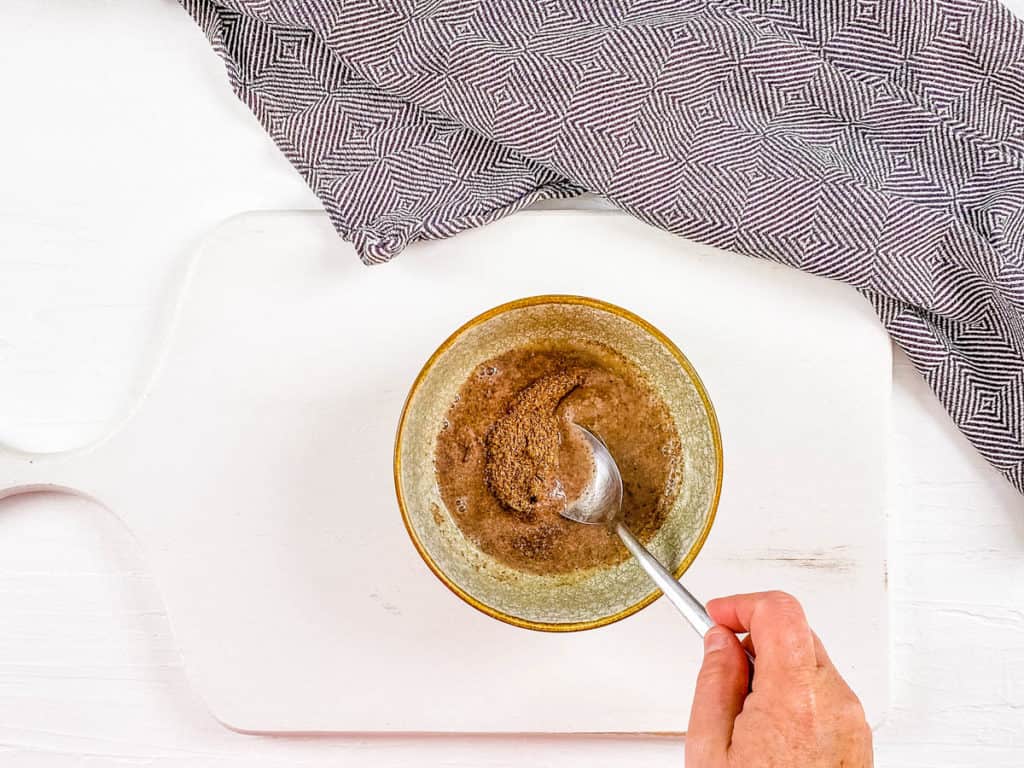
Make flax eggs: Then I stir my ground flaxseed with water, set it aside, and allow it to thicken for a few minutes.
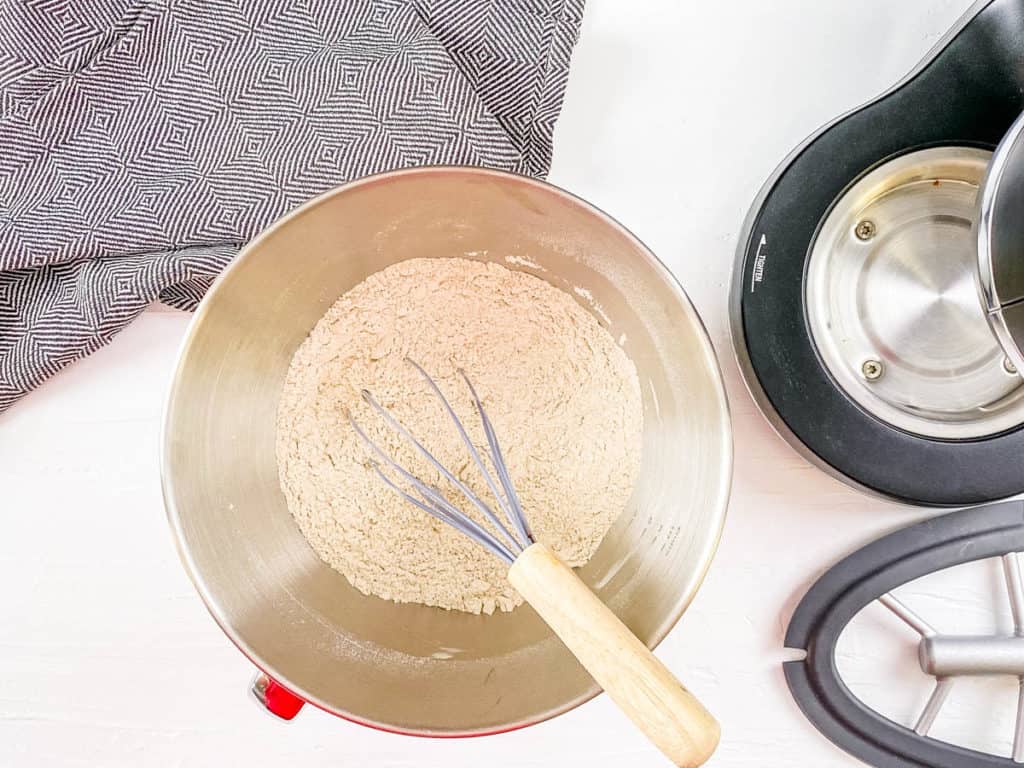
Combine dry ingredients: Next, I add the flours, psyllium, baking powder, yeast, sugar, and salt to a stand mixer, and stir until combined.
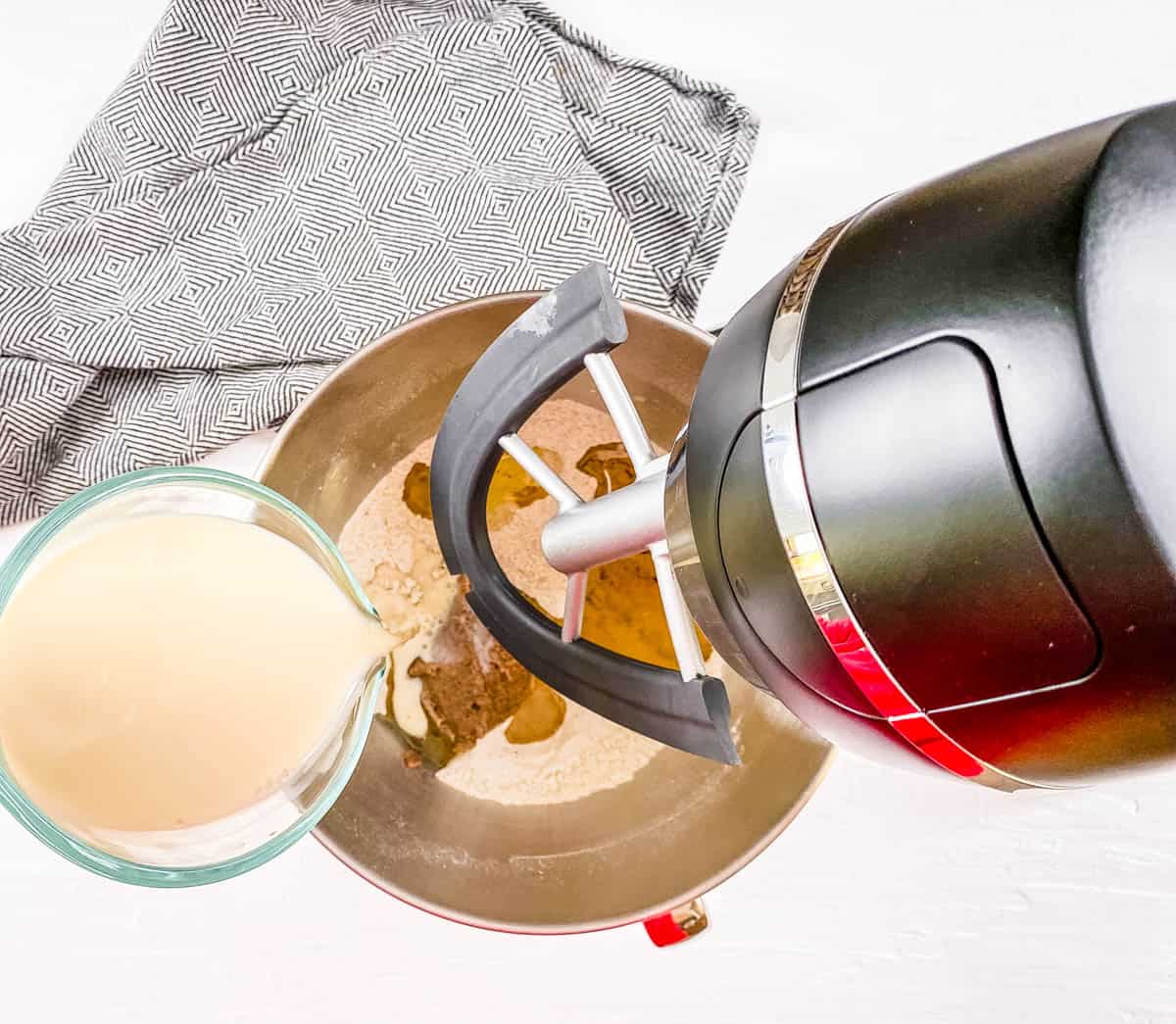
Add wet ingredients: I add the flax mixture, oil, vinegar, and milk to the dry ingredients, and mix with a paddle attachment until smooth and sticky.
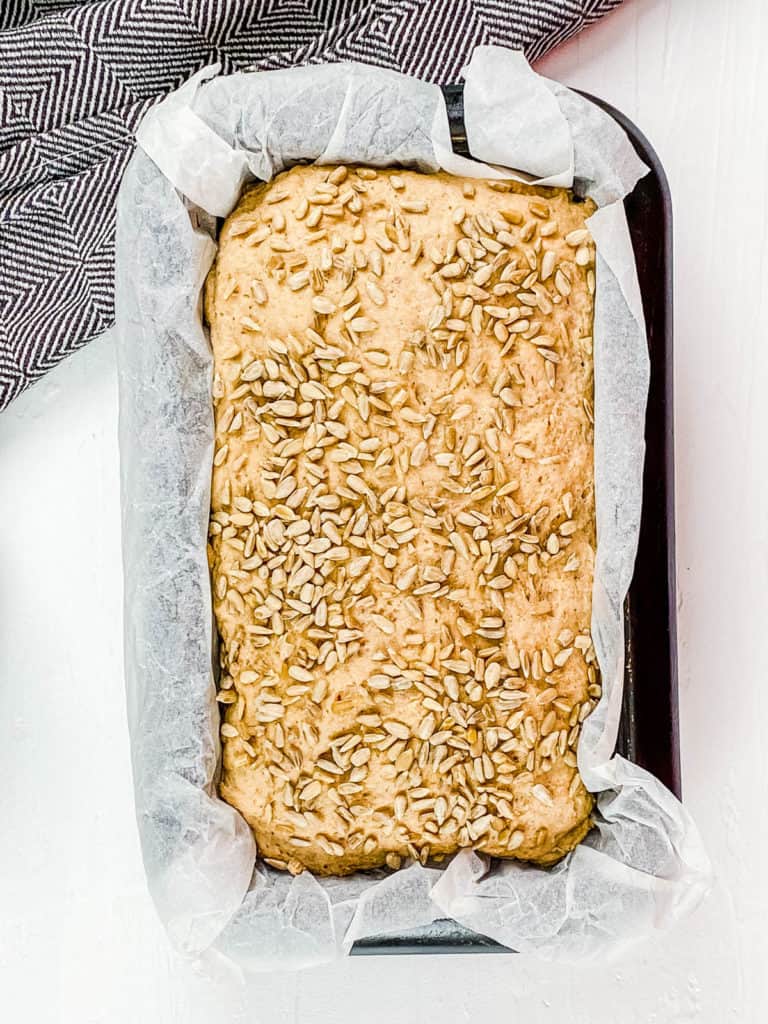
Let the dough rise: Then I spread the dough mixture into the prepared pan, top with seeds, cover loosely, and let rise until it has doubled.
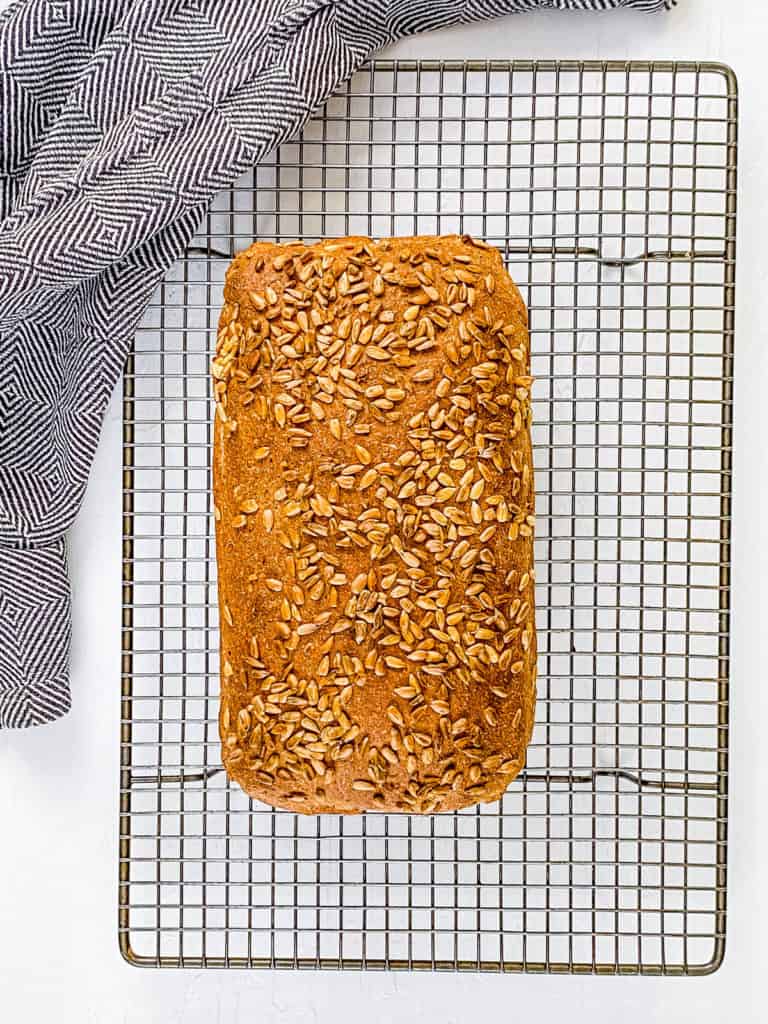
Bake bread: I bake the bread in a 350F preheated oven for 45-50 minutes. It is ready when it is crusty on the outside and sounds hollow when tapped. I remove it from the oven and let it cool in the pan for 5 minutes, then transfer it to a wire rack to cool completely.
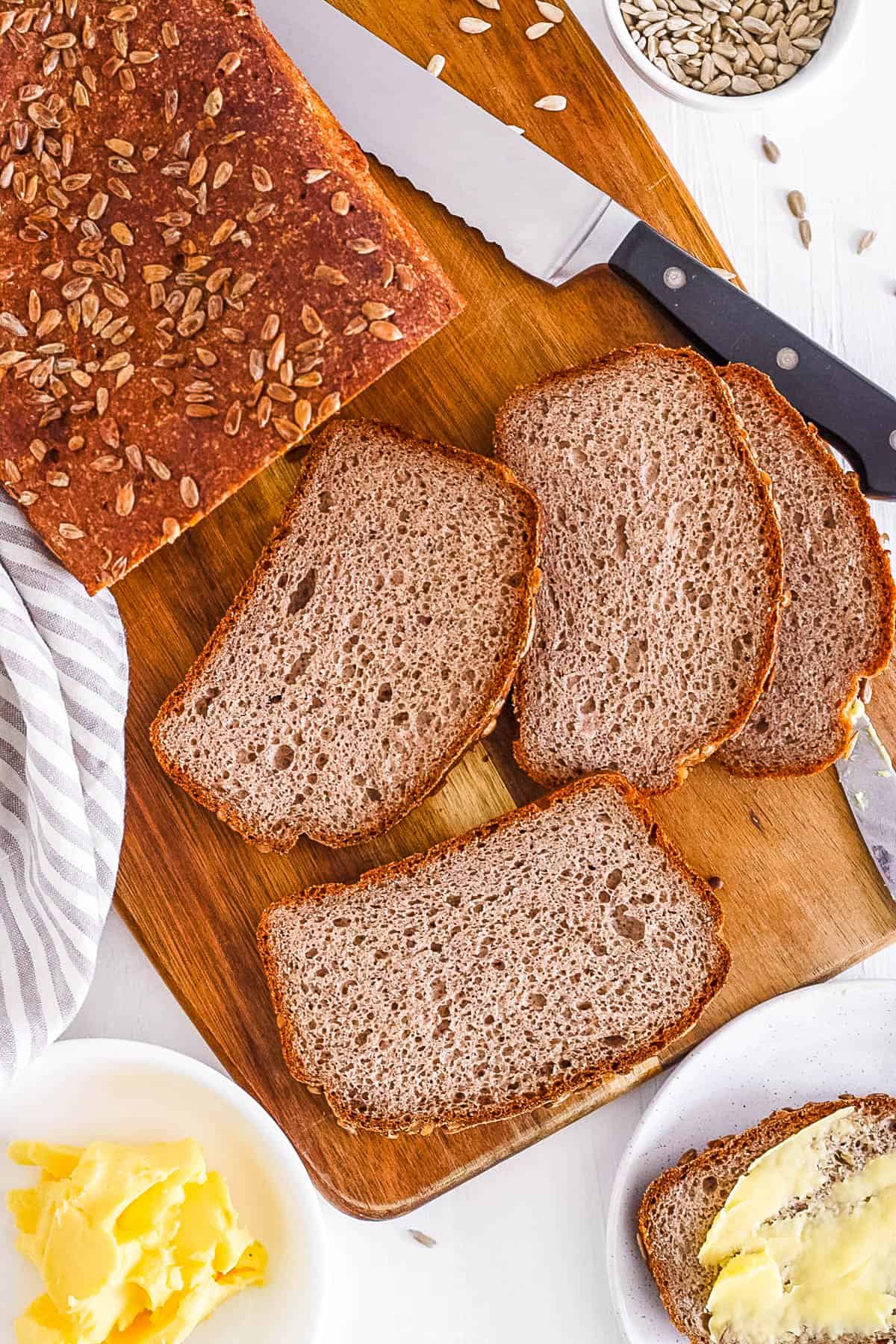
Slice and serve: Once cooled, I slice the bread and serve it immediately or store it for later.
My #1 Secret Tip for this homemade buckwheat bread recipe is to let the dough rise fully before baking. If the loaf goes into the oven too early, it can turn out short and dense. I do not limit the dough to how long it has to rise. I prefer to wait until the dough looks puffed and noticeably larger, preferably double in size.
Other Tips To Keep In Mind:
- Preheat 15 minutes before the rise ends: I try to gauge when my dough is going to be done rising, then start preheating my oven 15 minutes before the rise is complete.
- Wet spatula: I use a damp spatula to spread the sticky dough neatly into the loaf tin.
- Line pan: Lining the loaf pan with parchment paper allows for easy removal.
- Check dates: I check the expiry dates on my leavening agents. And if my baking powder has not been stored properly, I use a fresh batch. Expired ingredients may not be able to activate enough to give the loaf an adequate rise.
📖 Variations
I keep the variations for this homemade buckwheat recipe simple, but noticeable. These are 3 variations I highly recommend:
Seeded top: I add a blend of pumpkin and sesame seeds to the sunflower seeds for a crunchier top. I love this variation and use it when I am using this loaf for sandwiches.
Whole wheat: Replacing 1/2 cup of the regular flour with whole wheat flour gives my bread added fiber and nuttiness. I like making this loaf during meal prep and serving it with soups that have a low fiber content.
Chia Boost: Before transferring the dough into the pan, I gently work through 2 tablespoons of chia seeds. This adds extra texture as well as plant-based protein. I like serving this version toasted for breakfast as it does a great job of sustaining everyone until their next meal.
🍽 Serving Suggestions
The possibilities are endless when it comes to topping and serving this homemade buckwheat bread. You could keep it simple and enjoy it with a thick spread of my pumpkin seed butter, or you could use it for a vegan egg salad sandwich. I also recommend trying out my smashed chickpea salad sandwich with this bread for a nutrient-dense lunchtime meal.
A few weeks ago, I decided to get extra creative with some old pieces of buckwheat bread that were not as soft as they used to be. I dipped the slices into beaten egg and made French toast. Since it was a weekend, I decided to make breakfast a real treat. I topped each slice with a thin spread of my vegan Nutella and a spoonful of caramelized bananas. It was so good, I am seriously considering making it again, but as a dessert.
🧊 Storing And ♨️ Reheating
Refrigeration: I store the cooled loaf in an airtight container in the fridge for up to 1 week.
Freezing: I slice the bread and freeze well-wrapped portions for up to 3 months.
Reheating: Whether frozen or refrigerated, I toast slices straight from the fridge or freezer, or warm them briefly in the oven.
❓ Recipe FAQs
Crumbly texture is usually a sign that there was either not enough moisture in the dough, or that the loaf was cut while it was still warm. I know it’s tempting to slice bread and serve it steaming hot, fresh from the oven, but I always let the loaf cool completely before slicing with a serrated knife. The psyllium and flax need time to bind as the bread cools, which is why this step is so important.
This is a natural reaction, and there is absolutely nothing to worry about. Buckwheat contains pigments that can turn the dough or crumb a purplish shade during mixing and baking. I promise it is completely safe to eat, and the flavor has not been compromised.
Yes, you can, but be sure to use a 1:1 gluten-free blend that contains xanthan gum. Without it, the loaf may not have the structural quality that allows the bread to slice well.

Love this vegan recipe? Please leave a 5-star rating 🌟 in the recipe below and/or a review in the comments section further down the page!
You can also FOLLOW ME on FACEBOOK, INSTAGRAM, and PINTEREST to see more delicious, healthy, family-friendly food, and if you have any questions, I’m here to help!
📋 Recipe Card
Homemade Buckwheat Bread
Nothing beats slicing into my homemade buckwheat bread while it is still fresh from the oven. I make it with buckwheat flour, psyllium husk, and yeast, and bake it up to a soft interior with a lightly golden crust. It has a gentle nutty flavor and is ideal for toasting, sandwiches, or as a side for soups.
Servings: 16 slices
Calories: 145kcal
- My #1 Secret Tip for this homemade buckwheat bread recipe is to let the dough rise fully before baking. If the loaf goes into the oven too early, it can turn out short and dense. I do not limit the dough to how long it has to rise. I prefer to wait until the dough looks puffed and noticeably larger, preferably double in size.
- Preheat 15 minutes before the rise ends: I try to gauge when my dough is going to be done rising, then start preheating my oven 15 minutes before the rise is complete.
- Wet spatula: I use a damp spatula to spread the sticky dough neatly into the loaf tin.
- Line pan: Lining the loaf pan with parchment paper allows for easy removal.
- Check dates: I check the expiry dates on my leavening agents. And if my baking powder has not been stored properly, I use a fresh batch. Expired ingredients may not be able to activate enough to give the loaf an adequate rise.
Serving: 1slice | Calories: 145kcal | Carbohydrates: 19g | Protein: 3g | Fat: 7g | Saturated Fat: 1g | Polyunsaturated Fat: 1g | Monounsaturated Fat: 4g | Sodium: 109mg | Potassium: 99mg | Fiber: 5g | Sugar: 1g