
This post may contain affiliate links. As an Amazon Associate, I earn from qualifying purchases. Please read my disclosure.
Fresh pasta is unbeaten when it comes to certain dishes, and my homemade vegan pasta is no exception! With just 3 ingredients, I have a dough that rolls out perfectly, and cooks to a silky finish that rivals dried pasta. I use flour, olive oil, and water. That is it. Simple and amazing!
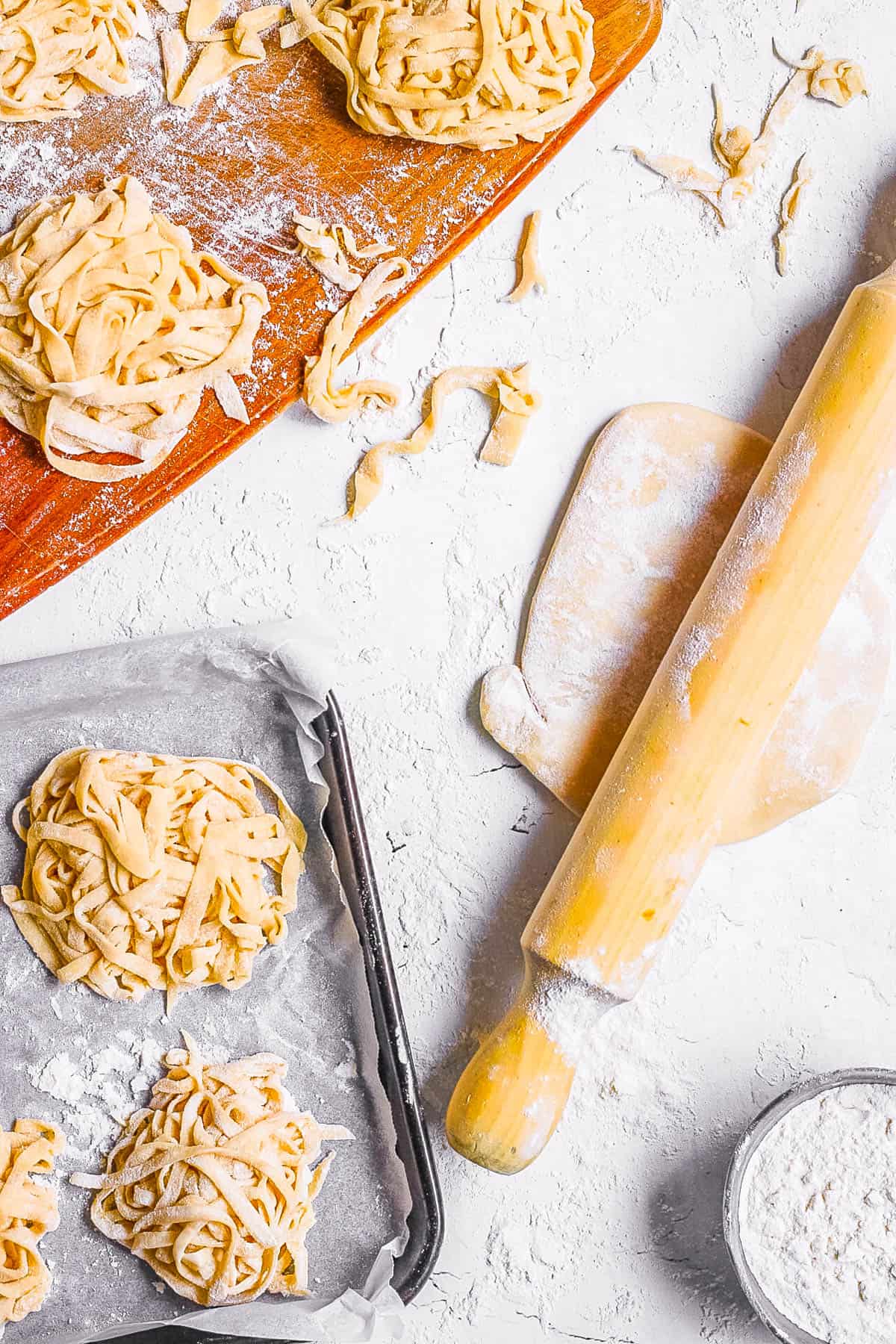
My homemade vegan pasta has a soft texture and a delicate yet distinctive flavor that elevates any pasta dish. I especially love using these noodles in my healthy veggie garlic pasta. If you enjoy pasta dishes that are light on sauce and give the noodles a chance to shine, you should try this recipe. It is fresh and aromatic.
I first started making this vegan pasta when I wanted a version that did not rely on eggs, but still tasted like classic fresh pasta. One of my best friends is strictly vegan and a pasta fiend, but she relies on dried pasta. When she came over for dinner, I cooked a full Italian spread along with a massive bowl of my vegan cacio e pepe, and the difference that the fresh noodles made blew her mind. I deliberately made too much because I knew she would want a second helping, and some to take home.
The texture of this fresh homemade vegan pasta is so satisfying. I use olive oil to add richness without eggs, while the flour forms the structure that gives my noodles a slight chewiness. The result is a soft, but sturdy pasta that holds its shape when cooked, and pairs with a variety of sauces.
The technique for creating the pasta is very simple, but also very important. I combine all the liquid and flour slowly, kneading the dough until smooth, developing the gluten strands. Then I give it ample time to rest so that I have a more pliable dough that rolls out easily and does not shrink while being shaped. Ultimately, these careful steps ensure that my pasta has just the right amount of chewiness and a classic fresh pasta finish.
My sister has always made her own pasta given any opportunity. She even has a fancy pasta maker that creates fantastic shapes. I was making a batch of my vegan pasta one afternoon, while she kept me company in the kitchen, and I noticed her side-eyeing me while rolling and cutting my dough into strips. It was clear that she was wondering when I was going to use my pasta machine. Ha! I could tell that she was skeptical of the finished product, but that all disappeared after her first bite.
Latest Recipe Video!
🥘 Ingredients
I do not think I could have made this ingredients list shorter if I tried. Here are all 3 items I use:
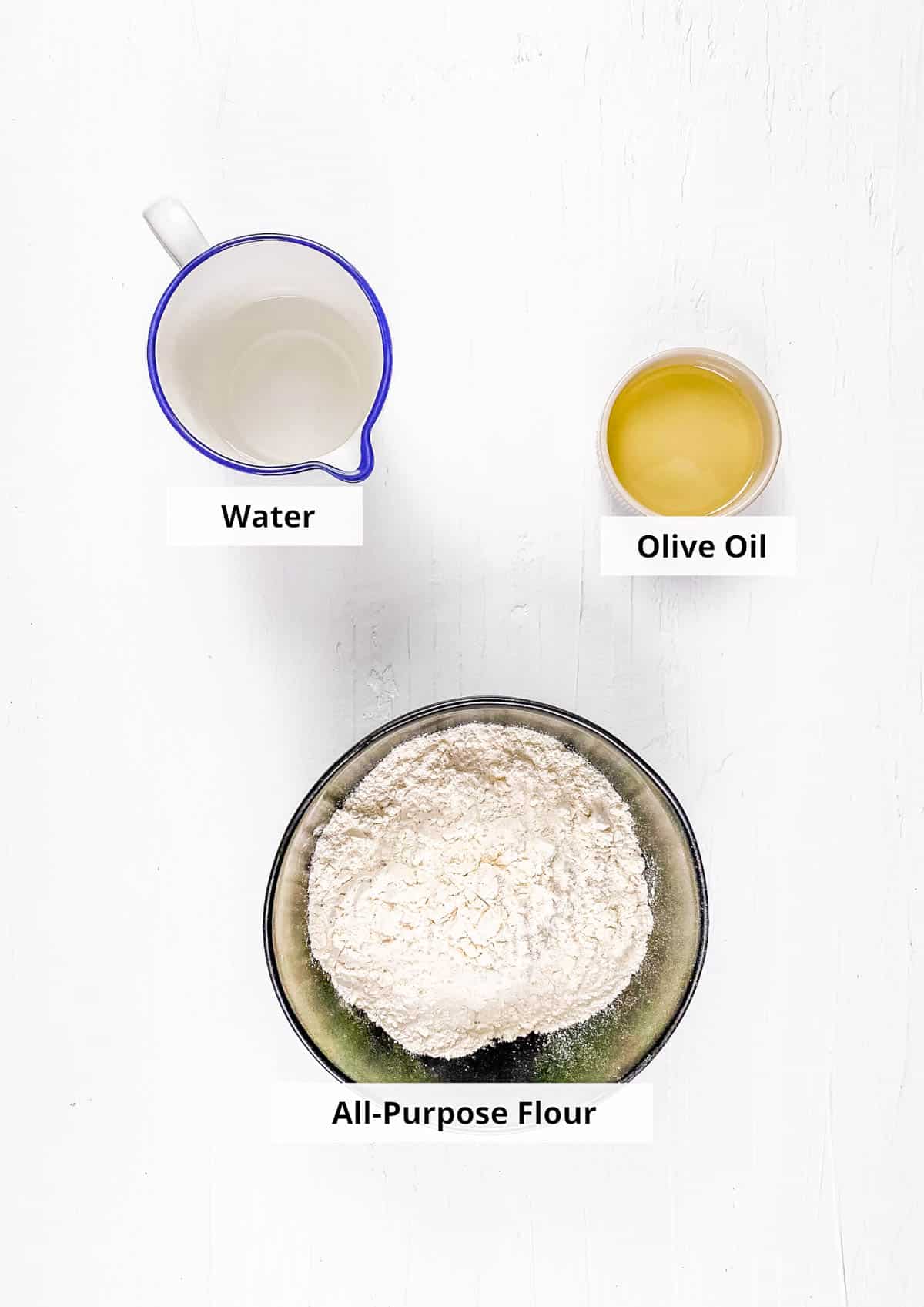
All -purpose flour: I use this to create a soft texture and solid structure.
Extra virgin olive oil: I add good-quality olive oil to provide richness and help the dough stay smooth and flexible.
Water: This hydrates the flour when mixing the dough, and brings all the ingredients together.
Salt (optional): Sometimes I add a pinch of salt to the dough to enhance the flavor.
🔪 How To Make
To make this vegan homemade pasta, I need my 3 ingredients, a clean work surface, a rolling pin, and a knife. This is how I make it:
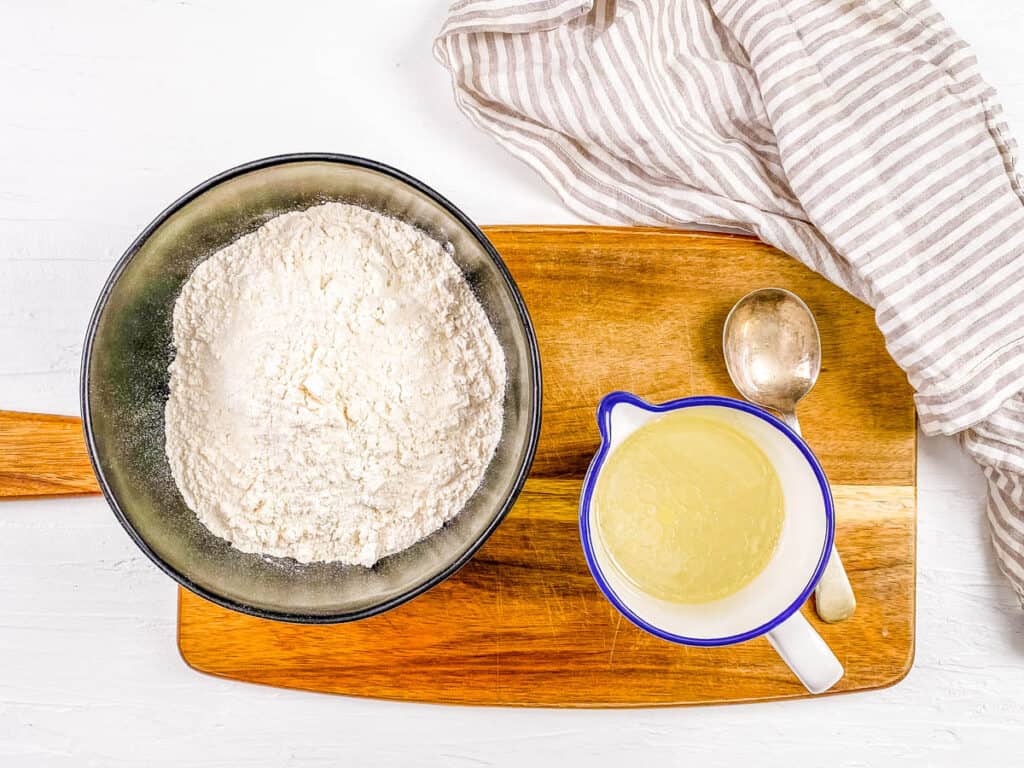
Mix liquids: I combine my water and oil in a jug.
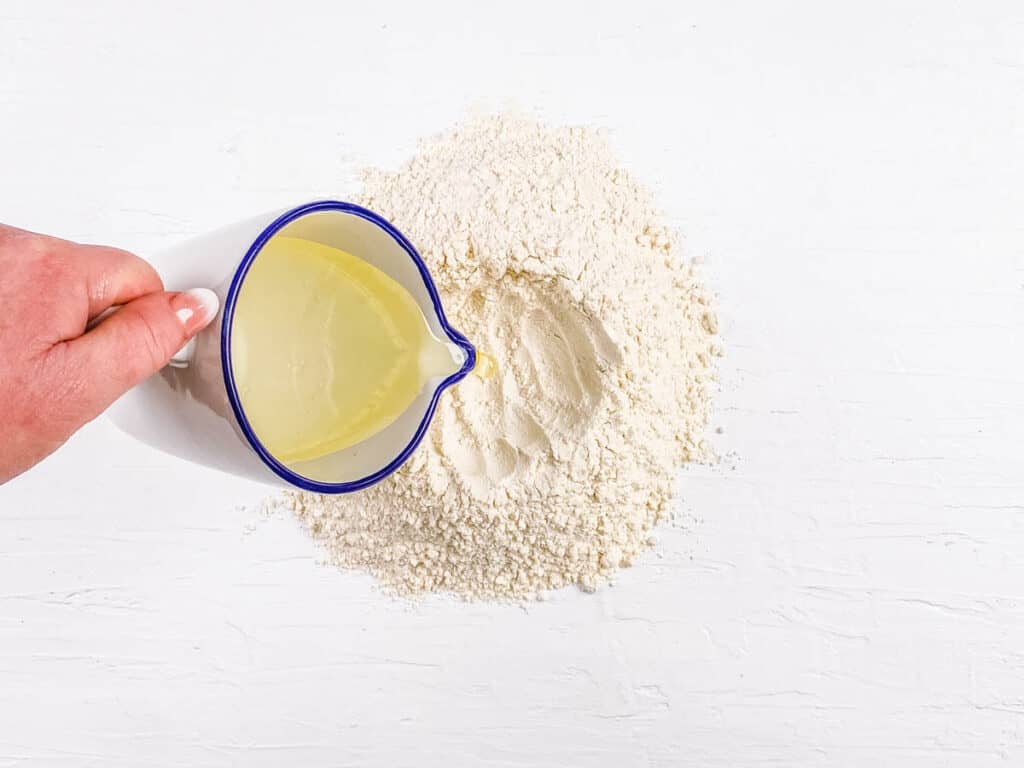
Make a well: Then I pour my flour out onto my work surface, and use my hand to make a well in the flour pile. Next, I pour 1/4 cup of my liquids into the well at a time.
Form dough: I use my hands to bring the flour and water together, to eventually form a ball of dough. If the dough is too dry, I add a splash more water, and if it is too wet, I sprinkle in a few more teaspoons of flour. Once the dough has come together, I knead it on a floured work surface for about 5 minutes.
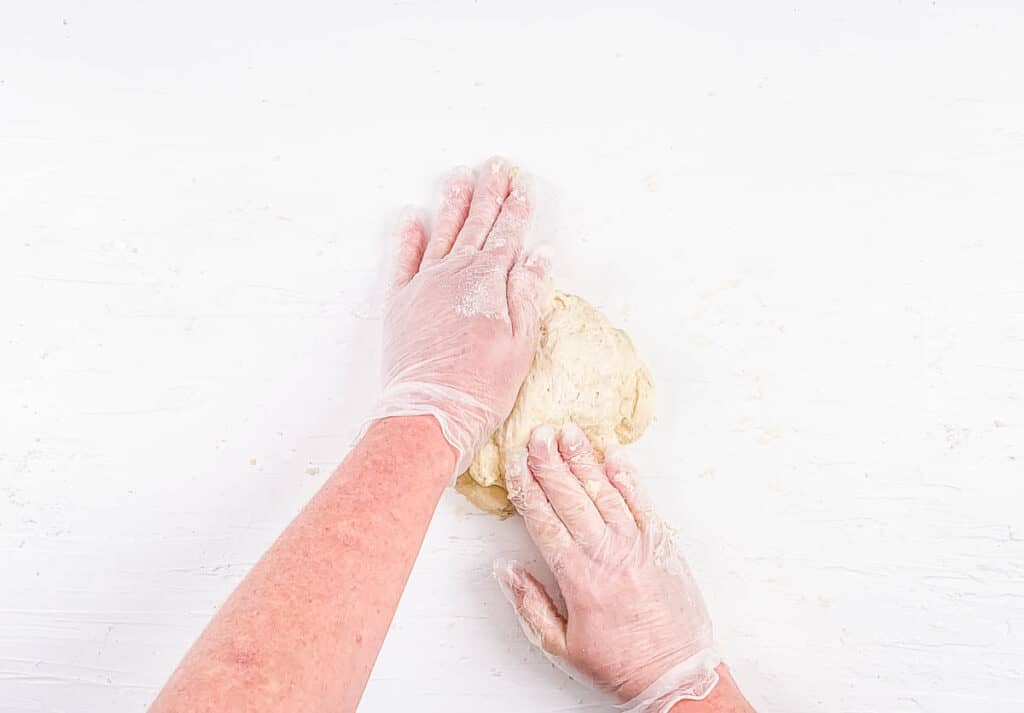
Chill dough: I wrap my pasta dough in plastic wrap and let it rest in the refrigerator for 30-60 minutes.
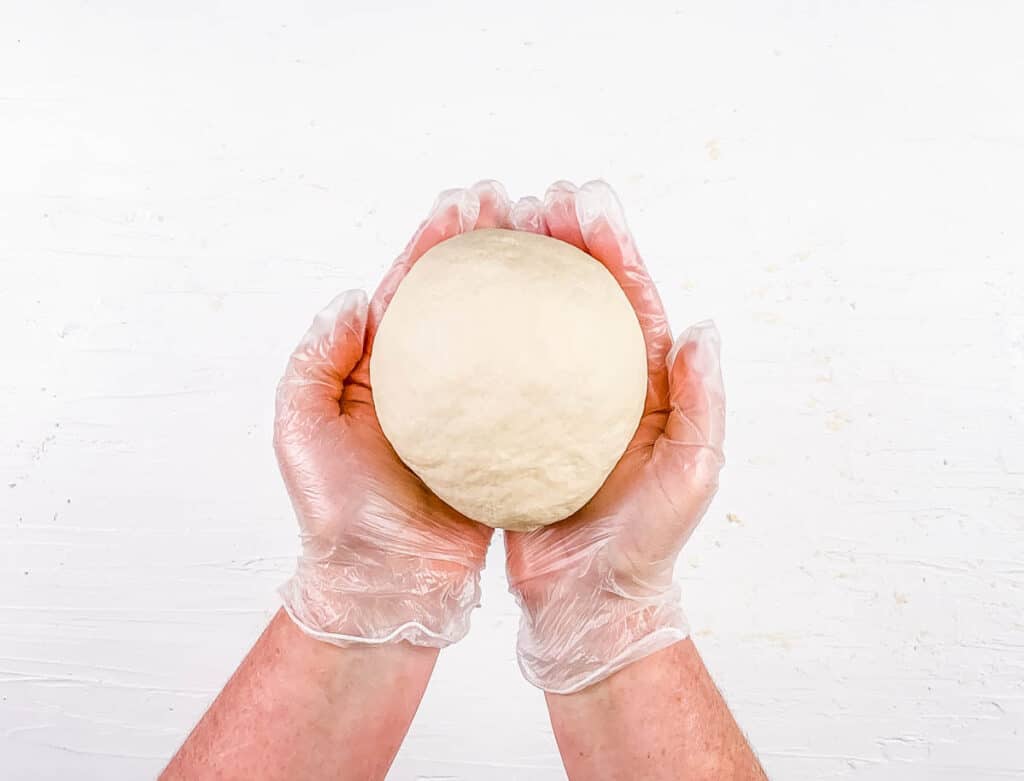
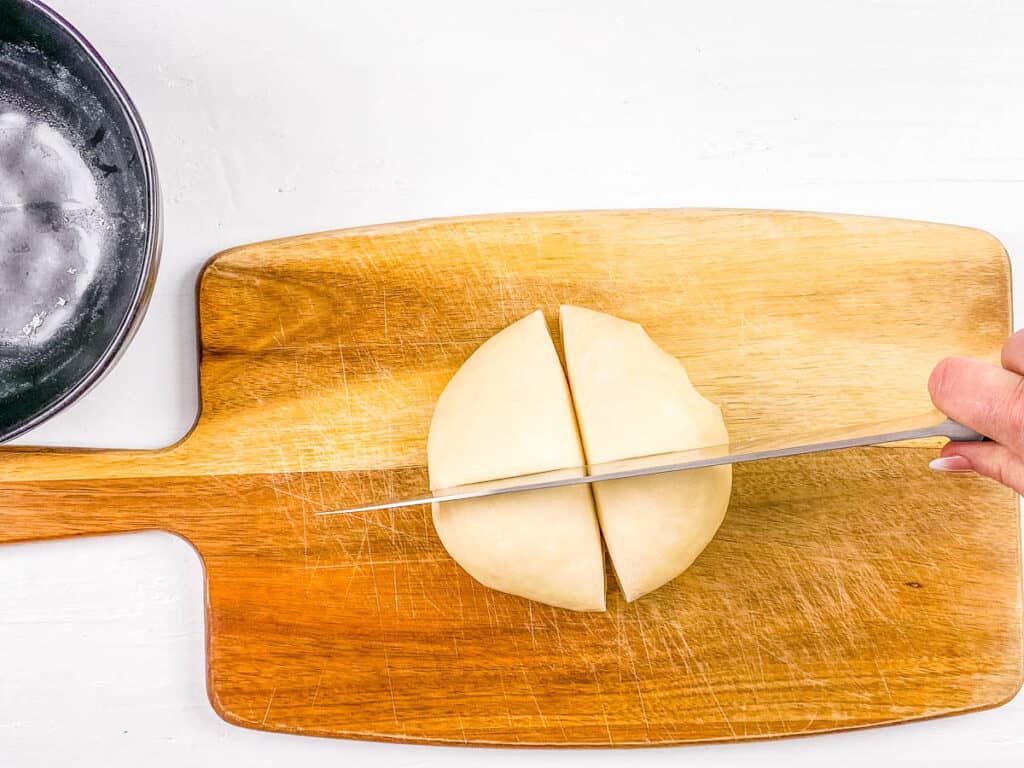
Cut dough: After resting, I cut my dough into 4 equal pieces.
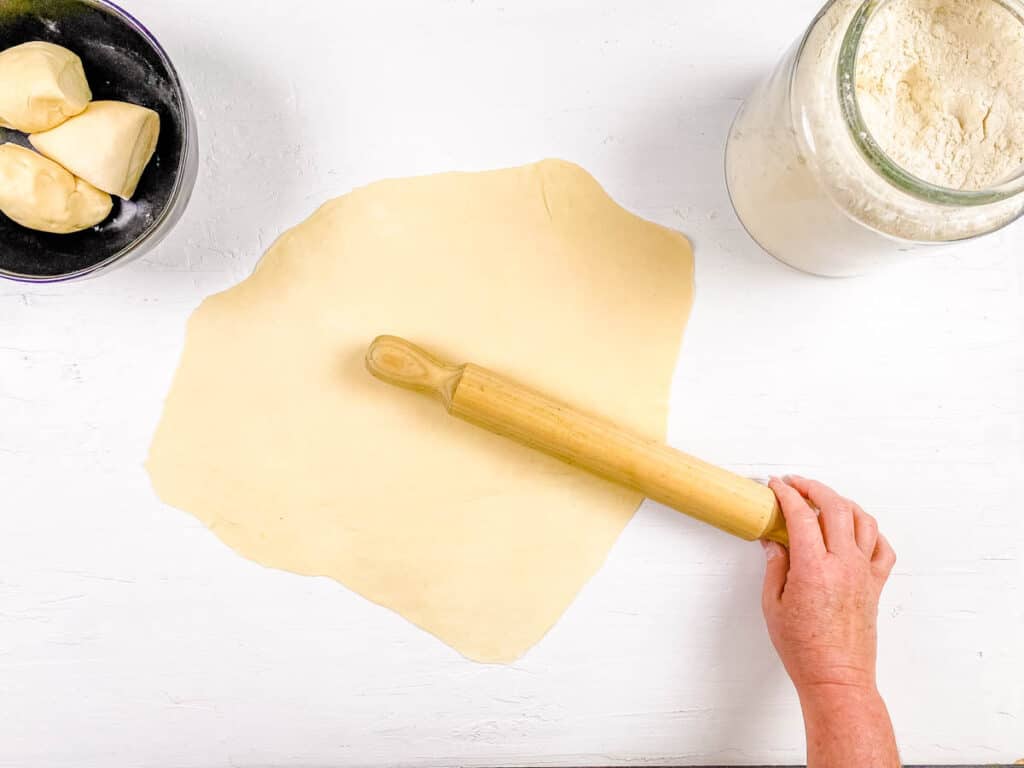
Roll out dough: I roll out one piece at a time with a rolling pin, making sure to go over it until it is a little bit thinner than I want, as it swells during cooking.
Fold pasta: Then I lightly dust the pasta with flour and gently fold the dough over itself several times.
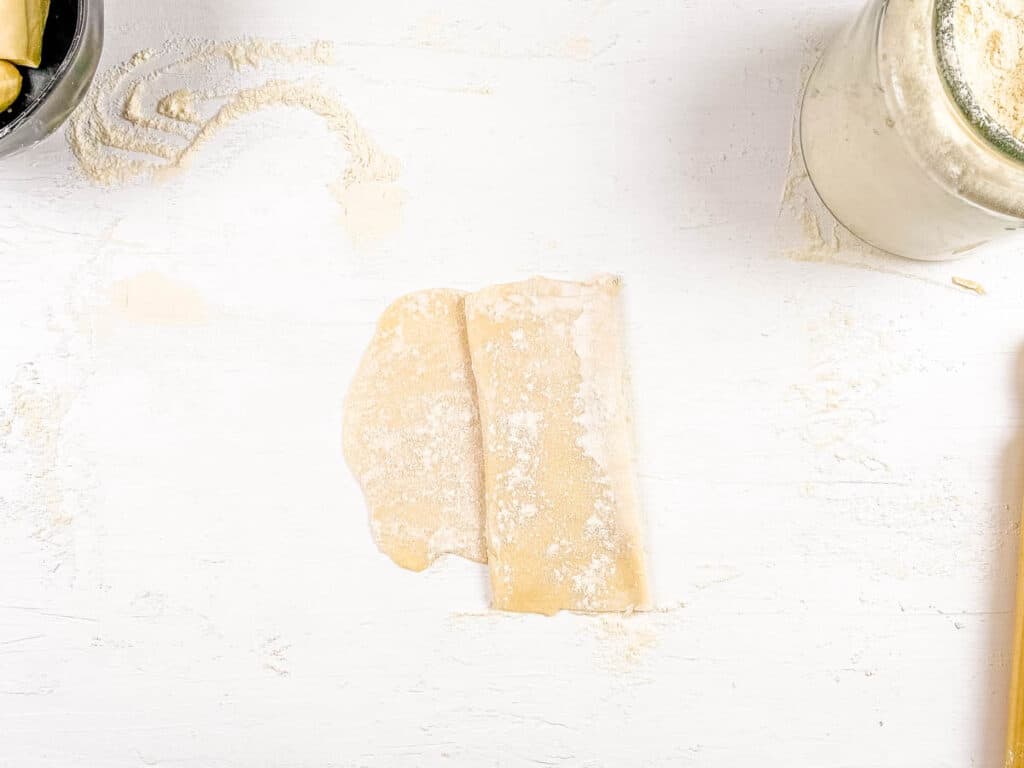
Cut pasta: I cut my pasta into narrow slices to make linguine or a bit wider for tagliatelle.
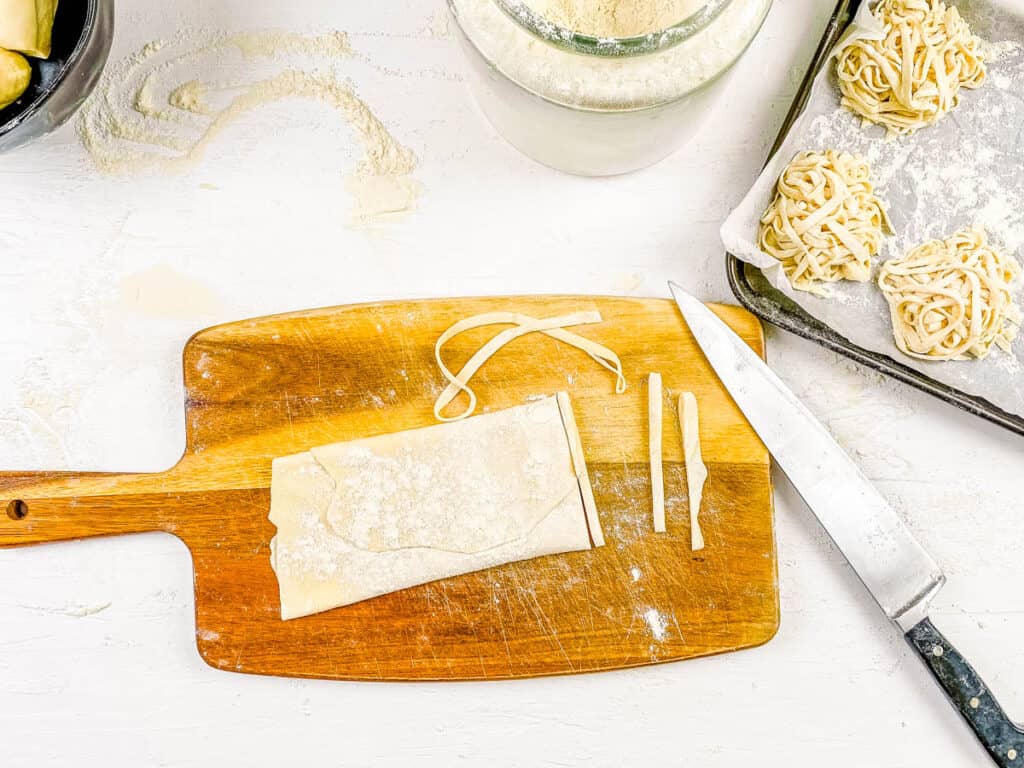
Form mounds: I gently and carefully separate the pasta and dust it again with flour. Then, I arrange the sliced pasta in small mounds on a floured baking sheet, and repeat with the rest of the dough. I cover my mounds and allow them to rest for 15 minutes.
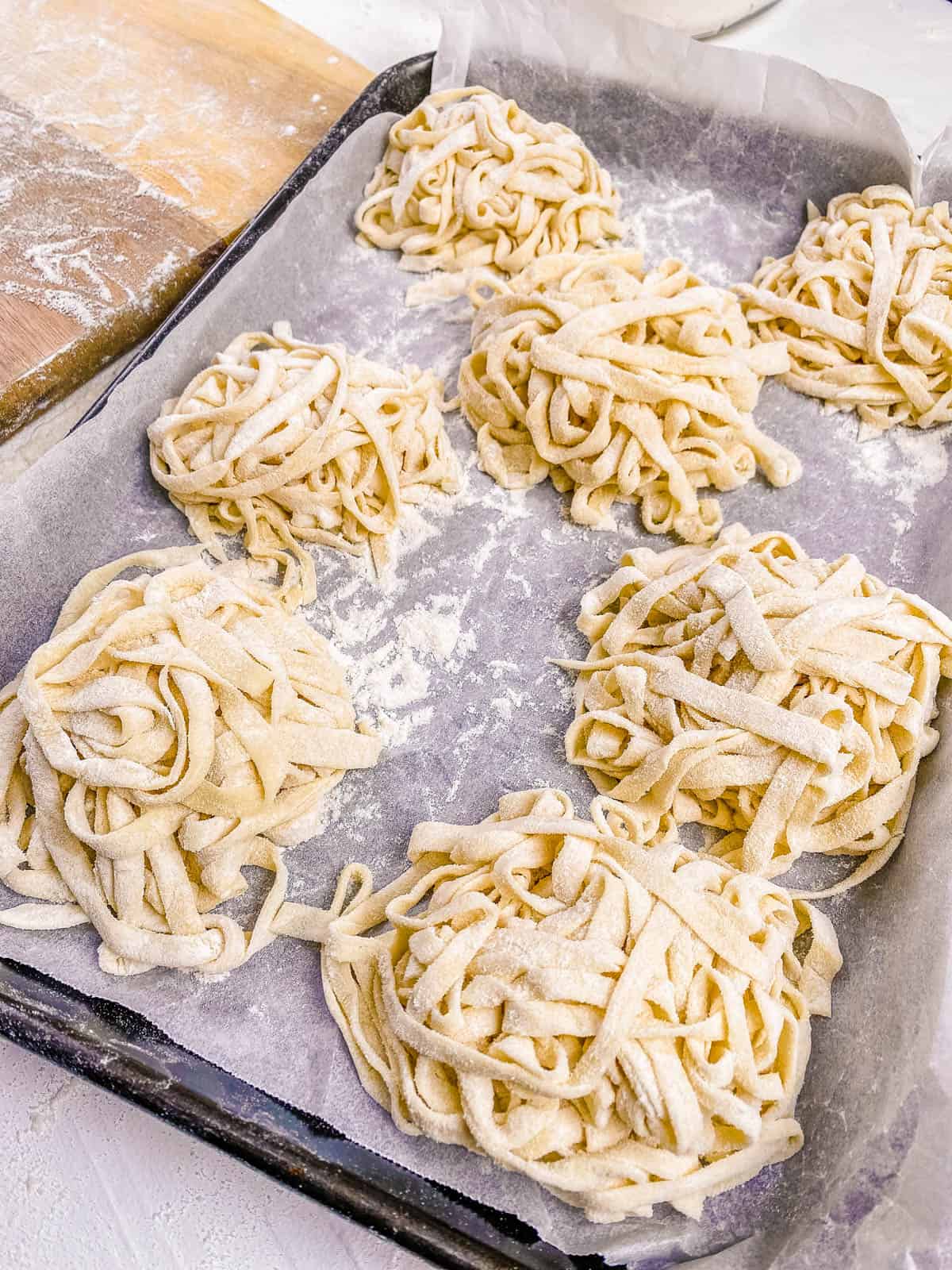
My #1 Secret Tip for this homemade vegan pasta recipe is to let the dough rest for at least 30 minutes. I always give my dough the full 1 hour resting time, as this allows the gluten in the flour to relax, and make the dough easier to stretch, roll, and shape without any shrinkage.
Other Tips To Keep In Mind:
- Keep a separate cup of water and flour: I always keep an extra pile of flour and a cup of water separate from my main ingredients so I can easily add them if needed. This saves me time and keeps my doughy hands from touching other items.
- Use a dough scraper: To clean my surface, I always use my trusty dough scraper to remove every last bit. A clean surface ensures no leftover bits accidentally end up in my finished dough.
- Knead thoroughly: I knead the dough until smooth and elastic so the pasta develops a good structure. This dough will be a lot tougher than bread dough, so do not be alarmed.
- Use a good quality oil: The oil plays a huge role in this recipe, so I like to use a good quality, strong-flavored oil. It makes a notable difference to the end product.
📖 Variations
I enjoy making small changes to my homemade vegan pasta dough, which shows just how versatile this recipe is. Instead of plain pasta, try one of these varieties:
Spinach dough: I blend 3 oz of cooked spinach with 1/3 cup of water before mixing it into the dough for a striking green pasta. This mixture will replace the 3/4 cups of water. My kids love green pasta, and I serve it plain with a bit of nutritional yeast so I do not mask the color.
Semolina blend: For a slightly firmer pasta texture, I replace 1 cup of the all-purpose flour with semolina flour. I do this when I use this dough for lasagna sheets. Which my husband loves in my healthy vegetable lasagna.
Whole wheat pasta: I swap 1 cup of my flour for whole wheat flour. I do this for a heartier pasta with a slightly higher fiber content. I love the slightly nutty flavor of this version.
🍽 Serving Suggestions
This homemade vegan pasta is great to have on hand, as it can be boiled quickly and tastes marvelous with a rich, fresh sauce. I like serving this during the warmer months when we are dining outside. I started the meal off with some vibrant bruschetta burrata, and coated my freshly cooked pasta in my simple vegan bechamel sauce, with freshly chopped basil and thyme. Next time you are craving Italian, try these dishes.
I remember when my kids, like so many others, went through a buttered noodles phase. As a nutritionist, I was desperate to get more nutrients into their meals anyway I could. I started by using this vegan pasta. Then one day, I added a bit of nutritional yeast. Soon, I replaced the butter with olive oil, and once I introduced them to my easy pesto without pine nuts, there was no going back! Recently, they enjoyed their pesto pasta with pieces of vegan mushroom bacon. A far cry from their buttered noodles. Ha!
🧊 Storing And ♨️ Reheating
Refrigeration: I store fresh, uncooked pasta on a floured tray, covered in the refrigerator for up to 2 days.
Freezing: I freeze uncooked pasta in an airtight container for up to 3 months.
Reheating: If cooked, I reheat my pasta in a skillet with a small splash of water or sauce to restore a bit of moisture. Frozen fresh pasta can be cooked without thawing. Place it in your boiling water as usual.
❓ Recipe FAQs
If I use a pasta maker, I press one piece of my dough flat with my hands, then feed it through the pasta machine on its widest setting. I continue feeding it through 2-3 more times per setting, making it thinner and thinner. Then cut into strips as stated in the recipe, or use the cutting settings of your choice on your pasta maker.
To cook this pasta, I bring a large pot of salted water to a rolling boil and carefully drop in the fresh pasta. I let it cook for 2-3 minutes, until al dente, then drain and serve with sauce or topping of my choosing.
Fresh pasta contains moisture, which can cause the strands to stick while resting. This is why I dust them with flour and fluff them up into a loose nest. If my pasta is sticking during cooking, I add a few drops of olive oil to the boiling water. Alternatively, I drizzle olive oil over my cooked pasta to help keep the strands separate.
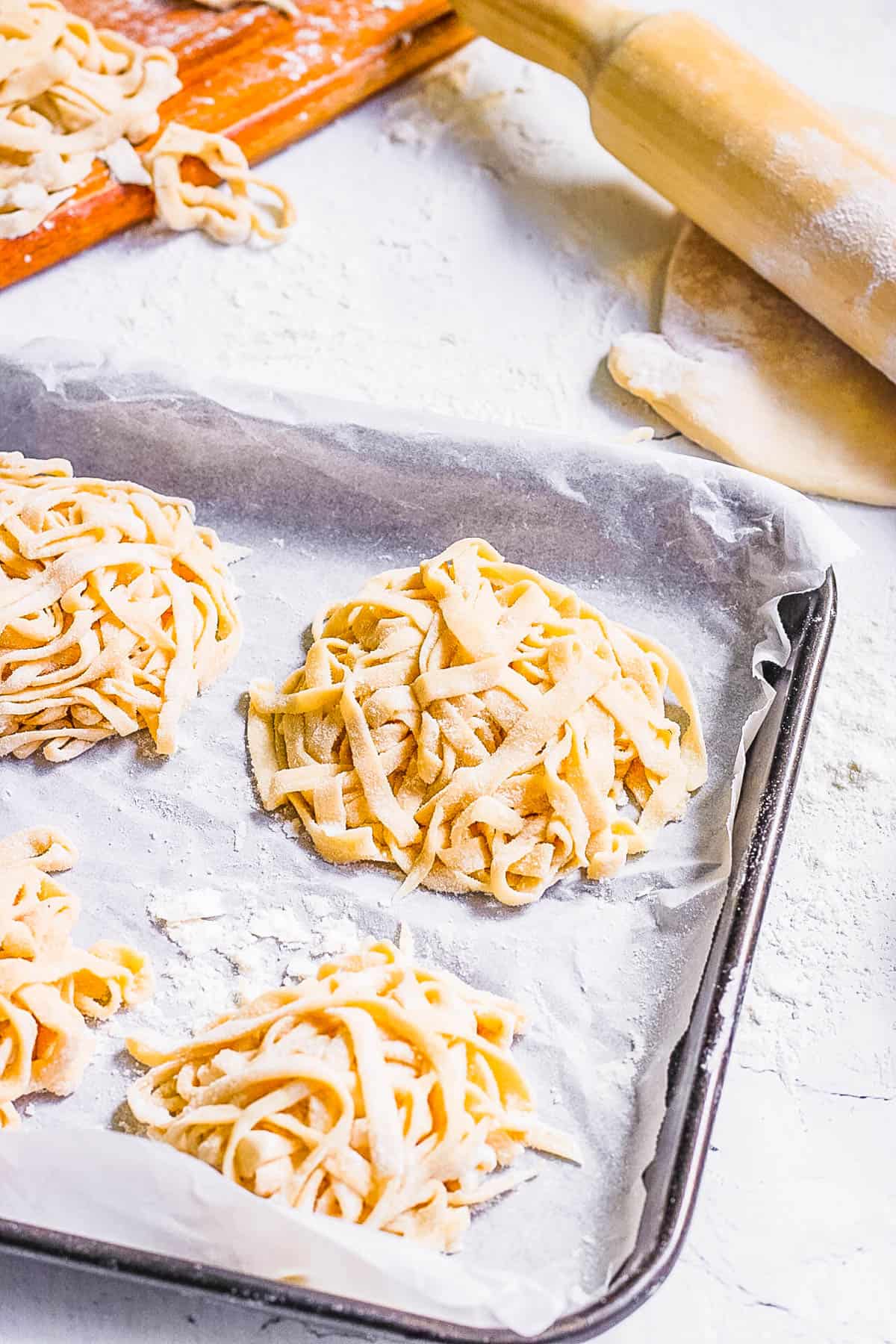

Love this plant based pasta recipe? Please leave a 5-star rating 🌟 in the recipe below and/or a review in the comment section further down the page!
You can also FOLLOW ME on FACEBOOK, INSTAGRAM, and PINTEREST to see more delicious, healthy, family-friendly food, and if you have any questions, I’m here to help!
📋 Recipe Card
3 Ingredient Homemade Vegan Pasta
Fresh pasta is unbeaten when it comes to certain dishes, and my homemade vegan pasta is no exception! With just 3 ingredients, I have a dough that rolls out perfectly, and cooks to a silky finish that rivals dried pasta. I use flour, olive oil, and water. That is it. Simple and amazing!
Servings: 8 servings
Calories: 173kcal
- My #1 Secret Tip for this homemade vegan pasta recipe is to let the dough rest for at least 30 minutes. I always give my dough the full 1 hour resting time, as this allows the gluten in the flour to relax, and make the dough easier to stretch, roll, and shape without any shrinkage.
- Keep a separate cup of water and flour: I always keep an extra pile of flour and a cup of water separate from my main ingredients so I can easily add them if needed. This saves me time and keeps my doughy hands from touching other items.
- Use a dough scraper: To clean my surface, I always use my trusty dough scraper to remove every last bit. A clean surface ensures no leftover bits accidentally end up in my finished dough.
- Knead thoroughly: I knead the dough until smooth and elastic so the pasta develops a good structure. This dough will be a lot tougher than bread dough, so do not be alarmed.
- Use a good quality oil: The oil plays a huge role in this recipe, so I like to use a good quality, strong-flavored oil. It makes a notable difference to the end product.
Calories: 173kcal | Carbohydrates: 30g | Protein: 4g | Fat: 4g | Saturated Fat: 1g | Polyunsaturated Fat: 1g | Monounsaturated Fat: 3g | Sodium: 2mg | Potassium: 42mg | Fiber: 1g | Sugar: 0.1g