You finish a meal, look down, and realize you’ve eaten about 500 calories.
Immediately, the thought strikes: How hard do I need to work to burn this off? How many jumping jacks would it take?
This is a question I hear constantly from fitness-minded patients. The truth is more nuanced than a simple number.
Burning 500 calories depends on your body, fitness level, how fast you do jumping jacks, and other factors.
But I can give you evidence-based answers that help you understand the real time and effort required.
Today, I’m breaking down exactly how many jumping jacks you’d need to burn 500 calories—and more importantly, whether this is realistic or if better exercise options exist.
What Is a Jumping Jack? Quick Overview

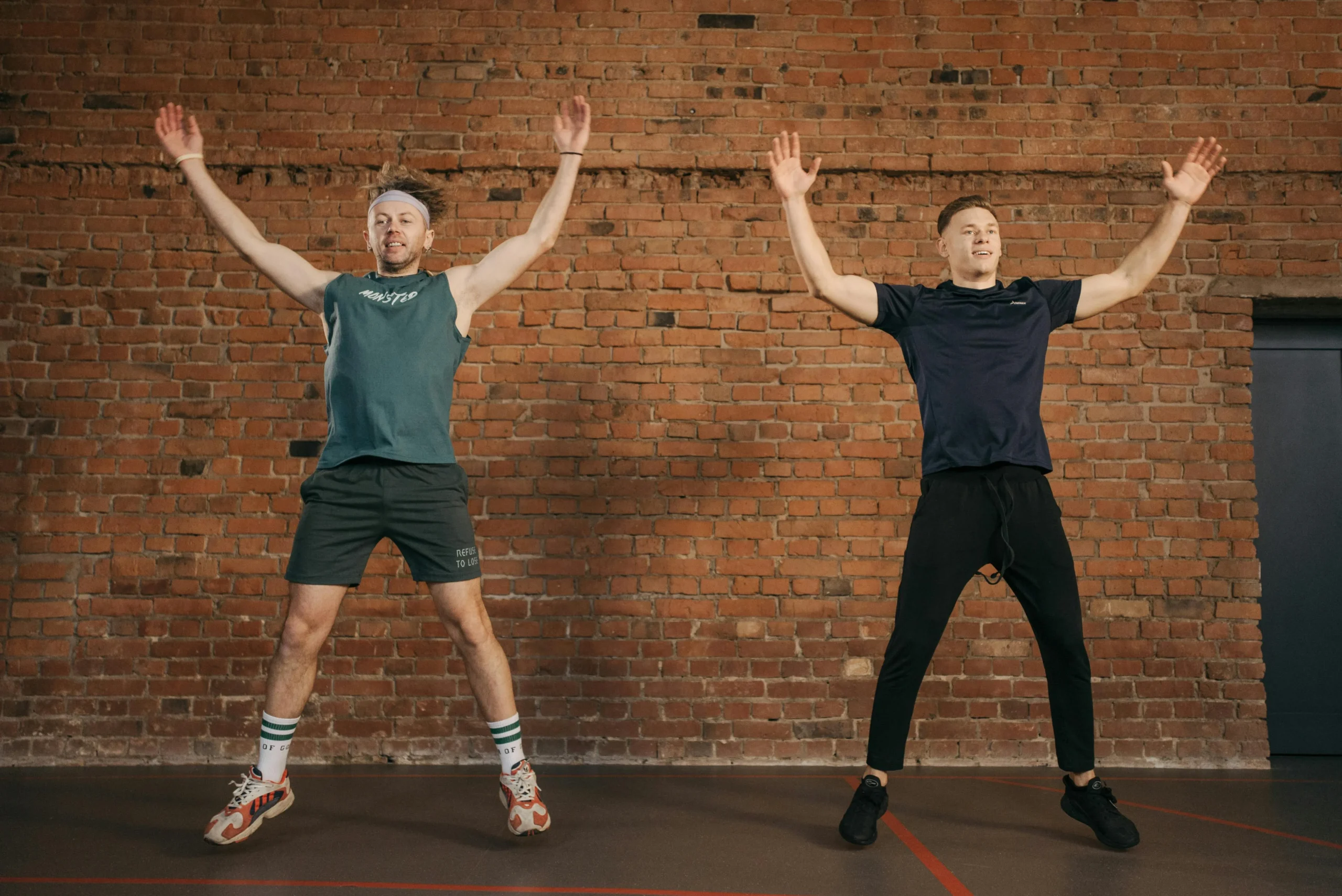
A jumping jack is a basic calisthenic exercise: you stand with feet together, jump while spreading your legs and raising your arms, then return to the starting position.
It’s simple, requires no equipment, and can be done anywhere—which is why it’s popular for home fitness.
The beauty of jumping jacks is that they’re a full-body exercise engaging your legs, arms, core, and cardiovascular system simultaneously.
This makes them relatively efficient for calorie burning compared to isolated exercises.
How Many Calories Does One Jumping Jack Burn?
This is where precision matters because it determines the total number you’d need.
On average, one jumping jack burns 0.16 to 0.20 calories, depending on your body weight, fitness level, and intensity. Let me show you this in detail:
| Body Weight | Calories Per Jack | Time to Burn 500 Cal |
|---|---|---|
| 45 kg (100 lbs) | 0.12 kcal | ~4,167 jumping jacks |
| 55 kg (120 lbs) | 0.14 kcal | ~3,571 jumping jacks |
| 65 kg (143 lbs) | 0.16 kcal | ~3,125 jumping jacks |
| 75 kg (165 lbs) | 0.19 kcal | ~2,632 jumping jacks |
| 85 kg (187 lbs) | 0.22 kcal | ~2,273 jumping jacks |
| 95 kg (209 lbs) | 0.25 kcal | ~2,000 jumping jacks |
The Key Insight: A 65kg (143 lbs) person doing jumping jacks at moderate intensity needs approximately 3,125 jumping jacks to burn 500 calories. A heavier person (85kg/187 lbs) would need about 2,273 jumping jacks.
This seems like an enormous number, and that’s because it is. Let me put this in perspective.
Real-World Context: How Long Would This Take?
Let’s translate jumping jacks into time commitment:
At Different Speeds:
| Speed | Jumping Jacks/Minute | Time to Complete 3,125 Jacks | Difficulty Level |
|---|---|---|---|
| Slow (60 jacks/min) | 60 | 52 minutes | Easy, sustainable |
| Moderate (90 jacks/min) | 90 | 35 minutes | Moderate, challenging |
| Fast (120 jacks/min) | 120 | 26 minutes | Hard, difficult to sustain |
| Very Fast (150+ jacks/min) | 150+ | 20 minutes | Very hard, almost impossible for most |
What This Means?
A person doing jumping jacks at a sustainable moderate pace (90 per minute) would need 35 continuous minutes to burn 500 calories.
A person doing them very quickly (120 per minute) would need 26 minutes.
But here’s the reality: most people can’t maintain 120 jumping jacks per minute for 26 consecutive minutes. It’s brutally hard.
To put 35 minutes in perspective: that’s nearly a full television episode of cardio non-stop. Not many people complete this.
Factors That Change Calorie Burn from Jumping Jacks
The numbers above are estimates. Several factors change actual calorie expenditure:
Five Variables That Affect Calorie Burn:
- Body Weight: Heavier people burn more calories (see table above). A 95kg person burns 50% more calories than a 55kg person doing identical jumping jacks.
- Fitness Level: Untrained people burn more calories doing the same exercise (inefficiency costs energy). Trained athletes burn fewer calories doing identical work.
- Intensity/Speed: Faster jumping jacks burn calories faster. But speed must be sustainable.
- Age: Younger people typically have faster metabolisms and burn calories slightly faster than older adults.
- Recovery Between Sets: Continuous jumping jacks vs. jumping jacks with rest intervals affects total calorie burn. Continuous is more efficient.
Is 3,125 Jumping Jacks Realistic? The Honest Answer

No. For most people, doing 3,125 consecutive jumping jacks is not realistic. Here’s why:
Physical Limitations:
- Joints (knees, ankles, hips) typically can’t handle 3,000+ jumping jacks without fatigue or potential injury
- Muscle fatigue sets in after 10-15 minutes for most untrained people
- Mental fatigue makes sustained focus nearly impossible
A More Realistic Approach: Break the workout into sets with rest intervals:
- Do 300 jumping jacks (3-4 minutes)
- Rest 1-2 minutes
- Repeat 10-11 times
This allows muscle recovery while completing the total volume over 45-60 minutes total including rest.
Is Burning 500 Calories Through Jumping Jacks the Best Option?
This is the critical question. The answer is probably not. Here’s why:
While jumping jacks are effective, they’re not the most efficient or sustainable way to burn 500 calories. Better options exist:
| Activity | Time to Burn 500 Cal | Difficulty | Joint Impact | Sustainability |
|---|---|---|---|---|
| Jumping Jacks | 35 minutes | High | Very High | Low |
| Running (8 km/h) | 45 minutes | Moderate-High | High | Moderate |
| Swimming | 45 minutes | Moderate | Very Low | High |
| Cycling (20 km/h) | 50 minutes | Moderate | Very Low | High |
| Brisk Walking (6 km/h) | 75-90 minutes | Low | Very Low | Very High |
| Weight Training (intense) | 60 minutes | Moderate-High | Low | High |
The Takeaway: Swimming, cycling, and running burn 500 calories in less time or in a similar time but are easier on the joints and more sustainable. Walking takes longer but is almost universally accessible.
Why You Shouldn’t Focus Solely on Burning 500 Calories?
Here’s something important I tell my patients: Don’t obsess over burning specific calories through exercise alone.
Here’s why this mentality is problematic:
The Math Reality:
- You burn 500 calories through 35 minutes of jumping jacks
- But it took you perhaps 20-30 minutes to eat that meal
- You just spent 35 minutes undoing 30 minutes of eating
- This isn’t sustainable thinking
Better Approach: Rather than exercising to “burn off” food, focus on eating right from the start.
A 500-calorie meal is substantial—perhaps too large for a single sitting. By eating mindfully, you avoid needing to burn off large meals.
The 80-20 Principle: Fitness professionals often say weight loss is 80% diet, 20% exercise.
Trying to outrun a bad diet through jumping jacks is inefficient. Instead:
- Eat appropriately sized meals (avoid excessive calories)
- Include exercise for health and fitness, not just calorie burning
- Let diet be the primary lever for calorie management
A Practical Alternative: Jumping Jack Variations
If you want to do jumping jacks efficiently to burn calories, try these variations that burn faster:
Higher-Intensity Variations:
- Burpee to Jumping Jack: Combines jumping jacks with burpees (squat, plank, jump up). Burns 30-40% more calories per minute.
- Fast Jumping Jacks with Sprinting: Alternate 30 seconds intense jumping jacks with 30 seconds sprinting in place.
- Jumping Jack Circuits: Combine jumping jacks with other exercises (push-ups, squat jumps, mountain climbers) to maximize calorie burn.
These variations can reduce the time to burn 500 calories from 35 minutes to 20-25 minutes, making the goal more realistic.
Jumping Jacks for Fitness (Beyond Calorie Burning)
While jumping jacks aren’t the best standalone tool for burning 500 calories, they offer genuine fitness benefits:
Cardiovascular Benefits: Jumping jacks elevate heart rate, strengthening the cardiovascular system with regular practice.
No Equipment Required: They can be done anywhere—home, park, office—making them accessible.
Full-Body Engagement: They engage multiple muscle groups, developing coordination and balance.
Low Cost: Completely free with no equipment needed.
Mental Health: Exercise releases endorphins, improving mood and reducing stress.
For general fitness, incorporating jumping jacks 2-3 times weekly (not necessarily for 35-minute 500-calorie sessions) provides genuine health benefits beyond just calorie burning.
FAQs: Quick Answers About Jumping Jacks and Calorie Burning
How many jumping jacks to burn 100 calories?
For a 65kg person at moderate intensity, approximately 625 jumping jacks burn 100 calories (about 7 minutes). The number scales proportionally for other weights and intensities.
Is jumping jacks a good exercise?
Yes, jumping jacks are excellent for cardiovascular fitness, coordination, and full-body engagement. However, they’re not ideal for long-duration isolated use due to joint stress. Combine with other exercises for best results.
How many jumping jacks should I do daily?
For fitness benefits without overtraining, 200-500 jumping jacks daily (in sets with rest) is reasonable for most people. More than this risks overuse injuries, especially in joints.
Do jumping jacks burn more calories than running?
Running burns calories slightly faster than jumping jacks when intensity and pace are similar. A 45-minute run burns similar calories to 35 minutes of jumping jacks, but running is more sustainable for long durations.
Can jumping jacks help with weight loss?
Jumping jacks can contribute to weight loss when combined with healthy eating. However, diet is the primary lever. Don’t rely on jumping jacks alone to burn 500 calories; instead, eat appropriately to avoid needing to burn excessive calories.
Are jumping jacks bad for knees?
Jumping jacks have high joint impact. For people with knee problems, arthritis, or joint sensitivity, they’re not ideal. Swimming, cycling, or strength training are better alternatives that minimize joint stress.
Also Read:
Final Thoughts: Realistic Calorie-Burning Expectations
Burning 500 calories through jumping jacks is technically possible but not practical for most people.
You’d need 3,000-3,500 jumping jacks, which translates to 25-35 minutes of nearly continuous high-intensity movement. This is exhausting and unsustainable.
Better approaches include:
- Eat appropriately-sized meals to avoid needing to burn excessive calories
- Choose more enjoyable exercises (running, swimming, cycling) if you want to burn 500 calories
- Use jumping jacks as part of a varied fitness routine, not as a sole calorie-burning tool
- Focus on total weekly activity rather than burning specific calories from specific meals
The most successful fitness approach combines reasonable eating habits with enjoyable exercise.
Trying to outrun poor eating through jumping jacks is fighting an uphill battle.