
Baking a ham can feel like a big task, but it’s easier than you think once you know the steps to follow. A baked ham can be the ultimate showstopper of your holiday table or Sunday family meal, with its delicious caramelized crust, tender interior, and incredible, slightly sweet flavor. Here’s everything you need to know to bake the perfect ham, from choosing the right type to applying a glaze that will make every bite irresistible.
A Few Notes on Making Baked Ham Before We Begin
Before diving into the mechanics, it helps to understand what kind of ham this recipe is written for and why certain traditions—scoring, cloves, cola glazes—have lasted across generations.
Most supermarket hams fall into three broad categories: city hams (wet-cured and fully cooked), country hams (dry-cured and much saltier), and fresh hams (uncured, raw pork leg). This recipe is written specifically for a fully cooked, city-style bone-in ham, which is the most common holiday option. The baking step isn’t “cooking from raw” but rather reheating the ham slowly so it stays moist while the glaze forms a deep outer crust.
Spiral-cut hams are convenient, but the pre-slicing exposes more surface area, which means quicker moisture loss. They can still work – especially if wrapped tightly in foil – but a single, intact bone-in ham is easier to manage for beginners.
Scoring the outer fat layer is more than a holiday gesture. Those shallow crosshatch cuts open as the ham heats, giving the glaze something to hold onto instead of sliding off in a sheet. Studding each diamond with a clove is optional but traditional, and brings a warm, resinous aroma that stands up well to the sweetness of the glaze. For those who prefer a softer spice profile, the cloves can be removed before the final bake.
You’ll also notice an optional tamari coating before the ham goes into the oven. This step adds a layer of savory depth that balances the sweetness of the glaze. It isn’t mandatory, but it does help the exterior develop a deeper color and adds quiet complexity beneath the sugary finish.
The glaze itself; brown sugar, mustard, cola, and either cider vinegar or bourbon, belongs to a long American tradition of sweet-and-sharp ham lacquers. Cola reduces down quickly and helps form a thick, sticky surface; mustard cuts the richness; vinegar brings acidity; bourbon adds warmth without reading as “boozy” once cooked. It’s a formula that works because each component keeps the others in check.
Finally, the slow oven temperature is intentional. Fully cooked hams respond better to a gentle reheat than to aggressive heat. Covering the ham at the beginning protects the interior, and only adding the glaze near the end prevents burning while still giving you that deep, dark finish.
With that foundation in mind, you can move into the steps with a clear picture of what you’re doing and why these details matter.
Step-by-Step Guide to Baked Ham
1. Choose the Right Ham
- Type of Ham: Select a bone-in, fully cooked ham for the best flavor and presentation. The bone helps add flavor and moisture to the ham, making it juicier and more tender. Avoid spiral-cut hams if possible, as they can dry out faster during baking.
- Fresh vs. Frozen: If possible, buy a fresh ham rather than frozen, as thawing can sometimes alter texture and moisture. If using frozen, ensure it’s fully thawed in the refrigerator for 24-48 hours before baking.
- Size: Calculate approximately 3/4 to 1 pound of bone-in ham per person. For a large gathering of 20 people, a 14-pound ham will work well, while for a smaller group of 8-10, go for 6-8 pounds.
2. Prep the Ham
- Score the Surface: Using a sharp knife, score the surface of the ham in a diamond pattern. Make cuts about 1/4-inch deep and spaced about 1 inch apart.
- Stud with Cloves: Insert a whole clove in the center of each diamond. This classic preparation adds flavor and makes for a beautiful presentation. For a medium-sized ham, you’ll need about 40-50 cloves.
- Optional Tamari Coating: For an extra layer of umami, brush the scored ham lightly with 1/3 cup tamari soy sauce. This adds a hint of savory depth that complements the glaze.
3. Bake the Ham
- Preheat and Prepare: Preheat the oven to 325°F (160°C). Place the ham cut-side down (ie, NOT the scored side) in a shallow roasting pan. Cover loosely with foil to prevent drying.
- Bake Slowly: Bake the ham for 22-26 minutes per pound, or until the internal temperature reaches 140°F (60°C) for a fully cooked ham. Slow baking helps retain the juiciness of the ham and keeps it from drying out.
- Avoid Basting with Ham Juices: As the ham cooks, avoid basting with its own juices as they can be salty and may alter the flavor. Instead, wait to add the glaze for the final 20 minutes.
4. Prepare the Glaze
- Combine Ingredients: In a medium saucepan, mix 3 cups dark brown sugar, 3/4 cup spicy brown mustard, 1 can of cola, and 3 tbsp apple cider vinegar (or 3/4 cup bourbon for extra depth).
- Cook the Glaze: Bring the mixture to a boil over medium heat, then reduce the heat and let it simmer for about 20 minutes until it thickens and darkens slightly.
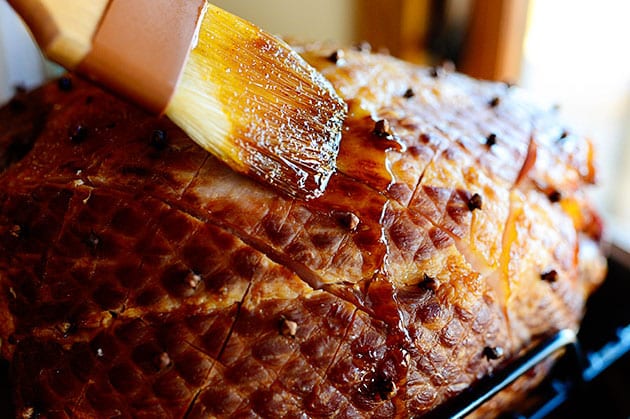
5. Glaze the Ham
- Initial Glaze: When the ham is done baking, remove it from the oven and uncover. Brush 3/4 of the glaze over the ham, coating it well.
- Return to the Oven: Place the ham back in the oven, uncovered, and bake for an additional 20-25 minutes until the glaze is bubbly and caramelized.
6. Finish and Serve
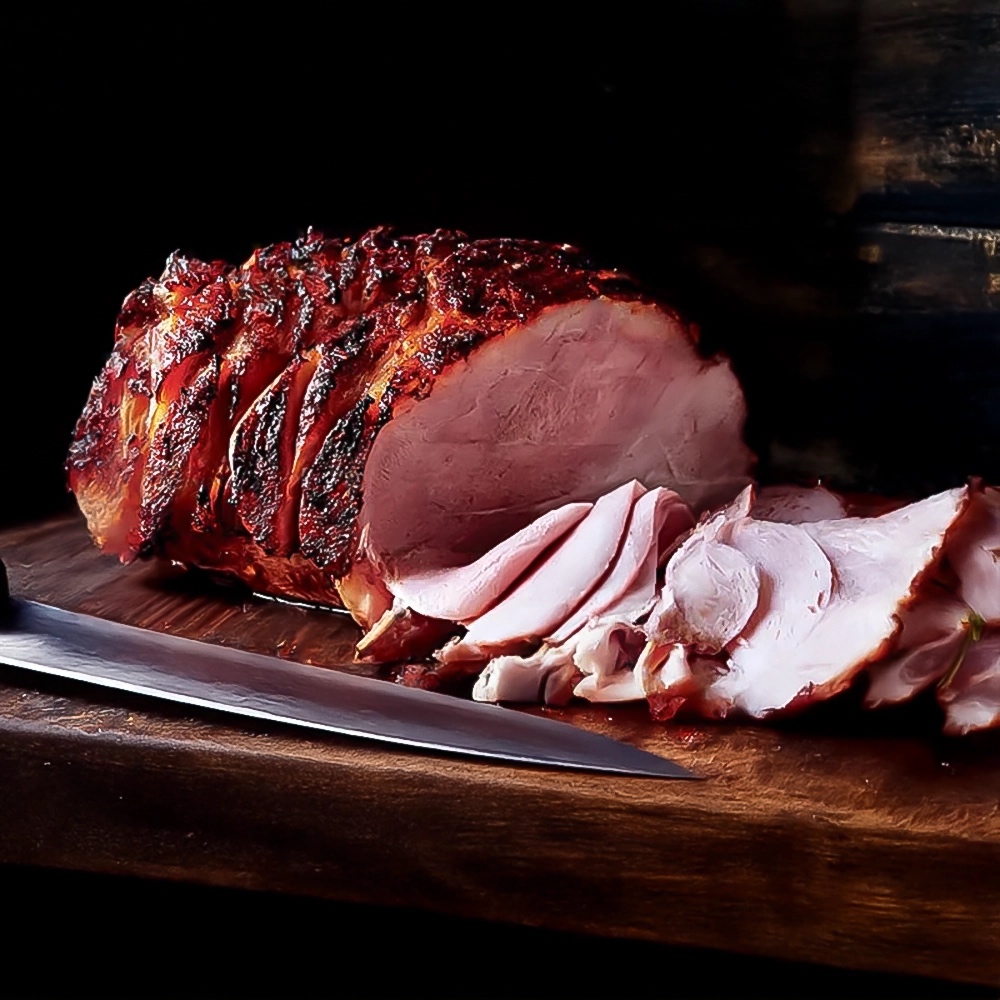
- Final Glaze and Rest: Remove the ham from the oven and brush it with the remaining glaze. Let it rest for 10-15 minutes before slicing. Resting allows the juices to redistribute, making the ham easier to carve and serve.
How to Make the Perfect Baked Ham

Total Time: 3-5 hours depending on size of ham

Yield: 12–14 servings 1x

Print Recipe

Pin Recipe
Description
There is nothing more festive than a juicy ham for any holiday gathering. Follow the recipe below and you are guaranteed to have your guests lining up for seconds.
Ingredients
Units
1 whole fully cooked, bone-in ham (size based on number of guests)
40–50 whole cloves
1/3 cup tamari soy sauce (optional)
Glaze:
3 cups (660g) dark brown sugar
3/4 cup (180g) spicy brown mustard
1 can (355ml) cola
3 tbsp (45ml) apple cider vinegar or 3/4 cup (180ml) bourbon
Instructions
Preheat the Oven: Set the oven to 325°F (160°C). Grease a roasting pan and set it aside.
Prep the Ham:
Use a sharp knife to score the surface of the ham in a diamond pattern, about 1 inch apart and 1/4 inch deep.
Insert cloves in the center of each diamond for flavor and presentation.
(Optional) Brush with tamari soy sauce for an extra layer of savory flavor.
Bake the Ham:
Place the ham cut-side down (ie, NOT the scored side) in the prepared roasting pan. Cover loosely with foil and bake at 325°F for 22-26 minutes per pound, or until the internal temperature reaches 140°F (60°C).
Make the Glaze:
In a medium saucepan, combine brown sugar, mustard, cola, and vinegar (or bourbon).
Bring to a boil, then reduce heat and simmer for 20 minutes until thickened and darker in color.
Glaze the Ham:
Remove the ham from the oven and brush with 3/4 of the glaze.
Return the ham to the oven, uncovered, for an additional 20-25 minutes until the glaze is bubbly.
Serve:
Take the ham out of the oven, brush with the remaining glaze, and let rest for 10-15 minutes before carving.
Notes
Don’t Rush the Baking: A slow, low bake keeps the ham tender and juicy. Increase the baking time if you use a larger ham.
Cloves and Presentation: Using whole cloves adds flavor, but you can remove them before serving if guests prefer.
Bourbon Option: For a more robust flavor, use bourbon instead of apple cider vinegar in the glaze.
- Prep Time: 20 mins
- Cook Time: 2.5-4 hours
 Category: Main Dish
 Method: Slow Roasting
 Cuisine: Holiday, American
Nutrition
- Serving Size: 1 slice
- Calories: 330
- Sugar: 15g
- Sodium: 940mg
- Fat: 10g
- Saturated Fat: 3g
- Unsaturated Fat: 6g
- Trans Fat: 0g
- Carbohydrates: 25g
- Fiber: 0g
- Protein: 32g
- Cholesterol: 80mg
If you liked this, you are going to love these favorite holiday recipes:
Cranberry Pecan Bread
Swedish Christmas Classic – Jansson’s Temptation
How to Make Flæskesteg: Danish Pork Roast with Crispy Crackling
Brunede Kartofler – Danish Caramelized Christmas Potatoes
The post How to Bake a Ham: A Guide to Choosing, Preparing, and Glazing a Holiday Ham appeared first on Honest Cooking and Travel.