
Photos by THE CREATIVE BK for the James Beard Foundation
Jordi doesn’t wait. He picks up a fork and goes straight for the oxtail stew. “I just want to use my hands and eat it off the bone,” he says, eyes fixed on the oxtail in front of him, a dish that tells the story of oxtail history, from Trinidadian working-class kitchens to fine dining tables around the globe.
From Undervalued to Essential
In Trinidad’s early post-emancipation kitchens, oxtail was never the meat you boasted about. Tough and bony, it was a cut for the working-class table, transformed into something extraordinary through patience and skill. African-descended cooks, carrying foodways across the Atlantic, knew how to unlock it. Slow braising. Heavy seasoning. Patient simmering. These were survival skills, not trends. They knew how collagen melts, how bone enriches liquid, how time itself becomes an ingredient.
After emancipation, Trinidad’s food evolved alongside its population. Indian spices, European techniques, Indigenous ingredients layered onto African foundations. Oxtail followed, appearing in stews, pelau, soups, and Sunday pots. What began as necessity became comfort, a staple food shaping the country’s most notable dishes.
Today, oxtail tops pizzas at Cuts & Slices, anchors TikTok recipes for ramen and mac and cheese, and headlines tasting menus where it’s treated as a luxury centerpiece. Its price has climbed steadily over the past decade, reflecting its cultural elevation. Beneath every plate, a question lingers when a food born of survival becomes trendy, who gets to keep eating it?
Dinner: Tristen Epps-Long x Osei “Picky” Blackett: A Trinidadian Dinner
The dinner takes place at Platform by the James Beard Foundation, a show kitchen, event space, and educational hub at Pier 57 in Manhattan. Here, all kinds of culinary talent create dinners, classes, and collaborations that spotlight cuisines ranging from well-known regions of the world to those lesser-known in the fine-dining world. On this evening, it’s oxtail, an ingredient that has made the same journey from dismissal to recognition.

Two chefs led the dinner. Tristen Epps-Long, the James Beard Award semifinalist (Best Chef South Florida, Miami in 2024) and winner of Top Chef Season 22, known for championing Black diaspora foodways and chef-owner of the highly anticipated Houston restaurant Buboy. Meanwhile Osei “Blacky” Blackett, a globe-trotting Trinidadian chef whose work at his restaurant Ariapita and sell-out event Oxtails and Cocktails has been telling Caribbean food stories for years.
“Chef Blacky and I do the same thing in different ways,” Long explains. “He brings the most approachable expression of Trinidadian food, and I’m always asking how far those flavors can go.” For Blacky, oxtail is deliberate. “I focus on foods that were never ‘popular enough’ to cross over,” he says. “Oxtails, pigtails, saltfish. These dishes carry our history.”
His work is deeply personal. “Food is a universal language. My mother passed away on September 6th, 2010, and I can introduce someone to her by a plate of food. Her recipes. It’s also a way to connect the dots and show similarities of food from the diaspora.” This personal connection drives his mission: “For years I’ve been telling the stories of our food. To me it’s on the level as the top cuisines in the world. My duty is to help with that recognition.”
Their collaboration spans multiple courses, each centered on oxtail. Long describes the approach “There was definitely a little friendly competition about who could push oxtail the furthest, but it was all love. I wanted to show it in ways people don’t expect, like in a fish course or even dessert, highlighting how far Caribbean cuisine can stretch.”
Authentic, Not Traditional
That unexpected approach arrives with the first course. It’s a za’atar focaccia topped with oxtail curry butter and oxtail sorrel marmalade. Rich, smoky, faintly sweet, the flavors surprise and set the tone. Middle Eastern spice meets Caribbean depth, a subtle hint of Long’s reinterpretation.
Long’s commitment to Black foodways extends beyond oxtail to all the parts that were given to enslaved people and transformed into treasures. This vision materializes in the following dish. It is a oxtail-crusted cod, paired with cow heel velouté and tendon crisp. Ingredients once dismissed – oxtail, cow heel, tendon – are transformed. The tendon crisp floats above the dish, airy and addictive like popcorn.

Then comes Blacky’s pepper-stewed oxtail with rice and peas. It looks simple. The meat slips off the bone, coated in dark gravy, evidence of the overnight green seasoning marinade and the careful browning in molten sugar that preceded hours of braising. This is the technique that distinguishes Trinidadian oxtail from, say, Jamaican versions which braise without that caramelized sugar base. For Trinidadians, this dish invites scrutiny. Some claim they could make it better at home, others measure it against memory. There’s a cultural expectation at play here, one that reflects deeper tensions. As Blacky has noted, Trinidadian people don’t want to pay restaurant prices for dishes they believe they can cook themselves, even when those dishes require hours of patient work and generations of knowledge.
Asked whether his food is traditional, Blacky clarifies: “It’s authentic. Not traditional.” The distinction matters. Tradition implies something frozen in time; authenticity allows movement. For Blacky, innovation comes from recognizing connections. “Trinidad and Tobago is probably the most multicultural country in the Caribbean, so it’s easy to be inspired. When I migrated to the US, I saw similarities with dishes from other countries and how they were presented, so I just use what I saw to innovate (for example polenta and coo coo).”
Long pushes his reinterpretation of oxtail even further with dessert. An ice cream created with browning, plantains, and oxtail. It took three months to develop. “It was definitely the most challenging,” Long says, “especially everything I went through to get it right. But it was also the most rewarding, because it represented everything we both grew up on but in a way, we’d never had it before.”
The first bite smells like a Trinidadian kitchen on Sunday afternoon: sweet, savory, familiar. “Browning is such an indicative flavor and smell in a Trinidadian household,” Long explains. “Turning all of that into something that tastes like black cake but still has this savory, satisfying dessert quality, was really cool.”
Guests respond first with surprise, then delight. Jasmine, who flew in from San Francisco, sums it up: “I traveled all this way just for this dinner. The chance to taste such a unique collaboration was worth every mile.”
Facing Criticism
Both chefs have faced criticism. Long says “Yeah, I’ve had a lot of criticism from traditionalists. For a lot of cultures that didn’t have much, the one thing they could cling to was the traditions around their food, so they’re very protective of it. A younger, angrier me would’ve told them to open their eyes, but I understand why now.”
His response is to stay the course. “The way I deal with it is by continuing to do what I do and staying steadfast. Sometimes I don’t label something as Trini even if it’s influenced by it, just to avoid the noise, but I’m trying to stop doing that too. I want to give people my interpretation. Other cuisines have evolved, and I think as long as I keep doing it with confidence, it will get there.”
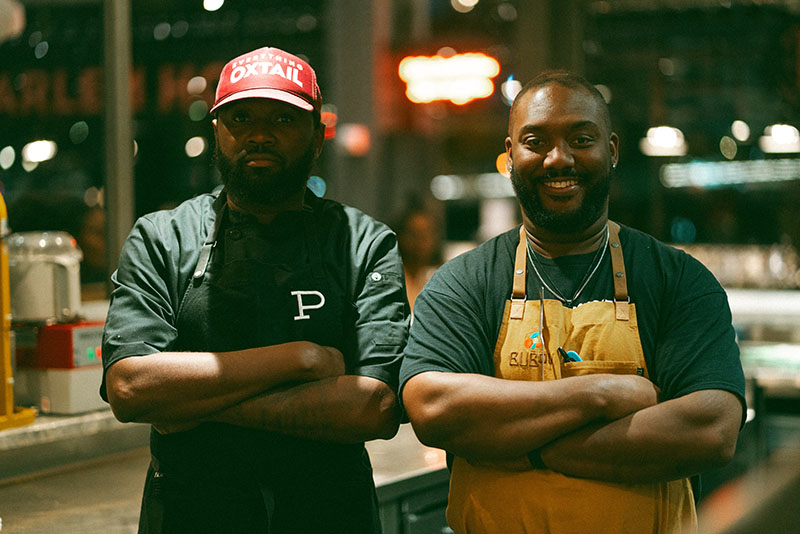
This personal connection drives his mission. “For years I’ve been telling the stories of our food. To me it’s on the level as the top cuisines in the world. My duty is to help with that recognition.”
Long worries about a deeper loss than just recipes. “I think a lot of the truth of food origins and how people identify with it, is at risk of being lost. People accept that ‘this is how it is,’ and they stop asking themselves why. Why certain cultures season more heavily, why some prefer sweeter or more bitter or more acidic food, why some people like things well-done. Those things all come from somewhere.”
Long also sees his work in a global context. “I still think Afro-Caribbean cuisine is global. If you look, you’ll find examples of the same ingredients or ideas everywhere. Oxtail is huge in Filipino cooking, like kare kare. And you can see those parallels with West African mafé. So seeing those connections helps me understand and connect things within my own food.”
Also for Long, mentorship means visibility. “For me, it’s about giving them a platform to see where this food can be successful and valued. Letting them work with it, be around it, taste it, see it up close. And also exposing them to other cultures so they can find pieces of their own culture reflected in others. I want them to see Afro-Caribbean cuisine not just at Sunday dinner, but also in nice restaurants, in formats where it hasn’t always been represented.”
What Remains
By the end of the night, it’s clear that oxtail no longer needs explanation. What was once dismissed has now, understandably, come to command attention. However, this transformation comes with responsibility.
As these foods are refined, renamed, and priced up, erasure becomes a concern—not just of recipes, but of the people and communities who created them. For example, simply removing the bones changes the experience entirely: it strips away the intimate, messy act of enjoying the oxtail and, in turn, comes with a higher cost as well.
Although the dinner didn’t provide definitive answers, it served as a reminder that thoughtful change is possible. That evolution doesn’t have to mean erasure. As Blacky puts it, the work continues: “Continuing to tell the story of not just my upbringing but an entire region.”
As Jordi finishes his stew, lifting the meat by hand without hesitation, one thing is clear: oxtail’s power has always lived in that moment, eaten by hand, slowly, with care. Oxtail history is not just about taste; it’s about keeping the story, the culture, and the people behind its journey alive as its reach expands.
The post Oxtail: From Humble Beginnings to Center Stage appeared first on Honest Cooking and Travel.