
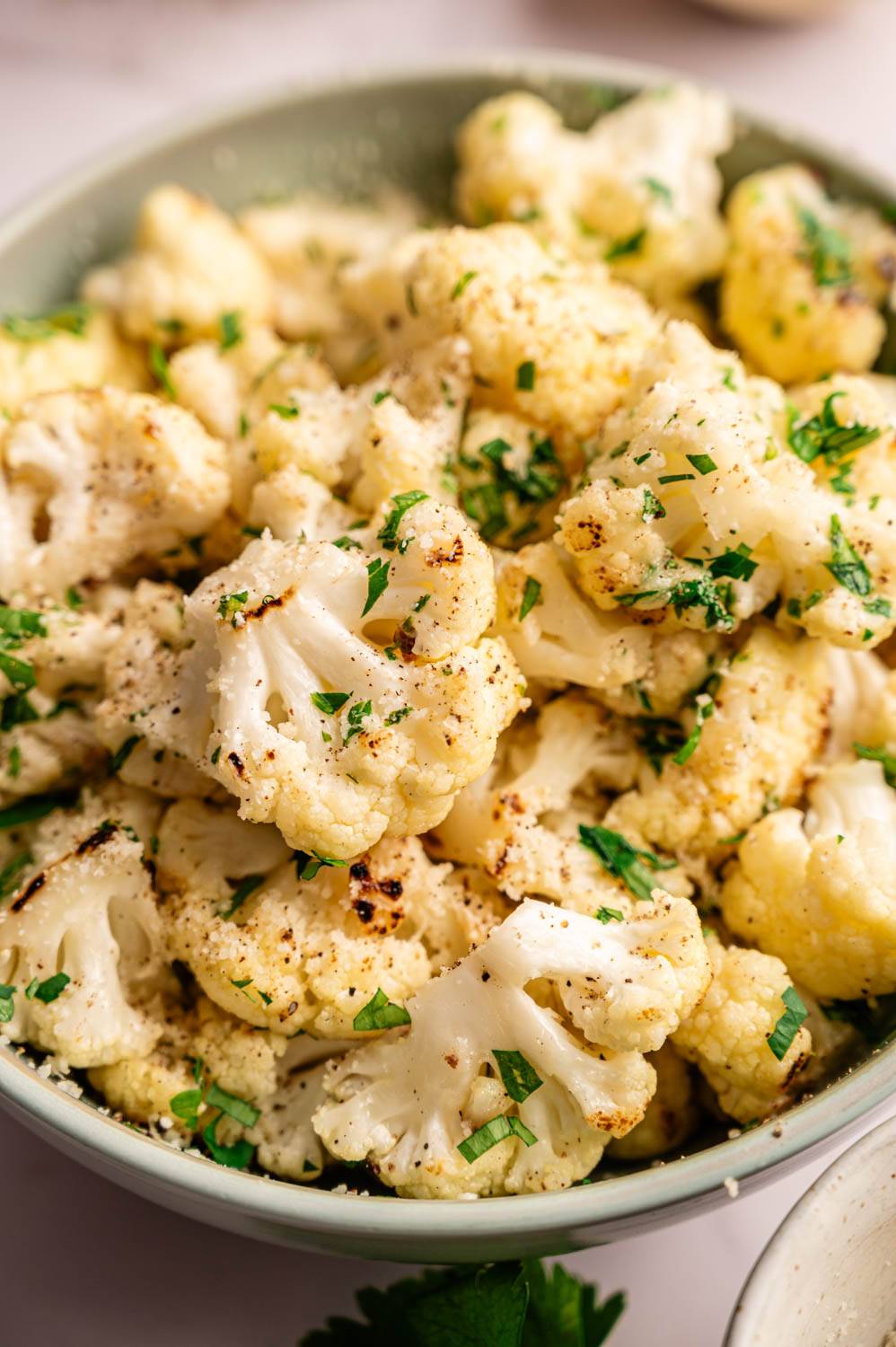
Sautéed Cauliflower turns a simple bag of florets into a star side with golden-browned edges and a fresh garlic-lemon finish in about 20 minutes. The trick is letting it caramelize in the pan first, then adding garlic at the end so it stays fragrant and not bitter!
0 CAL 0g CARBS 0g FAT 0g PROTEIN 2
Sautéed Cauliflower Recipe
I always make this veggie side dish when dinner needs something fresh and full of flavor, but I don’t want to turn on the oven. The cauliflower gets tender with a little crisp on the edges, and the lemon and Parmesan make it feel like more than “just a vegetable.”
If you ever buy a huge head of cauliflower and wonder what to do with it, this is the answer. It’s simple enough for weeknights, but it also looks really pretty on a holiday table, especially if you can find purple or golden cauliflower (it’s fun, and it makes the whole plate pop!).
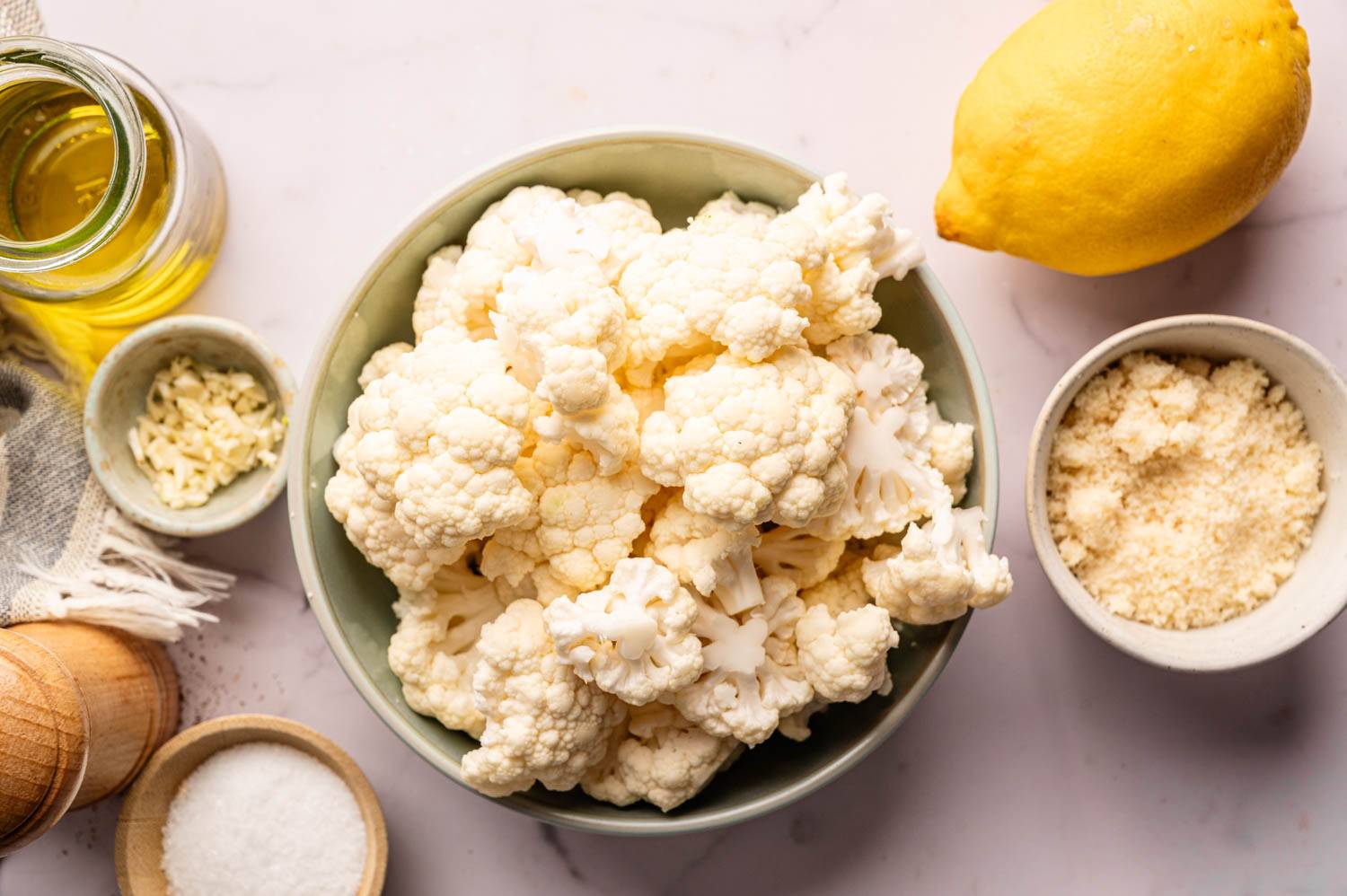
Before You Get Started
Here are a few things worth knowing before you start cooking, so everything goes smoothly.
- Use a big skillet: Give the cauliflower room so it browns instead of steaming.
- Dry it well: If you rinse your florets, shake them off, and pat them dry so they caramelize instead of turning watery.
- Cut evenly: Cut the cauliflower florets into bite-sized pieces so everything finishes tender at the same time.
- Parmesan note: Finely grated Parmesan cheese melts better, while shredded gives you little salty bites, either works!
How to Make Sauteed Cauliflower
Here’s a quick overview of how to pull this recipe together step-by-step.
1. Brown The Cauliflower
Heat olive oil in a skillet over medium-high heat. Add the cauliflower, toss to coat, season with salt and pepper, then cook until fork-tender with browned edges, stirring and flipping as it cooks.
- Pro tip: If the pan looks dry or the cauliflower is browning too quickly, add 1 to 2 tablespoons of water and scrape up the browned bits so nothing burns.
2. Add Garlic
Stir in the minced garlic and cook for about 1 minute, just until fragrant.
- Pro tip: Don’t let the garlic brown because it can turn bitter fast at high heat.
3. Finish With Lemon, Parsley, And Parmesan
Remove from heat and squeeze in fresh lemon juice, then toss with chopped parsley and Parmesan. Taste and adjust salt and pepper, then serve right away!
Recipe Tips and Tricks
Here are the best tips and pro tricks to help this recipe turn out perfectly every time.
- Extra lemon: Add a little zest along with the juice if you want it brighter and more aromatic!
- Make it spicy: Add a pinch of red pepper flakes with the garlic for a gentle kick.
- Herb swap: Parsley is classic, but basil or dill is great if you want a different vibe.
- Cheese swap: Try feta for a tangy finish, or grated pecorino for a saltier bite.
- Add crunch: Toasted almonds or pine nuts are great on top if you want texture.
- Browning boost: Let the cauliflower sit for 30 to 60 seconds between stirs, so it has time to develop golden edges.
Serving Ideas
Here are some easy and delicious ways to serve this recipe.
- With chicken: Perfect next to roasted or grilled chicken, especially anything lemony or herby.
- With fish: Great with salmon, shrimp, or any simple pan-seared fish.
- With pasta: Toss leftovers into pasta with olive oil and extra Parmesan for an easy dinner.
- In bowls: Add to grain bowls with chickpeas or chicken and a drizzle of dressing.
- Holiday side: Serve with extra parsley and Parmesan on top for a pretty, finished look.
Storage & Reheating
Here’s how to store, reheat, and enjoy your leftovers.
- Storage: Cool completely, then store in the fridge in an airtight container for up to 4 days.
- Freezer: Freeze in a freezer-safe container for up to 2 months, but expect a softer texture after thawing.
- Reheating: Reheat in a hot skillet for the best texture, or microwave in short bursts just until warmed through.
- Leftovers: Chop and add to scrambled eggs, stir into rice or quinoa, or toss into a quick salad with extra lemon and Parmesan.
Frequently Asked Questions
Here are some of the most commonly asked questions about this recipe:
Why didn’t my cauliflower brown?
Your pan was likely crowded, or the cauliflower was too wet. Use a large skillet, dry the florets well, and let them sit for short stretches so they caramelize.
Why is my cauliflower mushy?
It was cooked too long or had too much added water. Pull it as soon as it’s fork-tender and still holds its shape.
Can I double the recipe?
Yes, but use a very large skillet or cook in batches. Overcrowding traps steam, and you’ll lose the browned edges.