
Sons & Daughters has existed in San Francisco since 2010, yet for much of its life remained an insider’s secret. Respected locally, but largely overlooked internationally, it discretely operated among the Bay Area’s better-known heavyweights. That perception has shifted dramatically in recent years. Under the direction of British chef Harrison Cheney, the restaurant has entered a period of sharp focus and upward momentum, marked by the California Michelin Young Chef Award in 2023, followed by a second Michelin star and a Green Star in 2025.
Until recently, Sons & Daughters occupied a Nob Hill-dining room smaller than most living rooms, with a kitchen that demanded constant compromise. From that constrained space, the team overachieved, earning two Michelin stars within the first eighteen months of Cheney cooking his own food, and shortly afterwards becoming one of only a very small number of restaurants globally to hold both two Michelin stars and a Green Star simultaneously. It was an extraordinary feat.
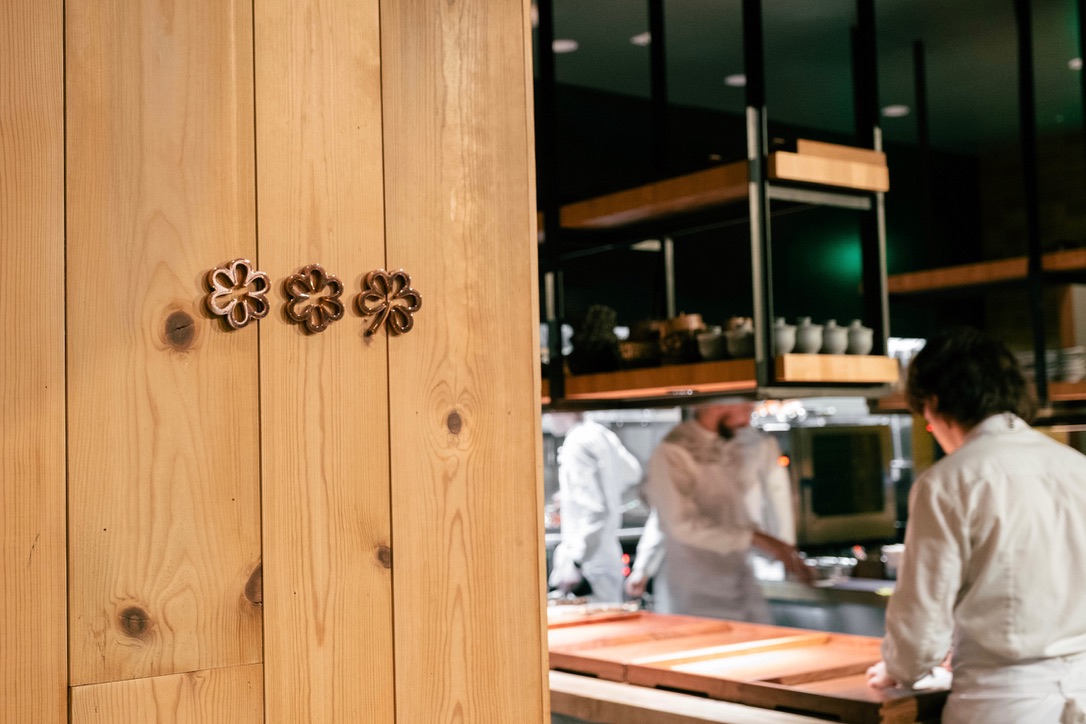
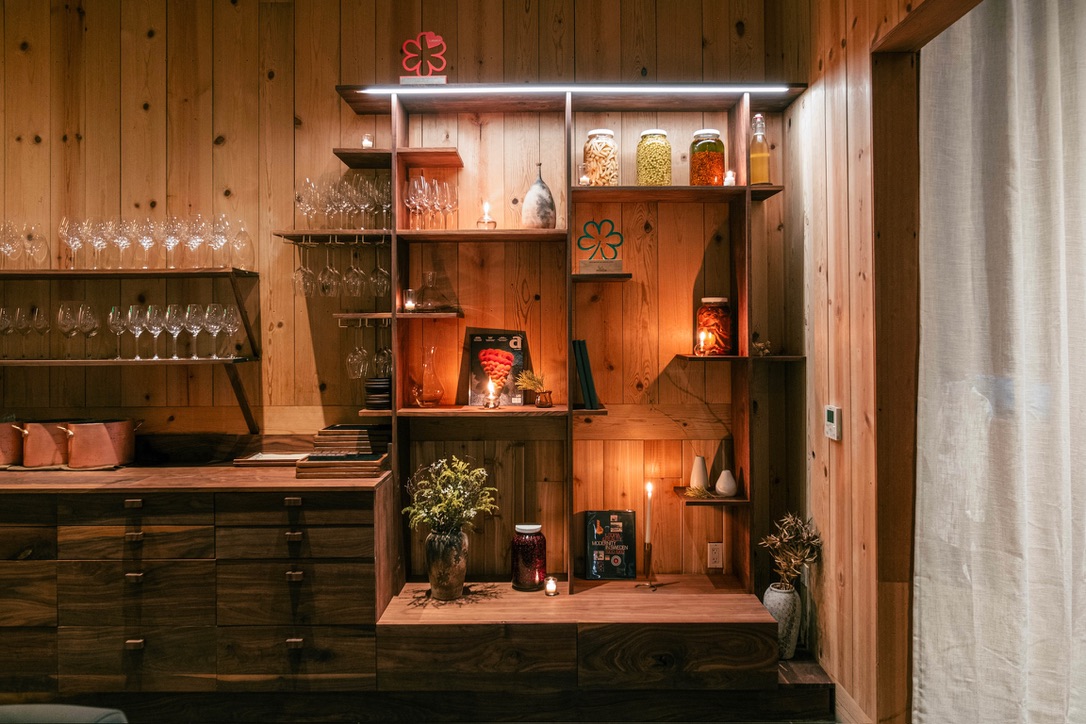
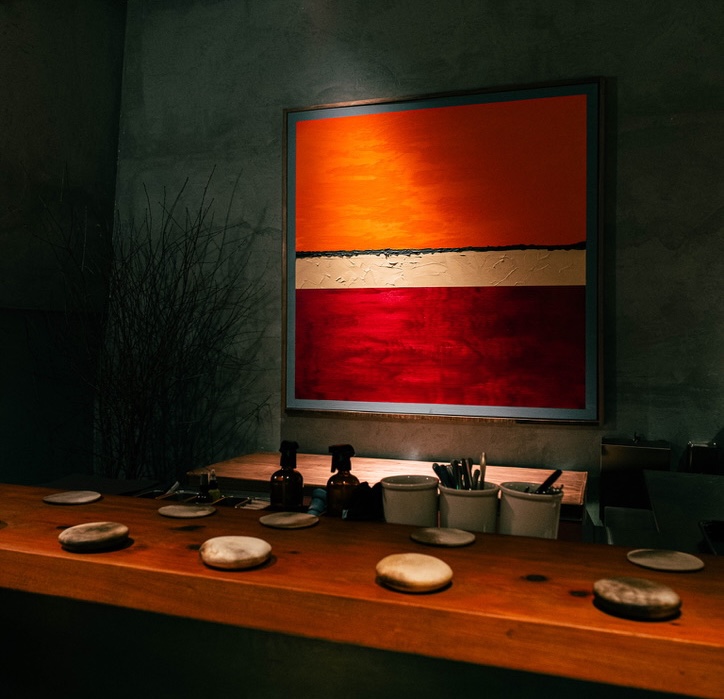
The recent move to the Mission District marks the next chapter. Set on a light-filled corner site at least twice the size of the former location, with a fully open kitchen and natural materials throughout, the new Sons & Daughters allows the restaurant’s philosophy to be expressed fully, across every element of the experience. The space mostly reminds you of a lush Swedish summerhouse where you surrender to being wrapped up in Scandinavian cozyness – to a New Nordic American gustatory experience. This is a restaurant with a clear, individual point of view, increasingly positioned as a destination of international relevance on top of being a local “must-try”.
Cheney arrived in San Francisco with more than a resume. Before taking the helm at Sons & Daughters, he had served as head chef at two-Michelin-starred Gastrologik in Stockholm, a formative period that reshaped how he understood cooking and seasons. With him he has even brought two Swedes, his right hand man in the kitchen, Alexander Blomdahl Hay, and Alex’s wife Frida, who is the general manager. Everything is connected. Frida’s extensive wine experience also underpins the restaurant’s service culture, which beverage director David Kolvek oversees the broader drinks programme, aligning it closely with the kitchen’s intent.
New Nordic American
Cheney’s food is often described as New Nordic, and the reference points are evident: acidity, fermentation, smoke, preservation, and an almost ascetic respect for ingredients. But the label is ultimately insufficient. New Nordic, in this context, is much a way of thinking as it is a culinary style, a philosophy as much as a set of techniques. What unfolds at Sons & Daughters is something closer to a New Nordic–American dialect, shaped as much by Northern California’s abundance as by Scandinavian discipline.
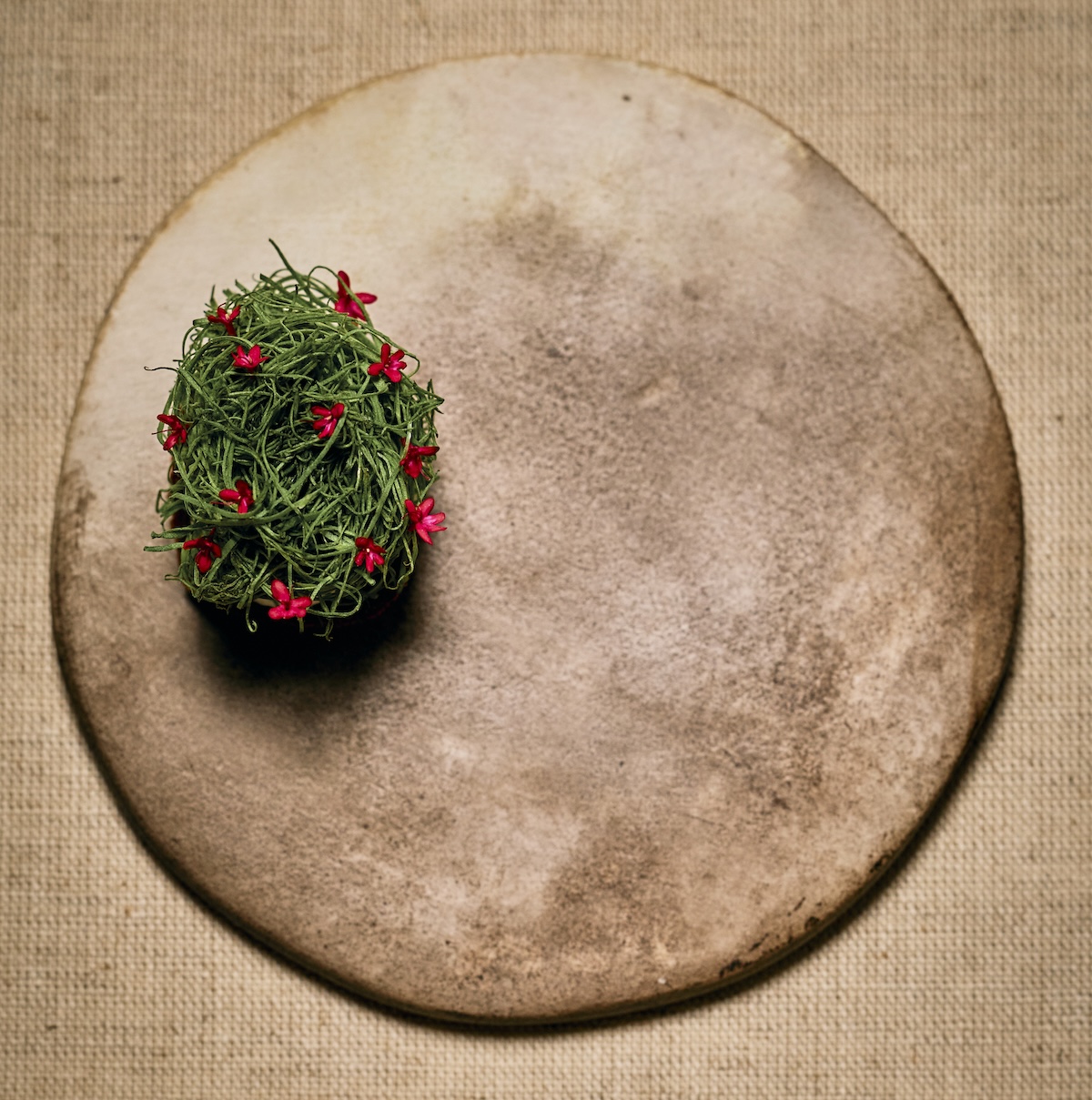
Cheney grew up in London, moving frequently, and was surrounded early on by making rather than consuming. His mother, a ceramicist, worked with smoke firing and raw materials, producing objects that were recognisable yet never fixed. That sensibility runs quietly through his cooking.
“My mother made things that looked recognisable but were never quite fixed,” – Cheney explains from Sons & Daughters’ new Mission District location. “Everything depended on the fire, the clay, the day. I think I’ve always cooked like that.”
From London to Stockholm to California
When Sons & Daughters received its second Michelin star in 2024, those who knew Cheney understood the speed of the achievement. At that point, he had been cooking his own food for just under eighteen months. The clarity was not the result of long tenure but of compressed experience, accumulated elsewhere.
After a short period studying in Cornwall, Cheney cut his teeth in London’s classically tough kitchens, environments where discipline is non-negotiable and ego quickly stripped away. Precision was learned the hard way in the UK-capital, but it was Stockholm that shifted his perspective entirely. At Gastrologik, luxury was reframed. Fermentation, preservation, smoke—these were not stylistic gestures but historical necessities.
“In Scandinavia, preservation came from necessity,” Cheney says, referring to the past rather than the present. “You fermented because otherwise you wouldn’t eat in winter. There’s honesty in that.” Fermentation, preservation, smoking: Cheney adopted these historical necessities as tools that nuanced his culinary style.
California confused him at first. At three Michelin-starred San Francisco icon restaurant Quince, the sheer abundance of Northern California produce, micro-seasons, ingredients harvested at full ripeness, and farmers who’d text you about a single courgette, felt almost overwhelming after Stockholm’s scarcity. But gradually, he understood the paradox: abundance demands restraint. There was no need to manipulate tomatoes that already tasted like summer.
After a stint as head chef back at Gastrologik, Cheney returned to San Francisco with clarity. The discipline of Nordic cooking and the generosity of Californian produce could coexist, and Sons & Daughters would be where that magic would happen,
Taking Control, Taking Risks
Cheney joined Sons & Daughters in October 2022. The remainder of that year was spent understanding the mechanics of the restaurant, easing into service, and observing. Full creative control came in mid-January 2023. The transition was not seamless. Early menus bridged old and new, and responses were mixed. Some diners embraced the sharper acidity and lighter touch; others found it unfamiliar.
“Teague [Moriarty, founder of Sons & Daughters] gave me complete creative freedom,” Cheney recalls. “So I rebuilt the team, took over pastry, sourced every plate and bowl. If it was going to fail, it would fail honestly.”
Cheney didn’t fail, but it took time for the audience to catch up.
Nordic Restraint, Californian Bounty
The current tasting menu reads like a thesis on restraint, where food and drink move in parallel rather than sequence. Plates are conceived with their liquid counterparts in mind, acidity answering acidity, savoury depth meeting oxidative complexity.
It opens with juiced tomatoes from Peach Farms paired with plums and grilled lavender in a dish that captures peak ripeness without showing off. The tomato isn’t hidden or deconstructed. It’s clarified and concentrated to allow its pure umami and sweetness to express by itself. The lavender appears briefly, grilled just enough to temper its floral edge. Plum adds acidity, not sweetness.
Knäckebröd follows, topped with smoked white fish roe, autumn pumpkin and salted leek. It’s about texture—crisp and creamy—and a saline accent with smoke used sparingly, almost as memory.
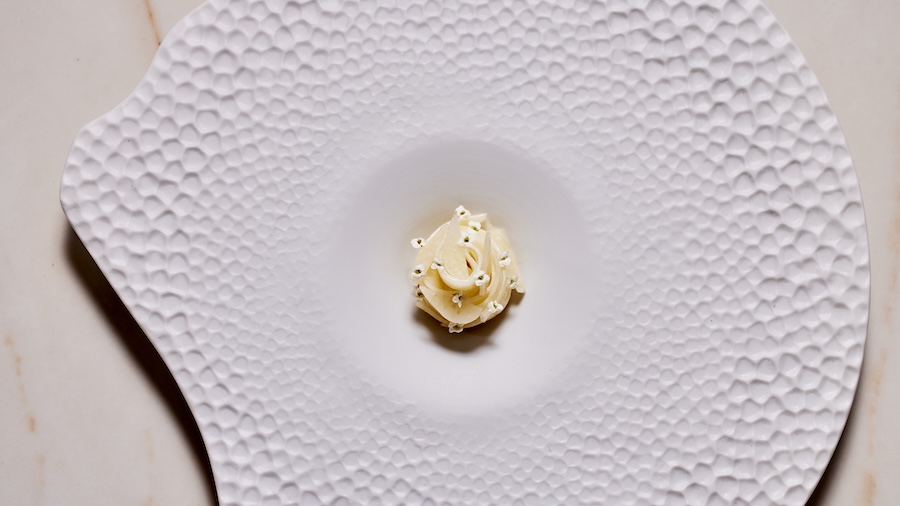
Then comes 42-day dry-aged dairy cow with elderberries, coastal redwood and grilled butter. On paper, it sounds provocative. In practice, it’s nuanced and controlled. The meat is deeply savoury, the butter browned to the edge of nuttiness, while elderberries introduce bitterness. Redwood, used aromatically, ties the dish to landscape without literalism.
Alongside this progression, the wine programme deliberately favours tension over softness. Albariño from Do Ferreiro establishes an early note of freshness and salinity, while the aged Champagne, Charles Heidsieck Millénaires 2007, brings depth without heaviness. Later, Nebbiolo from Castello di Verduno further emphasises the restaurant’s preference for verticality over sheer power.
One of the most striking courses is smoked and dried lamb heart with house-cultured crème fraîche and sorrel. This isn’t a shock-value offal. It’s honest cooking. The heart is mineral, firm, its smokiness controlled, softened by lactic richness and sharpened by sorrel.
Fish courses continue on the menu. Locally caught halibut arrives with fermented root vegetables, dill vinegar and currant wood oil. Fermentation adds depth without funk, dill vinegar lifts the fat and smoke remains present but never too loud.
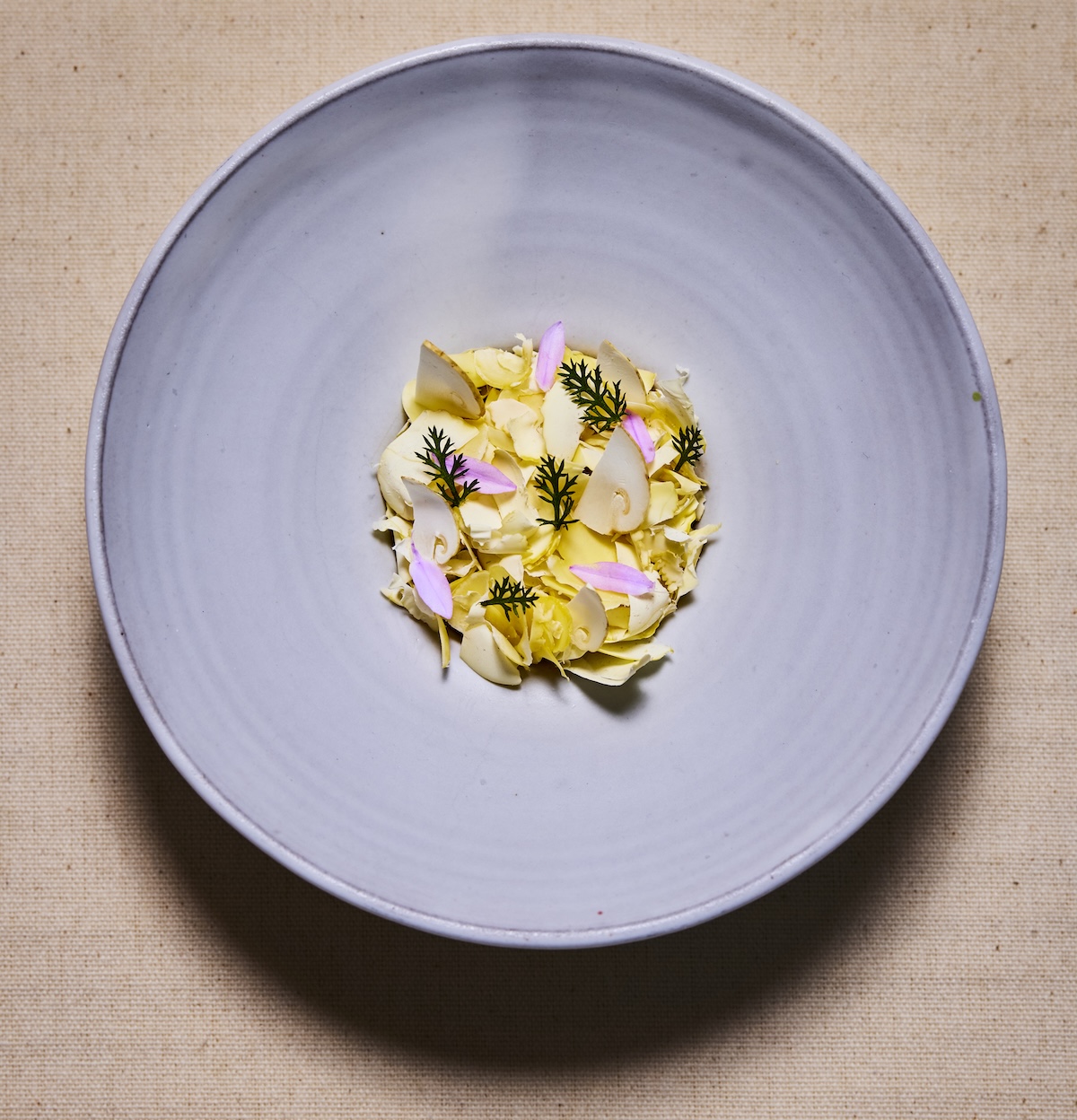
A more luxurious moment: Golden Osetra caviar with fermented potatoes, white Alba truffle and hönökaka. It could easily tip into excess, but the fermented potatoes ground the caviar while the truffle appears sparingly.
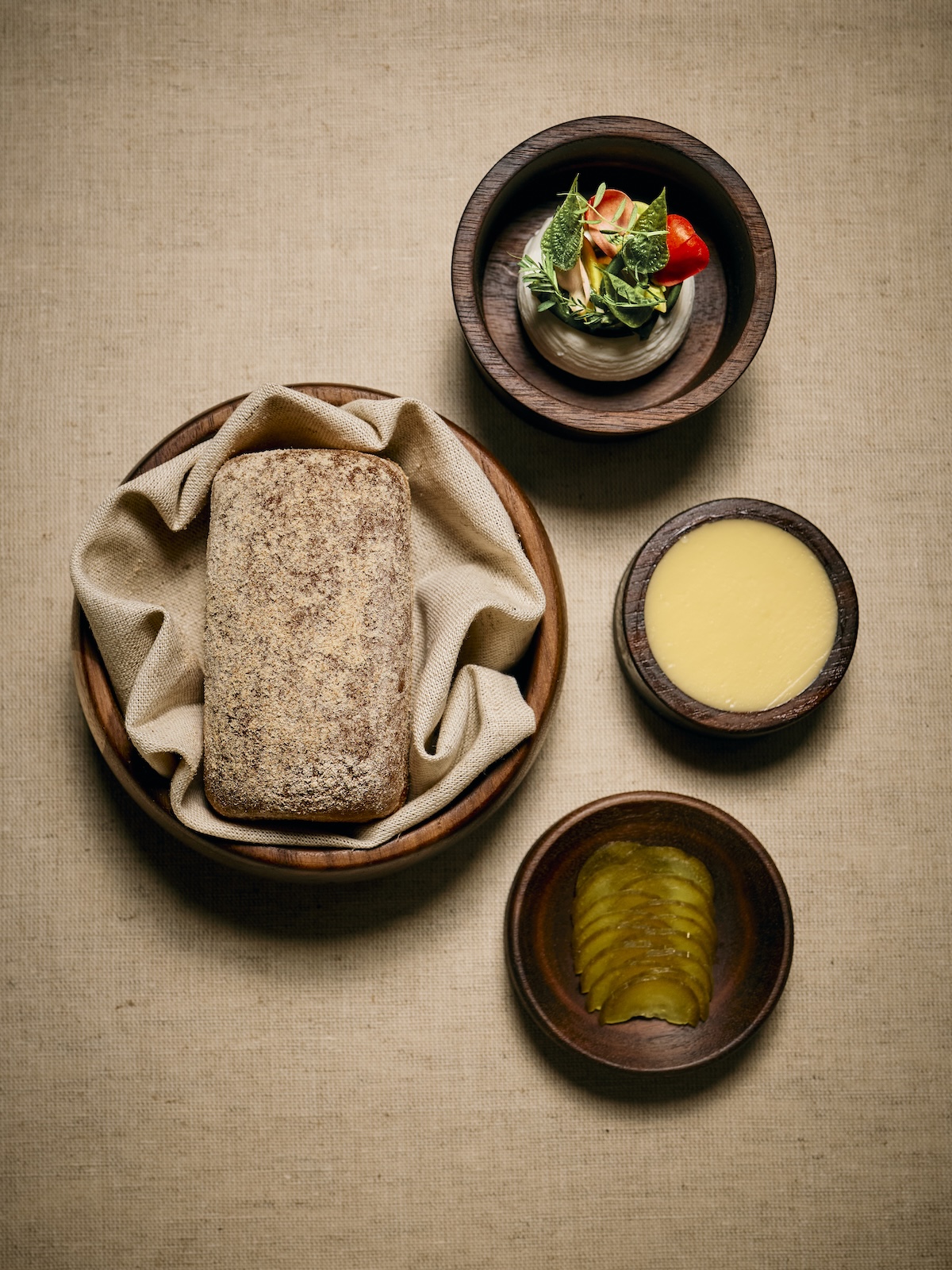
Raw scallop comes with house-cured pork belly, fresh cream, turnips and Douglas fir. Sweetness, fat and resinous notes intersect, the fir prevents richness from overwhelming. Even bread gets reverence. Toasted spelt with fresh cow’s milk cheese, house-cultured butter and preserved cucumber becomes a quiet study in fermentation.
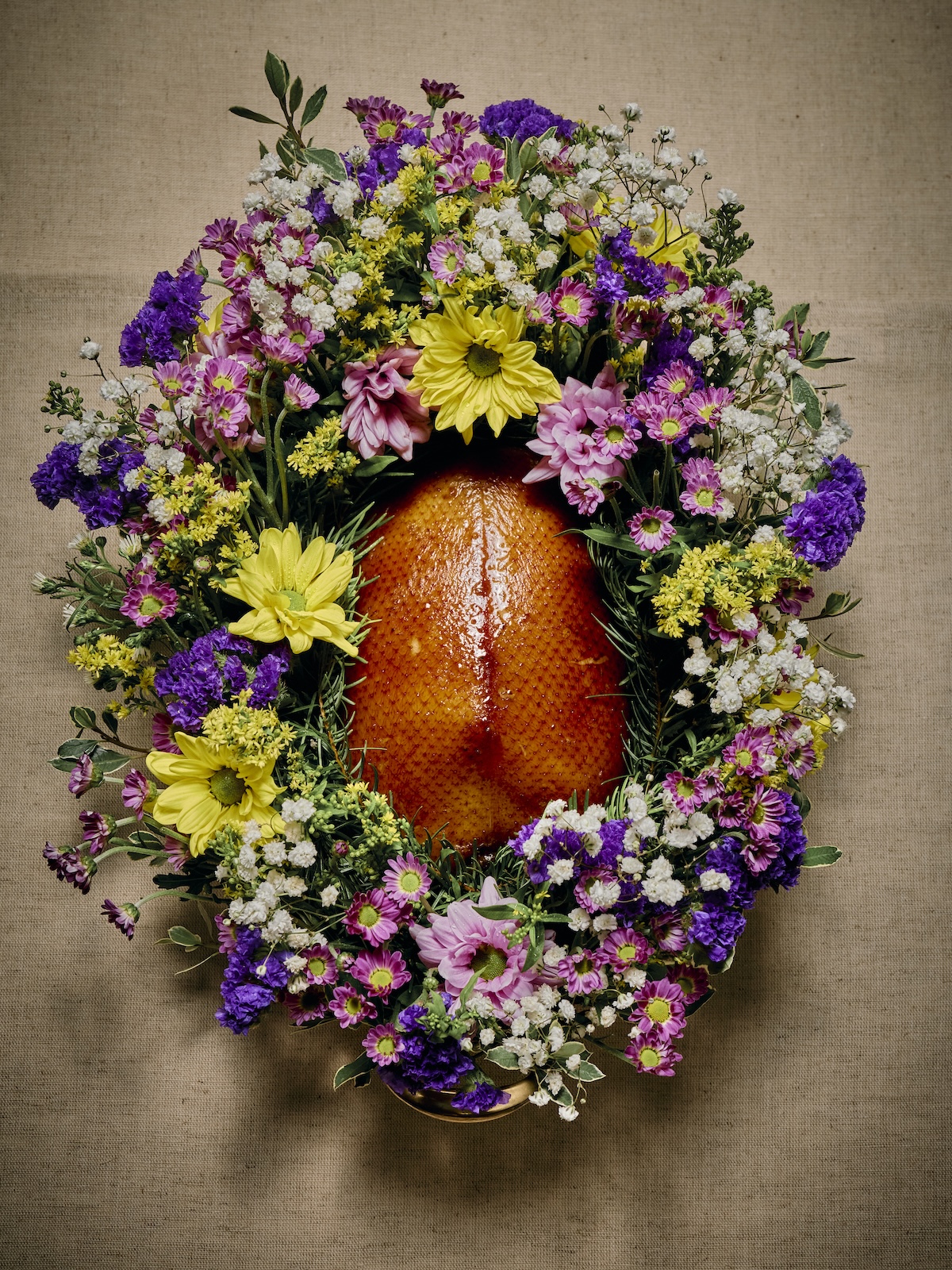
Later courses deepen. Grilled Maine lobster brushed with pineapple weed syrup and summer flowers balances sweetness and smoke. Then comes a signature: rutabaga from Tierra Vegetables, enriched with smoked and aged pork fat. Rooted in Cheney’s childhood memories of boiled swede it’s transformed into something elegant, humble and profound. Duck from Oz Family Farms, cooked over applewood and finished with a cream made from its own fat, is handled gently. Venison from Millbrook Farms arrives with caramelised cream, huckleberries, lovage and juiced beetroot.
Desserts reject sugar as resolution. Fermented pear juice with sour cream, rose geranium and whey caramel leans into acidity. Grilled apple ice cream with acorn cake, cold-pressed rapeseed oil and spruce tastes more of forest than patisserie. Frozen acorn cake miso challenges expectations. Sweet wheat bun with birch syrup and brown butter nods gently to comfort. A final bite of unripe juniper with dried blueberries closes the meal with clarity and freshness.
With desserts come wines that continue this refusal of easy sweetness, including a final Champagne from Lelarge-Pugeot and a Vintage Tawny Port from Graham’s, chosen for age and savour rather than sugar. Under Beverage Director David Kolvek wine is not an appendix and with Frida Blomdahl’s deep wine experience shaping service, the glass is treated as an extension of Harrison’s plates.
No Longer A Step, But A Place To Stay
The move to the Mission District has given Cheney’s philosophy physical space, light, natural materials, and calm. For him, it also represents personal arrival. After years of movement—Cornwall, London, Stockholm, San Francisco, Stockholm again, San Francisco again—Sons & Daughters is no longer a stepping stone. It feels like home to him.
“I’m done moving,” Cheney says simply. “This is it.”
In a short period, Sons & Daughters has generated significant momentum in California and the ambition now is broader: for new audiences to encounter the story and wonder how they weren’t already aware of it.
Tasting menus are expressions of personality and Sons & Daughters is clear about its point of view: acid-driven, restrained, and precise. Guests who value tension will recognise something rare: a restaurant cooking with absolute conviction.
Cheney is comfortable with that. He is interested in speaking his own culinary language.
“I’m not trying to make everyone happy,” he admits. “I’m trying to make food that feels true. If that resonates, brilliant. If not, there are plenty of other places to eat. But in a perfect world I would of course love for everyone to eat with me.”
Sons & Daughters
2875 18th St, San Francisco, CA 94110
www.sonsanddaughterssf.com
The post Sons & Daughters: Harrison Cheney Rewrites New Nordic in California appeared first on Honest Cooking and Travel.