
This post may contain affiliate links. As an Amazon Associate, I earn from qualifying purchases. Please read my disclosure.
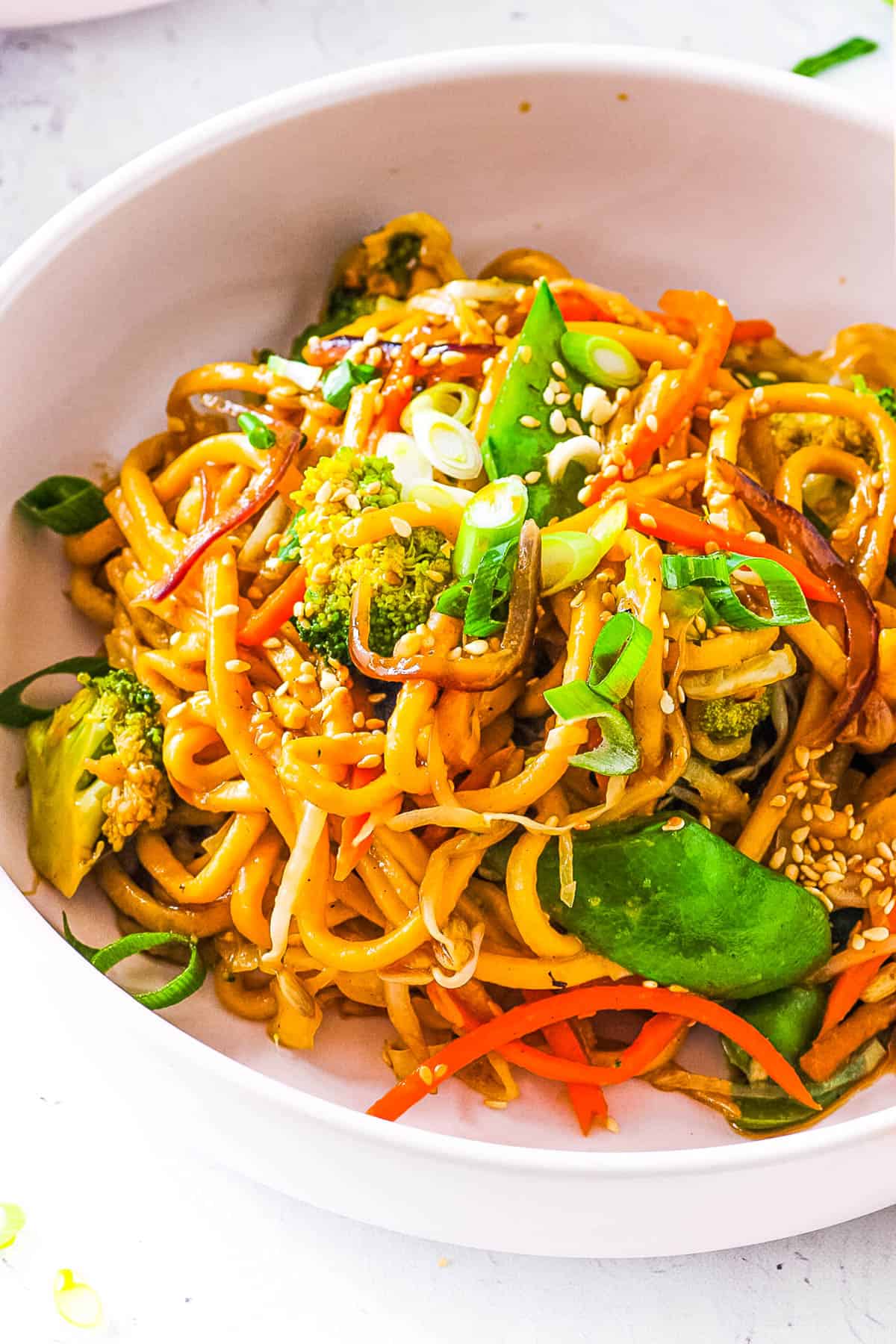
I love making vegan chow mein for an easy dinner that the whole family enjoys! I stir-fry fresh vegetables and noodles with a flavorful sauce that really brings the dish together. This wholesome, healthy meal has quickly become one of my favorite recipes. The best part? I can make it in just 30 minutes!
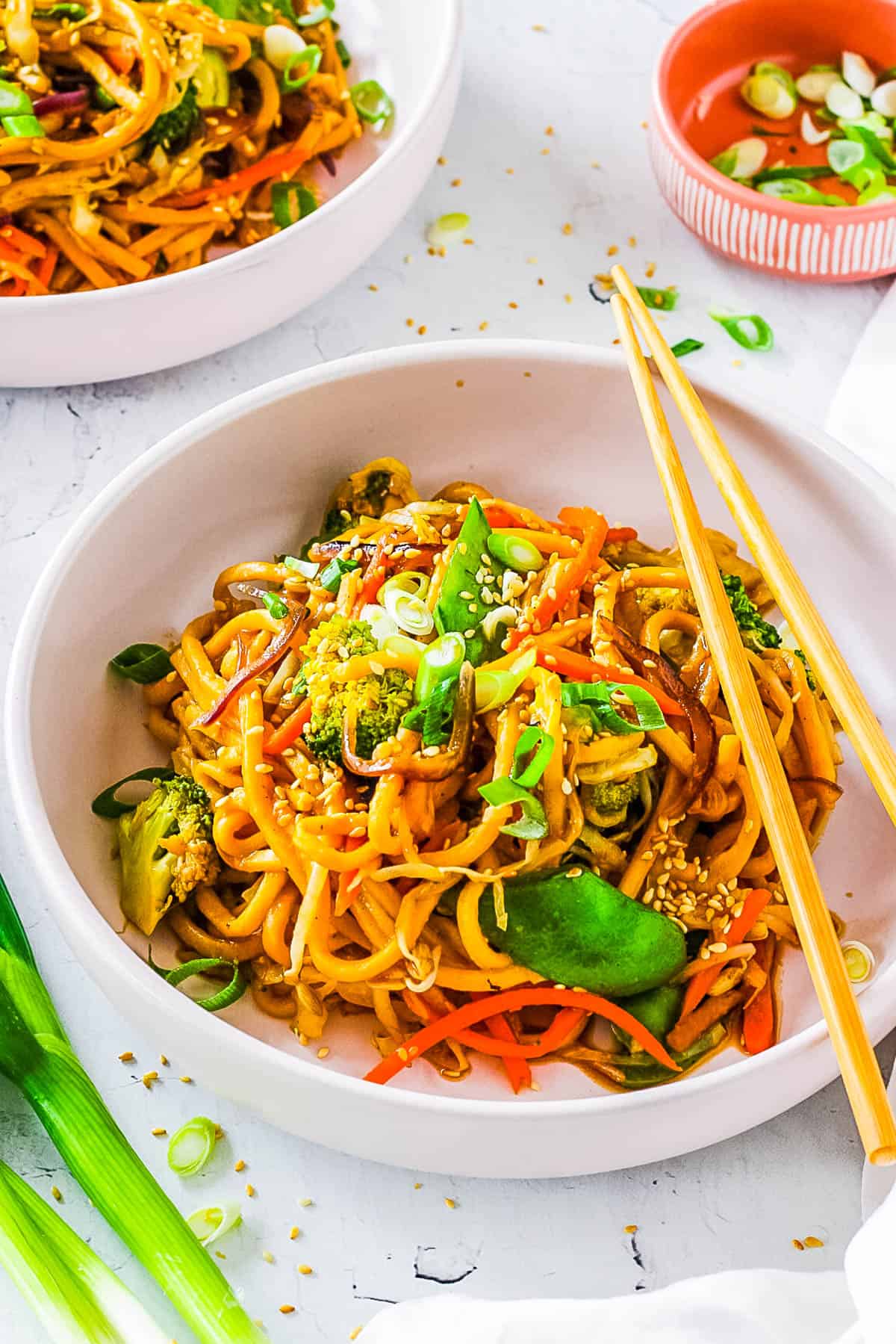
Chinese takeout is a comfort staple in our house, and chow mein has always been a favorite. But takeout versions are often heavy on oil and additives, and it can be hard to find one that is truly vegan. That’s why I created this vegan chow mein recipe. It keeps the bold flavors I love, uses simple, clean ingredients, and is easy enough to make any night of the week.
This vegetable chow mein is a lighter take on the classic Chinese noodle dish and works well as a filling meatless meal. When I want to switch things up, I also make vegan teriyaki noodles or vegan peanut noodles for a different plant based noodle option with bold flavor.
One busy weeknight, I tossed vegetables in the wok while my crew commented that it smelled like takeout. Yes! As I added broccoli, carrots, and snow peas to the pan, everything came together quickly. This vegan chow mein is made with clean ingredients, works well with different vegetables or proteins, and is simple enough for a weeknight dinner while still being filling.
I am obsessed with my recipe because the vegetables remain crisp and the noodles absorb the flavorful soy-based sauce exactly how I like it. I cook on high heat for a few minutes, then toss in the sauce and noodles, finishing with green onions and sesame seeds. It is versatile, gluten-free, and can include tofu or soy curls. Yum!
The fact that my family can enjoy a healthy takeout-style meal at home is a win for me. My kids always go back for seconds so I always make extra since it is also easy to store. It has become a regular recipe because it is easy to make, flavorful, and everyone in my house loves it.
Latest Recipe Video!
🥘 Ingredients
These are the ingredients I use for this healthy chow mein recipe. These can be found in any local grocery store or Asian market!
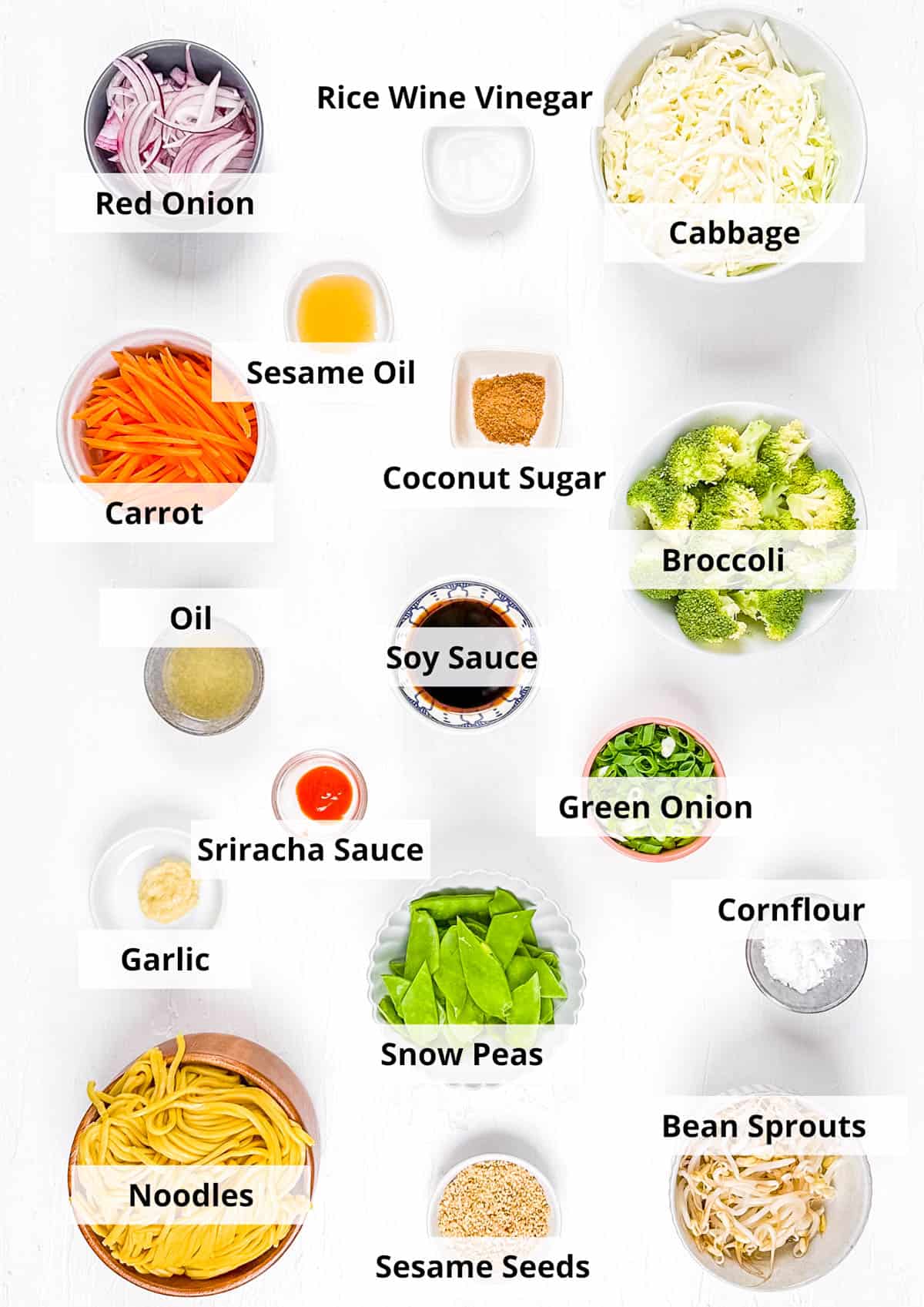
For The Stir-Fry
Olive Oil: I use olive oil or avocado oil to keep my Chinese vegan noodles as healthy as possible. I avoid palm or canola oil since they can be inflammatory.
Red Onion and Garlic: I sauté onion and garlic to bring out the best flavor in this vegan chow mein. I usually use red onion, but any type of onion works well.
Cabbage, Carrots, and Broccoli: After sautéing the onion and garlic for a couple of minutes, I add cabbage, carrots, and broccoli to the skillet. These bright vegetables add color and nutrition for a nourishing meal. Sometimes I add bell peppers too!
Snow Peas and Bean Sprouts: Snow peas and bean sprouts are classic vegetables in Chinese cuisine. If I can’t find snow peas, I use snap peas instead.
Chow Mein Noodles: If I don’t have vegan chow mein noodles, I use any long, thin noodles I have on hand. For a quick meal, instant ramen or other instant noodles work just fine.
Green Onions: I add green onions for a fresh boost of flavor. For a bolder taste, I sometimes use spring onions instead.
Toasted Sesame Seeds: Toasted sesame seeds are optional, but I love adding them. They give a classic Asian flavor and a healthy dose of fat to this vegetable chow mein.
For The Sauce
Soy Sauce: I use soy sauce as the base for my vegan chow mein sauce. I sometimes swap it for liquid aminos, coconut aminos, or hoisin sauce. Using a dark soy sauce gives the sauce a richer taste that is slightly less salty.
Sesame Oil: I add sesame oil for a slightly nutty and earthy flavor.
Coconut Sugar: I use coconut sugar to add a touch of sweetness and balance the boldness of the sesame oil. Brown sugar works well too if I want the sauce to taste closer to traditional chow mein.
Sriracha: I add sriracha to the sauce depending on how spicy I want it. I can adjust the amount or use other spices and flavors to suit my taste.
Rice Wine Vinegar: I include rice wine vinegar for a sweet and acidic flavor, similar to apple cider vinegar. I sometimes use Chinese cooking wine instead, which has hints of cinnamon and nutmeg along with amino acids.
Cornstarch: I mix in cornstarch to thicken the sauce so it can fully coat the vegetables and noodles.
🔪 How To Make
Healthy chow mein noodles are easy to make at home! With just a few simple steps, I can have this vegan recipe mastered. Here’s how I make vegetable chow mein:
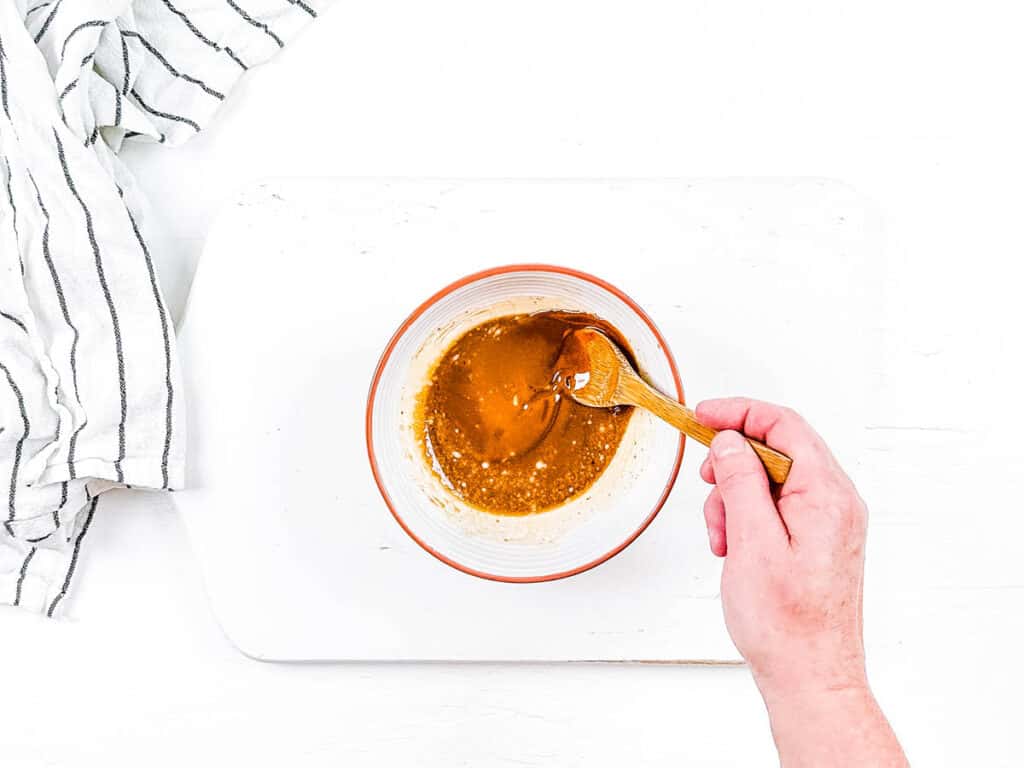
Mix Sauce Ingredients: I mix all of the sauce ingredients together in a small bowl and set it aside.
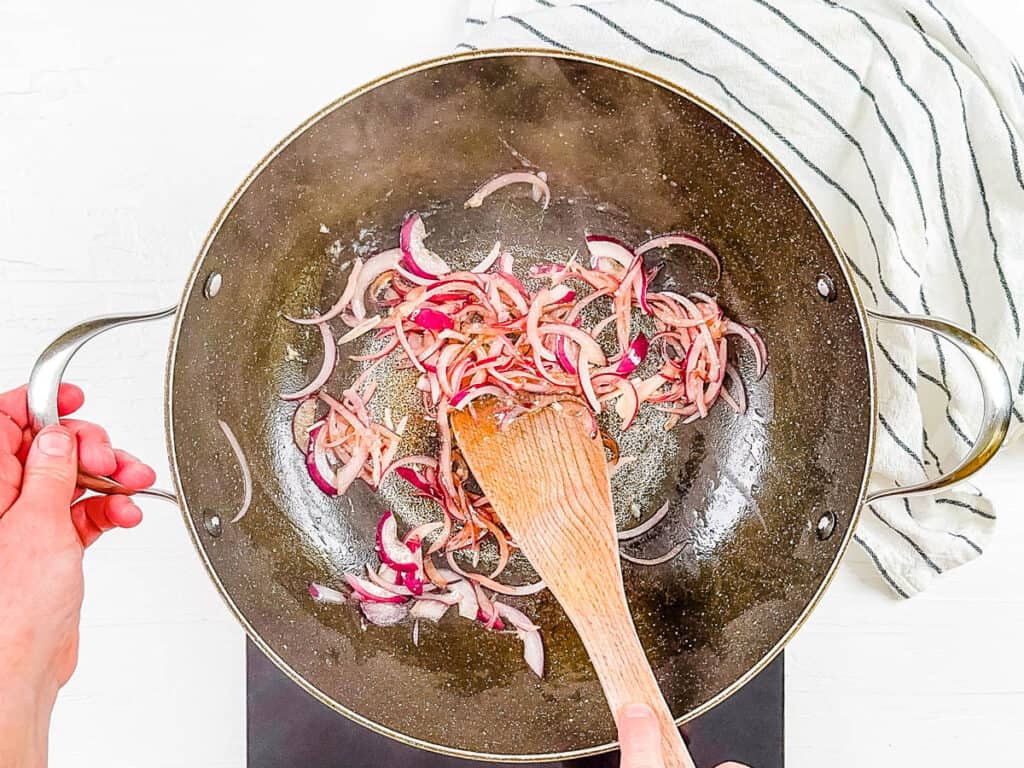
Cook Noodles, Saute Onion and Garlic: I boil water and cook the chow mein noodles according to the package directions until they are al dente. Then I drain them and set them aside. I heat 1 tablespoon of vegetable or olive oil in a large pan or wok over medium heat, slice the onions thinly, and crush the garlic cloves. I sauté the onions and garlic for 1 to 2 minutes.
Add Veggies: I add the cabbage, carrot, and broccoli florets, then continue to sauté for about 5 minutes over medium-high heat until they are cooked and tender. I sometimes add 2–3 tablespoons of water to the wok to help the vegetables cook evenly.
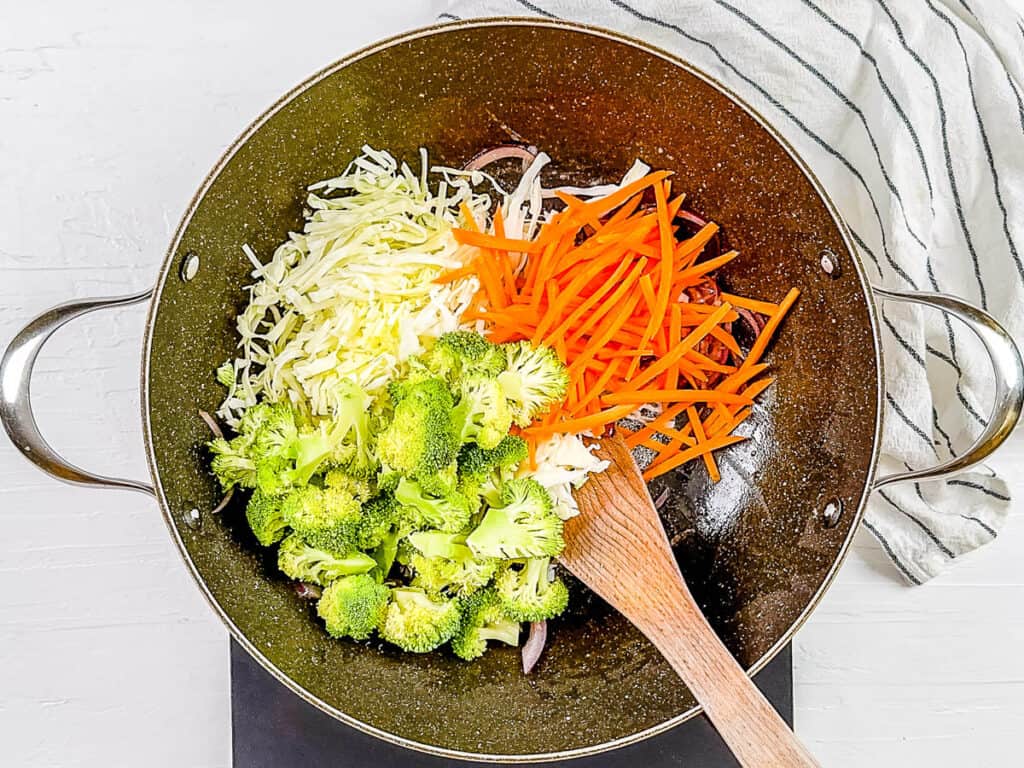
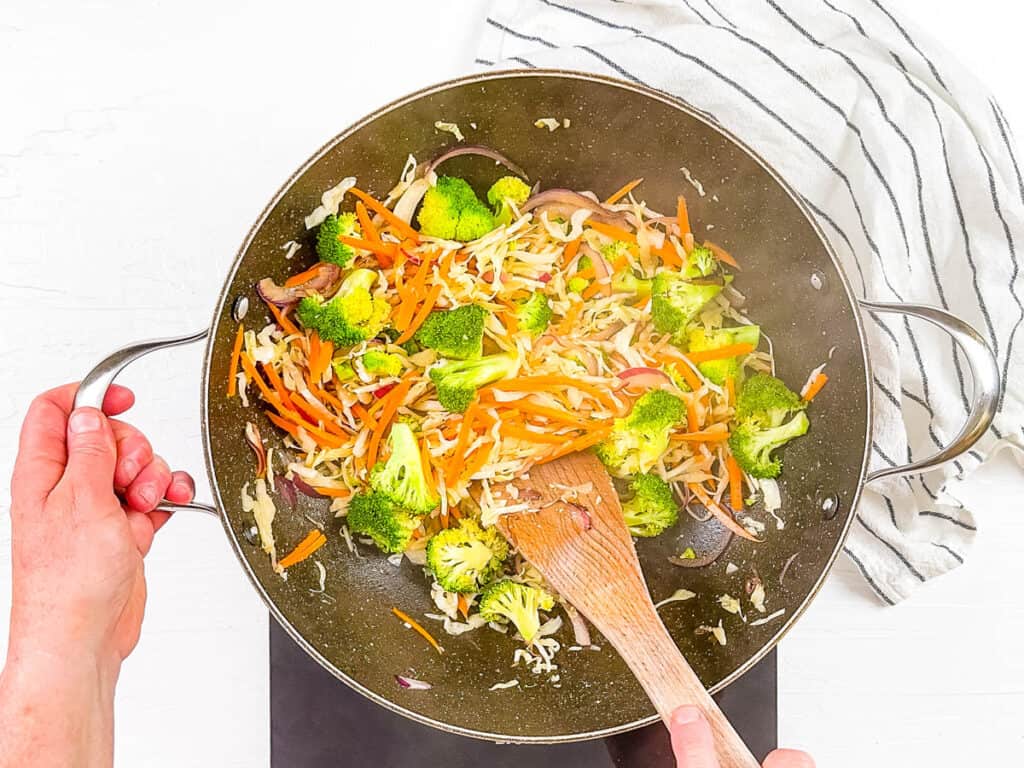
Add Additional Veggies: Next, I add the snow peas and bean sprouts and sauté them for a couple of minutes before adding the sauce and cooked noodles.
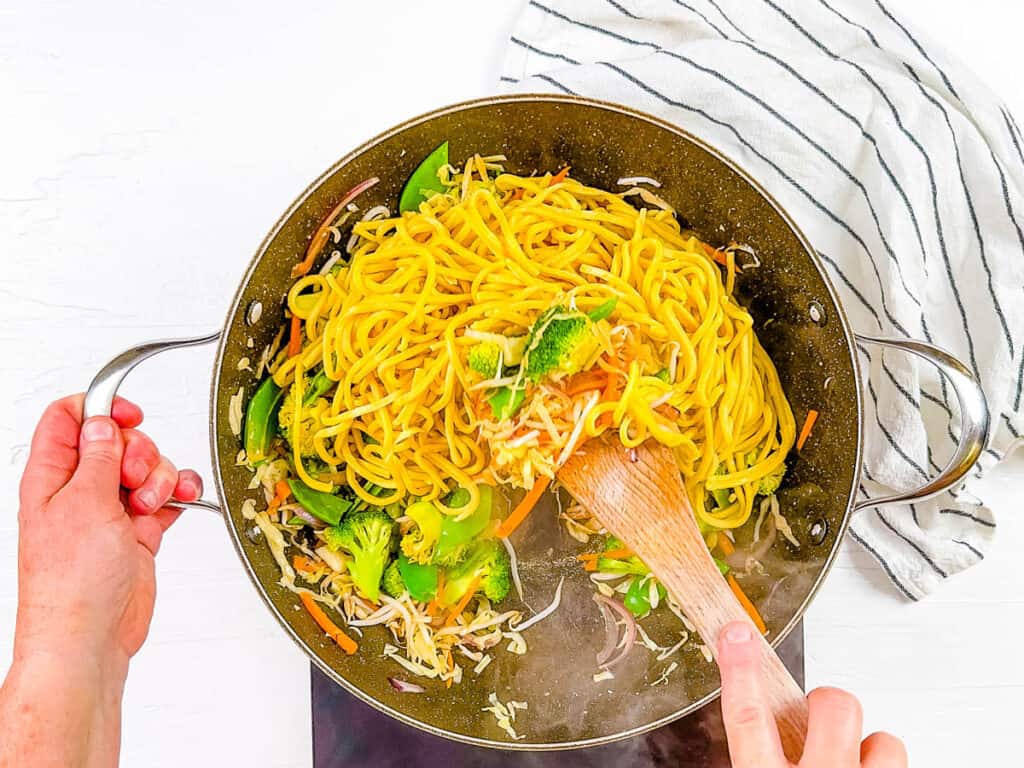
Add Noodles And Sauce: Lastly, I add the noodles and sauce, then cook everything for 2 to 3 minutes while the sauce thickens. I add half of the sliced green onion and toss everything to coat all the ingredients.
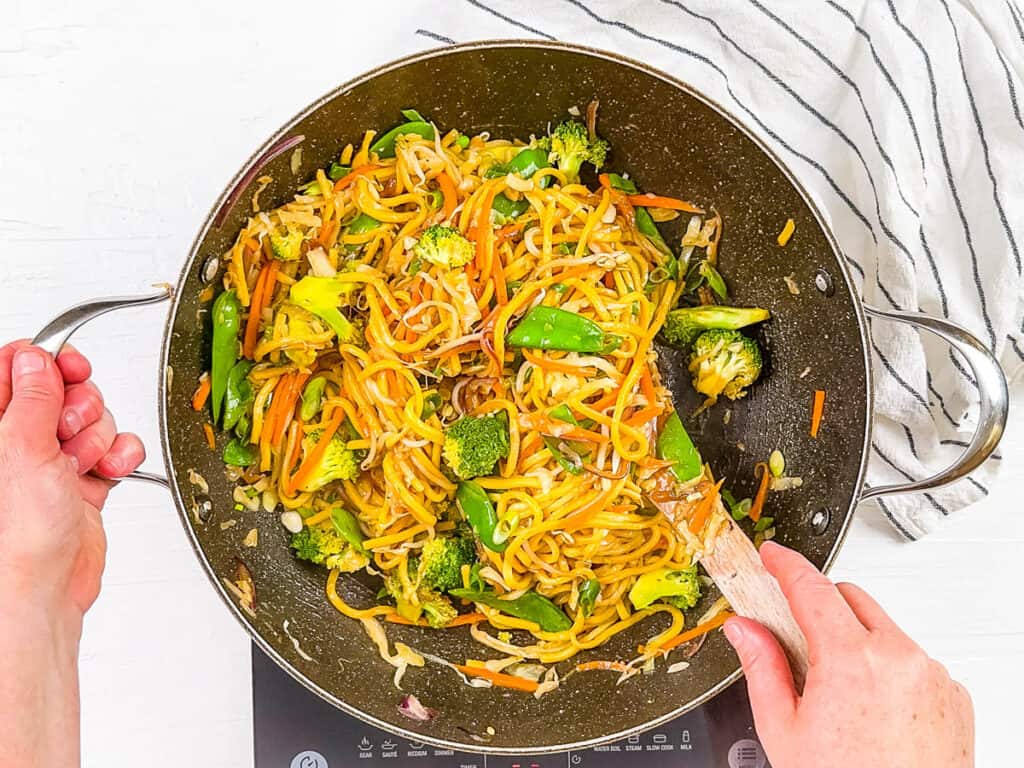
Serve: I serve these healthy Chinese noodles immediately, topped with the remaining sliced green onion and toasted sesame seeds.
My #1 Secret Tip for this recipe is to speed up the cooking time by using high heat, which helps the vegetables cook quickly while keeping them crisp and flavorful.
Other Tips To Keep In Mind:
- For more sauce: I add an additional ¼ cup water to the sauce ingredients and increase the corn starch to 1 tbsp.
- To stop noodles from overcooking: I rinse them under cold water and drain. This is especially important for rice noodles to yield the best result!
- Prepare ahead: I like to prepare all the vegetables ahead of time and store them in the fridge for up to 2 days before cooking.
📖 Variations
Here are a few easy variations I like to use to customize this vegan chow mein based on what I have on hand or what I’m craving.
Add Protein: I often turn this into a tofu chow mein or even a chicken-style chow mein for extra protein. For crispy tofu, I press the block with a clean kitchen towel to remove excess water, then sauté it with a little oil or speed things up using the air fryer. I also like adding soy curls for an easy vegan chicken-style option since the texture is very similar.
Spicy Chow Mein: When I’m craving heat, I turn this into a spicy chow mein by adding more sriracha or mixing in chili crisp, red pepper flakes, or sliced jalapeños.
Try Different Veggies: I love switching up the vegetables depending on what I have. Red bell pepper, shiitake mushrooms, bok choy, or green beans all work really well in these vegan Chinese noodles.
🍽 Serving Suggestions
This dish pairs well with a variety of Asian-inspired sides and works for both casual meals and more festive spreads. For sides, I often add Asian-style appetizers like vegan spring rolls, or vegetarian wontons.
Sometimes, I keep it simple by serving teamed white or brown rice on the side or tofu fried rice to add more flavor. If I want extra protein without mixing it into the noodles, I serve them with air fryer tempeh or tofu skewers.
🧊 Storage Directions
Refrigerating: I let the vegan chow mein cool to room temperature, then transfer it to an airtight container. It keeps well in the fridge for up to 4 days. Sometimes I also set aside some of the sauce and vegetables and cook fresh noodles the next day for the best texture.
Freezing: I don’t recommend freezing fully assembled vegan chow mein, as the noodles can become mushy and the vegetables may lose their texture once thawed. If I do want to freeze parts of this recipe, I freeze the sauce and cooked vegetables separately in an airtight, freezer-safe container for up to 2 months. When I’m ready to eat, I thaw them in the refrigerator overnight, cook fresh noodles, and toss everything together for the best flavor and texture.
Reheating: I reheat it on the stovetop or in the microwave for 1 to 2 minutes, or until it is heated through.
❓Recipe FAQs
Using thin, long noodles works best for my vegetarian chow mein. I usually find special chow mein noodles at an Asian market, but other noodles work too. For an easy option, I use ramen, spaghetti, or linguini noodles. If I want to make a vegetable chow fun or tofu chow fun, I use thick rice noodles instead. To keep it vegan, I make sure to choose eggless noodles.
If my noodles stick together, it usually means I didn’t rinse them after boiling or I forgot to toss them with a little oil. I always rinse them under cold water and toss with a small amount of oil to keep them separate.
If my noodles turn out mushy, it usually means I overcooked them. I make sure to boil them just until al dente, then drain and rinse with cold water to stop the cooking.

Love this healthy asian recipe? Please leave a 5-star rating 🌟 in the recipe below and/or a review in the comments section further down the page!
You can also FOLLOW ME on FACEBOOK, INSTAGRAM, and PINTEREST to see more delicious, healthy, family-friendly food, and if you have any questions, I’m here to help!
📋 Recipe Card
Vegan Chow Mein
I love making vegan chow mein for an easy dinner that the whole family enjoys! I stir-fry fresh vegetables and noodles with a flavorful sauce that really brings the dish together. This wholesome, healthy meal has quickly become one of my favorite recipes. The best part? I can make it in just 30 minutes!
Servings: 4
Calories: 549kcal
- My #1 Secret Tip for this recipe is to speed up the cooking time by using high heat, which helps the vegetables cook quickly while keeping them crisp and flavorful.
- For more sauce: I add an additional ¼ cup water to the sauce ingredients and increase the corn starch to 1 tbsp.
- To stop noodles from overcooking: I rinse them under cold water and drain. This is especially important for rice noodles to yield the best result!
- Prepare ahead: I like to prepare all the vegetables ahead of time and store them in the fridge for up to 2 days before cooking.
Calories: 549kcal | Carbohydrates: 94g | Protein: 24g | Fat: 10g | Saturated Fat: 1g | Polyunsaturated Fat: 2g | Monounsaturated Fat: 4g | Sodium: 1732mg | Potassium: 817mg | Fiber: 13g | Sugar: 11g