
This post may contain affiliate links. As an Amazon Associate, I earn from qualifying purchases. Please read my disclosure.
This healthy Greek salad stays true to traditional horiatiki while being a delicious addition to a low-carb lifestyle. I use cucumbers, tomatoes, and feta cheese for a crisp dish that takes just 10 minutes to make, meaning it is perfect for quick lunches and light dinners. The combination of juicy vegetables, briny olives, and a simple dressing is the reason this salad has earned legendary status.
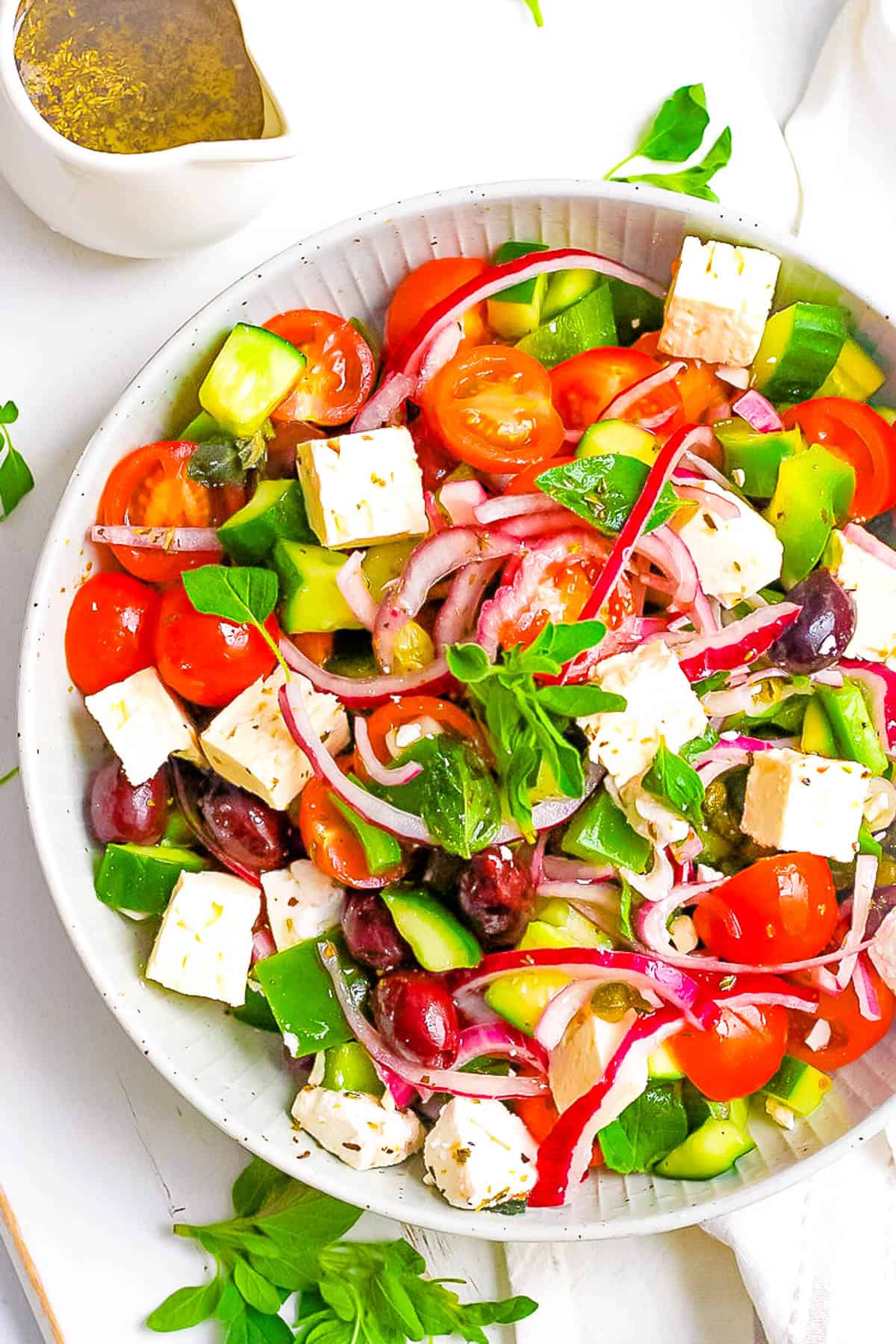
Greek salad lets fresh, simple ingredients take center stage and really shine in their true form. I focus on using quality produce to create an authentic salad with a healthy dressing. I even eat it on the go by using it in my Greek pita sandwich, which I highly recommend if you enjoy fresh, crisp meals.
I like switching between this healthy Greek salad and my vegan Greek salad, depending on who I am catering to. Whenever I need something quick that is nourishing, I turn to this recipe. There was at least a week straight when I ate nothing but this salad because of my busy schedule. You might think I grew tired of it, but I actually missed it when my schedule allowed for other meal planning and prep.
Let me preface this by saying I love lettuce and have nothing against it, but one of the reasons I love this healthy Greek salad is that it has no lettuce. This leaves more room for a variety of vegetables, with their colors and textures on full display. The cucumbers add crunch, while tomatoes bring sweetness and a slight acidity, and the feta provides a salty, creamy interruption. As a nutritionist, I love that this salad is packed with fiber, healthy fats, and a variety of vitamins.
As a busy mom, I love that this method is straightforward and practically impossible to mess up. I cut the vegetables into similar sizes, and keep the dressing simple, so it coats everything. And I purposefully add the feta at the end to keep it intact rather than break down in the salad and wash out the distinct colors.
The first time my kids had a traditional Greek salad, they had not yet had a salad that was devoid of lettuce, and that novelty really appealed to them. Then one night we visited a friend for dinner, and she made a Greek salad, which had lettuce in it. I made sure to give my kids a knowing look, so they knew not to say anything. At the end of the night, my eldest complimented her meal and said they liked that she added lettuce, and that it was a nice change. Ha! Skip the greens next time you make a salad, and go Greek instead.
Latest Recipe Video!
🥘 Ingredients
This is a complete list of the fresh produce and ingredients I use for this healthy Greek salad and the dressing:
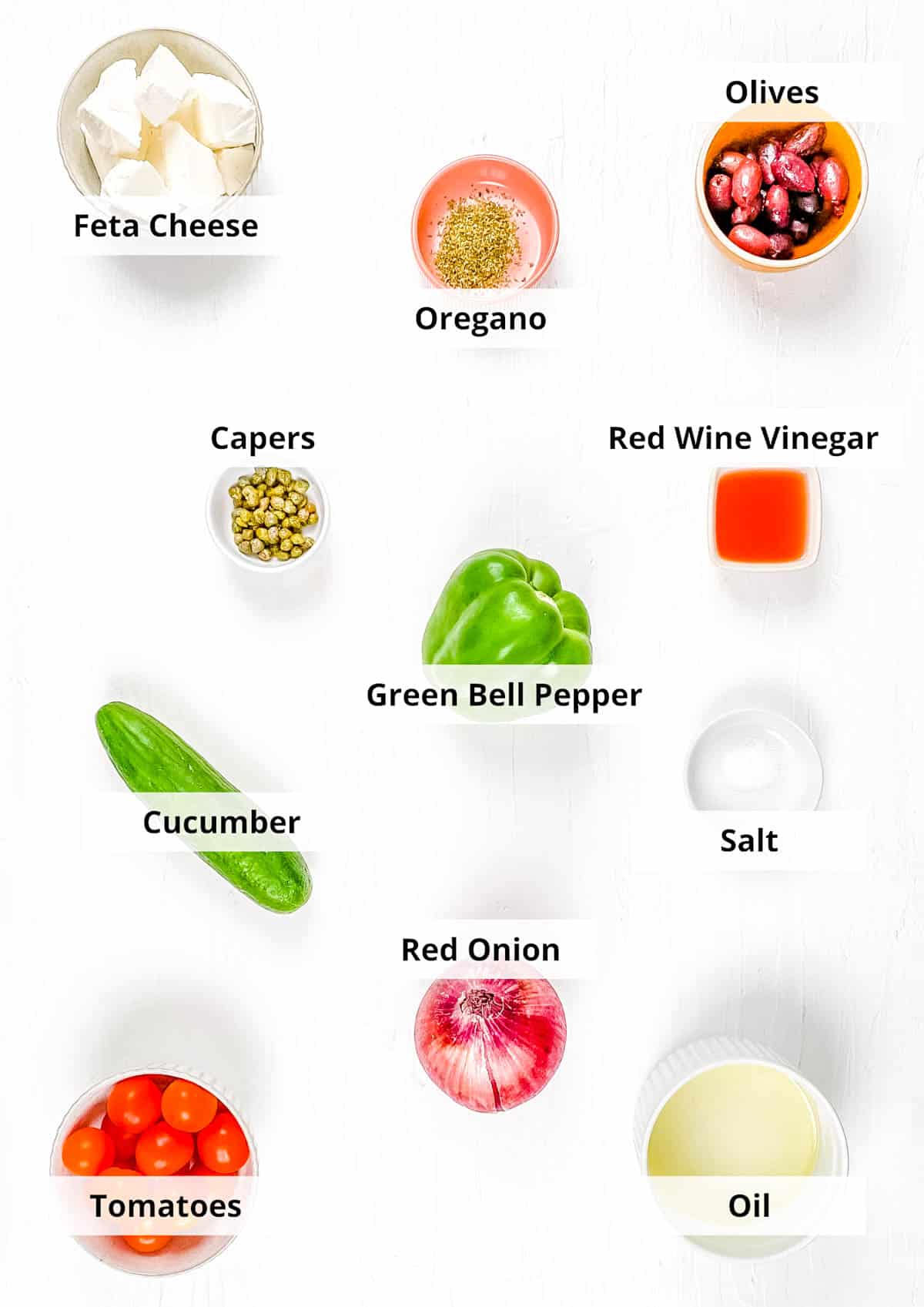
Cucumbers: I use firm cucumbers for crunch and a refreshing low-carb base.
Cherry tomatoes: These add sweetness and hold their shape better than larger tomatoes.
Green bell pepper: I include this for a slightly crisp texture and mild, earthy flavor.
Red onion: I slice this thinly to add sharpness that does not overpower the entire salad.
Kalamata olives: These bring a briny, savory element and a flavor that is essential to a Greek salad.
Capers: I add a small amount for extra saltiness.
Feta cheese: Block feta works best for this recipe.
Olive oil: This forms the base of the dressing and adds richness.
Red wine vinegar: I use this for acidity, which gives the salad a slight tartness.
Dried oregano and salt: These complete the dressing with a classic Mediterranean flavor.
🔪 How To Make
I follow this simple process and focus on prep and balance when making this healthy Greek salad:
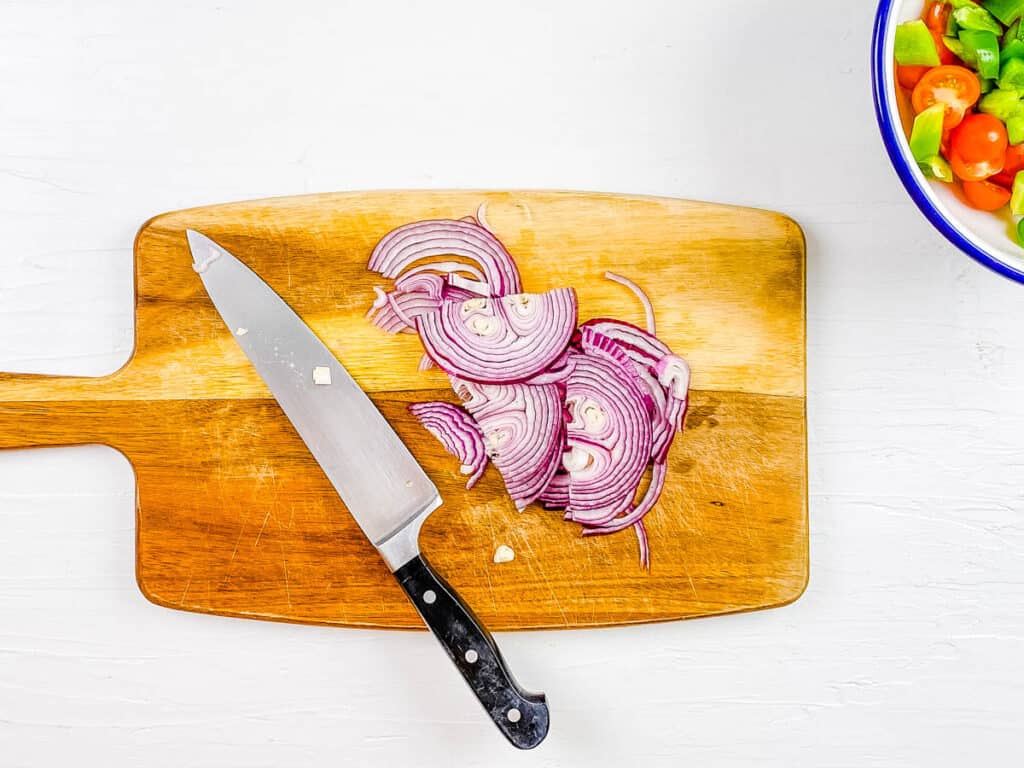
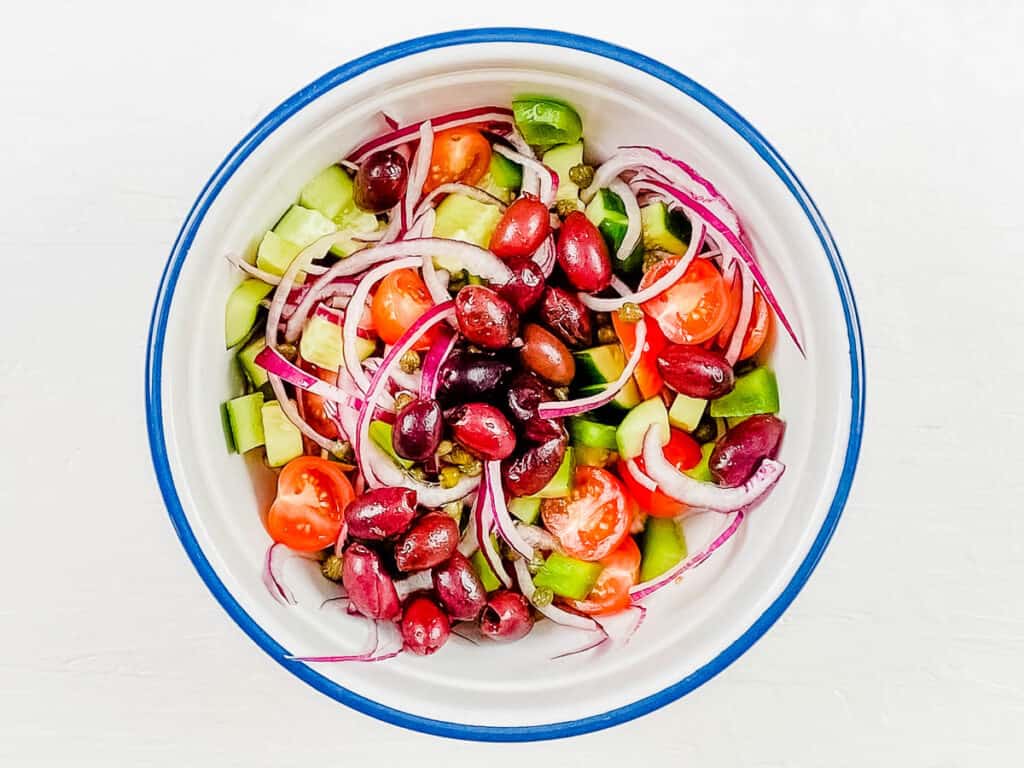
Prepare vegetables: I start by halving the cherry tomatoes, dicing the bell pepper, slicing the red onion, and cutting the cucumber into bite-sized pieces.
Add remaining ingredients: Then I add all the chopped vegetables into a large bowl, along with the olives and capers, tossing everything to combine.
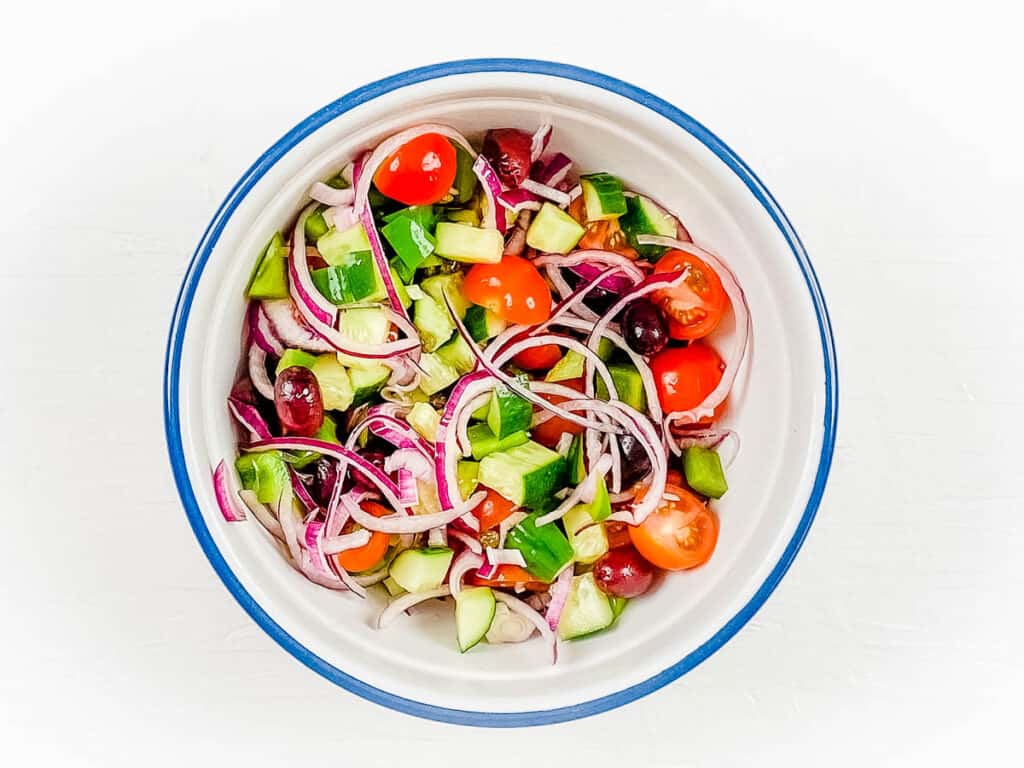
Chill: I cover the salad and place it in the refrigerator for 20-30 minutes, allowing the flavors to settle while I make the dressing.
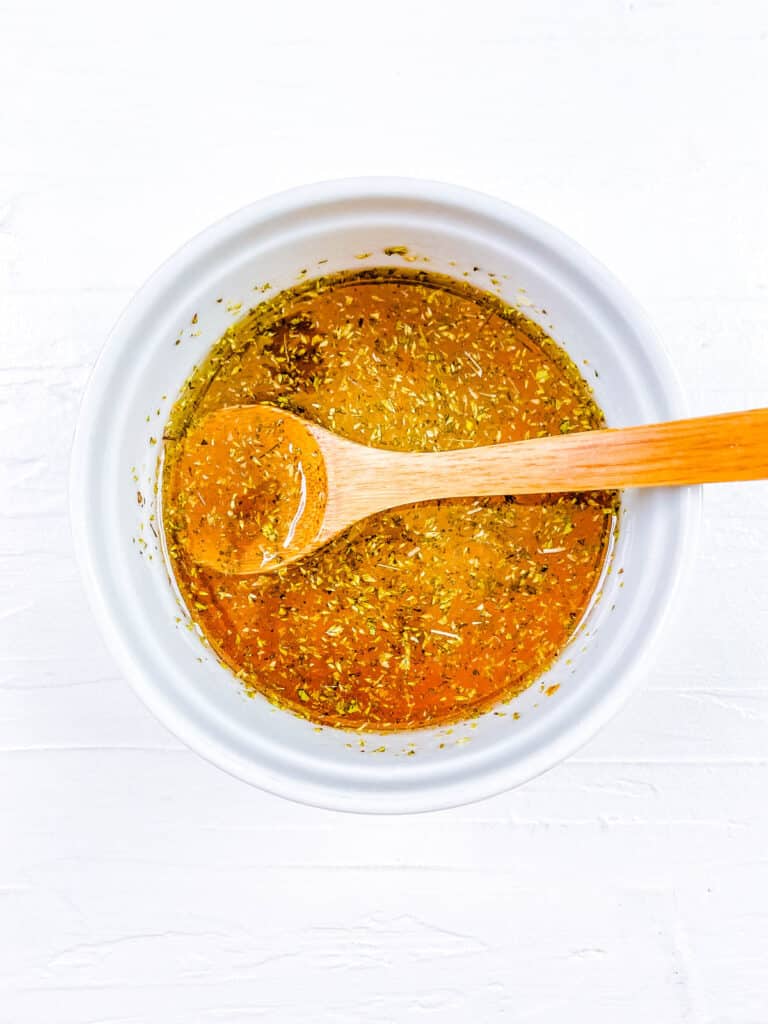
Make dressing: In a small bowl, I whisk together the olive oil, red wine vinegar, oregano, and salt until the dressing looks slightly thickened and emulsified.
Add feta and serve: I remove the salad from the fridge, crumble the feta over the top, and drizzle the dressing before giving it one light toss. I serve it immediately and enjoy!
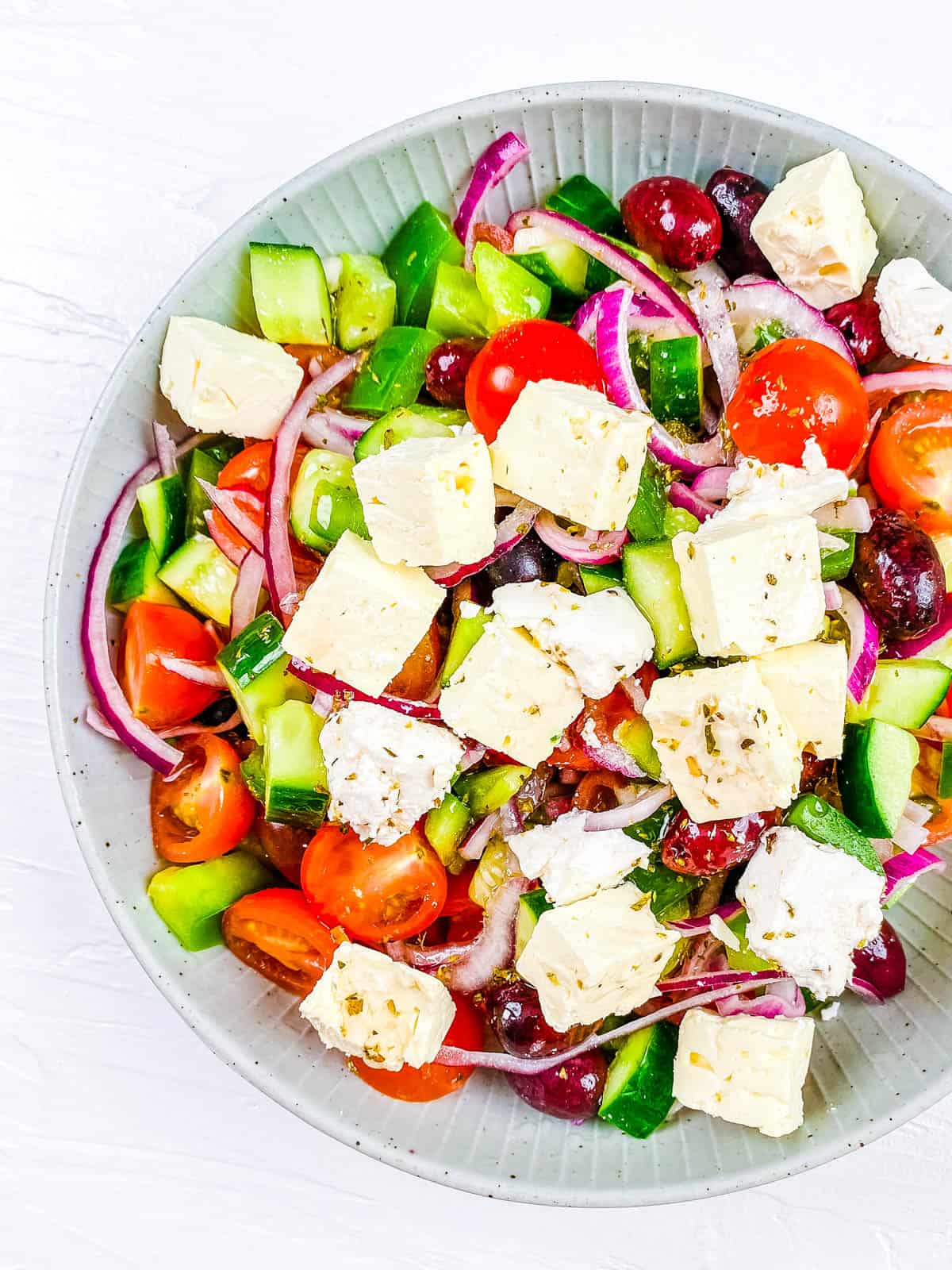
My #1 Secret Tip for this healthy Greek salad recipe is to add the feta after mixing the vegetables and dressing. I like keeping the cheese in larger pieces, and this also prevents it from breaking down too much in the salad.
Other Tips To Keep In Mind:
- Use firm produce: I choose cucumber and tomatoes that are firm, as they are less likely to release a lot of liquid as they sit. This keeps the salad crisp.
- Soak onion: If you do not like the taste of raw onion, soak the sliced onion in some cold water for 10-15 minutes. This removes some of the sharper notes.
- Balance dressing: I taste the dressing before adding it and adjust the oil or vinegar depending on how sharp or mild I want it.
- Reserve dressing: If I am serving this for a large group, I keep the dressing separate and allow each person to add their own amount to the salad.
📖 Variations
I like this Greek salad as is, but sometimes I adjust it slightly to keep it interesting. These are 3 variations you need to try:
Protein boost: I add 1 cup of cooked chickpeas or quinoa, and turn this salad into a complete bowl meal. This is a staple when my husband and I work from home and need something easy and fulfilling.
Herb upgrade: For a more aromatic flavor, I mix in 2 tablespoons of freshly chopped flat-leaf parsley and 1 tablespoon of chopped fresh dill. This small change brightens the entire salad perfectly.
Dairy-free: I replace the feta with a plant-based alternative or skip it entirely and add extra olives or some vegan croutons for a stronger savory element. A good friend of mine is sensitive to lactose and prefers using goat cheese in her salad. This does not make it dairy-free, but it is easier to digest.
🍽 Serving Suggestions
An authentic Greek salad deserves to be served with other authentic dishes, which balance freshness with richer flavors. It pairs really well with some freshly baked vegan flatbread and with Greek hummus. And if you want something a bit more substantial, try it with Yemista Greek stuffed tomatoes and peppers.
Last week, I served this salad for lunch with some Greek vegan spanakopita, which my kids absolutely love. I also reheated some mushroom flatbread and put out a few small bowls of extra Greek salad dressing for dipping. It may have been a mix of leftovers and last-minute additions, but it was so filling and tasty that I might have to make the same thing for dinner, but on purpose.
🧊 Storing And ♨️ Reheating
Refrigeration: I store the dressing and salad separately in an airtight container in the fridge for up to 3 days.
Freezing: I do not freeze this salad as the vegetables lose their texture.
Reheating: This salad is best served at room temperature or chilled and does not require reheating.
❓Recipe FAQs
This happens when the vegetables release moisture, especially the cucumbers and tomatoes. If I cut them too far in advance or add the dressing too early, the liquid accumulates in the bowl. If needed, I drain the excess liquid and add the dressing just before serving. But do not discard the liquid, as it can be used as a traditional dipping sauce for bread called papara. It is recommended that you squeeze tomatoes into the bowl and add some olive oil and feta brine.
I prefer cutting everything into similar bite-sized portions. Large chunks can make the salad feel uneven and awkward, while very small pieces can become too soft after mixing. Ultimately, it comes down to personal preference. Traditionally, this salad contains rustic chunky vegetables, so I recommend finding the size that works for you.
Block feta stored in brine works best since it has a firmer texture and a richer flavor. I avoid pre-crumbled or precut feta and try to use feta with a much softer, creamier texture that is still able to hold its shape in the salad.
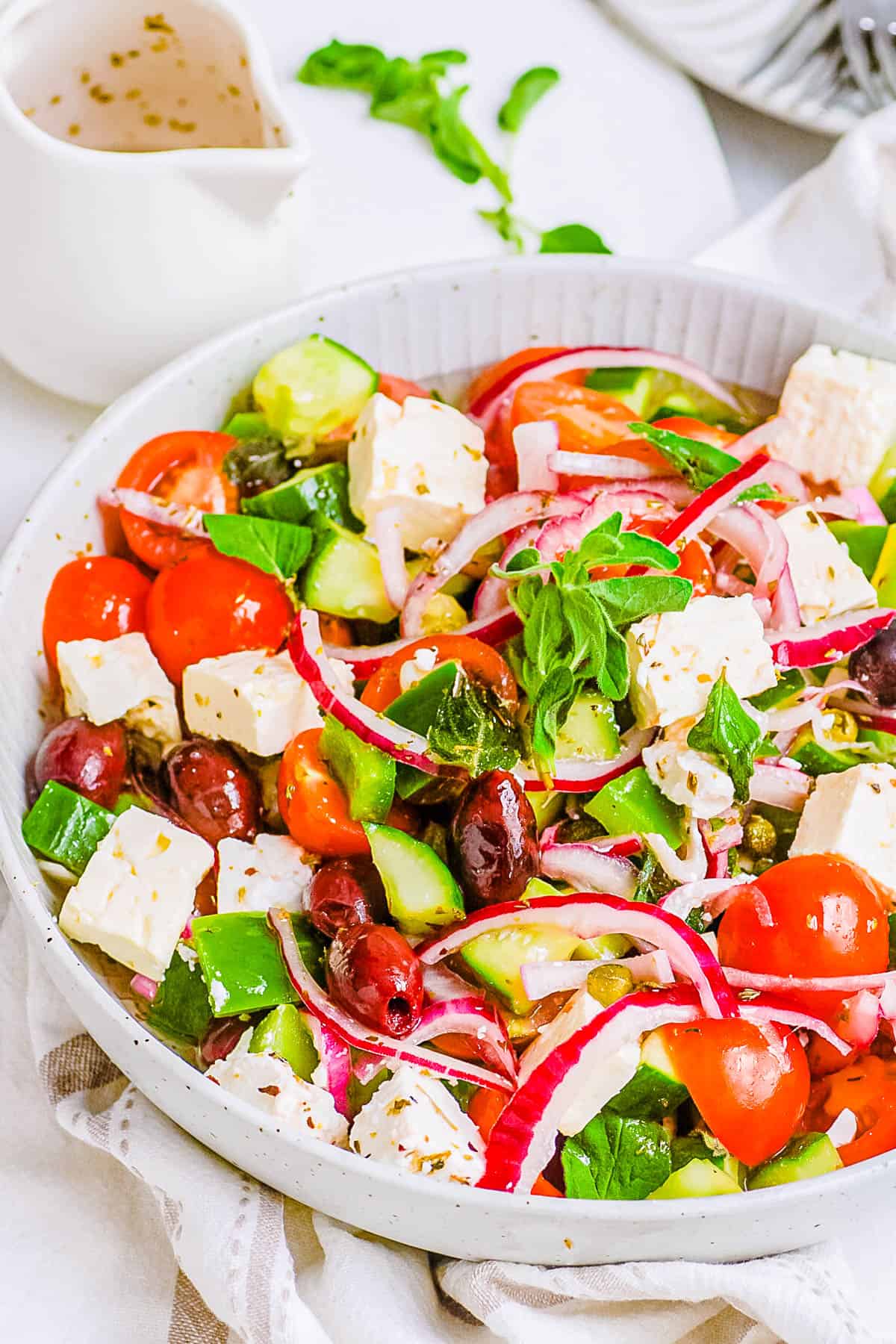

Love this vegetarian salad recipe? Please leave a 5-star rating 🌟 in the recipe below and/or a review in the comments section further down the page!
You can also FOLLOW ME on FACEBOOK, INSTAGRAM, and PINTEREST to see more delicious, healthy, family-friendly food, and if you have any questions, I’m here to help!
📋 Recipe Card
Healthy Greek Salad
This healthy Greek salad stays true to traditional horiatiki while being a delicious addition to a low-carb lifestyle. I use cucumbers, tomatoes, and feta cheese for a crisp dish that takes just 10 minutes to make, meaning it is perfect for quick lunches and light dinners. The combination of juicy vegetables, briny olives, and a simple dressing is the reason this salad has earned legendary status.
Servings: 4
Calories: 254kcal
- My #1 Secret Tip for this healthy Greek salad recipe is to add the feta after mixing the vegetables and dressing. I like keeping the cheese in larger pieces, and this also prevents it from breaking down too much in the salad.
- Use firm produce: I choose cucumber and tomatoes that are firm, as they are less likely to release a lot of liquid as they sit. This keeps the salad crisp.
- Soak onion: If you do not like the taste of raw onion, soak the sliced onion in some cold water for 10-15 minutes. This removes some of the sharper notes.
- Balance dressing: I taste the dressing before adding it and adjust the oil or vinegar depending on how sharp or mild I want it.
- Reserve dressing: If I am serving this for a large group, I keep the dressing separate and allow each person to add their own amount to the salad.
Calories: 254kcal | Carbohydrates: 10g | Protein: 9g | Fat: 21g | Saturated Fat: 8g | Polyunsaturated Fat: 1g | Monounsaturated Fat: 10g | Cholesterol: 44mg | Sodium: 970mg | Potassium: 325mg | Fiber: 2g | Sugar: 4g