After tea bags and chewing gum, it turns out the next worrying source of microplastics is something even more omnipresent: salt. And it gets worse — according to research, the fancier, premium salts like Himalayan salt and artisanal sea salt aren’t as pure as their messaging seems to suggest. In reality, these salts have been shown to be even more contaminated than conventional refined salts.
“The truth is that microplastics are present in over 90% of commercial salt brands globally, with higher concentrations usually found in terrestrial salts (like Himalayan pink salt) than marine salts,” explains Arif Gasilov, partner at Gasilov Group, a sustainability and ESG consultancy. “I think that creates some important questions regarding if there even is such a thing as a ‘safe’ salt.”
Specialty Salts Are the Most Contaminated on the Marketplace
The microplastics load of table salts has been examined by a range of recent studies aiming to better understand our exposure. While results vary depending on the samples, one thing has proved to be true across the board: Artisan salts are usually the worst culprits when it comes to contamination.
A 2022 study in Environmental Science and Pollution Research found that of seven tested samples, coarse Himalayan pink salt had the highest microplastics load1.
Sea Salt Exhibits High Microplastics Loads
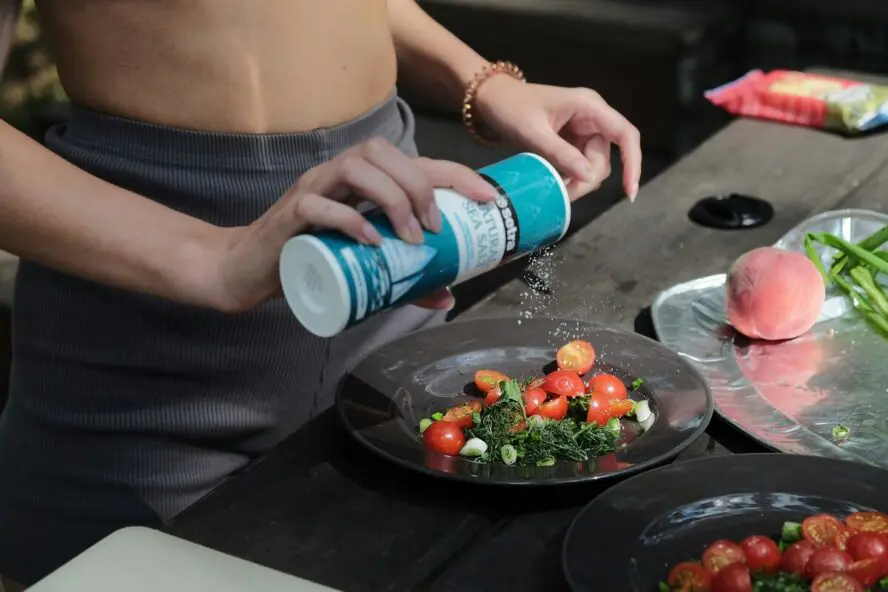
By and large, unrefined sea salt has proven particularly problematic when it comes to microplastics contamination. A 2018 study of 39 brands from 21 countries published in Environmental Science & Technology found an “abundance” of microplastics in unrefined sea salts, particularly those sourced from Asia2. Sea salt in general was found to have up to 1,674 microplastic particles per kilogram, as compared to lake salt, whose 462 per kilogram maximum pales in comparison.
As concerning as these results are, they honestly make sense. Since microplastics are now ubiquitous in our oceans3, it should come as no surprise that plastic particles are turning up in the salt harvested from them, especially unrefined brands.
“Unrefined sea salt comes directly from ocean water, which is loaded with microplastics now,” explains Dr. Paul Savage. “The ocean is a sink for plastic pollution.”
Seeing as Asia is a “hotspot for plastic pollution,” according to the OECD4, it’s only logical that salt from these regions should be more heavily contaminated. But Mediterranean sea salts, including Italian, also showed particularly high levels, with one 2022 study finding 1,653 particles/kg in contamination the authors attributed “solely due to the presence of microplastics in seawater5.”
Himalayan Salt Is Contaminated During Production
The presence of microplastics in Himalayan salt is far more surprising, seeing as this salt is mined, not harvested from the sea. For Dr. Jennifer Brandon, Environmental Scientist and Sustainability Consultant at Wild Beacon Consulting, this is likely due not to environmental contamination, but rather, how the salt is excavated and treated.
“Although rock salt has low atmospheric exposure rates in the caves, it seems to have a high exposure and contamination rate during mining and processing,” she says. Alex LeBeau, PhD, MPH, CIH, Toxicologist, Certified Industrial Hygienist, and owner of Exposure Consulting, agrees. She cites the treatment, crushing, and packaging process as “a major global contributing factor” to contamination.
“Based on the process, there could be several points along the production line where microplastics may be introduced, including the sales packaging itself in which the salt is sold.”
How to Reduce Plastic Exposure
While it’s never fun to find a new source of microplastics, take heart: Salt is probably not going to be the biggest source of plastic in your diet. The average human salt intake is about two to three grams of salt per day, making salt a relatively small contributor to overall microplastic exposure. Bigger sources include drinking water, seafood, food packaging and plastic utensils, and even the air we breathe.
Since the long-term health effects of microplastic ingestion are still being studied, there’s a lot we don’t know. The studies are all over the place — some show that microplastics are linked to an increased risk of cardiovascular disease, while other scientists suggest that previous research about microplastic accumulation in our bodies may have been overinflated. Others still have found that a bacterium in kimchi could be the answer to reducing microplastic absorption in our bodies. As the research continues, all we can do is stay informed and do our best to take precautions by minimizing exposure where possible.
Choose Cleaner Salts
Salt is a small piece of the exposure puzzle, but you can still be intentional if you want to minimize microplastic ingestion. To be safe, choose lake salt when possible. Research has shown that salts sourced from lakes and wells showed the lowest concentrations of microplastic particles — about 36 per kilogram, on average.
You can also pay attention to sourcing, avoiding sea salt from high-pollution regions like the Mediterranean or Asian Pacific. To go the extra mile, look for salts packaged in cardboard rather than plastic containers.
Gasilov recommends choosing salts made using controlled evaporation methods, like solar-evaporated salts, as well as brands that publish third-party lab test results showcasing their lack of contamination. These are good rules of thumb for most products you consume. “At the end of the day, consumers can reduce exposure by being mindful and pushing for stronger accountability,” he says.
Consider More Refined Salts
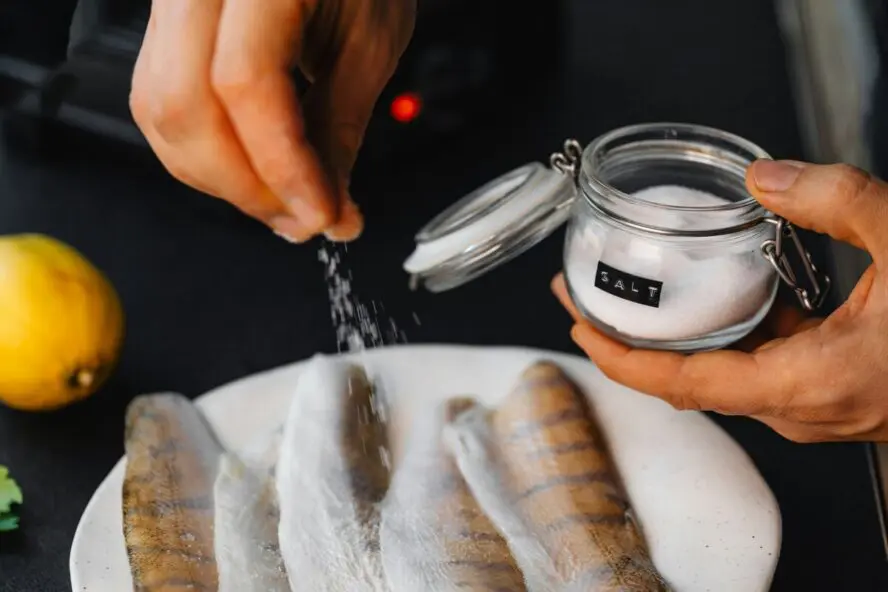
While unrefined salts have been marketed as the cleaner alternative for decades, this might no longer be the case, according to Savage. “The marketing narrative around these products (‘pure, natural, unrefined’) doesn’t account for the fact that ‘natural’ now includes microplastics,” he says.
“The irony is that less processing sometimes means less filtration,” he adds. “Refined white table salt goes through more aggressive purification steps, which can actually remove some microplastics in the process. So the premium product that sounds cleaner may actually carry more contamination because it’s been touched less by industrial processing.”
“I buy cheaper, iodized table salt, in a cardboard cylinder,” says Brandon. “It has less environmental exposure and the container itself is not another point source of plastic. Look for containers that are glass or cardboard, and don’t be afraid to spend less money for something that may also be less microplastic.”
Ultimately, salt is just a tiny fraction of your potential microplastic exposure. Rather than focusing on this news, consider your overall plastic footprint.
“Here’s the reality: you’re eating a credit card’s worth of plastic every month already, mostly from food and water,” says Savage. “Salt is a source, but it’s not the top one.”
“What I tell people is this: don’t obsess over salt as your primary microplastic source. Focus on bigger exposures first. Use a quality water filter at home. Choose seafood wisely (smaller fish like sardines and anchovies accumulate less than larger predatory fish). Avoid heating food in plastic. Reduce bottled water use. Those moves will reduce your microplastic burden far more than switching salt brands.”
While individual choices help, this is ultimately a systemic pollution problem. Do your best to support policies that reduce plastic production and ocean pollution and minimize your exposure where possible without letting the stress overtake your life.
Sources:
- https://pmc.ncbi.nlm.nih.gov/articles/PMC9813175/
- https://pubs.acs.org/doi/10.1021/acs.est.8b04180
- https://www.nature.com/articles/s41586-025-08818-1
- https://www.oecd.org/en/publications/regional-plastics-outlook-for-southeast-and-east-asia_5a8ff43c-en/full-report/a-regional-plastics-outlook-rationale-and-key-findings_22050aff.html
- https://pubmed.ncbi.nlm.nih.gov/36279784/

Add Organic Authority as a preferred source on Google?