
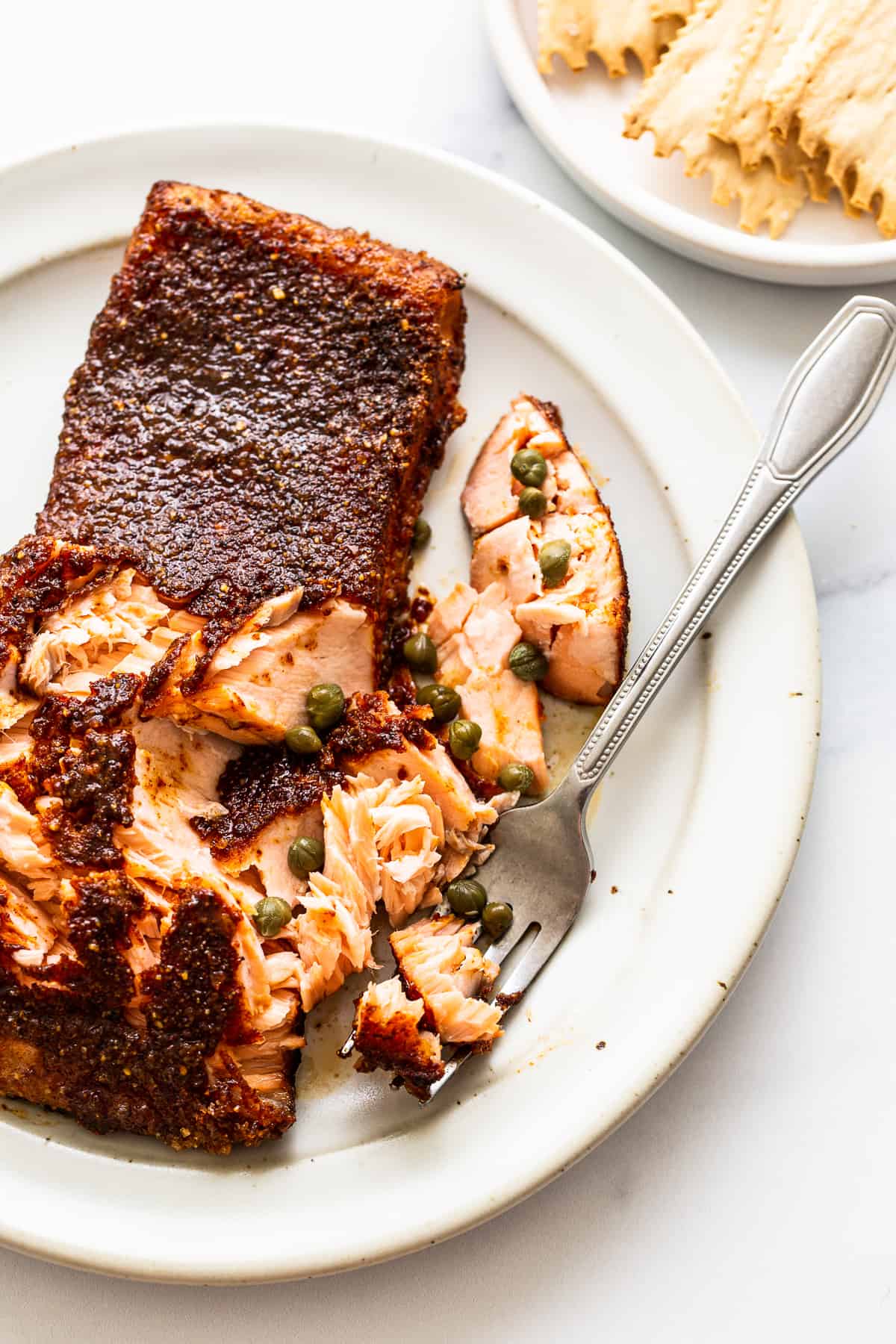
Is there anything better than a smoked salmon appetizer that’s perfectly flaky, smoky, and full of flavor? One of my favorite easy smoked salmon recipes makes tender, flaky salmon with a simple dry rub and a sweet maple glaze for the perfect balance of savory and sweet.
I love making salmon this way because it feels impressive but is surprisingly simple. The homemade smoked salmon rub adds tons of flavor, while the maple glaze spritz brushed on at the end gives the salmon a beautiful finish and a delicious caramelized flavor.
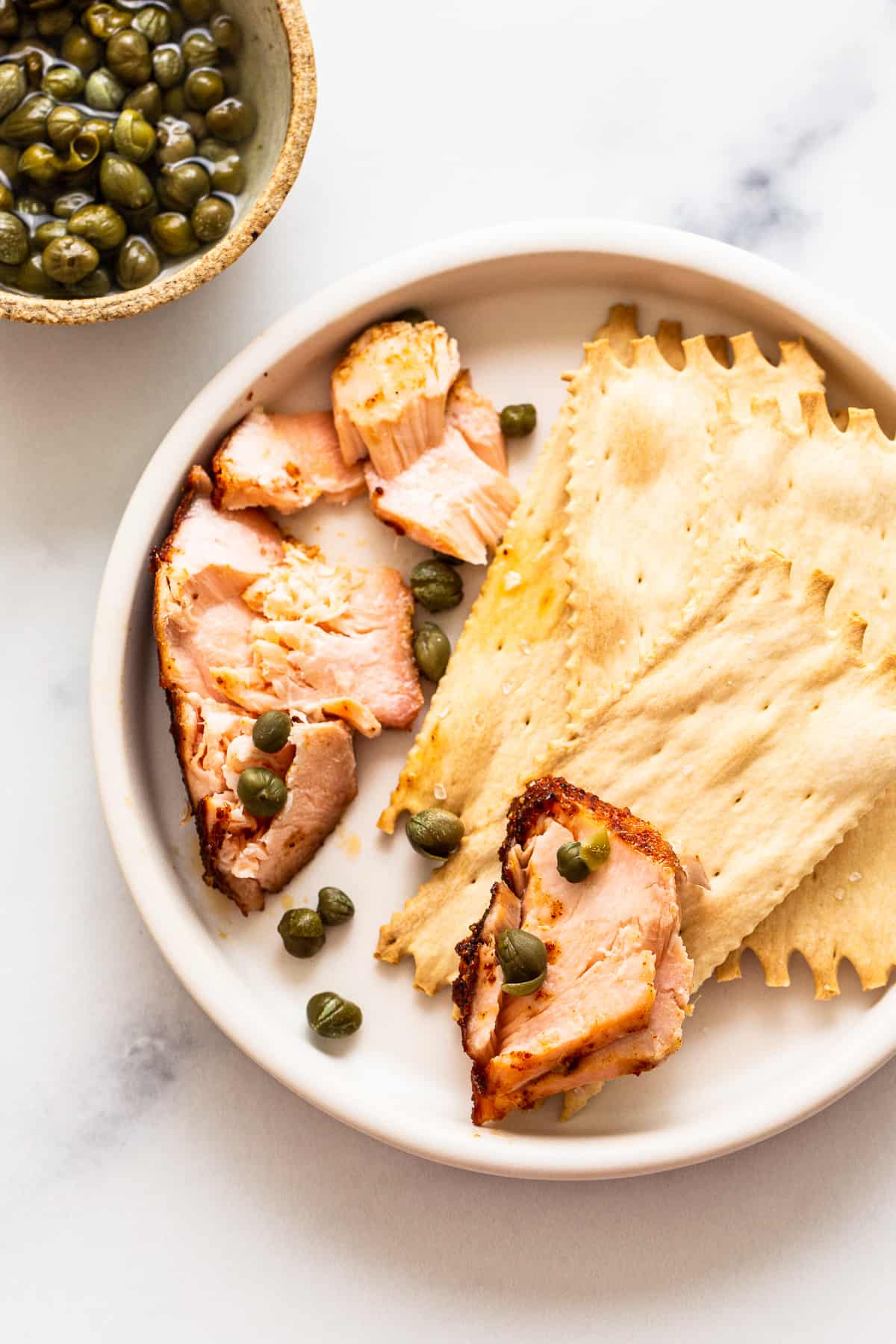
This recipe is written for a pellet smoker, but you can use any smoker you have. In about 2 hours, you’ll have a flavorful smoked salmon filet. It’s perfect served with crackers, on a bagel with cream cheese, over a salad, or turned into smoked salmon dip.
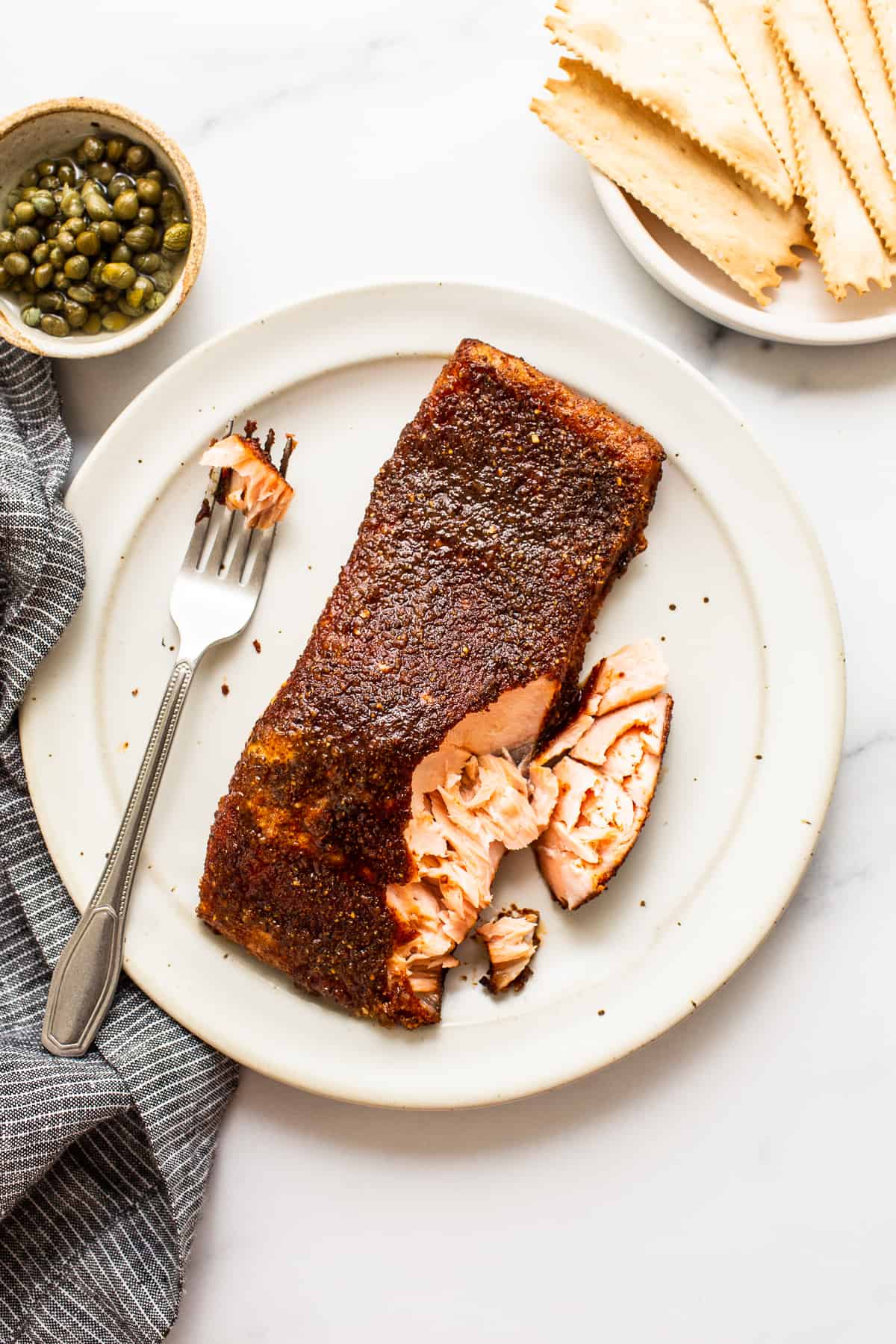
What Makes This Recipe Great
If you’re looking for an easy smoker recipe that’s packed with flavor, this one checks all the boxes:
- Tender and flaky: Smoking the salmon low and slow keeps it moist and perfectly cooked.
- Simple ingredients: A pantry-friendly dry rub and quick maple glaze deliver big flavor without much effort.
- Delicious hot or cold: Enjoy it fresh off the smoker or refrigerate it for bagels, salads, grain bowls, appetizers, and more.
- Works with any smoker: Although I developed this recipe using a pellet smoker, the method works with virtually any smoker.
“Amazing recipe, the entire family demands it at least once every couple weeks.”
— Dan P.
“We made this yesterday, and it is delicious! Thanks for a quality smoked salmon recipe.”
— Ann B.
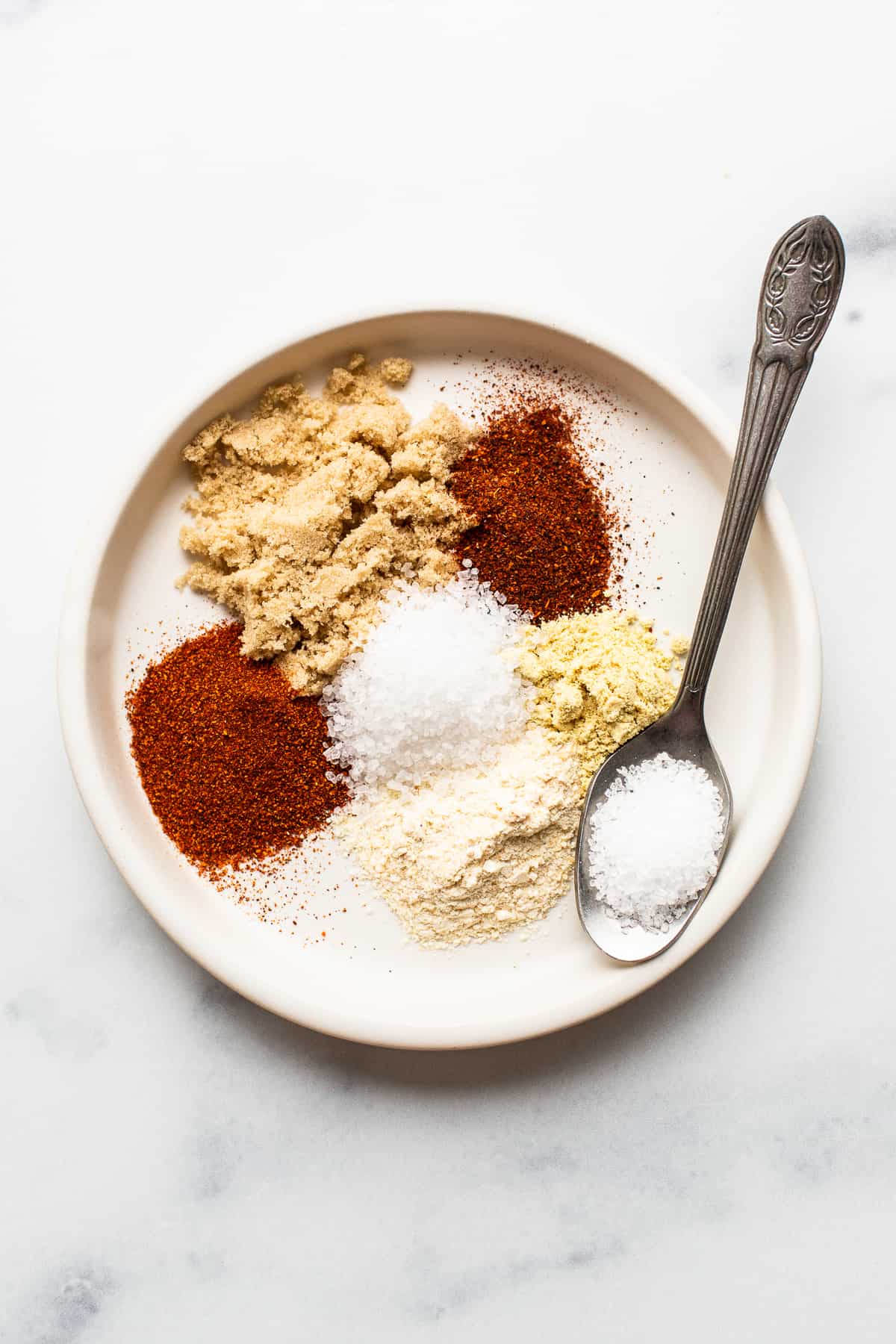
Ingredients You’ll Need
You only need a handful of simple ingredients to make this smoked fish. The smoked salmon rub adds a savory, slightly sweet coating, but the salmon stays the star of the recipe!
- Salmon filet: Use high-quality salmon fillets for the best flavor and texture. I love Surrender Salmon because it’s wild-caught, Alaskan salmon that’s flash-frozen the day it’s caught! Coho salmon, king salmon, and sockeye salmon are all great options because they have rich flavor and firm texture. Atlantic salmon is a little milder and fattier.
- Capers: These are optional but add a bright, salty finish when sprinkled over the smoked salmon before serving.
- Coarse salt: This helps season the salmon and enhances its natural flavor. Sea salt or kosher salt both work well.
- Garlic powder: Fresh garlic isn’t recommended here because the powder coats the salmon more evenly.
- Smoked paprika: This brings extra smoky depth and a subtle sweetness to the seasoning. Regular paprika can be used if needed.
- Chili powder: Use more or less depending on your spice preference to balance the sweetness of the glaze.
- Mustard powder: A little mustard powder adds a slightly tangy flavor that pairs well with salmon.
- Light brown sugar: Brown sugar helps create a sweet, caramelized crust as the salmon cooks. Dark brown sugar can be substituted for a deeper molasses flavor.
- Maple syrup: Maple syrup adds natural sweetness and helps create a glossy finish on the salmon. Pure maple syrup works best for the richest flavor.
- Soy sauce: Its salty, savory flavor balances the sweetness of the maple syrup. Use tamari or coconut aminos if you need a gluten-free alternative.
- Worcestershire sauce: A little goes a long way, adding subtle umami that rounds out the glaze.
Choosing Wood Pellets
The type of wood pellets you use can subtly change the flavor of your smoked salmon. For this recipe, I used Traeger’s signature blend pellet mix. The combo of hardwoods gives me a balanced smoky flavor that works well for fish and other proteins, like pork shoulder.
Here are a few more options depending on the flavor profile you prefer:
- Alder pellets: Alder wood BBQ pellets are a classic choice for smoking salmon for a mild, slightly sweet mesquite flavor.
- Apple wood or cherry wood pellets: These add a gentle sweetness and a lighter, fruitier smoke flavor.
- Hickory pellets: This is a stronger option that adds a bold, smoky taste. Use sparingly with salmon since it can overpower the fish.
Smoking salmon is easier than it sounds! The most important steps are giving the seasoning time to work into the fish, keeping your temperature consistent for the duration of the smoking time, and using the internal temperature as your guide for perfectly flaky salmon.
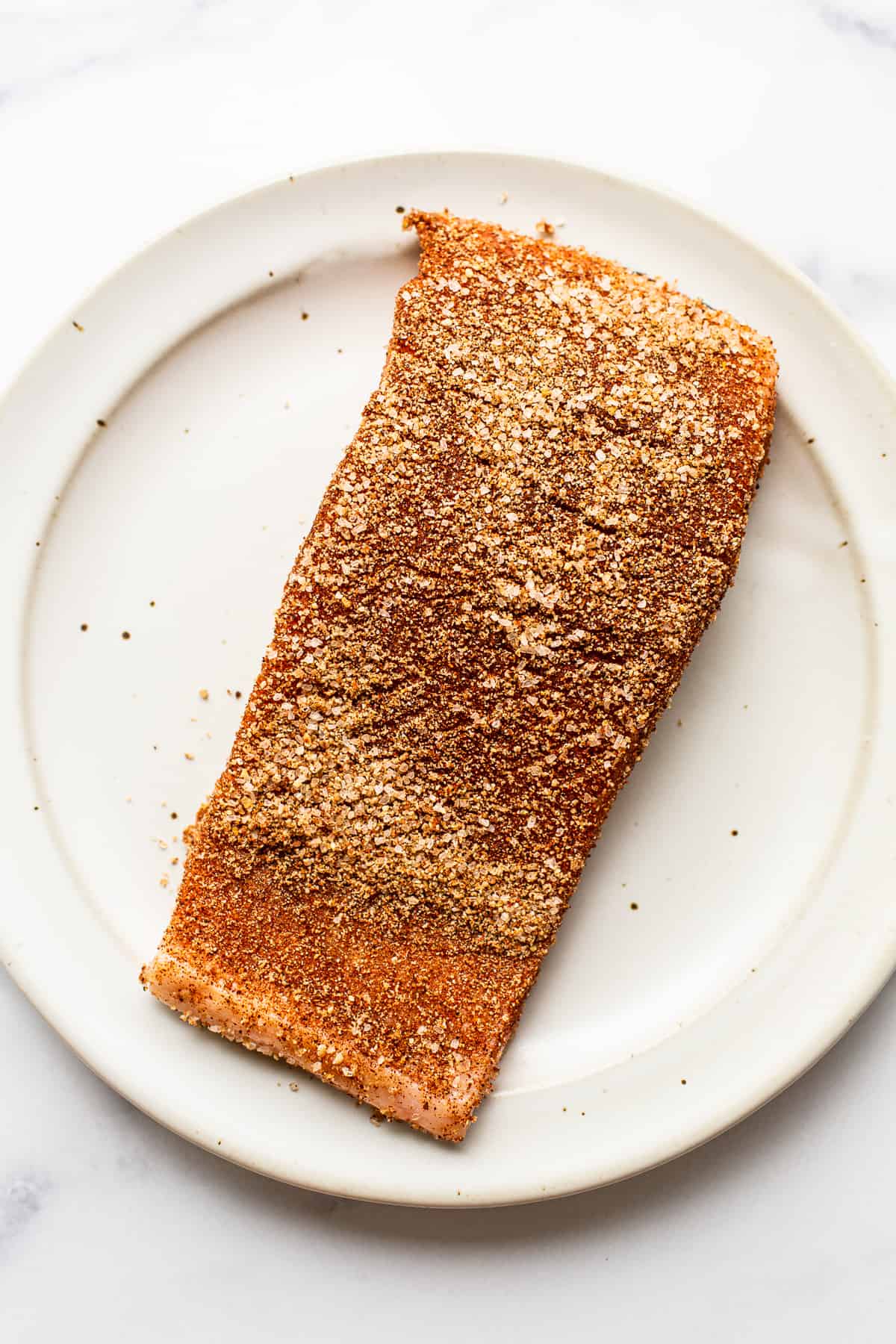
- Pat the salmon dry and season. Removing excess moisture helps the dry rub stick and allows the salmon to develop a flavorful exterior. You can check for pin bones here, too. Mix together the salt, garlic powder, smoked paprika, chili powder, mustard powder, and brown sugar for a flavorful dry rub, then gently press it into the salmon.
- Let the salmon rest. I refrigerate the seasoned salmon for at least 1 hour (or up to overnight). This extra time allows the salt and spices to season the fish throughout and helps create a delicious smoky crust.
- Smoke the salmon low and slow. I let the salmon sit at room temperature for about 10 minutes while my pellet smoker preheats to 225°F. This helps the salmon cook more evenly. Place the salmon skin-side down directly on the smoker grates for about 1 hour, until the edges begin to look opaque. Cooking low and slow helps keep the salmon tender and prevents it from drying out.
- Brush with maple glaze. While the salmon smokes, whisk together the maple syrup, soy sauce, and Worcestershire sauce to make the glaze. After an hour on the smoker, brush the maple glaze over the salmon for a bonus sweet and savory flavor and a glossy, caramelized finish.
- Finish cooking and check for doneness. Increase the smoker temperature to 375°F and cook the salmon for another 10 minutes, or until the salmon reaches an internal temperature of 145-150°F. This quick burst of heat helps set the glaze and gives the salmon a beautiful finish. I recommend using an instant-read thermometer to avoid overcooking the fish. The salmon should be moist, tender, and easy to flake with a fork.
- Rest before serving. Let the salmon rest for 5-10 minutes before serving to keep every bite flavorful and flaky.
Want to try another version? Try my Maple Mustard Smoked Salmon next!
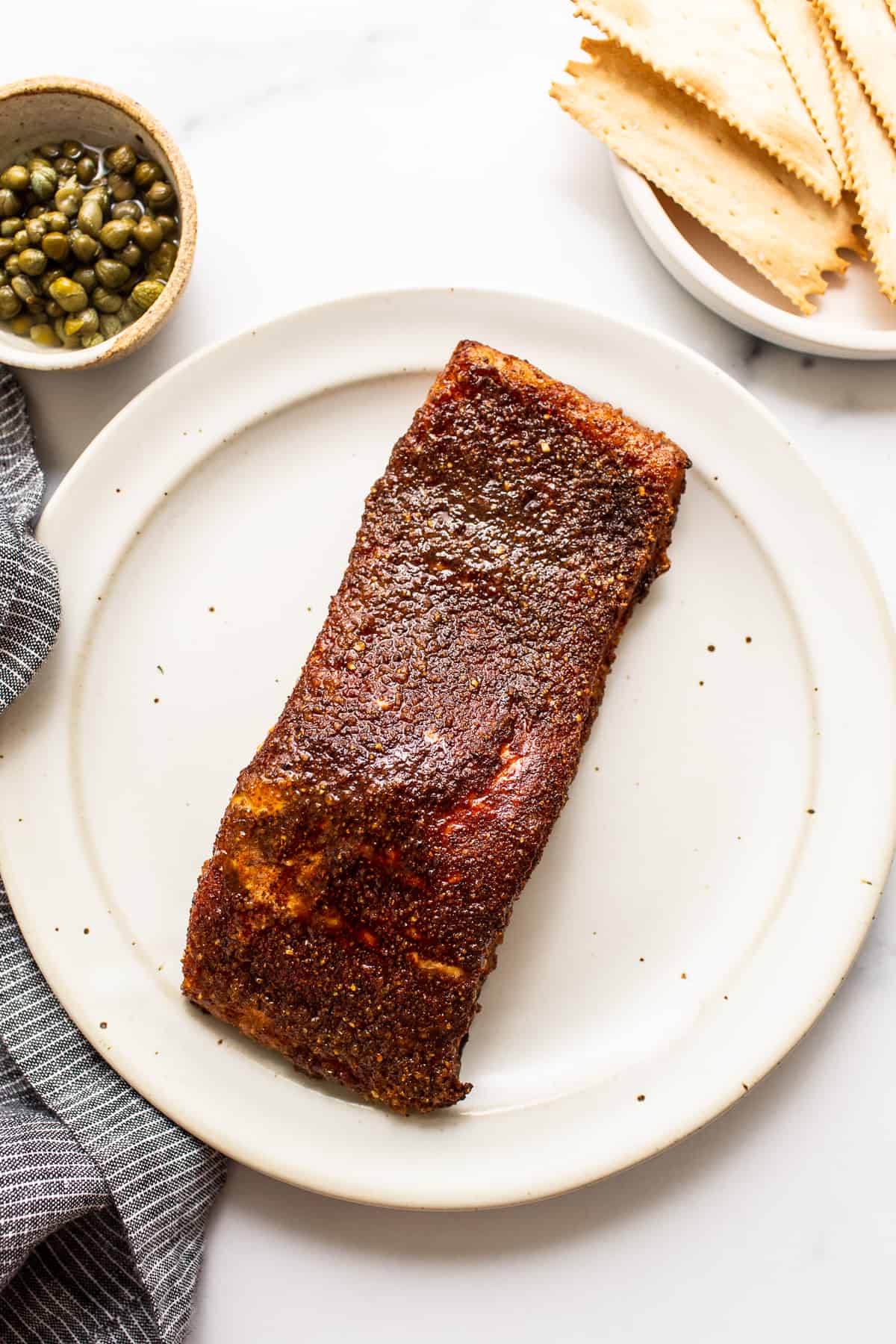
Serving Suggestions
One of my favorite things about smoked salmon is its versatility. It’s delicious straight from the smoker as hot smoked salmon, but I also love using leftovers throughout the week. Here are some of my favorite ways to serve it:
- With crackers: Serve smoked salmon with crackers, cream cheese, fresh herbs, and a squeeze of lemon for an easy appetizer or snack that feels a little fancy.
- On a bagel: Add smoked salmon to a toasted bagel with cream cheese, capers, red onion, or your favorite toppings for a classic breakfast or brunch option.
- In a smoked salmon dip: Turn leftover smoked salmon into a creamy, flavorful appetizer with my Smoked Salmon Dip recipe. It’s perfect for serving with crackers or veggies.
- In breakfast recipes: Add smoked salmon to eggs, frittatas, or breakfast burritos for a satiating morning meal.
- Over a salad: Flake smoked salmon over a simple green salad or grain salad for an easy lunch. It pairs especially well with creamy dressings, avocado, cucumber, and fresh herbs.
- In a grain bowl: Add smoked salmon to a bowl with quinoa or rice, roasted vegetables, greens, and a flavorful sauce for a balanced meal.
- Mixed into pasta: Flaked smoked salmon adds a rich, smoky flavor to pasta dishes. Try pairing it with a creamy sauce, lemon, garlic, fresh herbs, or vegetables for an easy dinner.
You can also use smoked salmon in place of grilled salmon, or in any of your favorite salmon recipes for an extra boost of smoky flavor!
Storage and Freezing
Smoked salmon makes a great make-ahead protein because it stores well and can be enjoyed in so many ways throughout the week. I like keeping leftovers in the refrigerator for quick breakfasts, lunches, or easy appetizers.
To store, place leftover smoked salmon in an airtight container and refrigerate for 3-5 days. For the best texture and flavor, let it come to room temperature for a few minutes before serving. Or enjoy cold smoked salmon on bagels, salads, crackers, or grain bowls.
Smoked salmon can also be frozen for longer storage. Wrap the chilled salmon tightly in aluminum foil, then place it in a freezer-safe container or bag for up to 3 months. When you’re ready to enjoy it, thaw frozen smoked salmon in the refrigerator for about 24 hours.
You can also thaw it more quickly on the countertop for 3-5 hours if needed. Keep in mind that freezing can slightly soften the texture, so it may not be quite as firm and flaky as freshly smoked salmon, but it’ll still be delicious in dips, salads, and pasta.
Do you need to brine salmon before smoking it?
You don’t have to brine salmon (dry brine or a wet brine) before smoking it, especially for this recipe. I use a flavorful dry rub, then let the seasoned fish rest in the refrigerator before putting it in the smoker. This gives the salt and spices time to season the fish.
A traditional brine can help salmon retain moisture and add flavor, but I find that a simple seasoning for smoked salmon works really well. As long as you start with a quality salmon filet and avoid overcooking it, you’ll still get tender, flaky smoked salmon every time.
What are common mistakes to avoid when smoking salmon?
Smoking salmon is pretty hands-off, but these common mistakes can affect the final texture and flavor:
- Skipping the seasoning rest: Letting the dry rub sit on the salmon before smoking gives the flavors time to absorb. Don’t rush this step if you want the best flavor.
- Using too much smoke: Salmon has a delicate flavor, so a heavy smoke can overpower the fish. I prefer milder wood pellets like alder, apple, or a balanced blend.
- Starting with a smoker temperature that’s too high: Smoking salmon at a lower temperature initially helps the fish cook gently and absorb smoky flavor without drying out. I recommend following the recipe’s temperature changes rather than trying to rush the process with high heat from the beginning.
- Overcooking the salmon: The best way to avoid dry smoked salmon is to use a thermometer and remove it once it reaches the recommended internal temperature.
- Not letting the salmon rest: A short rest after smoking helps the juices redistribute and keeps the salmon moist and flaky.
What is a pellicle, and why is it important?
A pellicle is a thin layer that forms on the surface of salmon after it has been seasoned and allowed to rest before smoking. This layer helps the smoke stick to the fish, giving the salmon a deeper smoky flavor and a nicer-looking finish.
For this recipe, I create a similar effect by seasoning the salmon and letting it rest in the refrigerator before it goes into the smoker. The dry rub has time to work into the fish, and the surface develops the right texture to hold onto that delicious smoky flavor.
Do you need to soak wood chips before smoking?
If you’re using wood chips instead of wood pellets, you don’t need to soak them before smoking. Many modern smokers work best with dry wood chips because they produce smoke more consistently, rather than steaming your fish.
For this recipe, I use dry wood pellets in a pellet smoker. The pellets are designed to burn evenly and provide consistent smoke throughout the cooking process.
-
Pat the salmon filet with a paper towel to remove any excess moisture from the salmon. Set aside.
-
Add the coarse sea salt, garlic powder, smoked paprika, chili powder, mustard powder, and brown sugar to a small bowl and mix to combine.
-
Sprinkle the dry rub on top of the salmon and gently massage it into the flesh.
-
Refrigerate for at least 1 hour or up to overnight.
-
Prepare your smoker with wood pellets. I like Traeger’s signature blend.
-
Preheat your smoker to 225ºF and remove the salmon from the refrigerator. Let the salmon sit at room temperature for 10 minutes.
-
When the smoker is ready, place the salmon filet skin-side down into the smoker and cover for 1 hour.
-
Next, make the maple glaze. Add the maple syrup, soy sauce, and Worcestershire sauce to a bowl and whisk to combine.
-
After 1 hour of smoking, brush the salmon filet with the maple glaze and increase the smoker temperature to 375ºF. Cook the salmon for an additional 10 minutes.
-
Remove the salmon from the smoker when the internal temperature reaches 145-150ºF.
-
Let the salmon rest for 5-10 minutes.
-
Top smoked salmon with capers and eat immediately, or place the salmon in the refrigerator to cool and serve cold.
Use a thermometer for the best results. Salmon can go from perfectly flaky to dry quickly, so I recommend using an instant-read thermometer to check for doneness instead of relying only on cooking time.
[adthrive-in-post-video-player video-id=”MLRIjOFy” upload-date=”2022-12-09T00:00:00.000Z” name=”Smoked Salmon” description=”This perfectly tender and flakey smoked salmon is made with a simple dry rub and a yummy maple glaze making it perfect for crackers, bagels, or a salad!”]
Calories: 83 kcal, Carbohydrates: 7 g, Protein: 8 g, Fat: 3 g, Fiber: 1 g, Sugar: 5 g
Nutrition information is automatically calculated, so should only be used as an approximation.