
This post may contain affiliate links. As an Amazon Associate, I earn from qualifying purchases. Please read my disclosure.
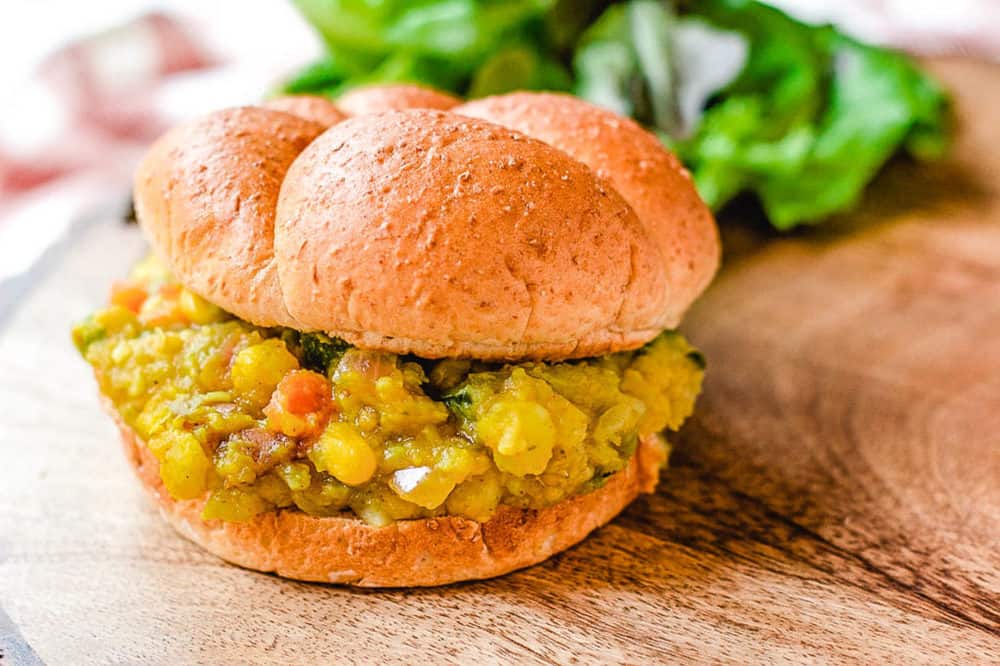
Pav bhaji always takes me back to the busy street stalls and buttery toasted buns I grew up with. My version swaps in red lentils, cauliflower, and warm Indian spices for a more nourishing dinner. I still keep the rich tomato base and soft mashed protein and fiber to make it genuinely filling. Best of all, I have this Indian inspired vegetarian sloppy joe ready for my family in just 45 minutes.
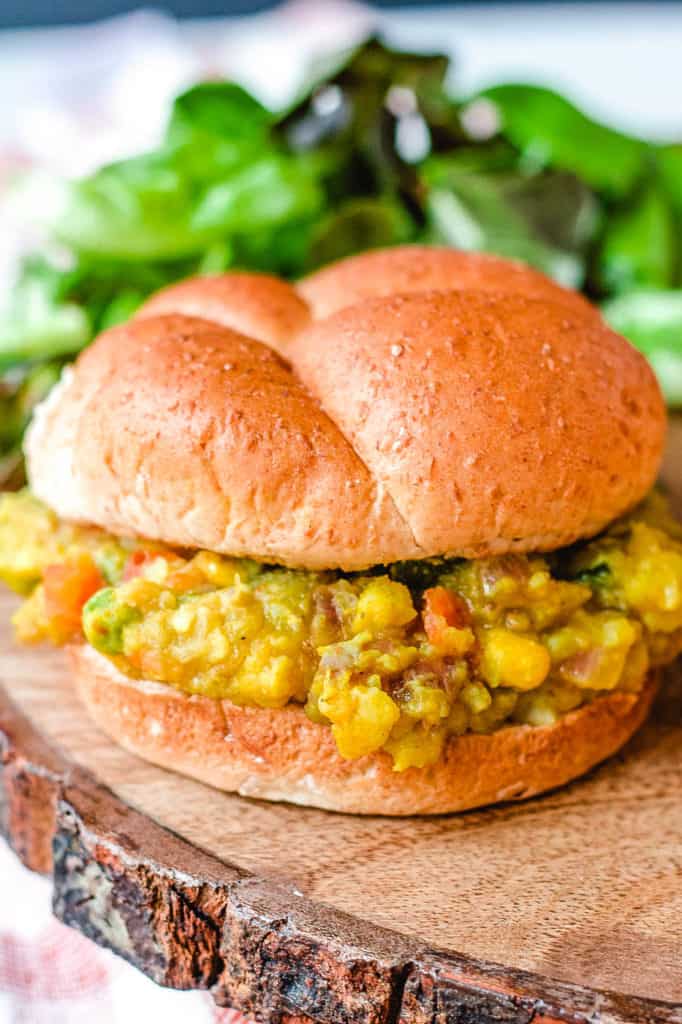
Pav bhaji is one of the most recognizable Indian street foods, traditionally served with soft toasted rolls and a heavily spiced vegetable mash. And while I do enjoy my vegan sloppy joes, I love how the potatoes, tomatoes, garlic, and spices cook into a thick scoopable filling. If you love comfort food and authentic Indian cuisine, this recipe is the ideal combination of both.
I started making this healthier version of pav bhaji after realizing just how much butter is used at every stage of traditional recipes. It was a shame that a dish with so many nourishing ingredients was laden with saturated fat. The first time I made this for my family, I just happened to have some leftover Indian vegetables and decided to use them in the bhaji. My kids loved the texture and warm flavor so much that they did not even realize that it was the vegetables they had refused to eat the night before. Ha!
As a nutritionist, I love the way this pav bhaji recipe is packed with fiber, plant protein, vitamin C, and iron without tasting overly healthy, which makes a huge difference when I am serving it to my picky eaters. The potatoes and lentils cook into a soft base, while the cauliflower and zucchini keep a bit of texture that reminds me of classic sloppy joes.
The method for pav bhaji is straightforward, but the order in which I cook everything completely changes the final texture and flavor. I start by simmering the red lentils while also cooking the potatoes, cauliflower, zucchini, and mixed vegetables until tender before mashing them. I cook the onions, garlic, ginger, and tomatoes in a separate skillet. The spices get stirred directly into the oil to coat the aromatics before folding in the mashed vegetables and lentils. After simmering everything together, the bhaji becomes thick and rich enough to fill my toasted buns.
Years ago, I made this pav bhaji for a neighborhood game night where everyone expected traditional, or maybe vegetarian, Sloppy Joes and chips. My friend picked one up, lifted the top bun, and inspected the contents. His wife quickly scolded him as a joke and told him not to play with his food. He obviously thought she was serious and very quickly took a huge bite. Of all the people there, he was the one person I was sure would not eat the pav bhaji. Not only did he eat it, but he also liked it. Break away from tradition and try these nutrient-rich plant-based sloppy joes with an Indian flair instead.
Latest Recipe Video!
🥘 Ingredients
For this pav bhaji recipe, I use a mix of classic Indian street food ingredients alongside extra vegetables and lentils to make the filling hearty enough for dinner. This is everything I use:
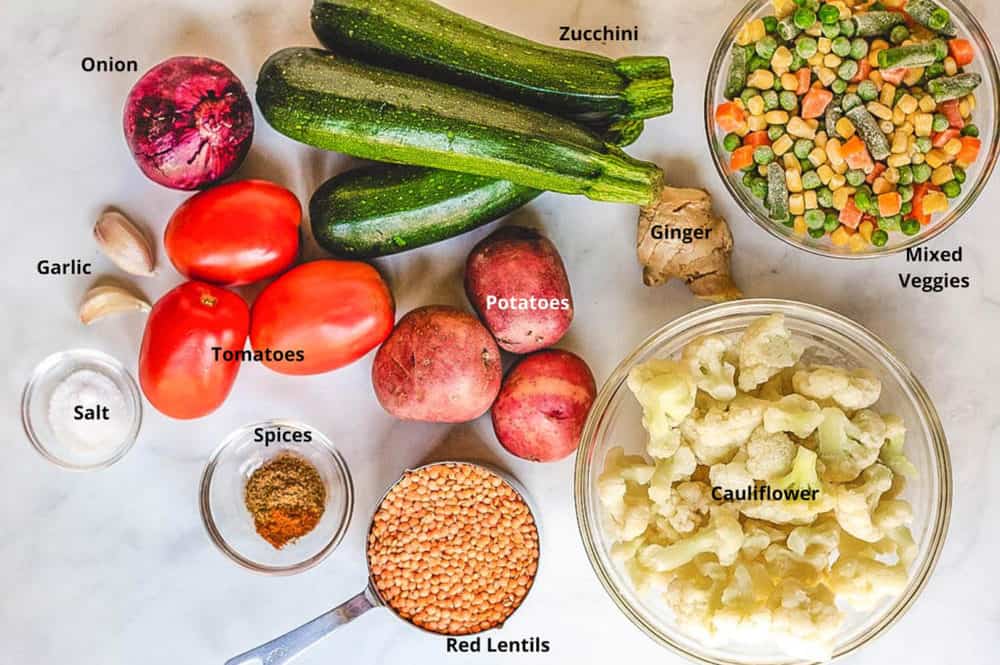
Red lentils: I use red lentils since they cook quickly and melt into the vegetable mixture, making the filling rich and thick.
Cauliflower: Small cauliflower florets add texture and bulk while soaking up all of the spices.
Zucchini: I chop zucchini finely so it softens into the bhaji while adding moisture.
Potatoes: I like using Yukon gold or russet potatoes, making sure to leave the skin on for extra texture and fiber.
Mixed vegetables: A frozen mix of peas, carrots, and green beans works well for convenience and color.
Onion: Diced onion creates the savory base.
Fresh ginger and garlic: I use both for sharpness and warmth that balances the richness of the potatoes and lentils.
Tomatoes: Fresh tomatoes break down into sauce and keep the filling bright.
Pav bhaji masala: This is essential for the authentic and signature taste.
Garam masala and turmeric: I add these spices for complexity.
Olive oil: A small amount helps cook the aromatics and bloom the spices.
Sprouted wheat buns: I love serving pav bhaji on toasted wheat buns or on my vegan dinner rolls.
🔪 How To Make
I make this pav bhaji in a few simple stages so the vegetables stay flavorful and the filling develops a thick texture. This is how I make it:
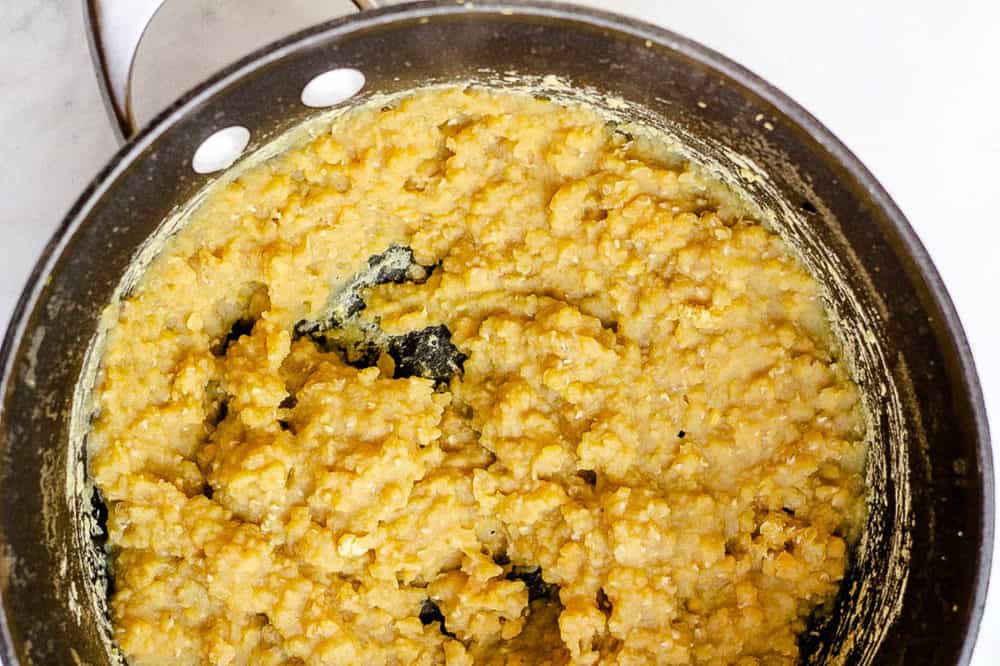
Cook lentils: I add the lentils and water to a pot and bring everything to a boil, then reduce the heat and simmer until the lentils are completely soft.
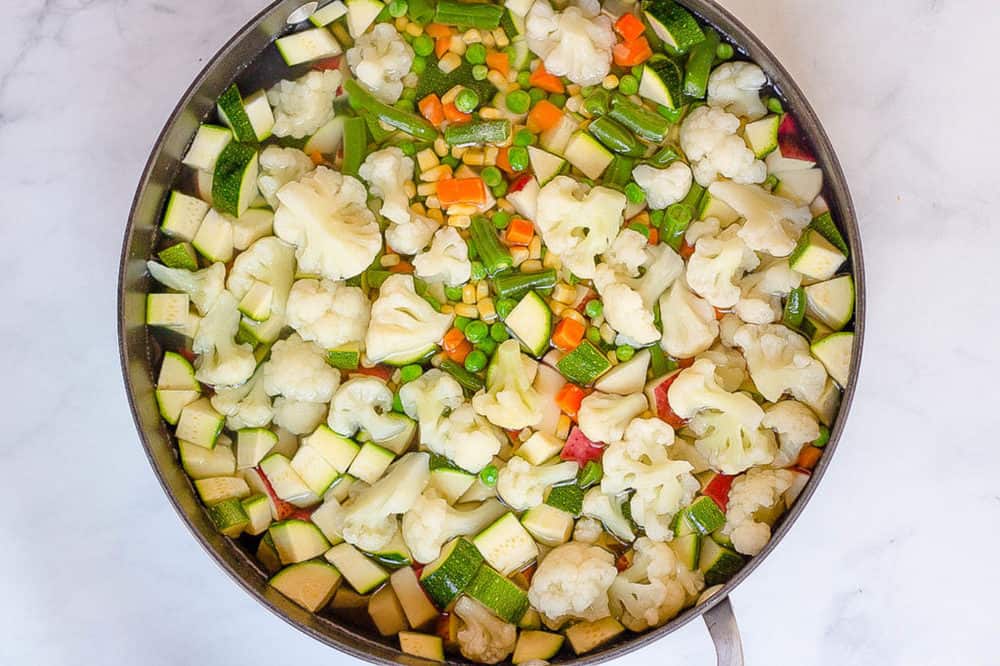
Steam vegetables: While the lentils cook, I boil or steam the cauliflower, potatoes, zucchini, and mixed vegetables until very tender. The vegetables should mash easily with a spoon.
Mash mixture: Once softened, I mash the vegetables directly in the pot, leaving a little texture behind instead of turning everything smooth. Then, I stir in the cooked lentils.
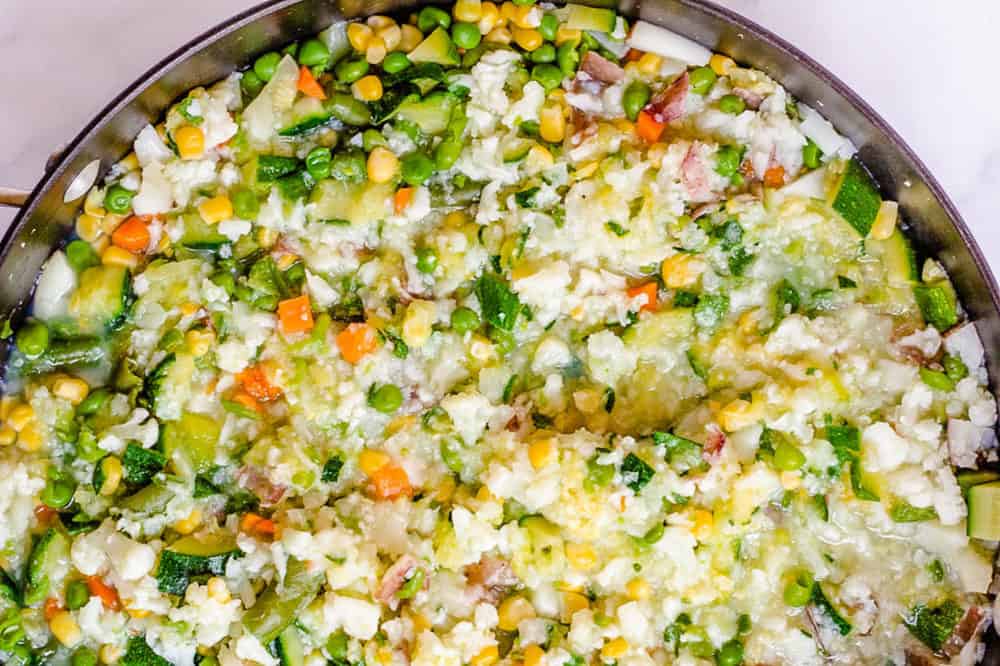
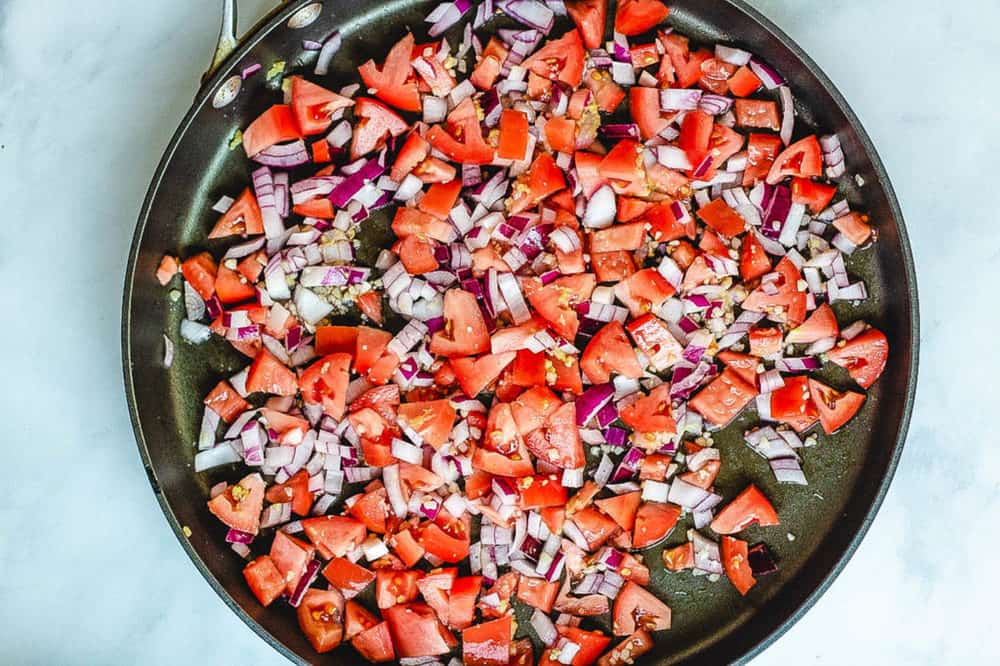
Build flavor base: In a large skillet, I heat olive oil and cook the onions, garlic, ginger, and tomatoes until the onions brown lightly and the tomatoes start breaking apart.
Bloom spices: Next, I stir in the pav bhaji masala, turmeric, and garam masala. I let the spices cook briefly in the oil so they coat the onions and tomatoes properly.
Simmer bhaji: I add the mashed vegetable mixture into the skillet along with salt and cayenne pepper, then simmer everything for about 20 minutes until thick and scoopable.
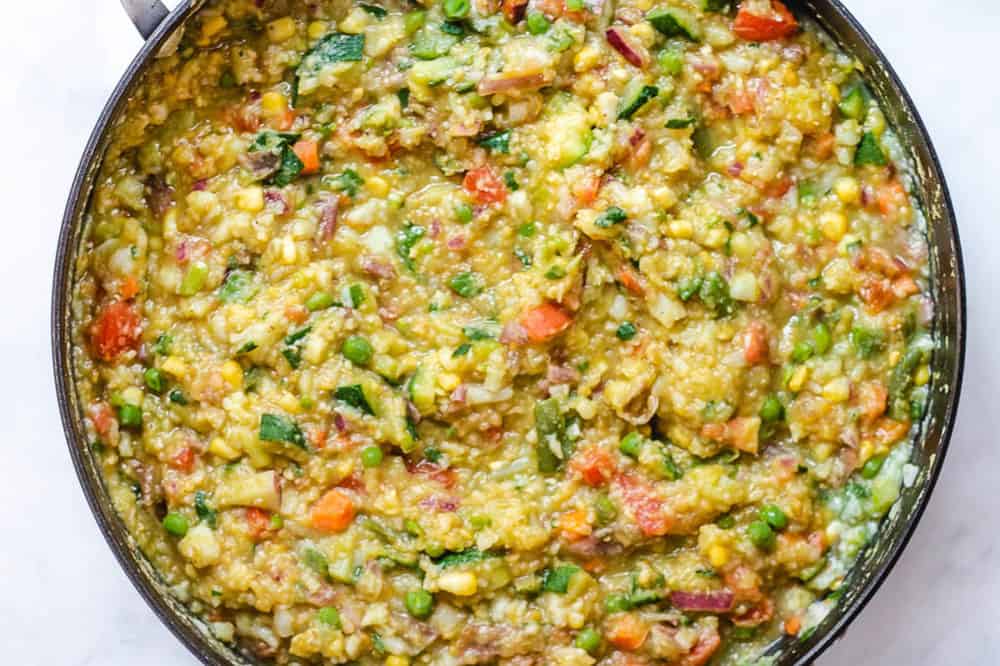
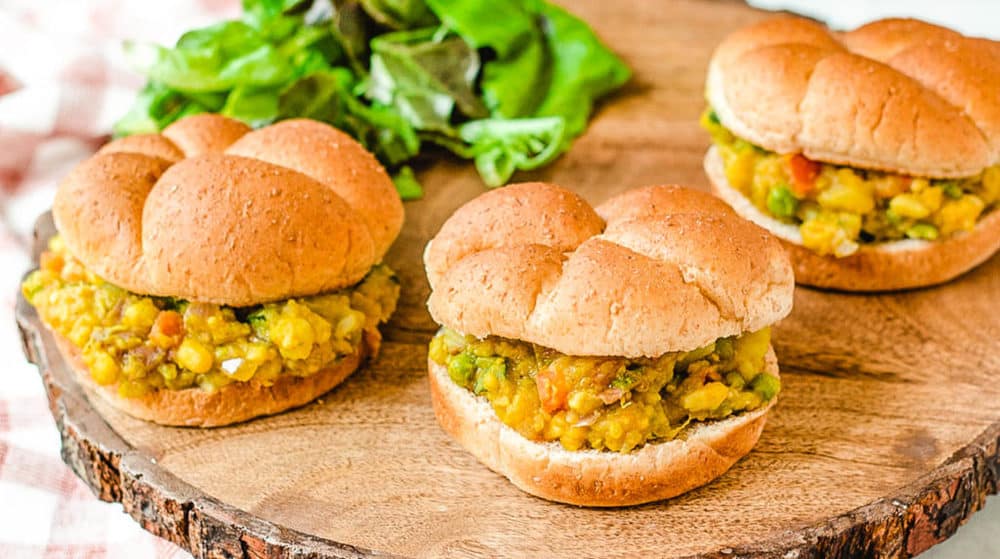
Toast and serve: Finally, I toast the buns lightly and spoon the hot filling inside.
My #1 Secret Tip for this pav bhaji recipe is to cook the tomatoes down fully before adding the mashed vegetables. When the tomatoes still taste raw or watery, my entire bhaji tastes flat instead of rich and savory.
Other Tips To Keep In Mind:
- Mash by hand: I always use a potato masher instead of a blender, so the filling keeps some texture instead of turning pasty.
- Simmer: I let the bhaji simmer gently after combining everything so the lentils absorb the spices properly.
- Salt later: I add most of the salt near the end since the mixture thickens during cooking and concentrates the flavor.
- Add a pinch of kasuri methi: A pinch of dried fenugreek toward the end of the cooking process provides an earthy restaurant-quality aroma that elevates the dish.
- Toast the buns: It may seem like a small step, but lightly toasted buns prevent the pav bhaji from soaking straight through the bread.
📖 Variations
I have tried and tested a few pav bhaji variations over the years, and these are 3 that have received a lot of praise:
Extra spicy: I add 1 extra teaspoon of pav bhaji masala along with 1/4 teaspoon cayenne pepper when my husband wants more heat with his dinner. If my kids find this too spicy, I usually drizzle some cashew cream sauce over it to lessen the heat.
Sweet potato addition: I replace half the regular potatoes with sweet potatoes for a slightly sweeter filling. My kids absolutely love this version, and I make it whenever I have leftover sweet potatoes.
Bell pepper mix: I stir in 1 finely diced red bell pepper while cooking the onions for extra sweetness and color. I love the flavor of this one, and always try to add in some bell pepper whenever I have the chance.
🍽 Serving Suggestions
If you are planning on serving this pav bhaji for dinner, I highly recommend making a meal out of it. Just because sloppy Joes are a laid-back dinner item, that does not mean that the sides have to be too. Serve it with some Indian asparagus stir fry and roasted tandoori cauliflower.
For my last book club meeting, I was hosting and decided to lay out an Indian spread, as it related to one of the themes in the book. I had a tray of pav bhaji and platters with traditional Indian samosas and a few samosa wraps. I finished the meal off with some rasmalai tres leches cake and masala chai.
🧊 Storing And ♨️ Reheating
Refrigeration: I store leftover pav bhaji filling in an airtight container in the refrigerator for up to 4 days. I keep the buns separate so they do not become soggy.
Freezing: I let the filling cool completely before transferring it to freezer-safe containers. It keeps for up to 3 months.
Reheating: If frozen, I thaw it in the refrigerator overnight, then I reheat the pav bhaji in a skillet over medium-low heat with a splash of water to loosen the texture. Then I toast fresh buns separately before serving.
❓Recipe FAQs
The bhaji should be thick but easy to spread. If it seems too watery, I turn up the heat and simmer uncovered for a few minutes until the excess moisture has evaporated, leaving me with a thicker texture. And if the mixture seems too dry or overly thick, I stir in a splash of water or vegetable broth and stir continuously while mashing.
Pav bhaji masala is the backbone of this dish’s flavor profile, and is distinct from most generic curry powders, so unfortunately, you cannot use just any old seasoning. If you absolutely can’t find it, then I recommend using a mix of cumin, coriander, chili powder, and dried mango powder. The flavor will not be quite the same, but it is the best you can do in a pinch.
Yes, you can, but I discovered the softer and faster it cooks, the better it will work. Yellow moong dal is probably the best substitute for red lentils. Chana dal can work, but you would need to increase your cooking time to 45-60 minutes. Chickpeas and kidney beans will not melt into the filling naturally, so if you use them, mash them thoroughly beforehand and treat them as a partial substitute alongside the potato rather than a full replacement. I avoid using black lentils as their firmness and color affect the bhaji.
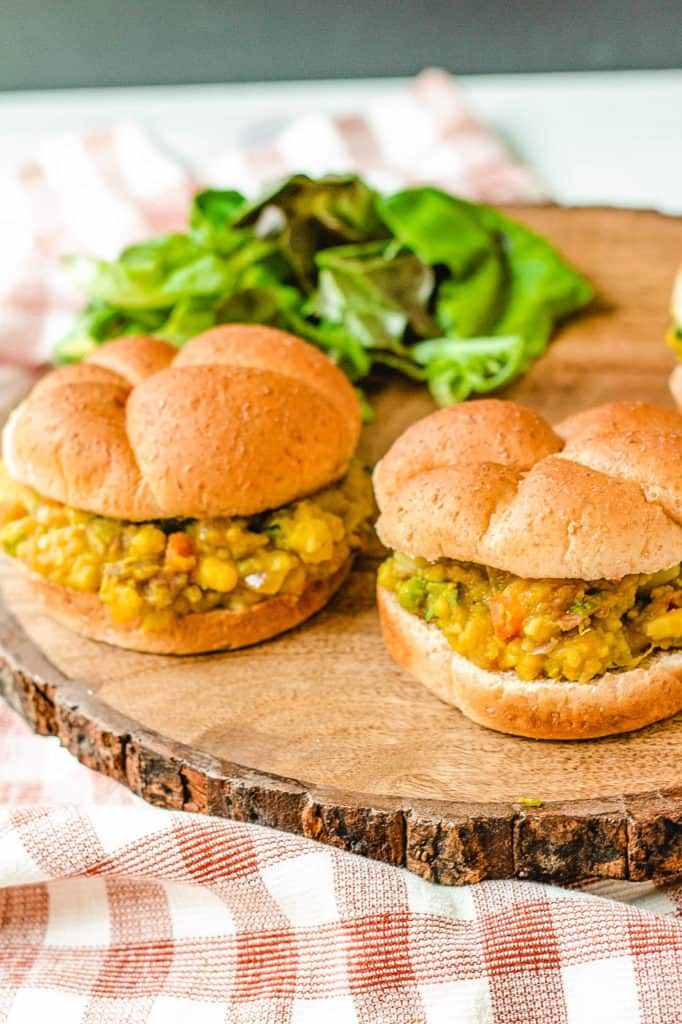

Love this plant based Indian recipe? Please leave a 5-star rating 🌟 in the recipe below and/or a review in the comment section further down the page!
You can also FOLLOW ME on FACEBOOK, INSTAGRAM, and PINTEREST to see more delicious, healthy, family-friendly food, and if you have any questions, I’m here to help!
Pav Bhaji (Indian Spiced Vegetarian Sloppy Joes)
Pav bhaji always takes me back to the busy street stalls and buttery toasted buns I grew up with. My version swaps in red lentils, cauliflower, and warm Indian spices for a more nourishing dinner. I still keep the rich tomato base and soft mashed protein and fiber to make it genuinely filling. Best of all, I have this Indian inspired vegetarian sloppy joe ready for my family in just 45 minutes.
Servings: 10 servings
Calories: 340kcal
-
Put the red lentils and water in a pot and bring to a boil. Reduce the heat to low and simmer until the lentils are softened, about 15 minutes.
-
Cook the cauliflower, mixed vegetables, zucchini and potatoes in water until soft. When they’re soft, mash the vegetables well, in the liquid. Stir in the cooked lentils.
-
Heat olive oil in a large skillet or pot over medium heat. Add the onions, ginger, garlic and tomatoes and cook until the onions have browned and the tomatoes start to break down (about 5-10 minutes)
-
Stir in the turmeric, Pav Bhaji masala and garam masala, cook for 30 more seconds.
-
Add the mashed vegetables/lentil mixture, salt, and cayenne pepper to taste (if using). Cook on low for about 20 minutes.
-
Serve with sprouted wheat burger buns, sloppy joe style!
- My #1 Secret Tip for this pav bhaji recipe is to cook the tomatoes down fully before adding the mashed vegetables. When the tomatoes still taste raw or watery, my entire bhaji tastes flat instead of rich and savory.
- Mash by hand: I always use a potato masher instead of a blender, so the filling keeps some texture instead of turning pasty.
- Simmer: I let the bhaji simmer gently after combining everything so the lentils absorb the spices properly.
- Salt later: I add most of the salt near the end since the mixture thickens during cooking and concentrates the flavor.
- Add a pinch of kasuri methi: A pinch of dried fenugreek toward the end of the cooking process provides an earthy restaurant-quality aroma that elevates the dish.
- Toast the buns: It may seem like a small step, but lightly toasted buns prevent the pav bhaji from soaking straight through the bread.
Calories: 340kcal | Carbohydrates: 66.2g | Protein: 18.8g | Fat: 2.7g | Saturated Fat: 0.2g | Sodium: 496.2mg | Fiber: 17.9g | Sugar: 1.7g