
Easy to work with and filled to the brim with nutrients, fish is easily one of our favorite proteins to cook. There’s simply no match for its versatility; one day you could be grilling up a delicious Mediterranean-style white fish, then the next be dicing up some sushi-grade sashimi to toss into a colorful poke bowl. There’s no argument that one of the most popular species is salmon, made famous by aesthetically perfect nigiri or Asian-inspired rice bowls. But if you’re looking to venture into new waters, skip salmon and give steelhead trout a go.
To clear up any confusion, steelhead trout is a sea-run rainbow trout, while salmon is a group of entirely separate species, including Chinook, sockeye, and Atlantic salmon. What sets steelhead apart from regular rainbow trout is its lifecycle. Steelhead hatch in freshwater, migrate out to the ocean, then return to freshwater to spawn. Rainbow trout, on the other hand, spend their entire lives in freshwater. That ocean-going lifestyle is exactly what makes steelhead so similar to salmon, which follow a very similar migratory path.
Both species also belong to the Salmonidae family, so swapping one for the other is honestly not a big leap. Cut into either one, and you’ll find the same orange-pink flesh, which makes them almost indistinguishable at the seafood counter. Where they part ways, however, is on the palate. Salmon carries significantly more fat, which gives it a bolder, almost buttery flavor. Steelhead is milder and less fishy, which makes it a safe bet for anyone who finds the flavor of salmon a bit overpowering. Steelhead also tends to be a budget-friendly alternative to salmon, though prices will naturally vary thanks to interacting factors such as market demand and whether they are farmed or wild.
The best ways to cook a steelhead trout
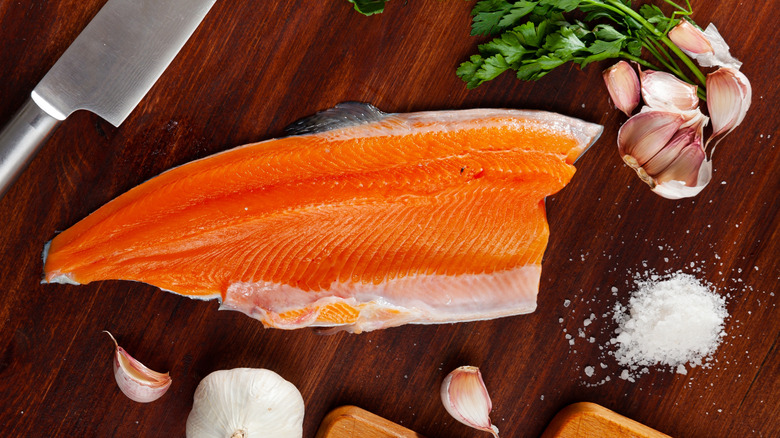
If you’ve ever cooked salmon, you’ll have no trouble working with steelhead trout. The two are so similar that they follow nearly identical preparation styles and can be swapped almost interchangeably, which makes steelhead a great lower-fat stand-in for salmon. That said, there are a few nuances worth noting. Steelhead is leaner, and its fillets tend to run thinner, so it cooks faster and dries out more easily. If a recipe calls for searing salmon for four minutes skin-side down and two minutes flipped, we’d shave about a minute off the total for steelhead.
Whether you’re cooking steelhead trout or salmon, one of the biggest rookie mistakes you can make is skipping the step of drying the skin. The beauty of a pan-fried, skin-on fish is the contrast between the soft, flaky flesh and the shatteringly crispy skin. Lay the skin in the pan while it’s still wet, and it will steam instead of sear, leaving you with a slimy film instead of a crackly crust. Worse, wet skin is far more likely to stick to the pan, turning a simple flip into a messy nightmare. Fortunately, the fix is easy. Pat the skin thoroughly dry with a paper towel, season it generously with salt and pepper just before it hits the pan, and of course, always sear skin-side first.
Pan-frying can be temperamental, so our favorite method to cook steelhead trout is baking. Preheat the oven to 400 degrees Fahrenheit and bake it for 15 minutes at most. To lock in precious moisture, we always wrap the fish in a foil packet or parchment paper, then load it up with anything from thinly sliced seasonal vegetables and fresh herbs to aromatics like lemon and garlic. A splash of white wine doesn’t hurt either.