
In this Turkish eggs recipe, poached eggs are served over garlicky yogurt with a spiced Aleppo pepper sauce on top. It’s a delicious savory breakfast!
I’ve made this Turkish eggs recipe more times than I can count in the last few months. It’s become a breakfast staple in our house, on repeat on busy weekdays and lazy weekends alike. It starts with a base of garlicky yogurt that I top with poached eggs and a richly spiced Aleppo pepper oil (butter works too). I round it out with a sprinkle of fresh herbs and pita bread for scooping everything up.
Ready in 20 minutes, it’s such a quick yet satisfying breakfast. The eggs and yogurt pack it with protein (we’re talking 22 grams per serving!), and the Aleppo pepper oil adds earthy, smoky flavor. If you need a change from plain fried eggs or scrambled eggs for breakfast, this recipe is a simple, delicious way to mix things up. I hope you love it as much as I do!
What is çılbır (Turkish eggs)?
Turkish eggs, or çılbır (pronounced chill-burr), consist of poached eggs served over garlicky yogurt and topped with Aleppo pepper butter or oil. The dish dates back to the Ottoman Empire and continues to be served in modern Turkey as a savory breakfast or light meal.
I first tried it years ago at a Middle Eastern restaurant and immediately loved the savory yogurt with the runny eggs and fragrant red pepper oil. Of course, I couldn’t resist developing my own recipe to make at home. Keep reading to learn how I make it!

Turkish Eggs Ingredients
Here’s what you’ll need to make this Turkish eggs recipe:
- Eggs, of course! I wrote this recipe to call for 2 eggs per serving, but you can use however many you’re hungry for. Scale it up or down depending on your preference.
- White wine vinegar – For making the poached eggs. It helps the egg whites coagulate in the simmering water.
- Whole milk Greek yogurt – It creates a rich, tangy base for the eggs. I recommend using whole milk Greek yogurt because it has the richest flavor, but if you only have fat-free or reduced fat Greek yogurt on hand, it’ll work as a substitute. It just needs to be Greek, or another type of thick, strained yogurt. Regular yogurt is too thin and runny to serve under the eggs.
- Garlic and salt – They give the yogurt delicious savory flavor.
- Olive oil or butter – It creates the base of the Aleppo pepper sauce. Butter is the traditional pick, and it adds rich, buttery flavor. I actually use olive oil more often though; I love its fruity notes with the spices in this recipe.
- Aleppo pepper – Known in Turkey as pul biber, Aleppo pepper flakes have a deep red color and fruity flavor with moderate heat. They infuse the oil that tops the eggs with flavor.
- Smoked paprika and ground cumin – These spices add smoky, earthy depth to the oil.
- Fresh parsley and dill – I love sprinkling these herbs over the final dish for a pop of freshness. Fresh cilantro and mint would be great here too—feel free to use what you have on hand!
Find the complete recipe with measurements below.
How to Make Turkish Eggs
This Turkish eggs recipe has 4 main steps.
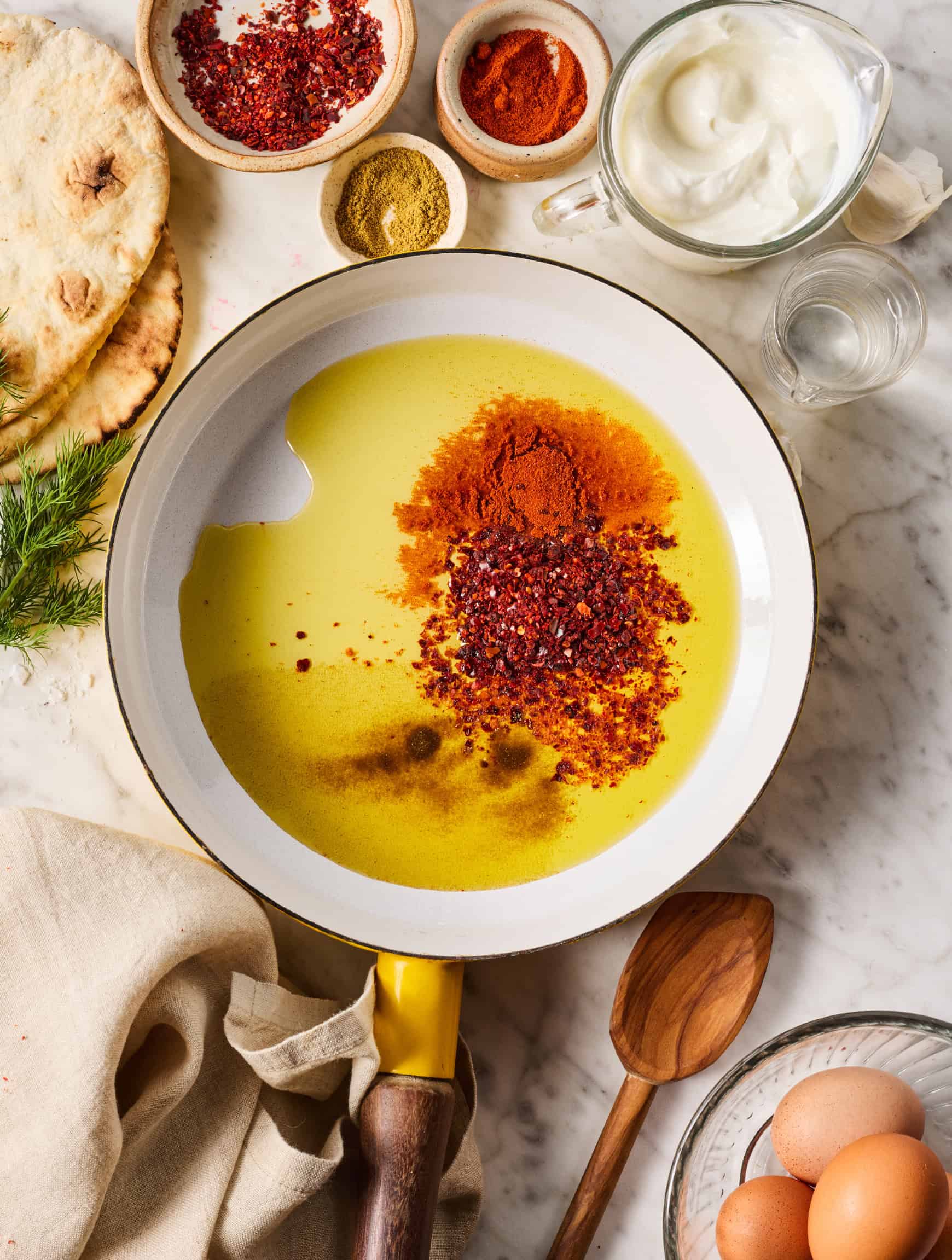
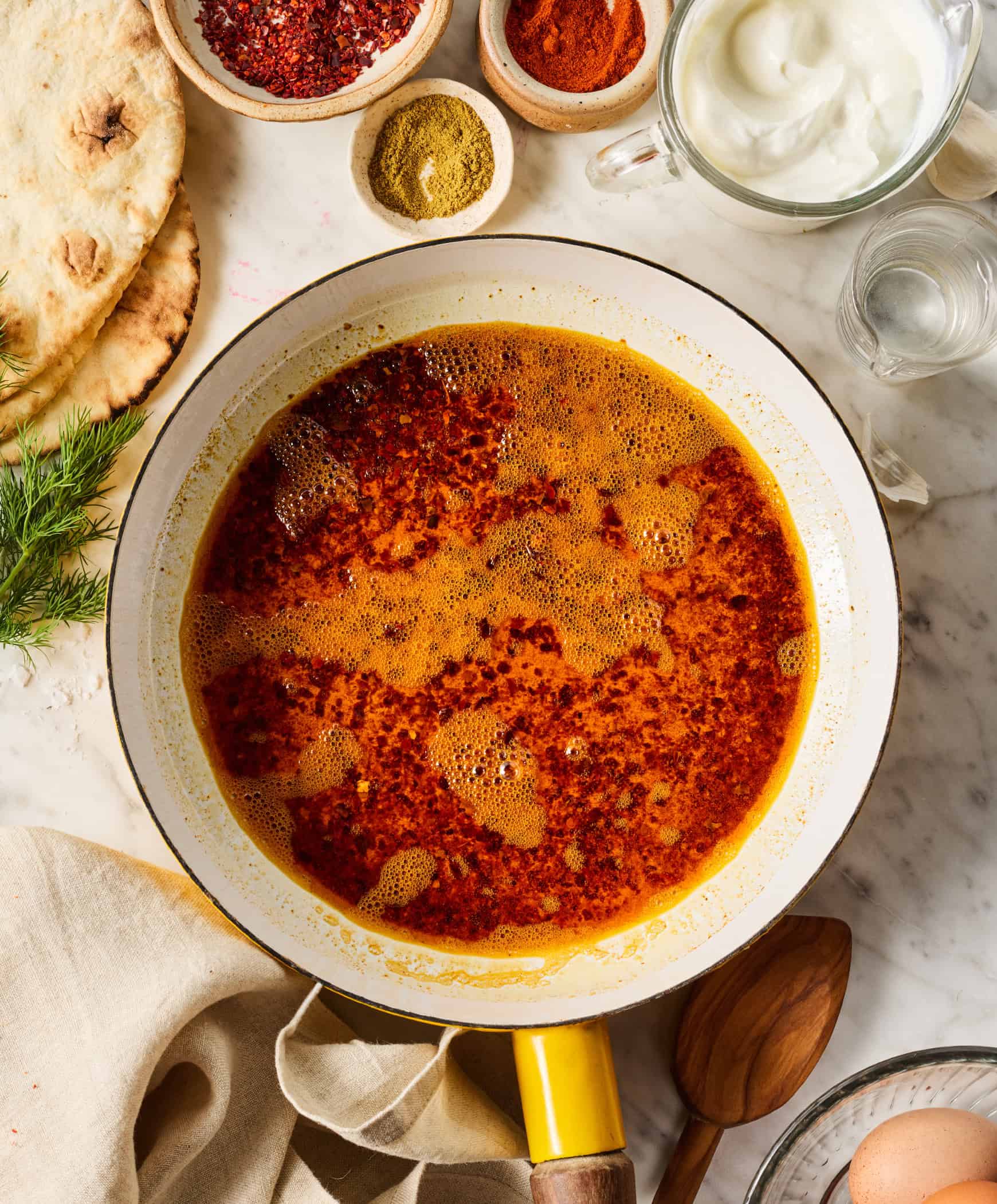
1. Start by making the Aleppo pepper sauce. Combine the oil or butter, Aleppo pepper, cumin, and paprika in a small skillet. Heat over medium until the oil is fragrant and lightly bubbling, just 30 seconds to 1 minute. Remove from the heat and transfer the oil to a glass or metal bowl.
2. Then, mix the yogurt with the garlic and salt. Set the yogurt mixture aside at room temperature while you cook the eggs.
3. Poach the eggs. Bring a medium pot of water to a gentle boil, and crack the eggs into four separate small bowls. Add the vinegar to the water and stir to create a vortex. Gently drop in the eggs and simmer for 3 1/2 to 4 minutes, or until the whites are set but the yolks are still runny. See my poached eggs recipe for more tips on making perfect poached eggs!
4. Assemble. Divide the yogurt between two plates or bowls and spread it in a thick swoosh. Top each with two of the eggs, then drizzle with the infused oil. Garnish with the herbs and serve with pita or crusty bread on the side.
Enjoy!
Recipe Tips
- Remove the Aleppo pepper oil from the skillet right away. As soon as it’s bubbling and fragrant, pour it into a heatproof bowl. This step will prevent the spices from burning. If they sat in the warm skillet—even off the stove—they could scorch while you poached the eggs.
- If you don’t have Aleppo pepper on hand, you can find it in the spice sections of most well-stocked grocery stores, in spice shops, and online. In a pinch, you can substitute regular red pepper flakes. They’ll be spicier than Aleppo pepper, so you may want to start with just 1 teaspoon (instead of 2) if you’re sensitive to heat.
- Save the leftover sauce. This Aleppo pepper oil makes extra—don’t let the leftovers go to waste! Smoky and savory, they’re fantastic on beans, hummus, salads, and roasted veggies. They keep well in an airtight container in the fridge for up to a week.

More Egg Recipes to Try
If you love this Turkish eggs recipe, try one of these delicious egg dishes next:

Turkish Eggs (Çılbır)
Serves 2
Prevent your screen from going dark
-
In a small skillet, combine the olive oil, Aleppo pepper, cumin, and paprika. Place over medium heat and cook for 30 seconds to 1 minute, or until the oil is fragrant and lightly bubbling. Remove from the heat and transfer to a heatproof bowl to prevent burning.
-
In a medium bowl, stir together the yogurt, garlic, and salt.
-
Poach the eggs. Crack the eggs into four separate small bowls or ramekins. Bring a medium pot of water to a gentle boil. Add the vinegar and stir the water so that it moves in a circular motion. Gently drop the eggs into the water, give the water one more gentle stir, and cook for 3½ to 4 minutes, or until the eggs are cooked to your liking.
-
Use a slotted spoon to scoop the eggs out of the water and transfer to a plate to drain slightly.
-
Divide the yogurt between two plates or bowls and spread it in a thick swoosh. Top each one with two eggs and drizzle with the Aleppo pepper oil. Season to taste with salt and pepper, garnish with dill or parsley, and serve with pita.
Nutrition facts calculated for 1 serving using 1 tablespoon of the oil