
This post may contain affiliate links. As an Amazon Associate, I earn from qualifying purchases. Please read my disclosure.
Build good eating habits early with this carrot puree for baby. I make this baby food with fresh carrots and water, for a naturally sweet, smooth, and bright food that comes together in just 25 minutes and stores really well, giving you more quality time with your little one.
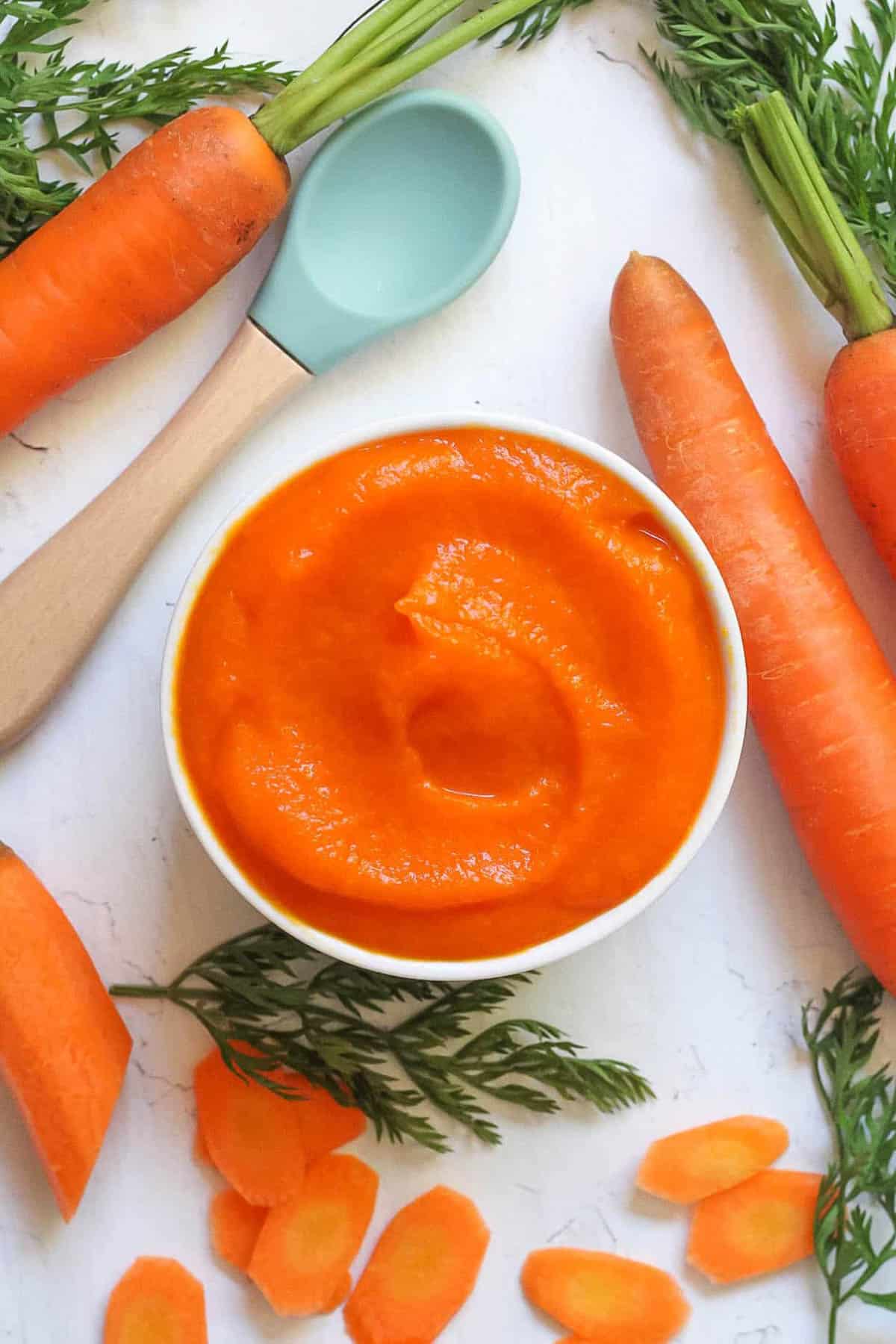
Simple vegetable purees are one of the best ways to introduce your baby to new flavors, and this carrot puree is a great place to start. Unlike more complex mixes like my broccoli, spinach, and cauliflower puree, this carrot one is sweet and simple, which babies tend to accept easily. If you are starting your baby on solids, give this smooth puree a try before moving on to more adventurous flavors.
As a new mom, this carrot puree was one of the first homemade recipes I tried with my kids. I made sure to stick to single-ingredient recipes like my avocado puree for baby, at first, to rule out any aversions or allergies safely. This is a really enjoyable stage as they are significantly less picky and more excited by healthy foods than they are when they get older. If my kids ever tell me they dislike something, I like to remind them that they were a lot more adventurous as babies. Ha!
I started making this carrot puree at home when, as a new mom and a nutritionist, I was highly aware of the additives used in store-bought baby foods. They are great in a pinch and extremely convenient, but I liked being able to adjust the texture and flavor as my kids moved up to different phases. Carrots are rich in beta carotene, which supports eye health and provides good doses of fiber and vitamin C.
The process for making this carrot puree is simple and reliable, perfect for parents with little ones starting on solids. I boil the carrots until fork-tender, and blend them along with the cooking liquid to avoid losing nutrients. Well-cooked carrots ensure a smooth texture, making the transition to solids a lot more palatable for your baby.
I have used this puree through all the various feeding stages, from spoonfeeding to mixing it with other foods as my kids grew. A friend of mine was starting her baby on his journey with solid foods, and I decided to help her out with a few premade portions of carrot puree. My eldest was in the kitchen watching me and looking at the puree with a slight nostalgia. I asked if they wanted some, and to my surprise, they said yes. Even more surprising was the fact that they remembered eating it as a baby, apparently. Make this puree for your baby, and build memories of good nutrition and flavor.
Latest Recipe Video!
🥘 Ingredients
This carrot puree for babies uses simple and focused ingredients, allowing the true flavor and nutrients to shine through.
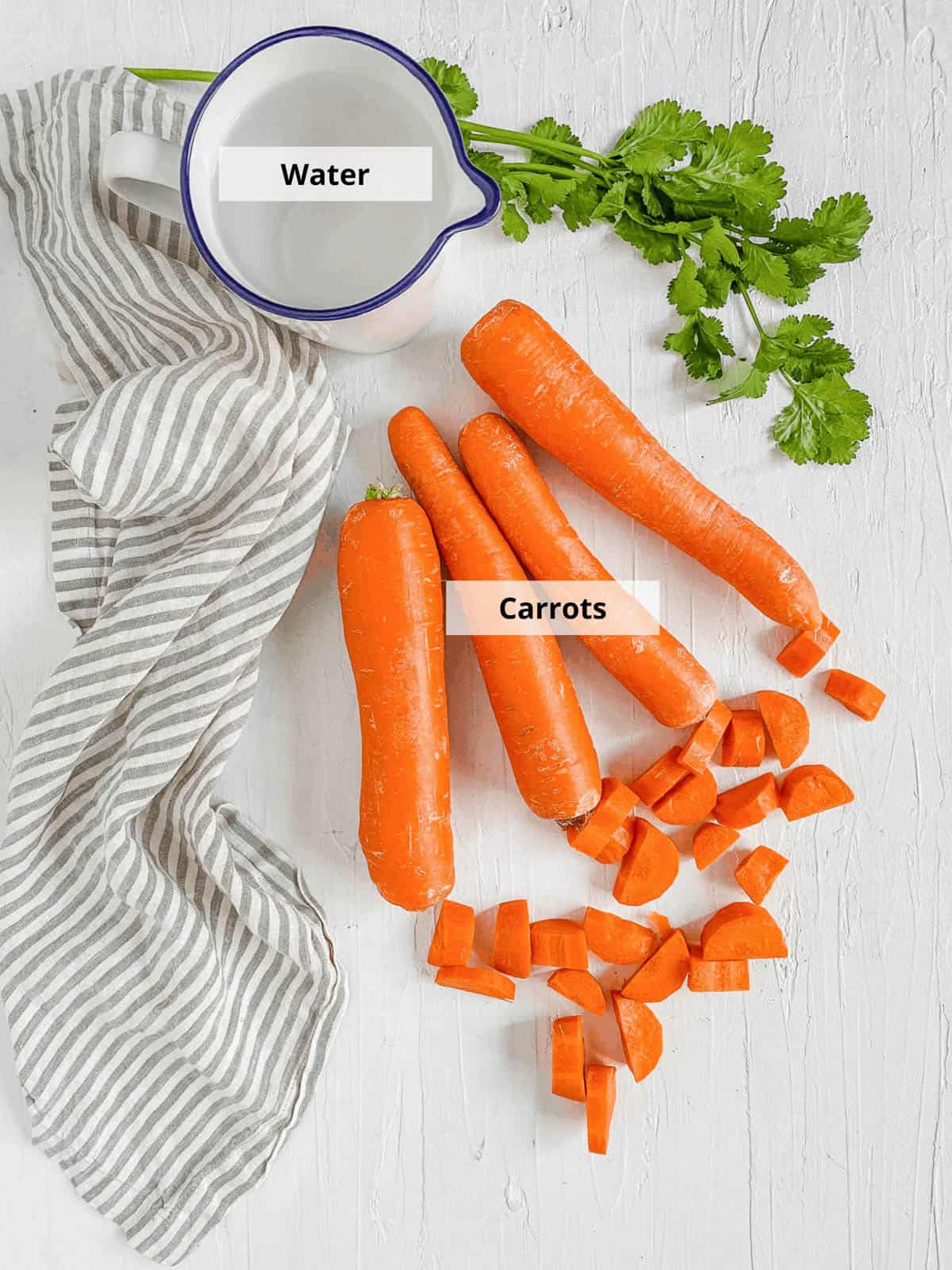
Carrots: I choose fresh, firm, organic carrots with a bright color. I make sure they are cut, topped, and peeled before boiling.
Water: I use filtered water to boil and blend my carrots, making sure none of the cooking liquid goes to waste.
🔪 How To Make
This is the simple method I use when preparing this carrot puree:
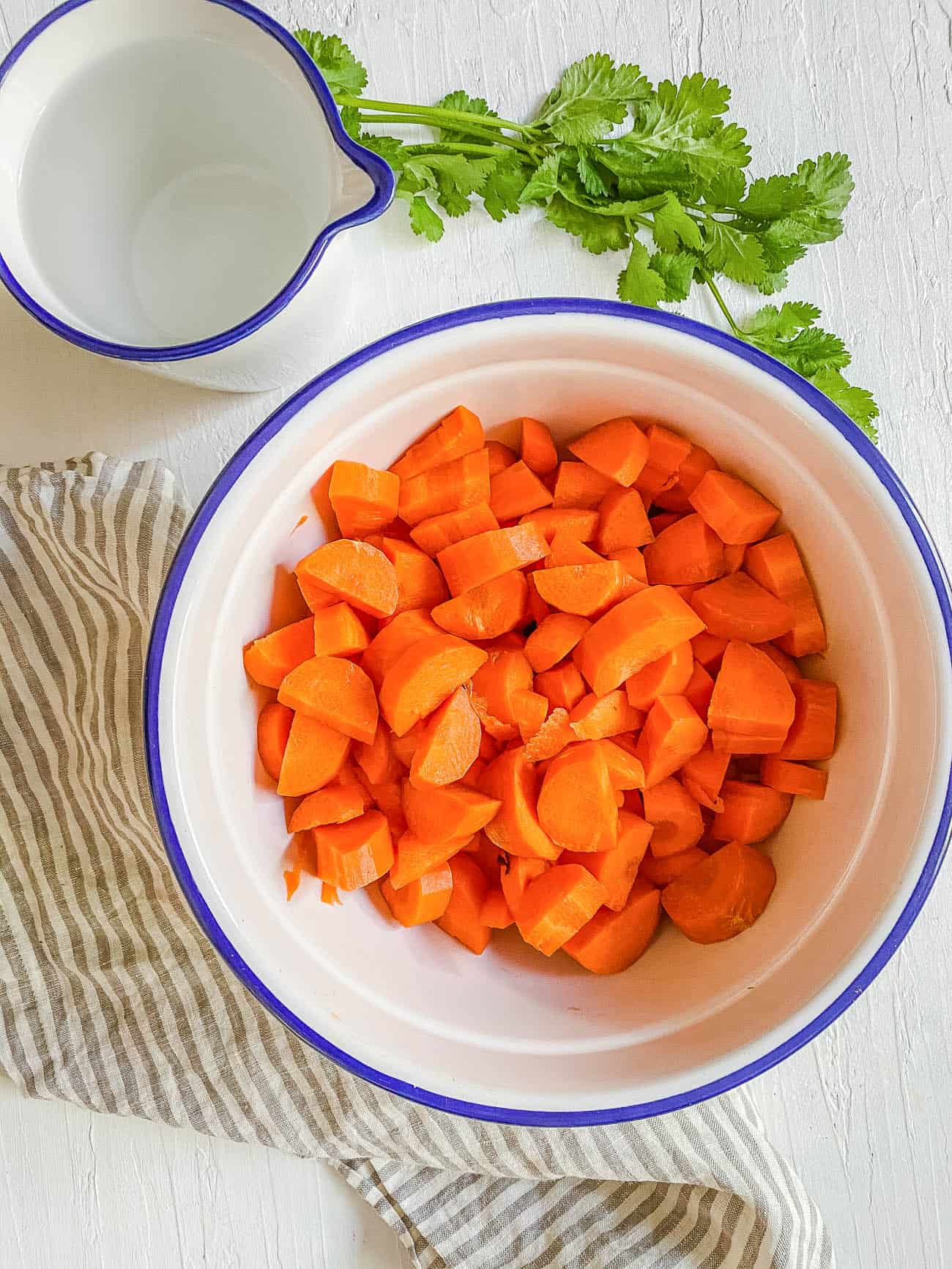
Prep carrots: I wash and peel my carrots, cutting off any stems and slicing them lengthwise and then into 8-10 smaller pieces. Then I add it to a pot with boiling water, and cook for 6-8 minutes until tender.
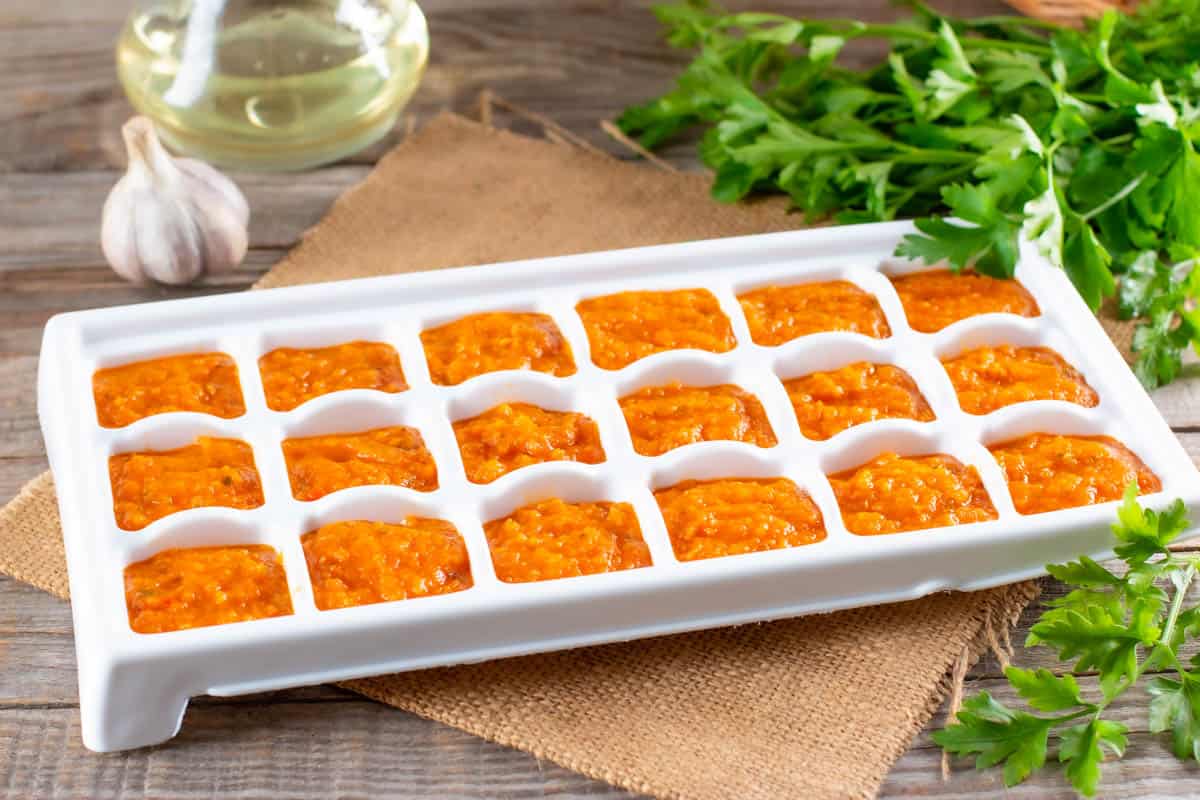
Puree: Then I pour the carrots and cooking liquid into a blender and puree until completely smooth. I pour the pureed carrots into clean ice cube trays, allow them to cool, wrap them tightly with plastic wrap, and freeze.
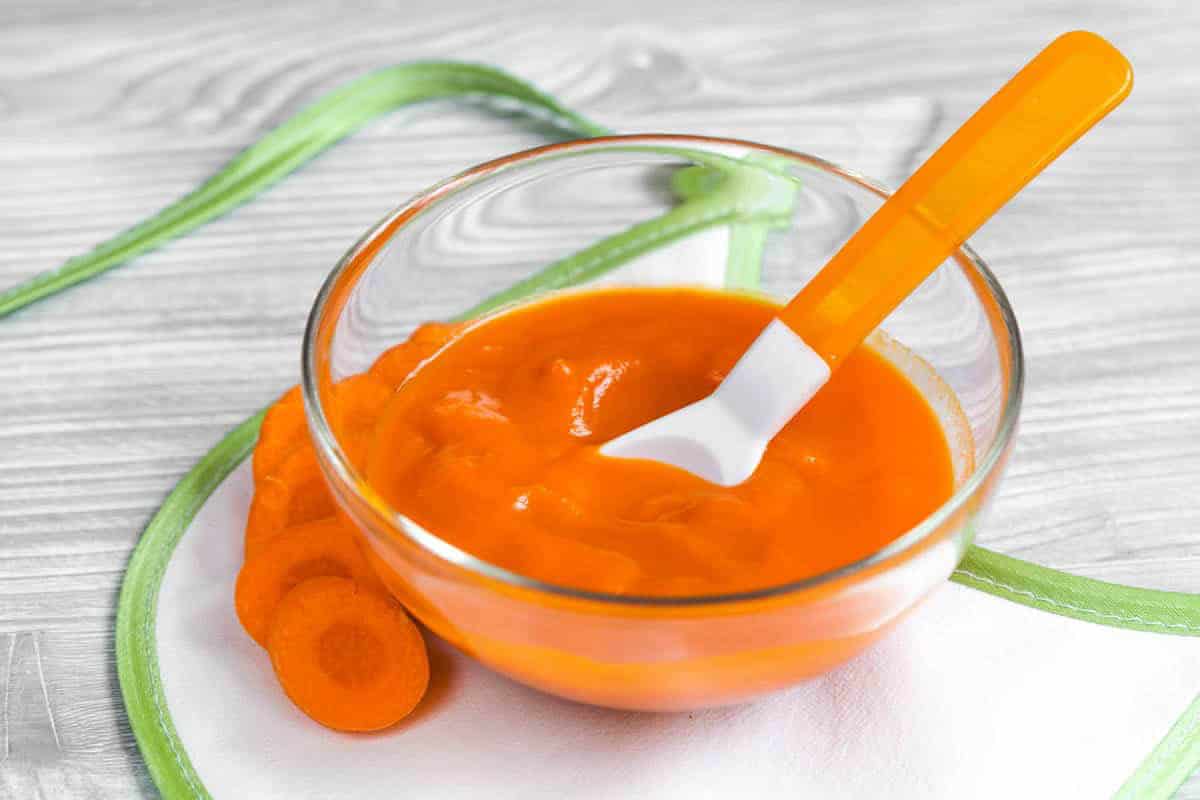
My #1 Secret Tip for this carrot puree recipe is to cook the carrots until completely soft before blending. Fully softened carrots create a much smoother texture, which is better for those early feeding stages.
Other Tips To Keep In Mind:
- Cut into small pieces: By cutting the carrots into small pieces, I reduce the amount of time they need to boil, make the process simpler, and also keep a fair amount of nutrients in the carrots.
- Add in formula or breast milk: Thinning out the puree with formula or breast milk is a great way to introduce your baby to new foods, with the familiar comfort of flavors and textures they know.
- Never use prepared carrots: For this puree, I only use fresh carrots. Prepared peeled carrots are often treated with bleach to keep them fresher.
📖 Variations
These are a few simple variations I have tried with this carrot puree, while keeping it safe and easy to eat for the baby:
Fresh herb addition: Babies are allowed to have fresh herbs when starting with solids, and I loved blending in leafy greens like thyme, cilantro, or parsley.
Mild spices: Adding in a pinch of mild spices like cinnamon, nutmeg, or cumin gives this puree a slightly aromatic taste, which my kids loved, especially the cinnamon.
Add healthy fats: For some healthy fats, I added 1 teaspoon of olive oil or coconut oil for a smoother texture. Alternatively, you could also blend in some avocado for healthy fats and creaminess.
🍽 Serving Suggestions
Since this carrot puree is naturally sweet, there is no need to add other fruity purees to make it more appealing to your baby. Instead, I recommend using it as a way to introduce your baby to other vegetable purees. When I was on stage one feeding, I mixed it with my peas baby food, which my kids loved, despite the color being less than appealing. Ha! I also moved on to a blend and made zucchini baby food, which contains apples and carrots, too.
When my kids were starting, they became a little too fond of this carrot puree and started getting fussy with other vegetables. Since this was the age when they became aware of colors, I decided to swap out the carrot puree with equally vivid and sweet vegetables that still provided some variety. The butternut squash baby food and sweet potato baby food worked like a charm.
🧊 Storing And ♨️ Reheating
Refrigeration: I store puree in an airtight container in the refrigerator for up to 4 days.
Freezing: I portion the puree into ice cube trays and store them in sealed bags or pouches for up to 4 months.
Reheating: If frozen, I thaw in the refrigerator overnight, then warm gently over a bowl of hot water. Never refreeze puree that has been frozen and thawed, as it may become unsafe to consume.
❓Recipe FAQs
Strictly speaking, you do not have to. But since carrots are a root vegetable that grows directly in the soil and absorbs whatever is in that soil, including pesticide residues, I prefer the organic route. Baby purees are made from whole vegetables and nothing else to dilute them, so the concentration of whatever is in that carrot goes straight into the puree.
I have seen this happen when the carrots have not been cooked for long enough before blending. If the pieces are still slightly firm, the blender will not break them down fully to a smooth, silky texture. This does not make the puree inedible, but it may not be appealing to your baby, especially if you are just starting with solid foods.
I adjust the consistency by changing the amount of liquid I add during blending. For the early stages, I add more water to create a thinner puree that is almost like a soup and easy to swallow. As my kids got older, I reduced the liquid and created a thicker puree ranging in texture from a pudding to porridge.

Love this plant based baby food recipe? Please leave a 5-star rating 🌟 in the recipe below and/or a review in the comment section further down the page!
You can also FOLLOW ME on FACEBOOK, INSTAGRAM, and PINTEREST to see more delicious, healthy, family-friendly food, and if you have any questions, I’m here to help!
📋 Recipe Card
Carrot Puree For Baby (Carrot Baby Food)
Build good eating habits early with this carrot puree for baby. I make this baby food with fresh carrots and water, for a naturally sweet, smooth, and bright food that comes together in just 25 minutes and stores really well, giving you more quality time with your little one.
Servings: 32 servings
Calories: 11kcal
- My #1 Secret Tip for this carrot puree recipe is to cook the carrots until completely soft before blending. Fully softened carrots create a much smoother texture, which is better for those early feeding stages.
- Cut into small pieces: By cutting the carrots into small pieces, I reduce the amount of time they need to boil, make the process simpler, and also keep a fair amount of nutrients in the carrots.
- Add in formula or breast milk: Thinning out the puree with formula or breast milk is a great way to introduce your baby to new foods, with the familiar comfort of flavors and textures they know.
- Never use prepared carrots: For this puree, I only use fresh carrots. Prepared peeled carrots are often treated with bleach to keep them fresher.
Serving: 4tablespoons | Calories: 11kcal | Carbohydrates: 2.5g | Protein: 0.3g | Sodium: 18.4mg | Potassium: 85.3mg | Fiber: 1g | Sugar: 1g