Over the last few decades, you probably remember common health guidance pushing you to opt for low-fat dairy options, or even non-dairy products. Well, all of that has changed with the recent release of the 2025–2030 Dietary Guidelines for Americans, which clearly recommend full-fat dairy1. So what guidance should we be listening to, and which is actually better for your health?
To answer that, let’s dig into the truth of whole milk by exploring the history of low-fat eating, whole milk nutrition, and how it stacks up to the alternatives.
How We Got Here: The Low-Fat Era
The idea that saturated fat causes heart disease started with the “diet-heart hypothesis” in the 1950s, sparked by research from physiologist Ancel Keys. His research influenced the American Heart Association in the ‘60s so much that reducing saturated fat intake became a part of government policy by 19802.
Recent studies, however, have us revisiting our opinions on saturated fat. A 2025 systemic review looked at the effect of saturated fat intake on heart health and found no significant link3. Studies like these are directly influencing food policies like the previously mentioned Dietary Guidelines for Americans, which now recommend three full-fat servings of food per day. The Whole Milk for Healthy Kids Act now also allows schools to offer whole, reduced-fat, low-fat, and fat-free milk options, offered both as organic or non-organic4. This is a departure from previous policies, which restricted whole milk from school beverage offerings.
What’s Actually in Whole Milk?

Before we go into the research, let’s start with the basics and look at whole milk nutrition alongside other milk options. This table offers a direct comparison of skim milk vs. whole milk and whole milk vs. 2 percent milk5,6,7.
| Nutrition Facts (per 8 fl. oz.) | Whole Milk | 2% Milk | Skim Milk |
| Calories | 149 | 122 | 83.6 |
| Total Fat (g) | 7.9 | 4.6 | 0.19 |
| Saturated Fat (g) | 4.6 | 2.7 | 0.12 |
| Protein (g) | 8.1 | 8.2 | 8.4 |
| Calcium (mg) | 306 | 309 | 325 |
| Vitamin D (IU) | 95.6 | 111 | 108 |
When comparing cow’s milks, protein hovers at around 8 grams per cup regardless of fat content, and calcium stays at around 300 mg per cup.
All of the above cow’s milk products shown above are fortified with vitamin D, but the lower fat types do tend to have slightly higher vitamin D levels. This is because vitamin D is a fat-soluble vitamin that gets largely stripped away when manufacturers remove the milk’s fat content — and then to correct this, they add synthetic vitamin D back, often in higher quantities than was there to begin with. The vitamin D in whole milk is likely more naturally present.
What Are the Key Differences in These Milk Types?
The obvious differences across milk types are that the lower-fat milks are lower in calories and saturated fat content. But there are a few other differences that aren’t shown in these basic nutrition facts.
Whole milk products, particularly grass-fed and organic whole milk products, are also high in conjugated linoleic acid (CLA). Research suggests that CLA may benefit heart and metabolic health, and could also reduce one’s risk for cancer if consumed regularly8. CLA is primarily found in the dietary fat of meat and dairy products — which means that whole milk naturally contains more CLA than lower-fat options.
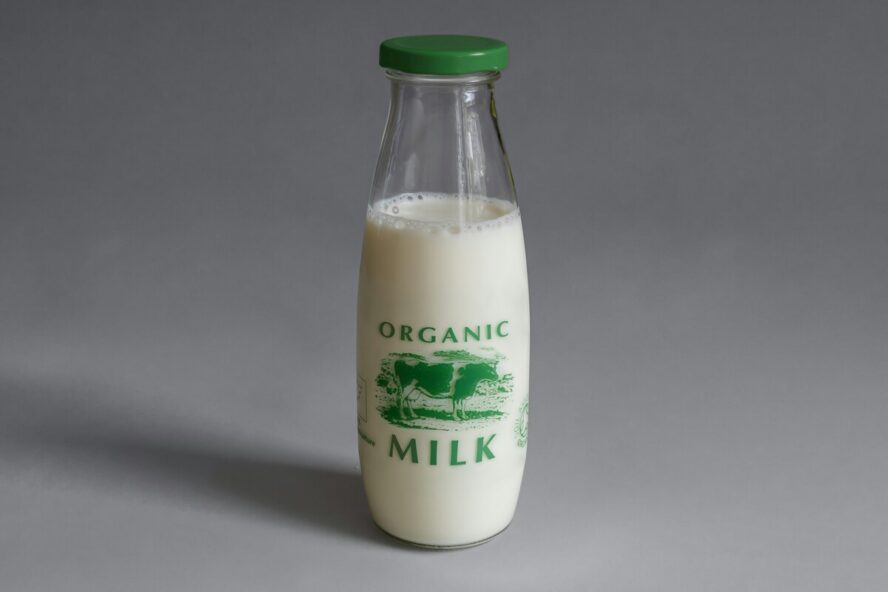
Finally, regardless of which fat level you opt for, you might also want to consider whether you’re buying conventional vs. organic milk. Research shows that conventional milk contains low amounts of omega-3 fatty acids as compared to organic cow’s milk9. Organic milk often has a label stating the omega-3 content per serving, so keep an eye out for that the next time you’re at the store.
Whole Milk vs. 2% vs. Skim — How to Think About the Difference

Whole Milk
In a study that observed children four hours after eating breakfast, research found that whole milk was better at keeping them satiated than skim milk10. Besides its satiating properties, whole milk also helps support the absorption of fat-soluble vitamins (A,D,E,K) in the body, holds up well with cooking sauces and soups, and supports optimal growth and weight in toddler-aged children11,12.
New research suggests that full-fat dairy products may not have a negative effect on heart health like other saturated fat-containing foods like red meat and butter13. In addition, grass-fed whole milk may provide antioxidants like omega-3 fatty acids to benefit overall health14. Still, if you have pre-existing cardiovascular conditions or very high LDL cholesterol, then you should consult with your doctor before consuming whole milk.
2% (Reduced Fat) Milk
If you’re trying to lower your total fat intake but still want the benefits of dairy fat, 2% milk may be a good compromise. You still retain some satiety benefits and fat-soluble vitamin content but with less saturated fat, making it a decent daily option for most adults.
Skim Milk
Skim milk contains little to no fat and provides the highest protein-to-calorie ratio of all the types of cow’s milk. This type of milk is best for those with strict calorie management needs. The downside, however, is that skim milk provides little satiety and fat-soluble vitamin absorption.
Saturated Fat Alone Doesn’t Tell the Whole Story
If you were purely comparing the nutrition labels, you might be tempted to toss whole milk aside purely based on the saturated fat content comparison. But if you did this, you would be missing out on the many nutrients associated with such fat content. That’s why we should consider the food matrix when thinking about dairy products like milk.
The food matrix concept acknowledges that a whole food is greater than the sum of its parts. It essentially reminds us not to focus only on the individual nutrients in any given food, but also the way these nutrients interact and work together to impact our health.
How the Food Matrix Should Affect Your Milk Choice
While nutrition guidance has often stayed laser-focused on isolated nutrients, often encouraging us to count grams of fat or sugar, the food matrix recognizes that nature may be the best designer. Vitamins, minerals, proteins, and fats are often naturally packaged together in complex bundles that support overall health better than any single nutrient could. They can even interact to slow down or speed up digestion, absorption, and nutrient processing, altering how our bodies respond to the food.

One study reports that the dairy milk matrix in particular is beneficial at promoting nutrient absorption15. For example, lactoferrin is a type of protein found in mammalian milk, and it plays a big role in iron regulation. It naturally binds to iron and helps support its absorption and distribution throughout the body — in essence making iron more bioavailable for our systems to take advantage of. The whole milk matrix also works to slow gastric emptying, which can support metabolic health and weight management over time.
And there’s no arguing against the nutrients whole milk delivers — the milk matrix provides more than 10% of the global intake of five essential amino acids, protein, phosphorus, potassium, and vitamins A, B5, and B1215.
So, how much should the saturated fat content really factor into your milk choice? Well, it really depends on your health priorities, and there isn’t really a conclusive scientific answer. The 2025–2030 DGA acknowledges that questions remain about how different types of fats impact long-term health, calling for additional high-quality clinical trials to strengthen the evidence base.
One such study in progress is known as the GOT MILC study, or “Gauging Outcomes of Total Milk Ingestion on Lipid and Control”16. It will look at whether lower-fat milks are actually more beneficial than whole milk in supporting heart health markers. These targeted studies will help us continue to piece together the puzzle of milk, fat content, and our health.
The Tension in the Science
Despite the new dietary guidelines inspiring some interesting conversations around full-fat milk, there are some contradictions that do complicate the guidance. The guidelines encourage three full-fat servings of food each day, but still cap daily saturated fat intake at 10% of total daily calories. Harvard’s Nutrition Source flagged these contradictory recommendations publicly because the math just doesn’t work17.
Based on the average 2000-calorie diet, 10% of your total daily calories comes out to 22 grams of saturated fat. If you eat three full-fat dairy servings per day, it becomes difficult to stay below the recommended limits for saturated fat. For example, one cup of whole milk is around 5 grams of saturated fat, one tablespoon of butter contains 7 grams of saturated fat, and one ounce of cheddar cheese is around 6 grams of saturated fat5,18,19. With these three full-fat dairy servings, you’ve already consumed 18 grams of saturated fat, leaving you with only 4 grams of saturated fat left for your daily intake. This saves room for around a ¾ cup serving of full-fat Greek yogurt20 — anything else pushes you into excessive territory according to the guidelines.
A Dietitian’s View
As a registered dietitian, I realize that most people don’t have time to track every single gram of saturated fat they eat each day to meet this recommendation. So when it comes to striking the balance between limiting saturated fat while also reaping the benefits of whole milk, I would encourage clients to choose those whole-fat dairy products that contain 5 grams of saturated fat or less, and limit butter intake during the day.

Here’s a list of tips I would provide to meet this rather limiting set of recommendations:
- Have one serving of full-fat dairy with each meal to make it easier to keep track of your servings consumed daily.
- Stick to foods with lower saturated fat content like yogurt and certain cheeses — cotija, Oaxaca, provolone, mozzarella, and feta, for example — which contain just 3-5 grams or less of saturated fat per ounce21,22,23.
- Instead of butter, rely primarily on low-sodium spices, herbs, and olive oil for flavoring dishes. If you enjoy the creamy texture of butter, try olive oil-based, margarine-like spreads.
- Use measuring spoons when using oils or oil-based spreads in cooking.
What If Your Goal Is Weight Management?
If you’re looking for the best milk for weight loss, don’t automatically count out whole milk. Let’s look at some of the facts to see what milk comes out on top.
- Calorie content: Whole milk contains nearly double the amount of calories of skim milk, which may make it hard if you’re on a strict calorie restrictive diet.
- Satiety: Whole milk keeps you fuller longer than skim milk due to its higher fat content. The fat in whole milk slows gastric emptying, which can reduce overall intake.
- Research: Recent studies in both the United States and Canada show that regular whole milk intake can help reduce body weight and body mass index in adults24,25.
The Verdict: Skim milk may win for its lower calorie content, but whole milk wins out on satiety. The bottom line is that 2% milk may provide the best of both worlds for most people.
Who Should Think Twice About Whole Milk
Although whole milk can offer health benefits for many people, there are some groups of people who should avoid higher-fat foods like whole milk, such as those with26,27:
- Pre-existing heart conditions: People with existing cardiovascular disease, familial hypercholesterolemia, or very high LDL should get personalized guidance from their doctor before adding full-fat foods to their daily routine.
- Malabsorptive conditions: Those with bile acid malabsorption or conditions like pancreatic enzyme insufficiency, for example, should stick to a low-fat diet.
- Milk intolerances or allergies: Whole milk would obviously not be safe for those with milk allergies or lactose intolerance to consume.
The Bottom Line
We’ve entered this article with the goal of answering a few questions. Is full-fat dairy bad for you? Is full-fat dairy better at delivering nutrients than other options? Is whole milk actually the best milk for weight loss? Which milk is the healthiest?
Unfortunately, there isn’t necessarily a clear-cut answer to all of these questions. We’ve only recently started to challenge what we thought was the truth about whole milk, and studies are ongoing. For now, aim for balance. Stick to current recommendations to limit saturated fat intake, but don’t be afraid to add some full-fat dairy products into your diet. Ultimately, the healthiest milk is the one that best supports your health needs.
So, if you’re wondering, “Is whole milk healthy?” — the answer depends on your specific health background. No single food will be ideal for everyone, no matter what dietary guidelines and science says. Figuring out what foods work best for us is a lifelong journey to navigate based on allergies, intolerances, health status, and taste preferences.
Frequently Asked Questions
Whole milk can help you feel full faster, while skim milk can help you minimize your calorie intake — both can have benefits if your goal is to lose weight. Therefore, the best milk for weight loss is the one that works best for you to help you manage your daily food intake.
No, whole milk is not considered inflammatory for most people. Whole milk contains fat-soluble vitamins like A, D, E, and K, which hold antioxidant properties, while organic whole milk also contains antioxidant-rich omega-3 fatty acids. Such antioxidant compounds actually offer anti-inflammatory properties that can help fight inflammation in the body.
Whole milk and 2% milk contain similar protein and calcium content, but whole milk contains about 25 more calories per cup. Meanwhile, 2% milk contains three grams less fat and two grams less saturated fat per cup than whole milk.
Organic whole milk contains more omega-3 fatty acids than whole milk, and also contains CLA, which can help provide metabolic and immune health benefits.
Sources:
- https://realfood.gov/
- https://pmc.ncbi.nlm.nih.gov/articles/PMC9794145/
- https://pubmed.ncbi.nlm.nih.gov/40416032/
- https://www.congress.gov/bill/119th-congress/senate-bill/222
- https://fdc.nal.usda.gov/food-details/746782/nutrients
- https://fdc.nal.usda.gov/food-details/746778/nutrients
- https://fdc.nal.usda.gov/food-details/746776/nutrients
- https://extension.psu.edu/conjugated-linoleic-acid-cla-in-animal-production-and-human-health
- https://www.frontiersin.org/journals/nutrition/articles/10.3389/fnut.2022.988707/full
- https://link.springer.com/article/10.1186/s40795-018-0253-8
- https://pubmed.ncbi.nlm.nih.gov/31851302/
- https://pubmed.ncbi.nlm.nih.gov/41980293/
- https://mcpress.mayoclinic.org/dairy-health/full-fat-dairy-foods-and-cardiovascular-disease-is-there-a-connection/
- https://pmc.ncbi.nlm.nih.gov/articles/PMC6723057/
- https://www.tandfonline.com/doi/10.1080/10408398.2026.2648097?url_ver=Z39.88-2003&rfr_id=ori:rid:crossref.org&rfr_dat=cr_pub%20%200pubmed
- https://clinicaltrials.gov/study/NCT07087184
- https://nutritionsource.hsph.harvard.edu/2026/01/09/dietary-guidelines-for-americans-2025-2030/
- https://fdc.nal.usda.gov/food-details/328637/nutrients
- https://fdc.nal.usda.gov/food-details/173430/nutrients
- https://fdc.nal.usda.gov/food-details/2259794/nutrients
- https://fdc.nal.usda.gov/food-details/2647441/nutrients
- https://fdc.nal.usda.gov/food-details/2647443/nutrients
- https://fdc.nal.usda.gov/food-details/2647440/nutrients
- https://www.sciencedirect.com/science/article/pii/S0271531724001453?via%3Dihub
- https://pmc.ncbi.nlm.nih.gov/articles/PMC13084591/
- https://www.ncbi.nlm.nih.gov/books/NBK553097/
- https://www.ncbi.nlm.nih.gov/books/NBK553106/

Add Organic Authority as a preferred source on Google?