
From aesthetically perfect matcha and the artistry of sushi to the fruit-stuffed indulgence of a sando, we’ve got Japan to thank for some seriously delicious food exports. But there’s one Japanese staple that deserves way more love than it currently gets: ponzu. Tangy, savory, and citrus-forward, ponzu is most commonly used as a delicious dipping sauce. But looking beyond its conventional uses, contained within its delicious recipe are some of our favorite Japanese ingredients, making it perfect for upgrading any chicken marinade.
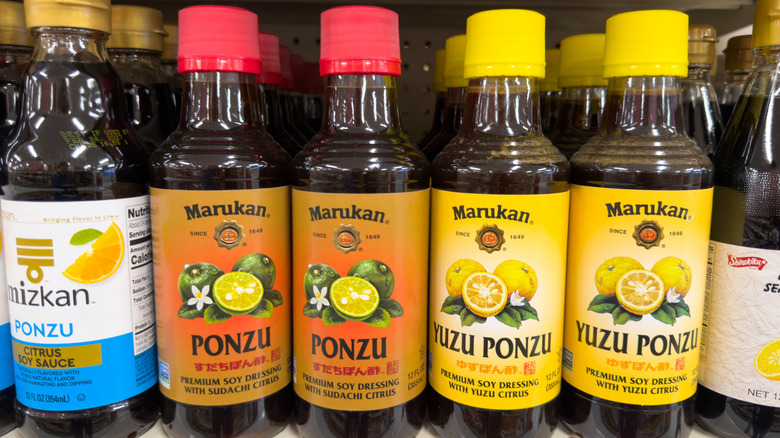
Ponzu is made by simmering mirin, rice vinegar, katsuobushi flakes (dried bonito flakes), and seaweed over a medium heat. The liquid is then cooled, strained, and a citrus juice is added — most often yuzu, but lemon or lime work in a pinch. There are several different takes on the sauce, including ponzu shōyu, which mixes the traditional recipe with Japanese soy sauce. While it’s easy to make at home, you’ll also have no trouble finding it sold at your local Asian supermarket (or in the international section of your favorite store).
Containing salty, sweet, sour, bitter, and umami elements, ponzu is a masterclass of perfectly balancing all five flavor groups. The katsuobushi flakes and seaweed infuse the sauce with deep umami flavors, while the citrus and rice vinegar add brightness. The sweet mirin then comes in to mellow the intense acidity and saltiness. While each component adds something unique to your marinade, it’s the yuzu and rice vinegar that are doing the heavy lifting. See, acids are one of the core foundations of a good marinade. Beyond boosting flavor, they also denature the meat’s protein, tenderizing its texture and allowing the other flavors to penetrate deeper. But before adding ponzu to your marinade, remember this: To avoid over-tenderizing your meat, make sure to only add two to three tablespoons max.
The best ways to pair your ponzu with chicken
One of the most common myths about marinades is that the longer you leave them to soak, the better your meat will taste. In reality, most proteins reach their peak flavor and texture within only a few hours. This rings especially true for ponzu-marinated chicken; if you leave the chicken to sit in the acid-based marinade for too long, there’s more time for the acids to break down the outer surface of the meat, causing it to become mushy and stringy. For the best results, we recommend marinating your chicken with ponzu for under an hour.
If you want the flavor of the ponzu to be more pronounced, skip the marinade and whip up a flavorful pan sauce instead. After searing the chicken, pour a splash of ponzu directly into the hot pan to lift the browned bits into a quick pan sauce. You could also reduce ponzu with a touch of mirin, sugar, and cornstarch until thick and glossy. With the heat concentrating the ponzu’s citrusy tang and umami depth, these methods will pack a serious punch.
Ponzu’s bright, citrusy acidity and sharp vinegar tang give it real cutting power against richer, fattier flavors — that’s why it’s the dipping sauce of choice for shabu-shabu (Japanese hot pot), where it brightly slices through fatty cuts. The same logic applies to chicken; the richer and more caramelized the meat, the more ponzu has to work with. That’s why we’d point you toward the grill, which builds smoky char the acid can play off, and toward skin-on pieces, which render fat as they cook. This competition of dominant flavors gives ponzu greater complexity, rather than just letting its bold flavors overpower a simpler dish.