
This post may contain affiliate links. As an Amazon Associate, I earn from qualifying purchases. Please read my disclosure.
A big bowl of Southern vegan black eyed peas is a comfort food steeped in tradition, and my version comes together in just 50 minutes. I make it with black eyed peas, colorful vegetables, and fresh thyme. Every bite is hearty, smoky, and packed with wholesome ingredients, and a little bit of luck.
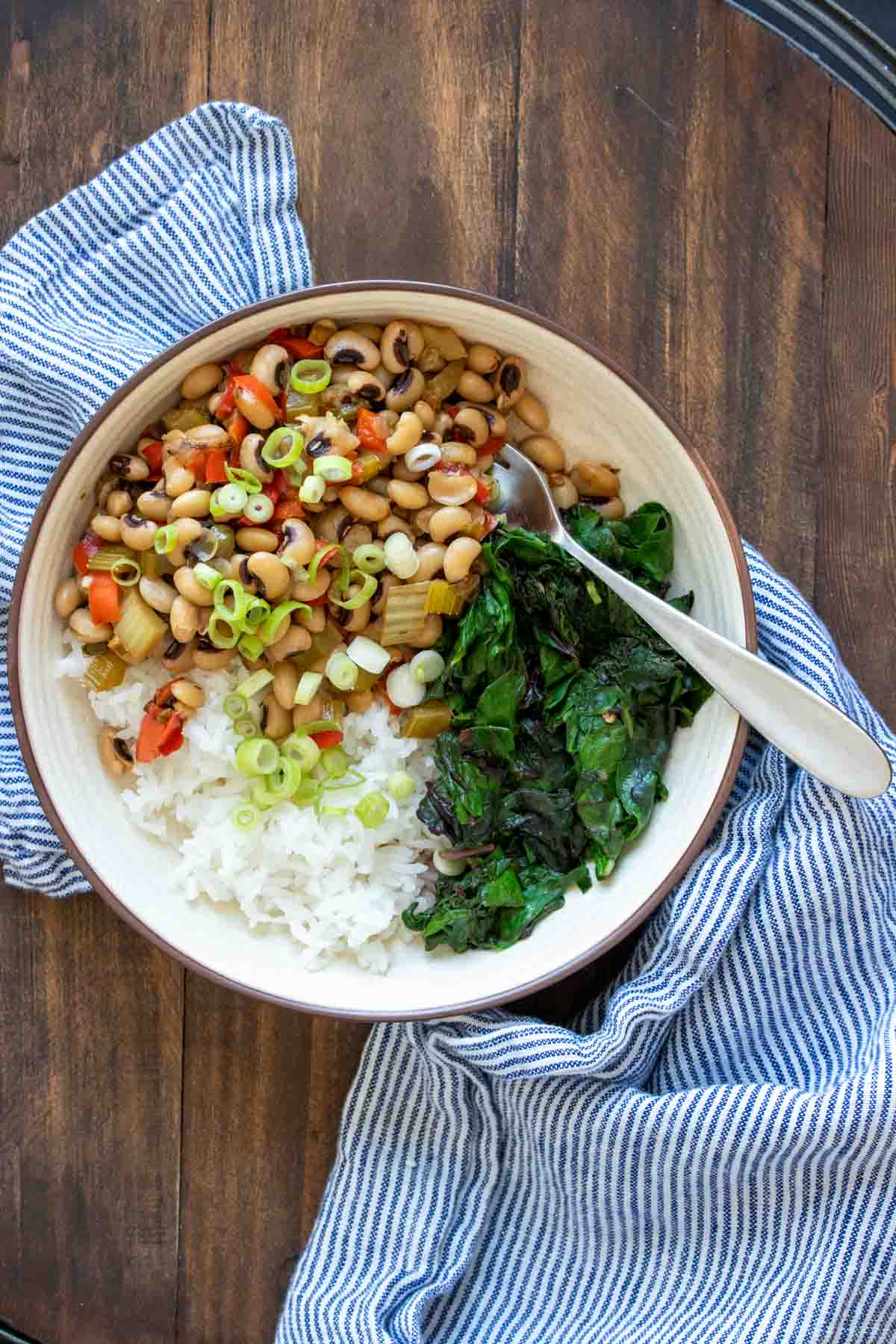
This dish has been a Southern tradition for generations and is known as Hoppin’ John. My Southern vegan black eyed peas have all the authentic flavors without any of the pork. I wanted to create something similar to my vegan black beans but with more of a smoky flavor. If you have grown bored of your usual bean recipes, I recommend trying these black eyed peas.
This recipe started after learning how much history and tradition surrounds Hoppin John, and I loved the challenge of recreating that signature smoky flavor without any meat. After plenty of testing, liquid smoke was the key ingredient that set my dish apart. Now when I need a meal that is lighter than Caribbean-style stewed beans for dinner, I make my southern vegan black eyed peas, and it never fails to impress whoever I serve it to.
Wholesome meals that combine vegetables, beans, and grains into one bowl, like Southern vegan black eyed peas, are always welcome in my kitchen. As a health coach, I love that the black eyed peas provide plenty of plant-based protein and fiber, while onions, celery, peppers, and greens add vitamins, color, and amazing flavor.
The flavors in my Southern vegan black eyed peas build perfectly from the very beginning. I cook the onion until tender before adding the garlic, celery, peppers, herbs, and seasonings, then stir in the soaked black eyed peas and vegetable broth for a gentle simmer until the peas become perfectly tender. Once most of the liquid has reduced into a concentrated flavorful sauce, I serve everything over warm rice with sauteed Swiss chard and a sprinkle of sliced green onions.
Over the past few years, I have made Hoppin ‘ John every New Year’s Day. My kitchen fills with the smoky, comforting aroma from a meal said to bring good fortune for the year ahead. I am usually exhausted on New Year’s Day, and this meal is easy but filling enough and a superb way to start the year right. After some research, my boys learned that diners must leave exactly 3 peas on their plate at the end of the meal to secure all the upcoming good luck. We are not superstitious, but they always stick to this rule no matter how hungry they are. Let me know if you plan to start the year with luck and some vegan black eyed peas.
🥘 Ingredients
All I need are simple vegetables, herbs, and pantry staples for my Southern vegan black eyed peas. This is what I use to create a hearty Southern-inspired meal packed with smoky flavor:
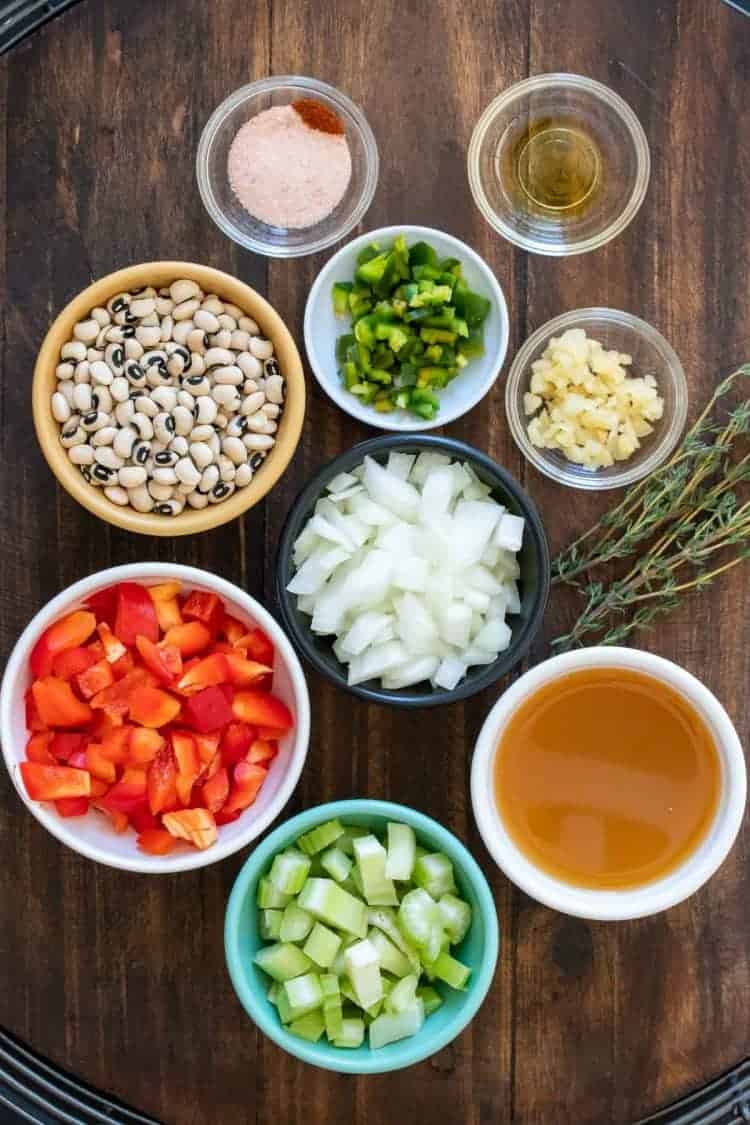
Sweet or yellow onion: I cook the onion first to build a naturally sweet, savory base.
Garlic: Fresh garlic adds richness and a robust aromatic flavor.
Olive oil or vegetable broth: I use this to saute the vegetables. Broth is a great option for keeping the meal oil-free.
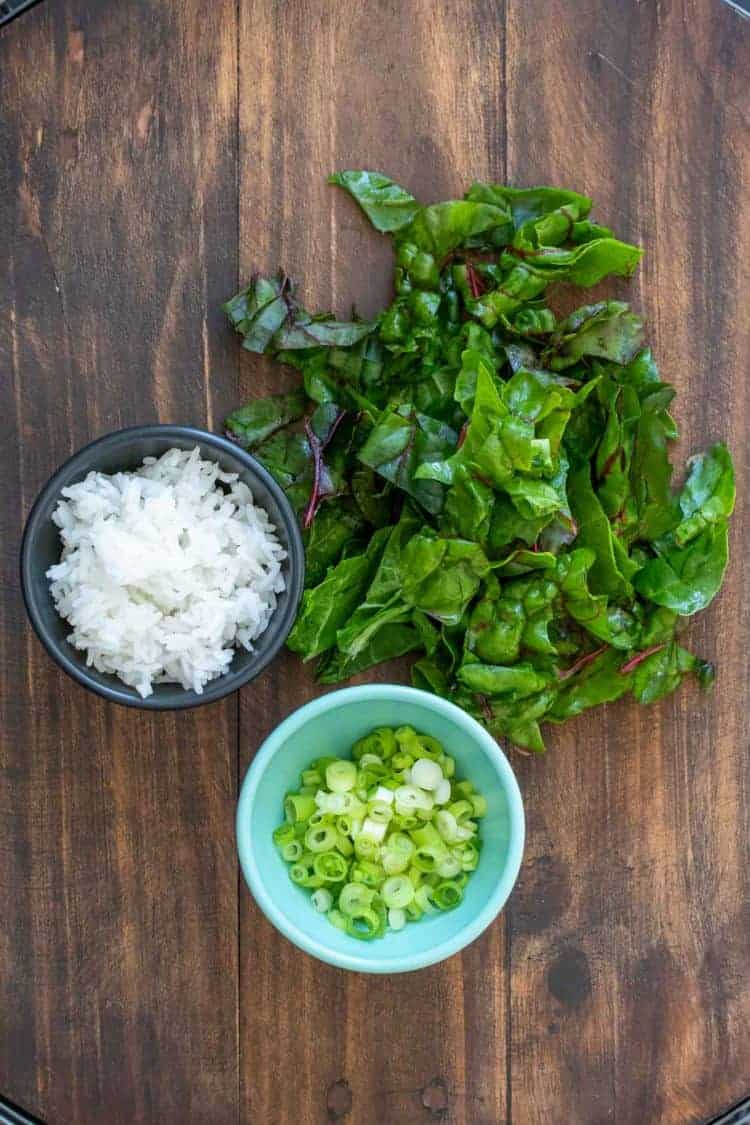
Vegetables: I use celery and red bell peppers in the dish and finish it off with sauteed Swiss chard and sliced green onions.
Jalapeno: A little jalapeno adds gentle warmth without overpowering the other flavors.
Seasoning: Sea salt and cayenne pepper enhance the flavors and add a little extra heat, respectively.
Fresh thyme: I add this to give the dish a fragrant, earthy flavor.
Liquid smoke: This is my secret ingredient for creating the traditional smoky flavor without meat.
Dried black eyed peas: I soak the beans overnight so they cook evenly and become perfectly tender as they cook.
Vegetable broth: I use this to cook the beans and build a rich flavor.
Cooked rice: I serve everything over warm white or brown rice.
🔪 How To Make
My Southern vegan black eyed peas recipe comes together in one pot, making dinner simple and clean up even easier. This is how I make it from start to finish:
Saute the vegetables: I start by sauteing the onion with the salt in olive oil or vegetable broth for about 5 minutes until softened. Then I stir in the garlic for 1-2 minutes, followed by the celery, red pepper, jalapeno, thyme, cayenne, and liquid smoke for another 3 minutes until the vegetables begin to soften.
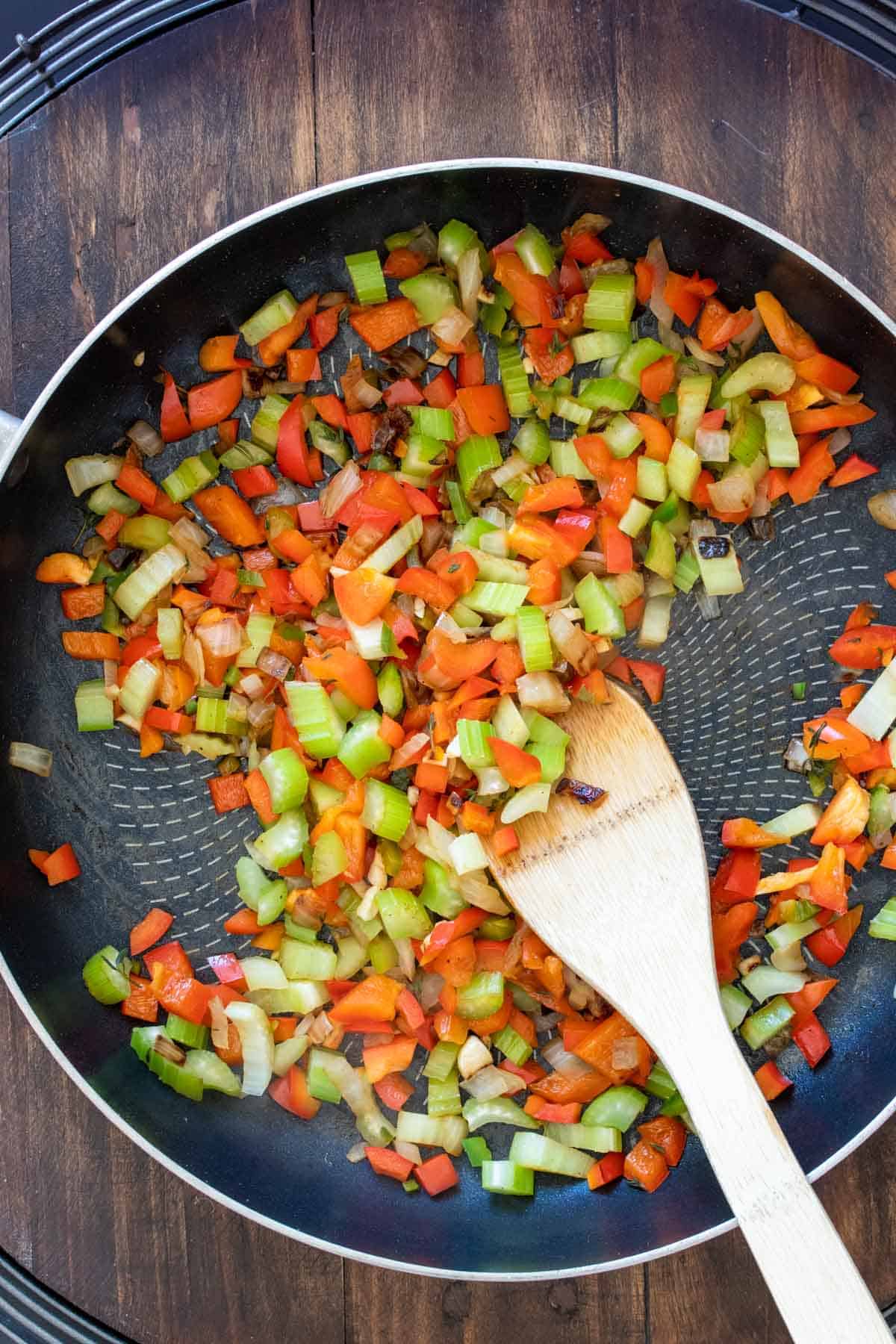
Simmer black eyed peas: Next, I add the soaked black eyed peas and vegetable broth to the pot, cover, and simmer for 20-30 minutes until the beans are tender.
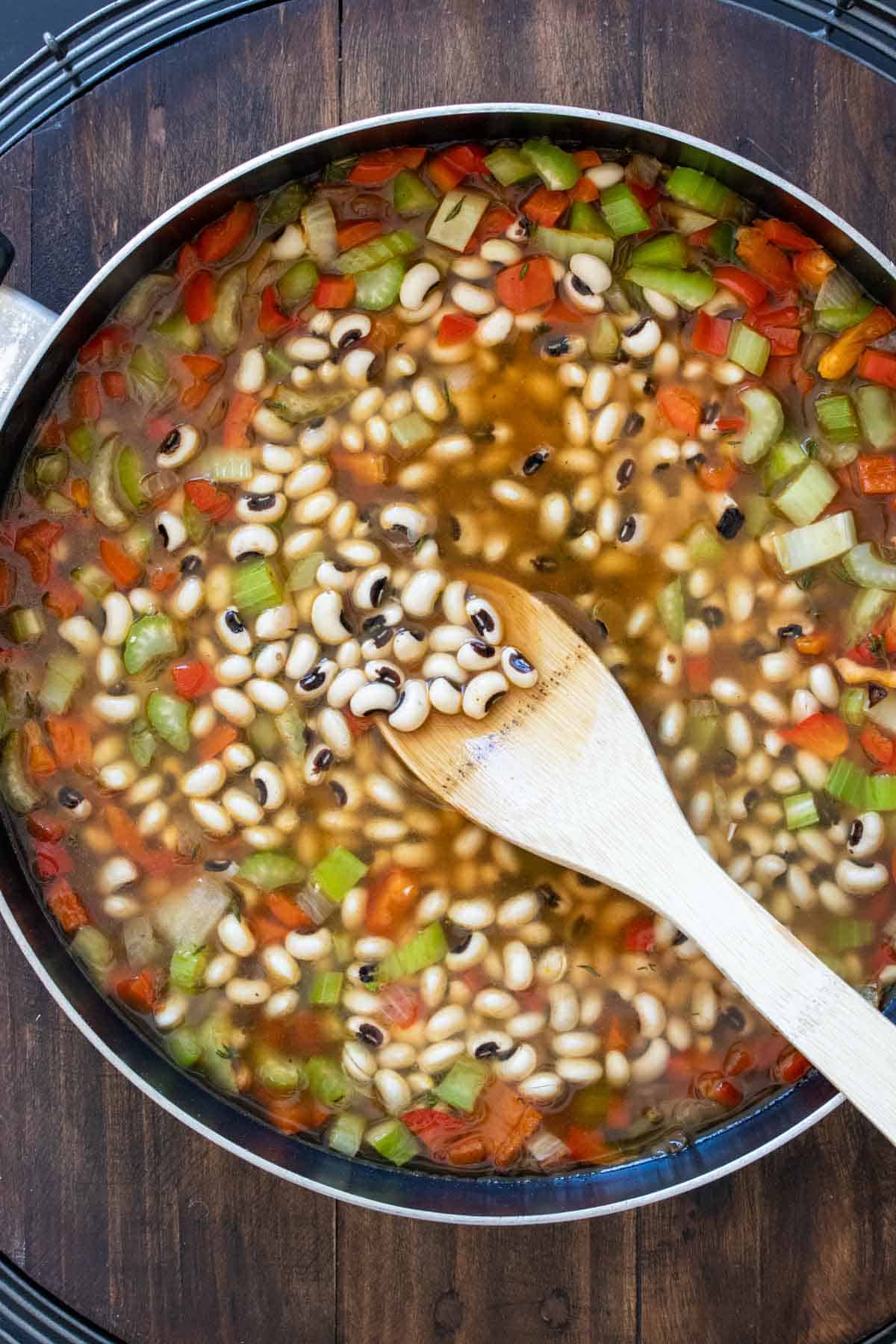
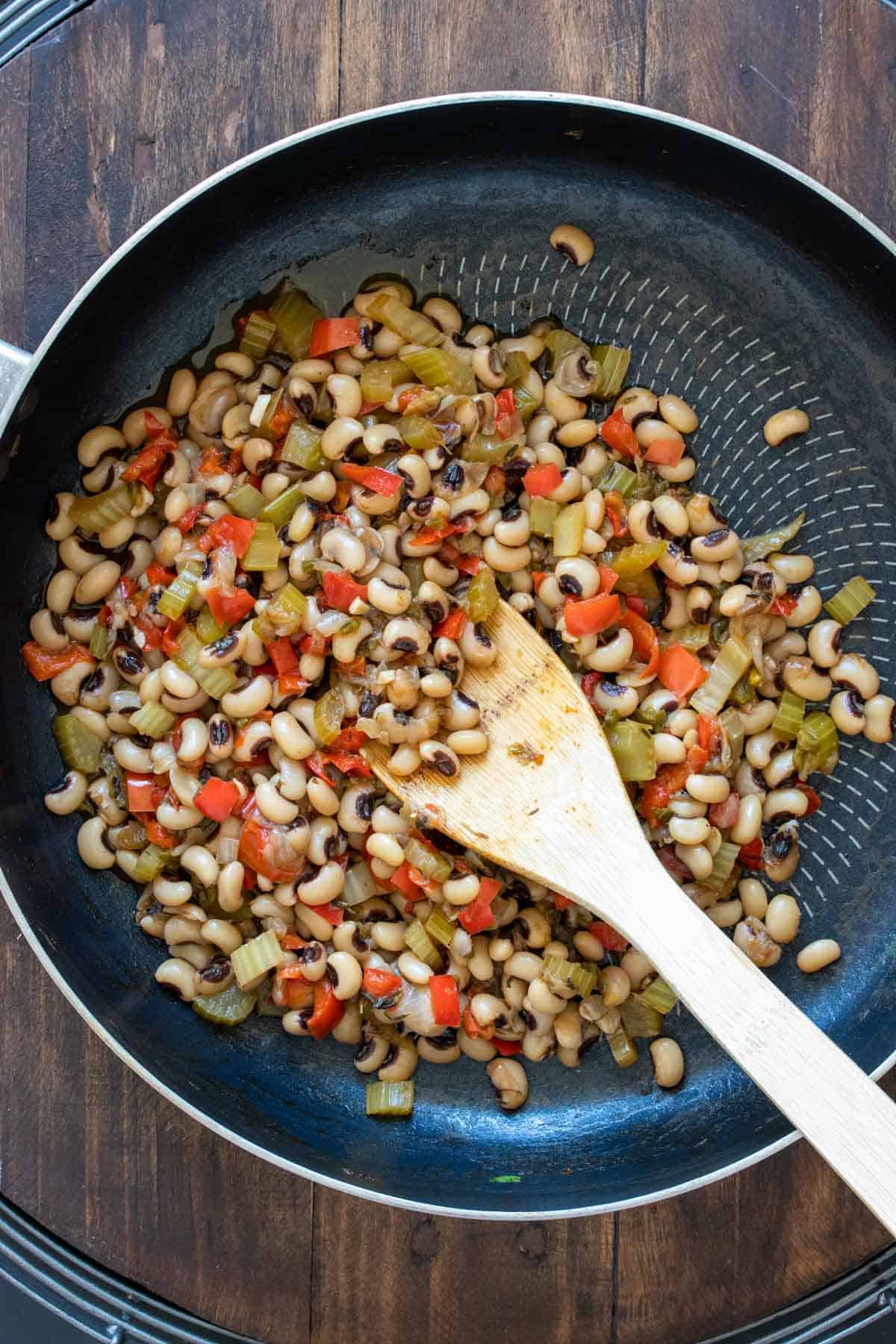
Cook: Then I remove the lid and cook for another 5 minutes so the remaining liquid reduces into a rich sauce.
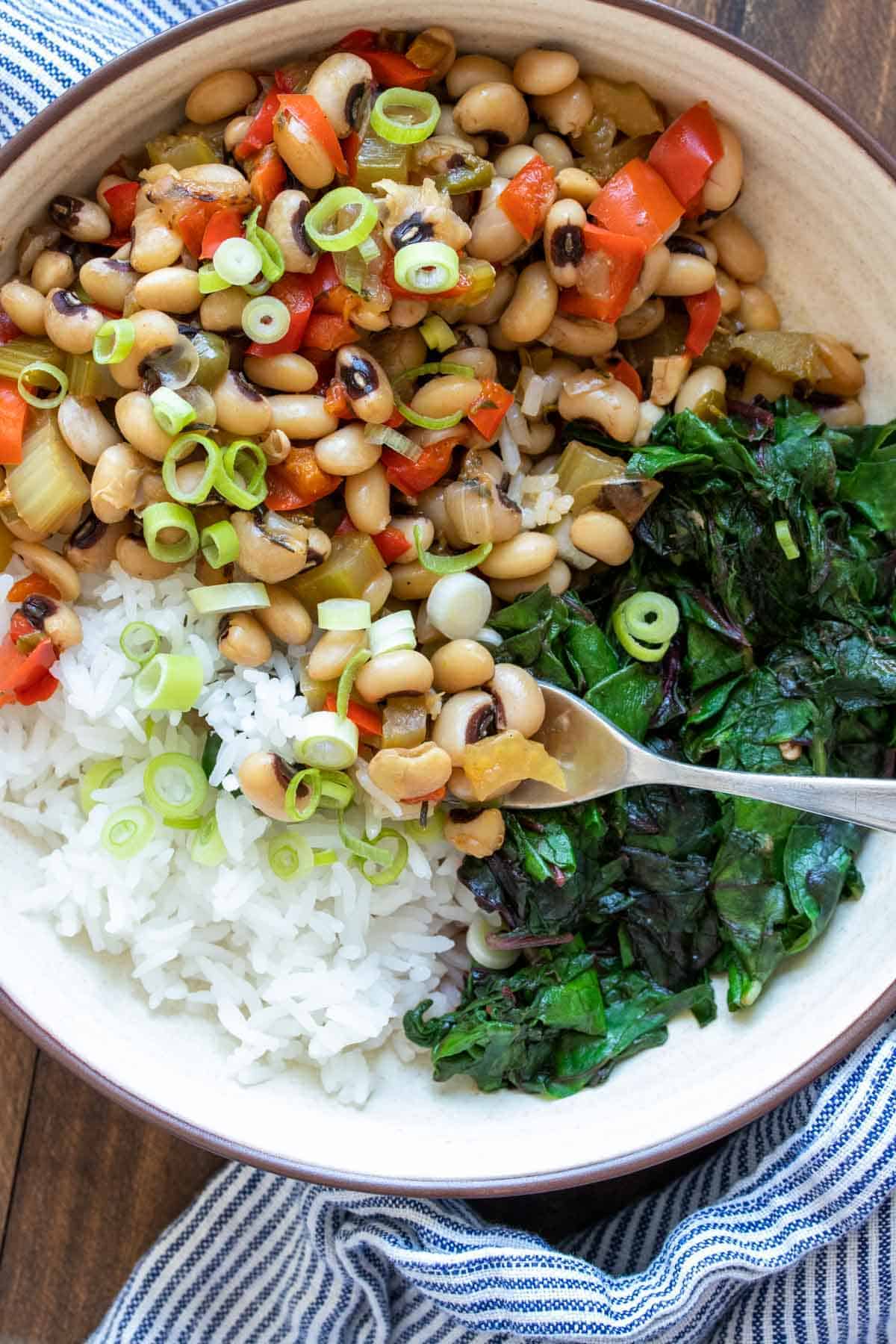
Serve: I spoon the black eyed peas over cooked rice, add sauteed Swiss chard, and finish with freshly sliced green onions.
My #1 Secret Tip for this Southern vegan black eyed peas recipe is to use just a small amount of liquid smoke instead of adding more spices. It creates the rich, smoky flavor that traditional Hoppin John is known for without overpowering the vegetables or beans.
Other Tips To Keep In Mind:
- Soak overnight: I always soak the dried black eyed peas overnight so they cook more quickly and evenly.
- Do not rush: I let the beans simmer gently instead of boiling rapidly, which helps them stay tender without splitting.
- Keep bean texture: I uncover the pot only during the final few minutes so the liquid reduces without drying out the beans.
- Taste before serving: Different broths contain different amounts of salt, so I check the seasoning after the beans have finished cooking and adjust the flavors accordingly.
- Cook green separately: To keep the chard bright and tender, I quickly saute them in the same pan after the beans have cooked, and separated into serving bowls. Cooking them with the other vegetables may lead to overcooking.
📖 Variations
There are plenty of ways to make this Southern vegan black eyed peas recipe your own, and these are just 3 ways I make them for my family throughout the year:
Collard classic: I replace the Swiss chard with 1 large bunch of chopped collard greens for a more traditional Hoppin John. I let them cook for a few minutes longer than I would the chard, until they become tender. This is the version I love making on New Year’s Day.
Smoky sausage: For another layer of smoky, savory flavor that pairs perfectly with the black eyed peas, I slice 2 vegan sausage links and saute them with the vegetables before adding the broth. If I do not have sausage links, my boys love adding chickpea vegan sausage crumble on top of their servings.
Creole style: I add 1 teaspoon smoked paprika and 1/2 teaspoon of dried oregano along with the thyme for a slightly bolder Louisiana-inspired flavor. My husband loves this version and always adds extra hot sauce to his bowl.
🍽 Serving Suggestions
To really enjoy Southern vegan black eyed beans in a flavorful and authentic way, I recommend serving them over 4 ingredient cilantro lime rice with a side of vegan cornbread. And there is nothing wrong with an additional side of vegetables like healthy green bean casserole.
When I make this for dinner, I like serving it with a bright side dish. Recently I had it alongside a roasted pumpkin salad, with vegan schnitzel. We kept dinner quite light, but since I was feeling inspired by all the Southern flavors, I made sure we finished off the evening with vegan peach cobbler.
🧊 Storing And ♨️ Reheating
Refrigeration: I store the black-eyed peas in an airtight container in the refrigerator for up to 4 days. If possible, I keep the rice separate so it stays fluffy.
Freezing: I freeze the bean mixture without the rice in a freezer-safe container for up to 3 months.
Reheating: If frozen, I thaw the bean mixture in the refrigerator overnight. Then I reheat the beans gently on the stovetop or in the microwave with a splash of vegetable broth or water to loosen the sauce before serving over fresh rice.
❓Recipe FAQs
If you are unable to get liquid smoke, you can still make flavorful black eyed peas. The closest substitute is 1 teaspoon of smoked paprika, which adds a gentle smoky flavor without overpowering the dish. I also recommend using a smoked ham-style vegan seasoning or adding a little extra smoked salt if you have it. If you do decide to use smoked salt, be sure to reduce the amount of regular salt to keep the seasoning balanced.
If my black eye peas are too salty. The easiest fix is to dilute the seasoning without sacrificing flavor. I stir in 1 cup of low-sodium vegetable broth or water and simmer for another 10-15 minutes. If you have extra cooked black eyed peas on hand, adding them can also help balance out the saltiness. For a small adjustment, a splash of apple cider vinegar or a pinch of brown sugar can help round out the flavor, making the salt taste less pronounced.
Yes, but the final dish will have a slightly different texture and flavor. Canned varieties are already fully cooked, so they will not absorb as much of the smoky broth during simmering and tend to be softer than dried beans which have been cooked from scratch. If using canned beans, I suggest draining and rinsing them well, reducing the broth and simmering time, and adding the beans during the final 15-20 minutes of cooking. This is just long enough for them to absorb the seasonings and heat through without becoming mushy. The final dish will still be delicious, but dried beans produce a creamy texture and more intense flavor.

Love this plant based recipe? Please leave a 5-star rating 🌟 in the recipe below and/or a review in the comment section further down the page!
You can also FOLLOW ME on FACEBOOK, INSTAGRAM, and PINTEREST to see more delicious, healthy, family-friendly food, and if you have any questions, I’m here to help!
Southern Vegan Black Eyed Peas Recipe
A big bowl of Southern vegan black eyed peas is a comfort food steeped in tradition, and my version comes together in just 50 minutes. I make it with black eyed peas, colorful vegetables, and fresh thyme. Every bite is hearty, smoky, and packed with wholesome ingredients, and a little bit of luck.
Servings: 4
Calories: 452kcal
- My #1 Secret Tip for this Southern vegan black eyed peas recipe is to use just a small amount of liquid smoke instead of adding more spices. It creates the rich, smoky flavor that traditional Hoppin John is known for without overpowering the vegetables or beans.
- Soak overnight: I always soak the dried black eyed peas overnight so they cook more quickly and evenly.
- Do not rush: I let the beans simmer gently instead of boiling rapidly, which helps them stay tender without splitting.
- Keep bean texture: I uncover the pot only during the final few minutes so the liquid reduces without drying out the beans.
- Taste before serving: Different broths contain different amounts of salt, so I check the seasoning after the beans have finished cooking and adjust the flavors accordingly.
- Cook green separately: To keep the chard bright and tender, I quickly saute them in the same pan after the beans have cooked, and separated into serving bowls. Cooking them with the other vegetables may lead to overcooking.
Calories: 452kcal | Carbohydrates: 90g | Protein: 17g | Fat: 3g | Saturated Fat: 1g | Polyunsaturated Fat: 1g | Monounsaturated Fat: 1g | Trans Fat: 1g | Cholesterol: 1mg | Sodium: 686mg | Potassium: 898mg | Fiber: 11g | Sugar: 8g | Vitamin A: 2148IU | Vitamin C: 60mg | Calcium: 101mg | Iron: 5mg